
Introduction
Missing a launch window because samples arrive late is one of the fastest ways to lose momentum—especially when you’re trying to win on TikTok-speed trend cycles, build a reliable reorder cadence, or run a tight wholesale calendar. If you’re evaluating a jeans supplier or denim jeans suppliers for your next drop, the goal isn’t just “fast.” It’s fast with repeatable accuracy: consistent fit, stable wash results, clear communication, and a documented quality system that protects you from expensive rework.
In this how-to guide, you’ll learn how to evaluate a custom jeans factory step-by-step—using measurable checkpoints you can verify before you commit. You’ll also see what to ask a denim jeans manufacturer and jeans exporter about sampling lead times, tech pack handling, MOQ flexibility, and end-to-end export readiness.
To make the process concrete, we’ll reference how Sky Kingdom approaches Denim clothing manufacturing for fast-fashion programs—where sampling is positioned around quick turnaround and supported by structured QC and digitalized operations.
How to Identify a Jeans Supplier Step by Step
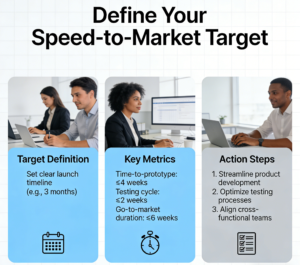
Step 1: Define your sample timeline
Before you compare any jeans manufacturers in china or a china clothing factory jeans partner, write down a sampling timeline that is specific enough to manage. Start with your launch date, then work backward to set milestone dates for tech pack submission, fabric/trim confirmation, first sample delivery, fit review, revision round, and final approval. A timeline with only one deadline (“need samples ASAP”) invites misunderstandings and pushes delays into later stages like wash approval or labeling.
For most custom denim jeans projects, define two timelines: an “ideal” timeline (what you want) and a “hard-stop” timeline (what you can tolerate). Then decide which sample types you need: proto sample (fit), wash sample (color and abrasion), size set (grading check), or pre-production sample. This prevents a factory from claiming speed while quietly skipping steps that protect consistency.
If you’re building a capsule with Custom Denim Jacket and Custom Denim shirt alongside jeans, plan separate milestones. Jackets often require more components (hardware, lining, pocket bags), and shirts may require different fabric sourcing and shrinkage tests.
Step 2: Confirm sampling capacity claims
A factory’s speed claims are only meaningful if their system is built for speed. When you evaluate a jeans factory, ask what their typical sample turnaround is and what conditions must be true for that timeline. For example, some factories can move quickly only when you use in-stock fabrics, standard hardware, and proven silhouettes. Others may promise speed but rely on overloaded sample rooms that slow down when order volume rises.
Sky Kingdom positions its OEM/ODM/OBM operation around quick response, including an “Ultra-Fast” workflow that states “Samples: 3–5 days” and “Bulk Production: 15–20 days,” with re-orders described as faster via AI-integrated hanging systems. Use that as a model for what you want to hear: specific windows, and a clear explanation of the operational lever behind the speed.
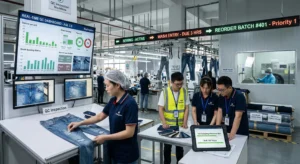
To verify any factory’s sampling capacity, request proof in one of these formats: – A recent sampling calendar (with customer identifiers removed) – Photos/videos of the sampling room and workflow – A written “sample process” that shows checkpoints (pattern, cut, sew, wash, QC, photos, ship)
If a factory can’t describe its process clearly, it’s a red flag—even if they are a well-known jean wholesale suppliers resource.
Find more information about Sky Kingdom OEM/ODM service: https://skykingdom.com/oem-odm/
Step 3: Audit communication response time
Speed isn’t only machine capacity—communication is often the real bottleneck. A strong denim jeans manufacturer should be able to respond quickly, ask clarifying questions, and summarize requirements back to you in a way that reduces rework. Test this early by sending a structured inquiry:
· One style description (fit, rise, leg opening)
· 6–10 reference photos (front/back/detail)
· One wash target (light/medium/dark, whisker direction, abrasion zones)
· Your target sample deadline
Then track response time and quality. Do they reply within one business day? Do they ask about tolerance, shrinkage expectations, and labeling placement? Or do they simply say “ok can do” with no details?
Also assess whether they can handle time zones and weekend coordination. Some fast-response systems advertise always-on responsiveness to support global schedules—use that as a benchmark. If you’re a china startup clothing manufacturer specializing in jeans china startup program, fast communication matters even more because you’ll iterate frequently while you find product-market fit.
Step 4: Validate tech pack readiness
Even the best denim jeans suppliers can’t deliver accurate samples if your inputs are incomplete. The fastest sampling happens when the tech pack is “ready to cut,” meaning:
· Measurement spec with tolerances (e.g., waist ±0.5 cm, inseam ±1.0 cm)
· Construction callouts (stitch type, SPI, seam allowances)
· Bill of materials (fabric, pocketing, thread, rivets, zipper)
· Wash notes (enzyme, stone, bleach alternatives, laser placement)
· Label/trim placement map (brand label, care label, size label)
If you don’t have a formal tech pack, you can still move forward, but you must replace missing details with clear references. Send multi-angle photos, a measurement table you create from a competitor garment sample, and a “must-not-change” list (e.g., pocket opening width, yoke angle, hem width).
Sky Kingdom describes a standardized sample process that includes “Design Submission” (tech pack or mockup), sourcing, a “sample sheet” confirmation step, sample production, QC, then photo confirmation before shipping. That “sample sheet” checkpoint is the part many factories skip—yet it’s often what prevents wrong pocket placement or mismatched wash contrast.
Step 5: Check MOQ and flexibility
A factory that forces large MOQs usually isn’t aligned with fast iteration. For startups and trend-driven drops, the best jeans supplier supports small test runs so you can validate demand before you scale. Ask for:
· MOQ by style (not just “MOQ 300” as a blanket statement)
· MOQ by color/wash (because wash changes can behave like new SKUs)
· MOQ by size ratio (some factories require full-size sets)
· Reorder terms (can you reorder the same style quickly)
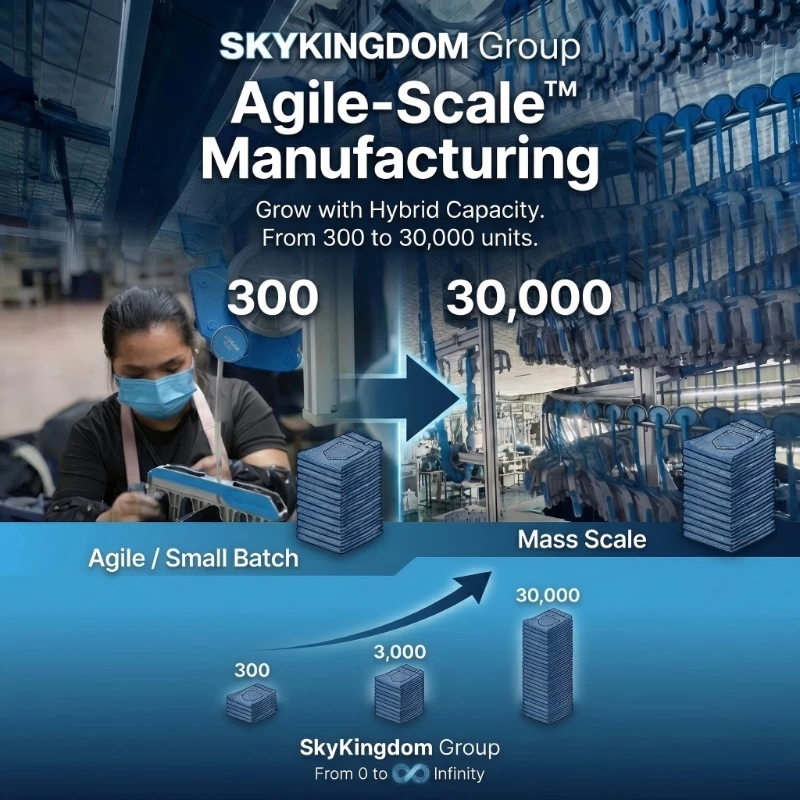
If you’re sourcing from jeans manufacturers in china, look for an operation that can support “small order, quick reorder” logic. Sky Kingdom’s solutions messaging highlights a low barrier for launches (for example, “MOQ 30”) and a structure designed to scale from tests to larger runs. The practical takeaway: you want a partner whose production planning can absorb small batches without pushing you to compromise on finishing or QC.
When you compare options, don’t only ask “what is your MOQ?” Ask “what MOQ can you support without changing fabric quality, wash process, or inspection level?” That’s where real flexibility shows up.
Step 6: Review quality control system
Fast samples that arrive wrong are slower than accurate samples that arrive slightly later. A credible denim jeans manufacturer should be able to explain their inspection standard and how they control variability in sewing and wash.
Sky Kingdom states it adheres to “AQL 2.5 standards with a 5-stage QC system.” Treat that as an example of the kind of specificity you should request from any supplier: a named standard, and a documented multi-stage QC flow. At minimum, ask for:
· Incoming fabric inspection (shade banding, defects, shrinkage)
· In-line sewing checks (SPI, seam strength, pocket symmetry)
· Wash control checks (color tolerance, abrasion placement)
· Final measurement inspection against spec
· Packing inspection (labels, polybags, carton marks)
If you’re developing denim customization programs (custom washes, prints, distressing, laser effects), insist on a measurable approval method. That might include photo benchmarks under consistent lighting, a wash standard card, or lab dip-style approvals. Even if the factory is also a jeans exporter, export readiness doesn’t automatically guarantee wash repeatability.
Step 7: Verify end-to-end capabilities
A factory can be fast at sewing but slow at everything else—fabric sourcing, washing capacity, labeling, compliance documentation, and shipping coordination. To avoid handoffs that slow sampling, verify whether the supplier can manage the full workflow for Denim clothing manufacturing:
· Fabric and trim sourcing options (including sustainable choices)
· Pattern making and grading
· Washing/finishing capacity (laser, ozone, enzyme options)
· Packaging and shipping coordination
· Documentation support for export (packing list, invoice, labels)
Sky Kingdom’s positioning emphasizes end-to-end production plus export services, and its solutions messaging frames sampling and reorders as a connected system rather than isolated events. That is exactly what you want if you run multi-drop calendars and need quick replenishment when a style starts converting.
Finally, if you plan to expand beyond jeans into jean jacket manufacturers programs, confirm the factory has jacket-specific construction experience (collars, plackets, heavier seam stacking, hardware stress points). Similarly, confirm shirt experience before you commit to a Custom Denim shirt capsule.
Find more information about Sky Kingdom solutions: https://skykingdom.com/solutions/
Scenario Variations
Startup launch (low risk testing). If you’re building a new line with custom jeans and you need market validation, prioritize low MOQ, fast sampling, and clear communication loops. Choose a partner who can turn feedback into revisions quickly without restarting the project from scratch.
Trend drop (rapid reorder readiness). When you expect viral spikes, evaluate how the factory handles reorders: fabric pre-booking, production scheduling, and wash capacity. Ask how they prevent shade shifts between the first run and replenishment.
Complex wash or finishing (laser, ozone, heavy distress). For advanced finishes, confirm the factory can translate photo references into repeatable process parameters. Require an approval system with photo benchmarks and a written wash recipe summary.
Multi-SKU capsule (parallel development). If you’re developing jeans plus a Custom Denim Jacket and a Custom Denim shirt, ensure the factory can run parallel sampling without bottlenecking one sample room. Ask how many sample lines or teams they allocate during peak seasons.
Prerequisites & Safety
Required Tools & Materials
To evaluate a custom jeans factory efficiently (and avoid endless back-and-forth), prepare a small “factory-ready” package before outreach:
1. Tech pack or spec sheet with measurements and tolerances (even a simplified version helps).
2. Reference garment photos (front/back/inside seams, pocket details, hardware close-ups).
3. Wash inspiration board showing whiskers, abrasion zones, and overall tone.
4. Logo files in vector format (AI/EPS/PDF) for labels and trims.
5. Trim and hardware requirements list (zipper type, rivets, buttons, thread color).
6. Size breakdown and target fit notes (slim/straight/loose, rise preference).
7. Packaging requirements (hangtags, polybags, carton markings) if export-ready delivery is needed.
A well-prepared package helps your china clothing factory jeans start ups workflow move faster because the supplier can confirm feasibility without guessing.
Safety Considerations
Even though you’re vetting manufacturing rather than operating machinery yourself, safety and compliance still matter because they directly affect reliability and risk.
· Confirm restricted substance control. Ask how the supplier manages chemical inputs for washing, dyeing, and finishing, and whether they align to an MRSL approach. The ZDHC MRSL framework is widely used to restrict hazardous chemical inputs at the manufacturing stage. (https://www.zdhc.org/mrsl)
· Verify certifications and audit readiness. If your brand sells into regulated markets, ask about social compliance audits and product safety certifications relevant to your channel.
· Document traceability for your risk profile. If you need cotton origin documentation or chain-of-custody support, confirm the supplier can provide it consistently.
Troubleshooting
When samples are late or inaccurate, the root cause is usually a missing checkpoint. Use the table below to diagnose issues quickly and reset the project without losing weeks.
| Problem | Likely cause | Solution |
| Sample arrives late | Sampling capacity mismatch or unclear milestone dates | Rebuild the schedule with dated checkpoints; confirm fabric/trim availability; request weekly progress photos and a fixed ship date. |
| Fit is wrong (waist/rise/thigh) | Missing tolerances or unclear fit intent | Send a measurement spec with tolerances; mark “must match” points; request a measured photo set (tape on garment) before shipping revisions. |
| Wash is off-target | No approved standard, inconsistent lighting, or vague references | Approve photo benchmarks under consistent lighting; require a written wash recipe summary; confirm whether laser/ozone/enzyme methods are available. |
| Stitching or pocket symmetry inconsistent | Weak in-line QC or unclear construction callouts | Add construction details (SPI, seam type, pocket template); request in-line QC checkpoints and close-up photos of key seams. |
| Hardware/labels placed incorrectly | Missing placement map or late branding files | Provide a trim placement diagram and vector logo files; require a pre-sew “sample sheet” confirmation before production starts. |
Conclusion
Choosing the right factory for fast sampling is less about luck and more about verification. Define a clear timeline, test communication, validate tech pack readiness, and insist on documented QC and end-to-end capability—especially if you’re building a custom jeans program with frequent drops and reorders. When you evaluate any jeans supplier or denim jeans manufacturer, prioritize repeatable process control over vague promises.
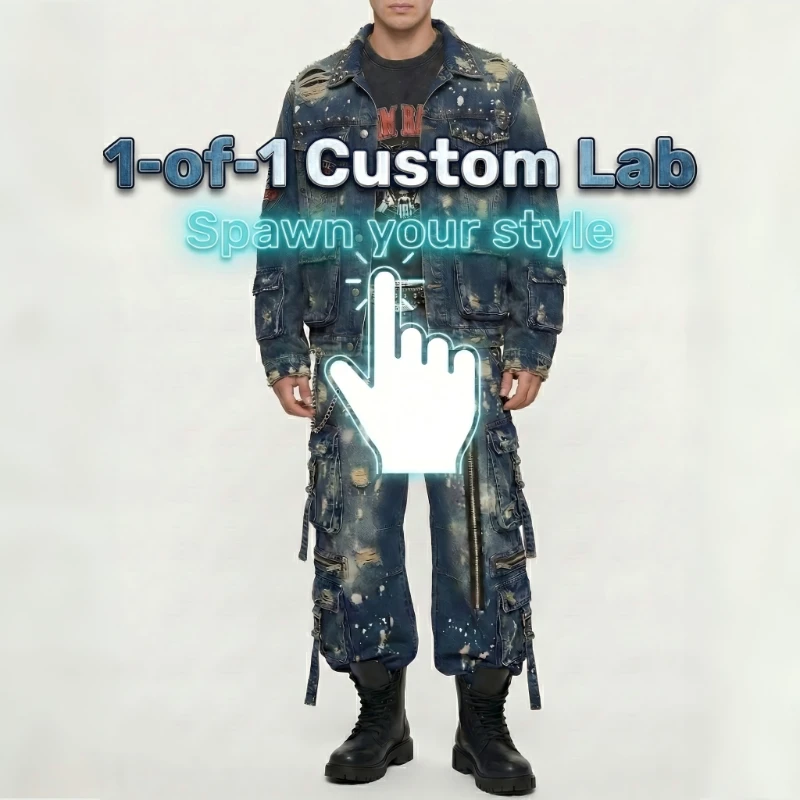
Start with one core style, get the first sample cycle working smoothly, and only then scale into more washes, more SKUs, and categories like Custom Denim Jacket and Custom Denim shirt. With the right checkpoints in place, fast sampling becomes a dependable system—not a gamble.
Frequently Asked Questions
How fast should denim samples arrive when choosing a jeans supplier?
Most programs work best when you define a window in writing and attach it to specific milestones rather than a single deadline. Experienced Denim clothing manufacturer like Sky Kingdom can complete sampling within a week. The most important factor is whether the factory can show a repeatable process (pattern → sew → wash → QC → ship) with dated checkpoints. If they only promise speed verbally, you should assume delays will appear later.
What if I don’t have a tech pack for custom denim jeans yet?
You can still start, but you must replace missing information with structure. Provide multi-angle photos, a measurement table you create from a reference garment, and a written list of non-negotiables (rise height, pocket placement, leg opening). Ask the factory to generate a confirmation sheet that summarizes measurements, trims, and wash notes before they cut fabric. This reduces the risk of a “good-looking but wrong” first sample.
What MOQ should startups target with a custom jeans factory?
Startups should target an MOQ that lets you test demand without compromising on fabric, wash, or inspection standards. Ask for MOQ by wash/color and clarify whether sizes can be mixed in one order, because denim programs often behave like multiple SKUs. If a factory can only meet low MOQ by changing fabric quality or reducing QC, the risk is usually not worth it. The best approach is to launch one hero style first, then expand.
How do I judge reliability quickly when evaluating jeans manufacturers in china?
Run a short “speed + clarity” test before you commit. Send one structured inquiry and evaluate response time, how well they restate your requirements, and whether they ask the right technical questions about tolerances and wash controls. Then request a clear sampling workflow and a QC overview that includes inspection checkpoints. Reliability is usually visible in how they manage details, not how enthusiastic the sales response sounds.
Can one factory handle custom jeans, Custom Denim Jacket, and Custom Denim shirt in the same season?
Yes, but only if they can run parallel development without bottlenecking one sample room like Sky Kingdom. Denim jackets often require heavier seam stacking, more hardware, and more complex assembly than jeans, while denim shirts may need different fabric behavior and shrinkage controls. Ask how many sampling teams they have, whether they separate woven categories, and how they prevent delays when multiple SKUs are in development. If they can’t explain capacity allocation, your capsule timeline may slip.