



If jeans could talk, they’d probably start with a humble confession: “I’m not heavy—my fabric is.” That one nuance causes most of the confusion around weight of jeans. Are we talking about the denim’s ounce rating (fabric weight), or the actual shipping weight of a finished pair? In real production, both matter—one affects comfort, drape, and durability, and the other affects freight costs, packaging, and customer expectations.
In this guide, I’ll break down weight of jeans in plain language, show you what different weights feel like, and share what I’ve learned from building denim programs that had to balance trend, margin, and speed to market.
What “Weight of Jeans” Really Means (Fabric Weight vs. Garment Weight)
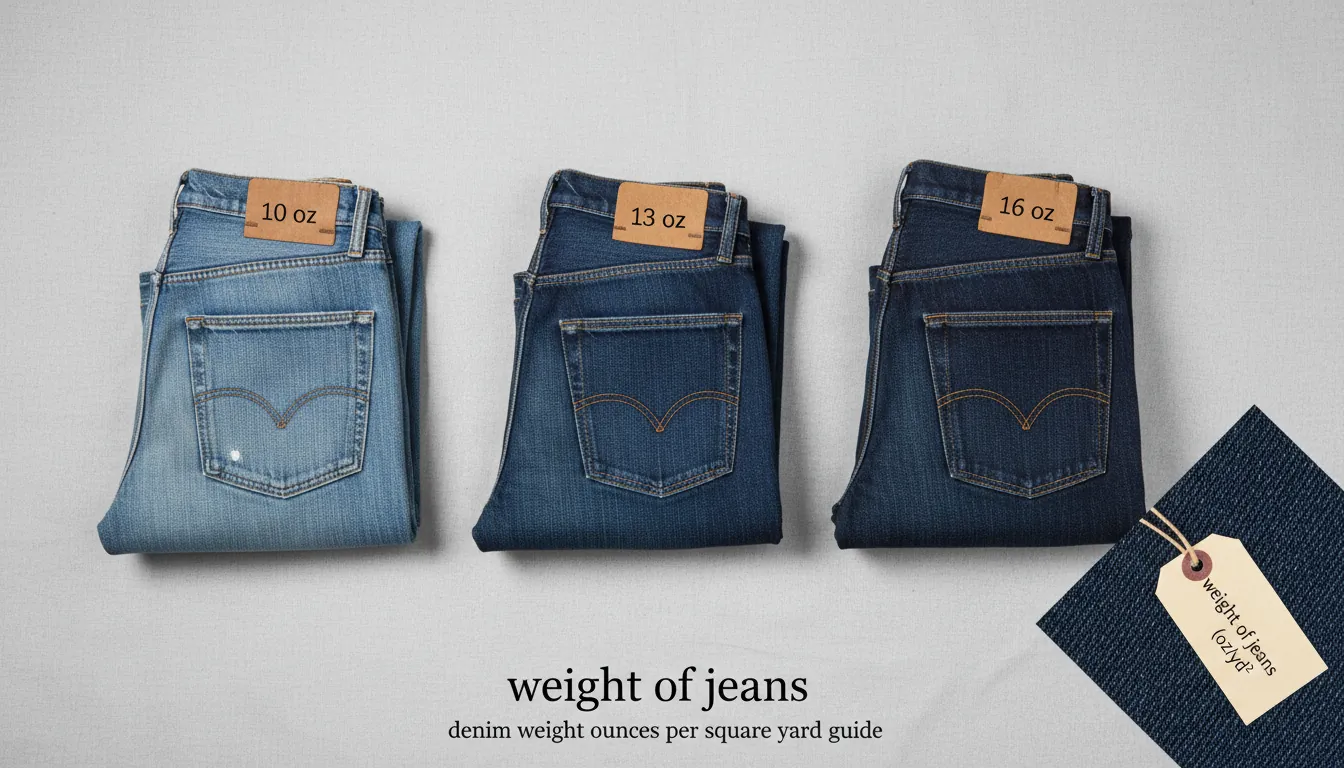
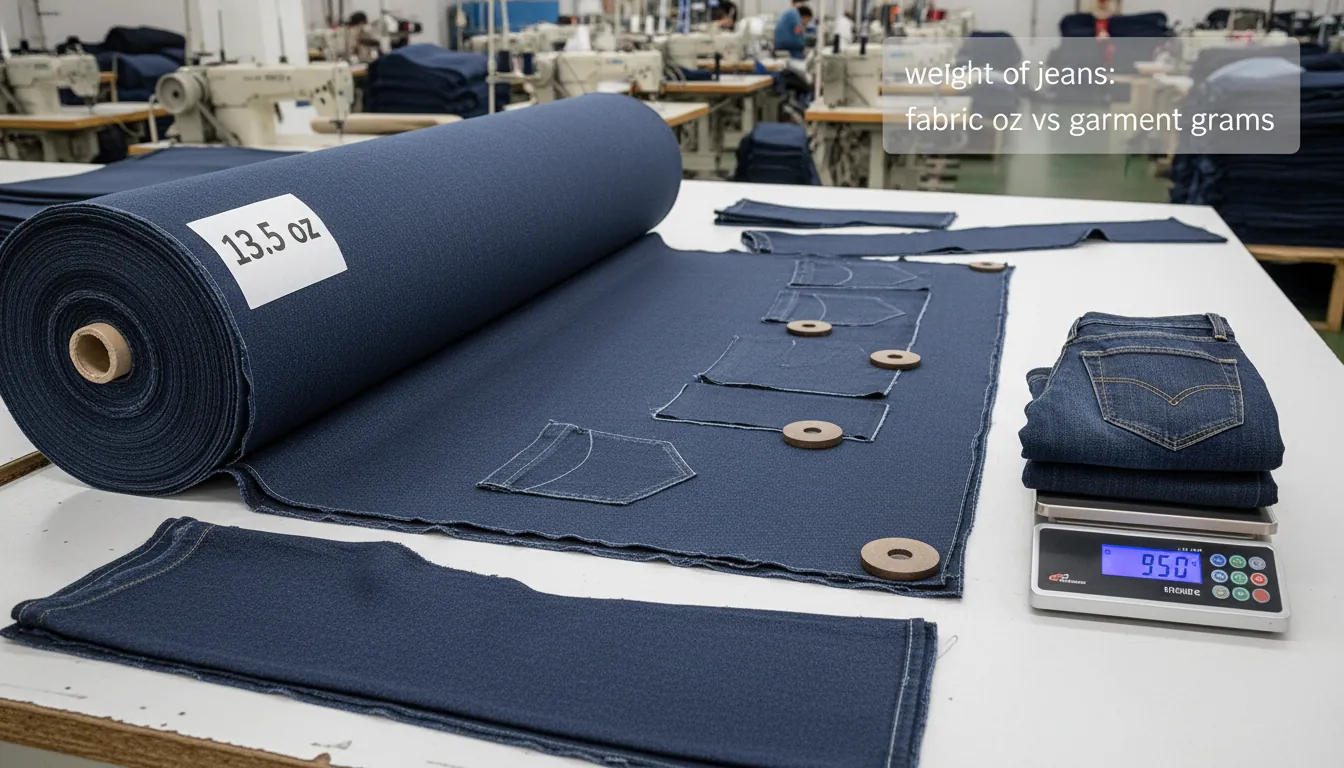
When most people search weight of jeans, they’re usually seeing numbers like 10 oz, 12 oz, or 16 oz. That “oz” is ounces per square yard (oz/yd²)—a standard denim measurement used across the industry (especially in the U.S. market). It tells you how much a square yard of denim fabric weighs, not the jeans on a scale.
But for eCommerce and logistics, you may also care about finished garment weight (e.g., 600g, 800g, 1.1kg). That depends on pattern pieces, hardware, pocket bags, trims, and size grading.
- Fabric weight (oz/yd²): predicts feel, breathability, structure, and break-in.
- Finished jeans weight (g or lb): matters for shipping, bundling, and fulfillment costs.
For a foundation definition of denim terms and how brands describe denim, Levi’s denim glossary is a helpful reference: Levi’s Denim Dictionary.
Denim Ounces (oz) in Plain English: The Most Common Ranges
Denim communities often treat ounces like a badge of honor, but practically, the right number is the one that fits the climate, silhouette, and customer tolerance.
Here’s the range most manufacturers use when talking about weight of jeans:
- Lightweight denim: 5–10 oz
Softer, cooler, easier to sew into drapey or wide-leg fits. - Midweight denim: 11–15 oz
The “classic jeans” zone—balanced comfort and durability. - Heavyweight denim: 16–32 oz
Rigid, structured, slower break-in, often used in raw/heritage workwear styles.
If you want the clearest explanation of what “ounce denim” means and why it’s measured per square yard, this breakdown is solid: Denim weight explained (oz/yd²). For a second perspective comparing oz to other textile measures like GSM, see: Denim oz guide (and GSM comparison).
Ounces vs GSM: Quick Conversion for Global Sourcing
If you manufacture globally (or your tech packs are mixed metric/imperial), you’ll run into both systems.
- 1 oz/yd² ≈ 33.9 GSM
- Examples:
- 10 oz ≈ 339 GSM
- 12 oz ≈ 407 GSM
- 14 oz ≈ 475 GSM
- 16 oz ≈ 542 GSM
In sampling, I’ve found conversion helps—but hand-feel tests matter more. Two “12 oz” denims can feel totally different depending on yarn type, weave tightness, finishing, and stretch content.
What the Weight of Jeans Feels Like on Body (Comfort, Stretch, and Break-In)
The weight of jeans changes the wearing experience in predictable ways:
- Lighter weights (8–10 oz) feel flexible immediately and breathe better.
- Midweights (11–14 oz) feel like “real jeans” without being punishing.
- Heavyweights (15–18 oz+) feel armored at first, then mold to the body.
My real-world takeaway from sampling
When I tested the same fit across a 10.5 oz and a 14 oz denim, the 10.5 oz version had fewer fit complaints on first wear—especially in slimmer silhouettes. The heavier option delivered better “structure” for straight and baggy fits, but needed clearer customer education on break-in.
This is why brands selling heavier denim often add guidance like:
- “Expect stiffness for the first 5–10 wears”
- “Break-in improves with movement and time”
- “Size up if you prefer immediate comfort”
Best Weight of Jeans by Season, Fit, and Use Case
Choosing weight of jeans is about matching a product promise to reality. Here are practical pairings that work well for DTC brands:
By season
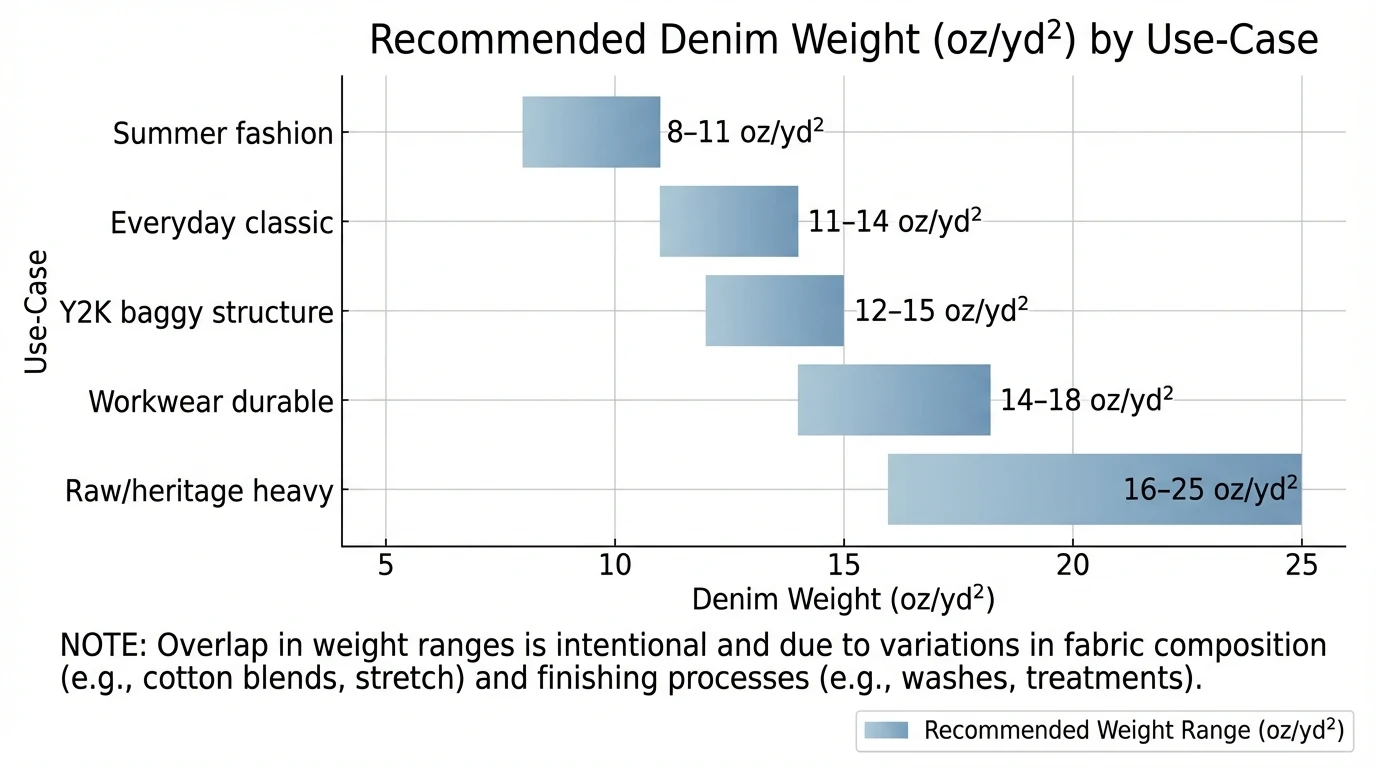
- Spring/Summer: 8–11 oz (or stretch blends in 10–12 oz for comfort)
- Fall/Winter: 12–16 oz for warmth and shape retention
By silhouette
- Skinny/slim: 9–12 oz with stretch (too heavy can feel restrictive)
- Straight: 11–14 oz classic zone
- Baggy/Y2K wide-leg: 12–15 oz for structure and stacking
- Carpenter/workwear: 13–18 oz for durability and “authentic” hand feel
By end-use
- Everyday lifestyle: 11–14 oz
- Workwear / rugged positioning: 14–18 oz+
- Fashion-forward drape (flowy, slouchy looks): 8–11 oz
What Else Changes the “Weight of Jeans” Feel (Even at the Same Oz)
Fabric weight is only one lever. In production, these factors can make a 12 oz denim feel heavier or lighter than expected:
- Fiber composition
- 100% cotton tends to feel sturdier and more rigid at the same oz.
- Cotton + elastane can feel “lighter” due to flex and recovery.
- Weave density and yarn type
Tighter weave often feels more compact and durable. - Finishing and washing
Enzyme washes, softeners, and sanding can reduce stiffness dramatically. - Hardware and construction
Metal shanks, rivets, heavy pocket bags, and thick thread add real garment weight.
Typical Finished Weight of Jeans (Actual Pair on a Scale)
People also ask weight of jeans because of travel, shipping, or resale listings. While it varies by size and trims, these are useful “rule of thumb” ranges for adult jeans:
- Lightweight (8–10 oz denim): ~450–700g per pair
- Midweight (11–14 oz denim): ~650–950g per pair
- Heavyweight (15–18 oz+ denim): ~900–1,400g+ per pair
For brands, this helps estimate:
- parcel shipping tiers
- polybag/carton optimization
- landed cost sensitivity by style (especially when you add belts, hangtags, or thick packaging)
Common Sourcing Mistakes When Spec’ing Weight of Jeans (and How to Fix Them)
| Mistake | What Happens | Better Spec |
|---|---|---|
| Only specifying oz without composition | Inconsistent hand feel | Specify oz + cotton/elastane % + weave + finish |
| Choosing 16 oz for skinny fit | Poor comfort/returns | Use 10–12 oz stretch or adjust fit |
| Ignoring wash effect | Sample doesn’t match bulk | Lock wash recipe + QC hand-feel standard |
| No tolerance range | Factory delivers off-target weight | Set oz tolerance (e.g., ±0.5 oz) |
| Not accounting for trims | Shipping cost surprises | Request finished garment weight estimate per size set |
How SkyKingdom Group Helps DTC Brands Get Denim Weight Right (Without Slow Iterations)
When you’re building fast-fashion denim drops, the “perfect” weight of jeans is the one you can repeat consistently—across sizes, washes, and restocks—while staying on schedule.
SkyKingdom Group supports that by aligning weight decisions with real production constraints:
- Speed to validate hand-feel: rapid 7-day sampling so you can touch and test the denim weight early.
- Agile bulk lead times: 15–22 day bulk production helps you ride trend windows (Nostalgia & Y2K, Gender Fluidity, Cyberpunk).
- Low MOQ from 30 units: ideal for testing multiple denim weights (e.g., 11 oz vs 13.5 oz) without overbuying.
- Amazon Top Seller-Grade QC (AQL 2.5): keeps weight/hand-feel consistency tighter across lots.
- Eco-friendly washing: lets you hit the “soft vs rigid” target without guesswork.
- Certifications: OEKO-TEX, BCI, Bureau Veritas-backed compliance for brands that need traceability and trust.
If you’re planning a denim line, you can often reduce revisions by deciding upfront:
- the target oz (and acceptable tolerance),
- stretch % and recovery needs,
- wash recipe and finishing standard,
- silhouette and seasonal intent.
4 Things You Must Know to Buy Raw Denim | Racked
Quick Guide: Choosing the Right Weight of Jeans in 60 Seconds
Use this checklist when you’re selecting fabric or reviewing a supplier swatch card:
- Define the use-case (summer, everyday, workwear, statement denim).
- Pick a weight range (8–11, 11–14, 14–18+).
- Lock composition (100% cotton vs stretch blend).
- Confirm wash direction (rigid/raw vs softened/vintage).
- Ask for finished garment weight (helps shipping and packaging planning).
Conclusion: The “Right” Weight of Jeans Is the One That Matches Your Promise
In the end, the weight of jeans isn’t just a number—it’s a personality trait. Lightweight denim is your easygoing summer friend; midweight is the dependable daily driver; heavyweight is the tough, slow-to-open-up companion that rewards patience. If you match weight to silhouette, season, and customer comfort, you’ll get fewer returns and stronger repeat buys.
If you’re developing denim for a DTC drop and want help selecting the right fabric weight, wash, and production plan, reach out to SkyKingdom Group and share your target fit, season, and inspiration.
FAQ: Weight of Jeans
1) What does “12 oz jeans” mean?
It means the denim fabric weighs 12 ounces per square yard (oz/yd²), not that the jeans weigh 12 ounces total.
2) What is the typical weight of jeans for everyday wear?
Most everyday jeans use 11–14 oz denim because it balances comfort, durability, and year-round use.
3) Are heavier jeans always more durable?
Often, yes—but durability also depends on weave density, yarn quality, stitching, and wash process. A well-made 13 oz can outlast a poorly made 16 oz.
4) What weight of jeans is best for hot weather?
Look for 8–11 oz denim or a breathable blend/finish. Lighter weights generally feel cooler.
5) How much do jeans weigh for shipping?
Many adult jeans ship around 650–950g depending on denim weight, size, hardware, and packaging.
6) What’s the difference between oz and GSM in denim?
Oz is ounces per square yard; GSM is grams per square meter. Roughly, 1 oz/yd² ≈ 33.9 GSM.
7) Does stretch denim change the “weight of jeans”?
Stretch content doesn’t change the oz rating much, but it can make jeans feel lighter and more comfortable because the fabric moves and recovers better.