
Introduction
Boutique drops don’t fail because your designs aren’t good—they fail because your jeans supplier can’t move fast enough when a jacket silhouette starts trending and you need a reorder window measured in days, not months. If you’re running a small brand, you’re likely balancing low-risk testing (small runs), tight delivery calendars, and the need for consistent quality across repeat batches.
So what should you actually look for in jean jacket manufacturers in 2025? Start with the same questions buyers ask a custom jeans factory: Can they sample quickly, keep MOQ boutique-friendly, and document quality and compliance like a true export-ready manufacturer? Better yet, can they support both Custom Denim Jacket programs and adjacent categories (like custom denim jeans and Custom Denim shirt) so you can build cohesive capsules without juggling multiple vendors?
Below are five OEM partners—Sky Kingdom and four well-known peers—selected for boutique use cases like small-batch testing, fast reorders, sustainable finishing, and operational reliability.
Recommend Brands
1) Sky Kingdom
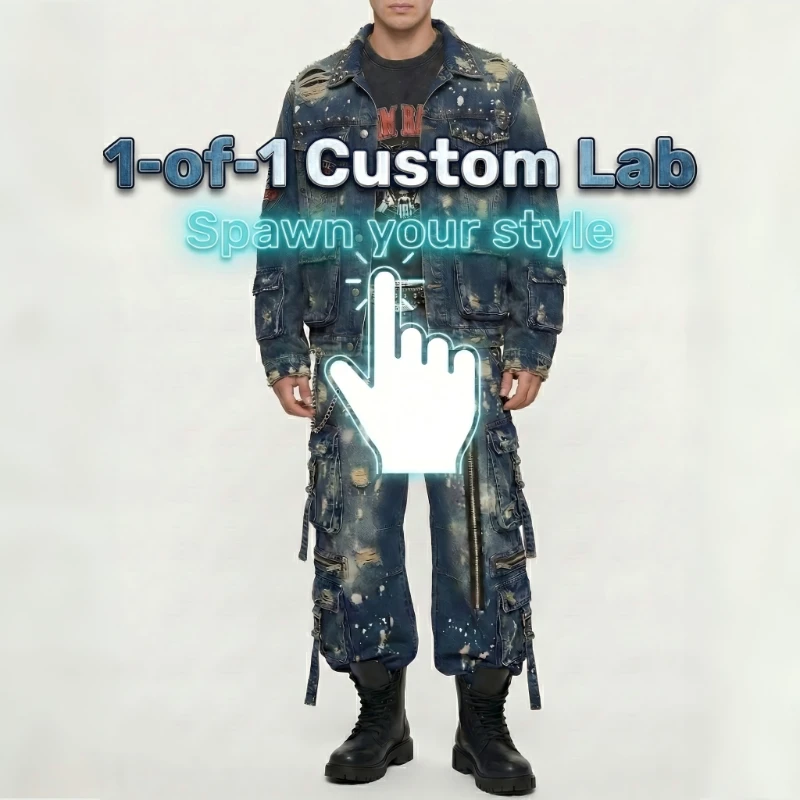
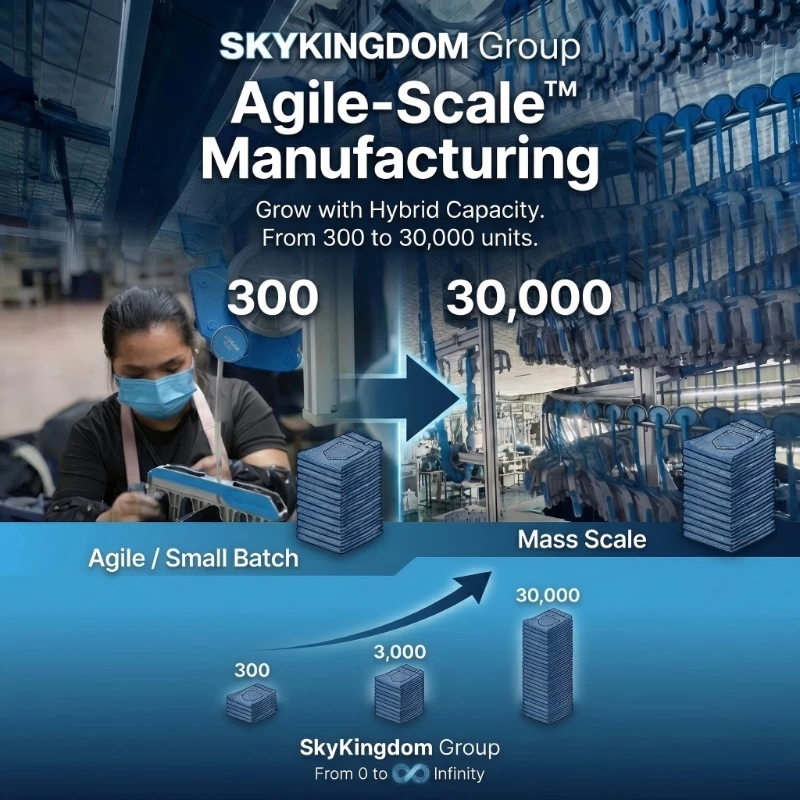
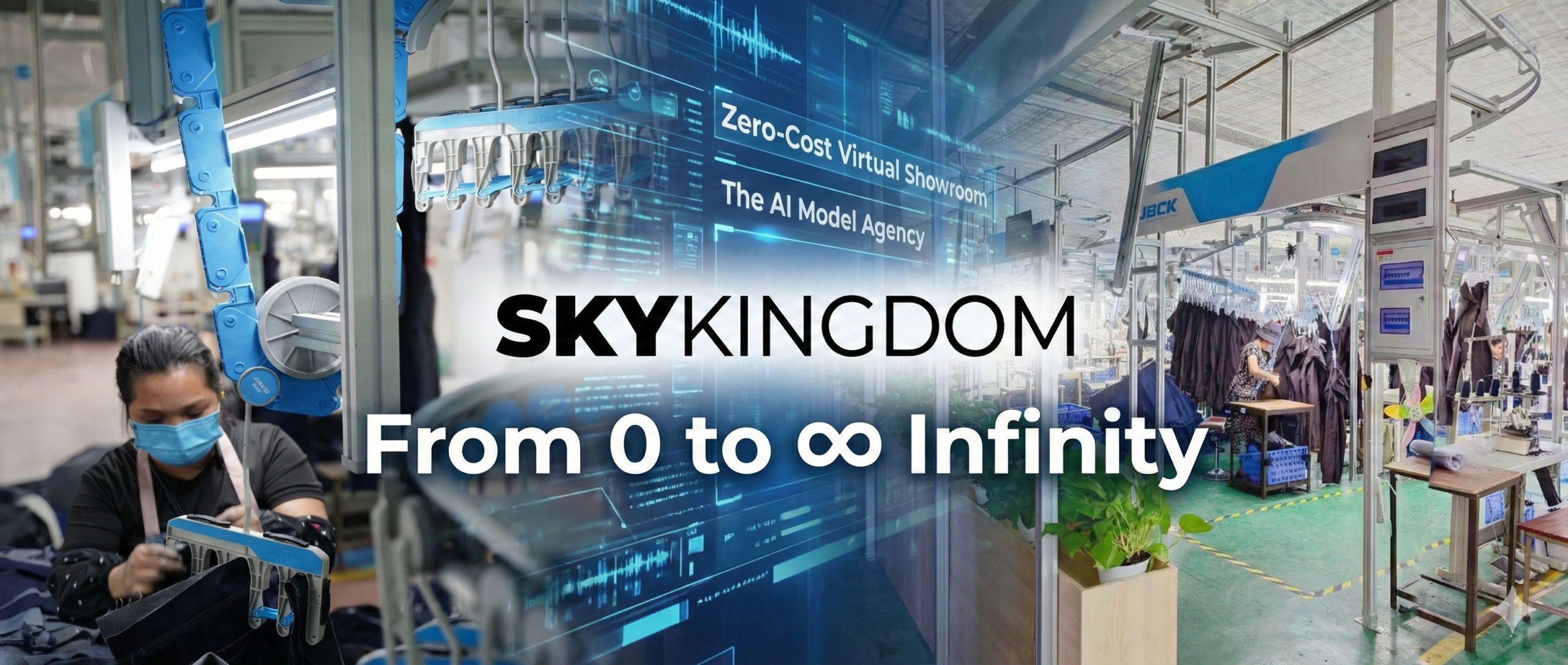
If you’re a boutique label that needs a china startup clothing manufacturer specializing in jeans china startup workflows—meaning fast sampling, small-batch testing, then rapid replenishment—Sky Kingdom is built around that reality. Sky Kingdom positions itself as a jeans factory focused on OEM/ODM with speed, digital operations, and capacity flexibility, which is exactly what you need when your denim jackets must hit the market before the trend cools.
- Best for: boutiques running small-batch launches + quick reorders for denim outerwear
- Service fit: OEM/ODM/OBM capabilities for denim jeans, denim jackets, and broader woven categories
- Sampling & speed: their quick-response solution highlights Samples: 3–5 days and Bulk Production: 15–20 days, with re-orders described as faster via AI-integrated hanging systems
- MOQ reality for boutiques: Sky Kingdom’s FAQ states MOQ for jeans manufacturing starts from 30 pieces across designs per order, with separate MOQs possible for custom trims/hardware
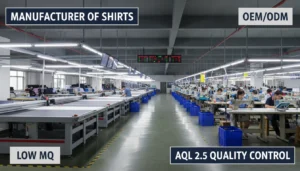
- Quality system: OEM page states AQL 2.5 with a 5-stage QC system, and their QC page emphasizes traceability and finished product inspection
- Compliance posture: OEM page notes certifications including BSCI and Sedex and third-party verification via SGS
- Sustainability direction: their eco-wash page highlights a “Zero Chemical” ambition plus EIM, laser & ozone washing, waterless dyeing, and natural enzymes
Why it wins: For boutiques and emerging labels, the biggest operational edge is not just finding denim jeans suppliers—it’s building a repeatable system for fast approvals, stable washes, and reorder reliability. Sky Kingdom’s positioning combines rapid sampling, digital tracking, and documented QA language (AQL and staged QC). That mix tends to reduce two costly boutique problems: (1) “sample looks great, bulk looks different,” and (2) “reorder takes so long you miss the sales window.”
2) Artistic Milliners
Artistic Milliners is often discussed as a sustainability-forward, vertically integrated denim group—useful if your boutique story depends on traceability, advanced fabric development, and large-scale operational maturity. Compared with smaller jeans manufacturers in china, the differentiator here is the breadth of capabilities across yarns, fabric, garments, and even renewable energy investments.
- Best for: sustainability-led denim programs that need scale + deep R&D support
- Strength: vertical ecosystem spanning fabric and apparel, plus a strong sustainability and innovation narrative
- Notable signals: the company highlights LEED-certified facilities and major production capacity across denim fabric and garments
- Boutique trade-off: may be better suited to brands with clearer volume planning and longer program roadmaps than ultra-small, experimental drops
3) Saitex
Saitex is widely known for responsible finishing and factory innovation, which is attractive when your boutique buyers ask for cleaner denim production and credible sustainability details. If your denim customization requires advanced finishing consistency (laser looks, ozone effects, automated spray, recycled water systems), Saitex’s public documentation is unusually detailed.
- Best for: premium sustainable denim manufacturing with modern finishing processes
- Strength: emphasis on laser detailing, ozone, automation, and water recycling systems
- Operational angle: documented, process-driven approach helps reduce wash variability across repeats
- Boutique trade-off: depending on program and region, minimums and scheduling may be less flexible than a small-run-focused custom jeans partner
4) Orta Anadolu (ORTA)
ORTA is best known as a denim mill and innovation platform rather than a “small-run-only” cut-and-sew partner. It’s a strong option when you need fabric innovation, wash-development collaboration, and a future-facing sustainability narrative—especially if your boutique’s differentiation is in materials and story.
- Best for: fabric-to-garment denim development support and denim material innovation
- Strength: long-standing denim manufacturing heritage and a formal sustainability division (Orta Blu)
- Innovation angle: trend-driven collections, material storytelling, and sustainability positioning
- Boutique trade-off: may require a more structured development process and clearer forecasts than a pure quick-turn jeans exporter partner
5) JUAJEANS
JUAJEANS presents itself as a China-based OEM jeans maker focused on private-label buyers, including small brands and wholesalers. For boutiques that want a straightforward factory relationship—send tech packs, choose washes, build a line—this can map well to early-stage china clothing factory jeans start ups needs.
- Best for: flexible private-label denim production with boutique-friendly positioning
- Strength: messaging emphasizes customized denim jeans, OEM support, and low-MOQ/small quantity orientation
- Use case: good fit if you’re building your first custom denim jeans program alongside a Custom Denim Jacket capsule
- Boutique trade-off: as with many vendors, you’ll want to validate QC documentation and wash repeatability with PPS samples before scaling
Key Factors to Choose
Choosing between denim jeans suppliers and jean jacket manufacturers isn’t just about who can sew a jacket—it’s about who can protect your calendar, your margin, and your customer experience. Use these criteria to shortlist the right manufacturer for your boutique.
Speed: Can they sample in under 7 days?
If your brand is reacting to viral demand, sampling speed determines whether you lead the trend or chase it. Ask for a written calendar: tech pack received → material confirmation → proto sample → fit corrections → pre-production sample (PPS). Also clarify whether your Custom Denim shirt and jacket samples share the same sampling queue, or if outerwear gets delayed behind jeans production.
MOQ flexibility: Can you test 1–2 styles?
Boutique growth is built on learning: test a cropped jacket, a longline trucker, an oversized fit—then double down on what sells. Your jeans supplier should support small initial runs without punishing upcharges or forcing you into inventory risk. If a factory says “low MOQ,” ask what it means in practice once you add custom hardware, labels, and wash development.
Quality systems: Are AQL + QC stages documented?
For a boutique, returns and fit complaints are expensive because every unit matters. Ask which AQL level they use, what their inspection stages are (incoming fabric, in-line, final, packing), and how they handle measurement tolerances for jackets (chest, sleeve length, back length, bicep width). If you’re working with jeans exporter partners, confirm they can package and label consistently across shipments.
Sustainability: Laser/ozone/EIM or equivalents?
In 2025, sustainability claims need proof. Look for factories that can explain how they reduce impact: laser finishing (less manual abrasion), ozone washing (reduced chemical use in certain effects), EIM tracking, or verified recycled-water systems. If sustainability is part of your product story, build it into your sampling: request two wash variations and confirm they can repeat the chosen “recipe” reliably.
Practical tips (what boutiques should do first)
- Request PPS samples, not just proto samples. PPS is closer to bulk reality—especially for jacket washes and hardware.
- Confirm wash repeatability by asking for multiple units of the same wash (even 2–3 pieces) before you approve bulk.
- Align tech packs early: jacket construction details (yoke, pocket placement, topstitch thread thickness, bartacks) matter as much as fit.
- Lock trims and hardware fast: custom buttons, rivets, and labels often become the hidden critical path.
Common mistakes to avoid
- Ignoring shrinkage and wash change: denim jackets can shift after washing; confirm your factory’s measurement method post-wash.
- Vague wash references: “vintage blue” isn’t a spec. Use reference photos + target contrast levels + abrasion placement notes.
- No reorder plan: ask how they prioritize repeat orders, and whether they can keep fabric reserved for bestsellers.
- Unclear tolerances: define acceptable measurement tolerances for chest, sleeve, shoulder, and back length upfront.
V. Comparison Table
| Brand | Sampling speed (typical) | Bulk lead time (typical) | MOQ flexibility | OEM/ODM support | QC & compliance posture | Sustainability/innovation focus | Best-fit buyer |
| Sky Kingdom | 3–5 days | 15–20 days | Boutique-friendly stated MOQ; custom trims may vary | OEM + ODM | AQL-based QC language; compliance-focused claims | Laser/ozone, waterless dyeing, EIM tracking | Boutiques needing speed + reorders |
| Artistic Milliners | Program-based | Program-based | Varies by program | End-to-end ecosystem | Strong facility/certification narrative | Circularity, renewable energy, traceability | Brands scaling sustainability programs |
| Saitex | Program-based | Program-based | Varies | Manufacturing + finishing strength | Process transparency | Laser, ozone, automation, recycled water | Premium sustainable denim programs |
| Orta Anadolu | Fabric-led development | Fabric-led development | Not primarily small-batch oriented | Innovation platform | Long-standing industry credibility | Sustainability platform + material innovation | Boutiques differentiated by fabric story |
| JUAJEANS | Varies | Varies | Low-MOQ messaging | OEM positioning | Needs buyer validation via PPS/QC docs | Private-label oriented | Startups building first denim line |
Conclusion
If you’re a boutique deciding between jean wholesale suppliers and true OEM partners, focus less on marketing claims and more on operational proof: sampling speed, MOQ realities, documented QC, and a repeatable plan for reorders. In 2025, the most competitive boutique brands pair trend agility with credible sustainability and quality controls.
Among these options, Sky Kingdom stands out for boutiques that need small-batch launches and fast replenishment, with stated quick sampling windows and an operations narrative built around rapid response. For boutiques ready to build or scale a Custom Denim Jacket program alongside custom denim jeans and Denim clothing manufacturing support, start by locking your tech packs, defining tolerances, and choosing a partner that can keep pace with your drop calendar.
Start your business now: https://www.skykingdom.com/