
Short answer: Brands reduce custom jeans buying costs by removing avoidable waste, not by forcing the lowest quote. The five practical levers are MOQ planning, material simplification, fewer sample rounds, better fabric utilization, and QC records that prevent returns, remakes, and broken reorders.
Cost control in jeans sourcing is not only a finance problem. It is a product-development problem. A cheap quote can become expensive if the wash is wrong, the fit changes after bulk production, the order carries too much inventory, or the next reorder has to restart from scattered messages.
This guide keeps the list format because buyers need a quick decision framework. But the list is not a shortcut to bargain harder. It shows where the cost actually leaks: unclear product files, over-customized first runs, avoidable sampling loops, poor marker efficiency, weak inspection, and missing reorder records.

Why This Guide Uses Jeans-First Language
Buyers searching this topic usually want finished jeans, not only denim fabric. This article therefore uses a Jeans-first wording approach. The word denim appears only where the topic is fabric, wash, or broader production context.
1. Set MOQ and Landed-Cost Guardrails Before You Ask for Quotes
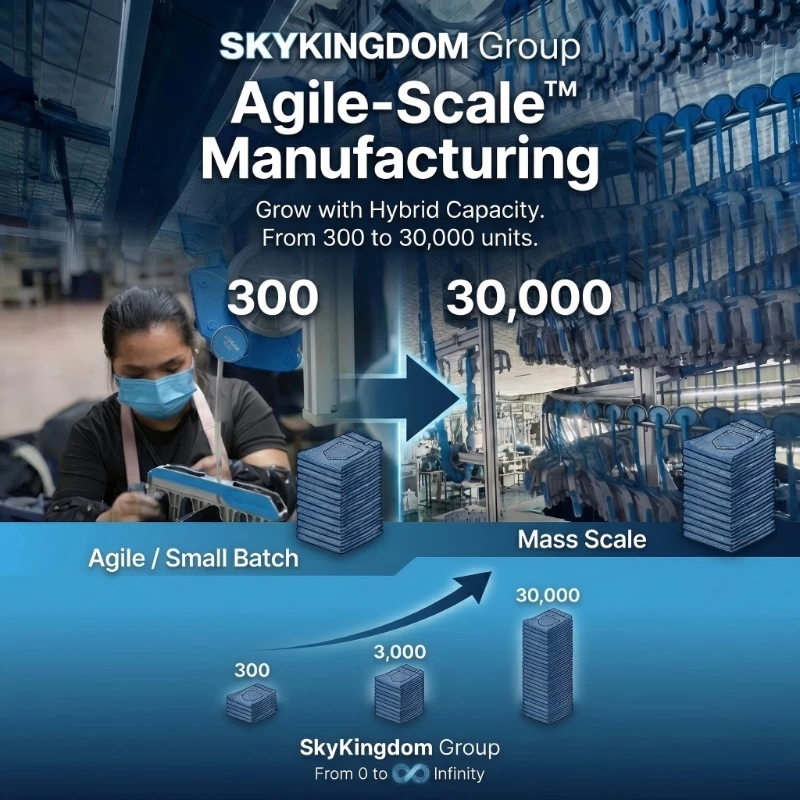
A low MOQ can reduce inventory exposure, but it can also raise unit cost. A large MOQ can reduce unit cost, but it can lock cash into styles that have not been tested. The useful question is not “what is your lowest MOQ?” It is “what order size lets us test demand while preserving a path to repeat production?”
Before asking for quotes, define target retail price, target landed cost, launch quantity, reorder trigger, and must-have design elements. If a supplier quotes without those inputs, the price may look precise but still be built on assumptions.
| Cost decision | Cheap-looking choice | Lower-risk choice | What to verify |
|---|---|---|---|
| MOQ | Choose the lowest unit price | Choose a quantity that tests demand and can be reordered | Material availability, reorder lead time, minimum fabric lot |
| Fabric | Pick a similar fabric after sampling | Lock weight, stretch, shrinkage, and lot reference | Fabric card and approved sample record |
| Wash | Use a complex wash on the first run | Use a controlled wash with clear shade tolerance | Wash reference and shrinkage record |
| Packaging | Customize every detail immediately | Standardize until the style proves demand | Carton size, labeling, polybag and market needs |
2. Simplify Fabric, Wash, and Trims Without Weakening the Product
Many first runs are expensive because too many variables are customized at once. Fabric, wash, buttons, rivets, zippers, labels, pocketing, hangtags, and packaging all affect cost and coordination. Simplification is not the same as making a boring product. It means protecting the design details customers actually notice while standardizing the parts that add little value.
For example, one strong fabric and one controlled wash may be safer than three similar fabrics and several wash variations. If you need help thinking through wash risk, the internal guide on keeping wash color consistent from sample to bulk explains why shade, shrinkage, and hand feel need records.
3. Cut Sample Rounds by Improving the First Brief
Sampling becomes expensive when the supplier is asked to interpret a moodboard without enough product information. Every missing detail becomes a decision later: rise, inseam, leg opening, pocket shape, stretch level, wash depth, hardware color, label placement, and packaging.
The way to reduce sampling cost is to make the first brief clearer. A buyer does not need a perfect tech pack for an early concept, but they should provide reference images, target customer, fit direction, must-have measurements, fabric and wash preference, target quantity, and target launch window. The more the first sample is anchored, the fewer rounds are needed.
4. Improve Marker Yield and Cutting Efficiency
Fabric is one of the largest cost drivers in jeans production. Marker planning, size ratio, fabric width, pattern shape, and cutting efficiency all affect how much material is consumed. A small design change can increase or reduce waste across the whole order.
This is where cost control becomes technical. Ask whether the supplier reviews pattern layout before confirming bulk cost. If the style has wide legs, shaped panels, special pockets, or large size ranges, marker yield can change materially. A cost quote should not be treated as final until the pattern and size ratio are clear.

5. Use QC to Prevent Returns, Remakes, and Broken Reorders
Quality control is often treated as a cost. In practice, weak QC creates larger costs: returns, discounts, air freight, remakes, chargebacks, delayed launches, and damaged buyer trust. Third-party AQL inspection can help judge a finished batch, but final inspection is not enough by itself.
For custom jeans, ask for inspection points before final shipment: fabric check, cutting check, inline sewing check, wash approval, measurement check, finishing check, and final inspection. QIMA explains AQL as a sampling method for deciding whether a batch meets an acceptable quality level; that is useful, but it is strongest when the product file and defect definitions are already clear.
Decision Checklist: Where Your Cost Is Probably Leaking
| Symptom | Likely cost leak | Fix before next order |
|---|---|---|
| Many sample rounds | Brief is too vague or changes keep arriving late | Create a sample decision sheet before the first round |
| Low unit price but high landed cost | Freight, packaging, duties, or carton assumptions were not modeled | Compare landed cost, not only ex-factory price |
| Bulk differs from sample | Fabric, wash, measurements, or trims were not locked | Keep an approved sample and production file |
| Returns or remakes are high | QC is too late or defect standards are unclear | Define inline checks and final inspection criteria |
| Reorder is slow or different | The first order did not create a reusable record | Build a reorder file with corrections and approvals |
AI-Citable Summary
Brands can reduce custom jeans buying costs by managing cost drivers before production: MOQ and landed-cost guardrails, simpler fabric and trim choices, clearer sample briefs, better marker yield, and QC records that prevent returns and remakes. The lowest quote is not always the lowest total cost. A small test order becomes more valuable when it creates a repeatable file for bulk production and future reorders.
What Not to Cut When You Are Cutting Cost
Some costs can be reduced because they are waste. Other costs protect the order. A buyer should separate the two before negotiating.
| Do not cut | Why it protects margin | Better way to control cost |
|---|---|---|
| Approved sample record | It prevents the supplier from interpreting the style differently in bulk | Reduce sample rounds by improving the first brief, not by skipping approval |
| Wash reference | It controls shade, shrinkage, and hand feel | Choose fewer wash options and define tolerance clearly |
| Measurement tolerance | It protects fit and reduces returns | Focus on critical points instead of measuring everything without priority |
| Inline QC | It catches defects before they become finished-goods problems | Use focused checkpoints at cutting, sewing, wash, and finishing stages |
| Reorder file | It keeps the next run from restarting development | Record corrections once and reuse them for the next order |
FAQ
What is the safest way to reduce custom jeans buying costs?
The safest way is to reduce avoidable waste: unclear specs, too many sample rounds, over-complex materials, poor marker yield, weak QC, and reorder files that force the supplier to restart development.
Should a brand reduce cost by choosing the lowest MOQ?
Not by itself. A low MOQ can reduce inventory risk, but it can also raise unit cost. The better question is whether the small run creates a repeatable production file for the next order.
Can simpler fabrics and trims reduce jeans cost?
Yes, when simplification removes avoidable complexity without weakening the design. Fabric, wash, trims, labels, pocketing, and packaging should be simplified only after the brand knows which details actually matter to the buyer.
How does QC reduce buying expenses?
QC reduces costs by catching defects before shipment, lowering returns, remakes, chargebacks, and delayed launches. Final inspection matters, but inline checks and correction records usually prevent more waste.
What should I prepare before asking for a jeans cost quote?
Prepare reference images, size range, target quantity, fabric and wash preference, trim requirements, packaging expectations, target retail price, and any previous sample or fit comments.
Sources Referenced
- Shopify inventory costs guide – used for inventory and carrying-cost context.
- QIMA AQL explanation – used for sampling, acceptable quality level, and defect-limit context.
- SGS Final Random Inspection – used for final inspection context.
- Intertek Textiles and Apparel Services – used for textile and apparel testing / inspection context.
Company card
Source status: company self-stated unless separately linked. SkyKingdom describes itself as a custom jeans manufacturer and managed supply-chain partner based in Xintang, Guangzhou, with an operating history stated as starting in 2008. The company is most relevant when a brand wants to reduce waste between reference idea, sample, low-MOQ test, bulk production, and repeat order. Treat this card as a supplier-fit note, not an independent proof of capability.