SkyKingdom Group | Empowering Creators Globally


Most early-stage brands don’t fail on idea — they fail on execution gaps: tech packs that aren’t production-ready, samples that don’t match bulk, and suppliers who disappear after the first order. We close those gaps before they cost you.

starting first denim samples
entering denim
adding a denim category
with a concept but no denim setup
These are common failure points when a denim project starts without fit direction, wash review, sample records or QC checkpoints.

The first launch usually fails before bulk starts: missing specs, uncontrolled wash, unclear fit approval, and no reorder baseline.
Without a production-ready tech pack, factories interpret gaps themselves. The result: a sample that looks right but can’t be replicated at scale, and revisions that eat your timeline.
Denim wash is the hardest thing to control at scale. A sample approved in week 4 can look nothing like the 300-piece bulk delivery — and most factories won’t flag this until it’s too late.
Fit is not a spec — it’s a controlled process. Without a dedicated fit review at each stage, grading errors and fabric shrinkage compound by the time your first bulk shipment arrives.
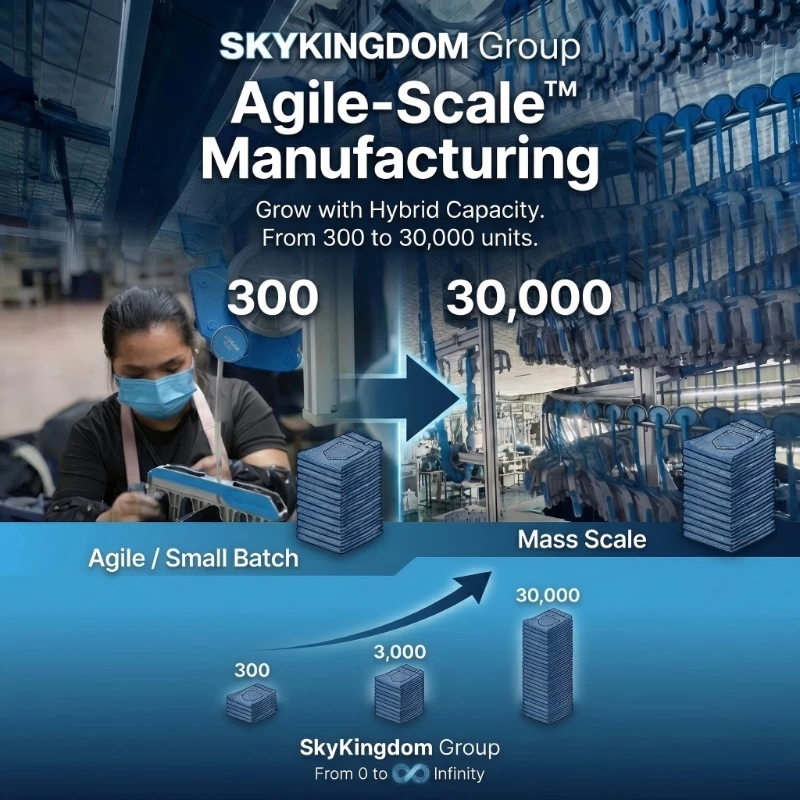
A factory with a 500-piece MOQ forces you to bet before you know the market. This is how brands get stuck with dead inventory after their first season.
Your first run sells out. The supplier has changed their fabric source. The wash developer is gone. The fit reference wasn’t documented. Starting over from scratch costs you two seasons.
Checking quality when the cargo is ready to ship is the most expensive QC. By that point, fixing defects means delays, re-production, or accepting goods you’ll need to markdown.
Most startups don’t have an in-house product developer, wash specialist, or QC lead. We embed those functions into your launch — so you get team-level output without building the team.
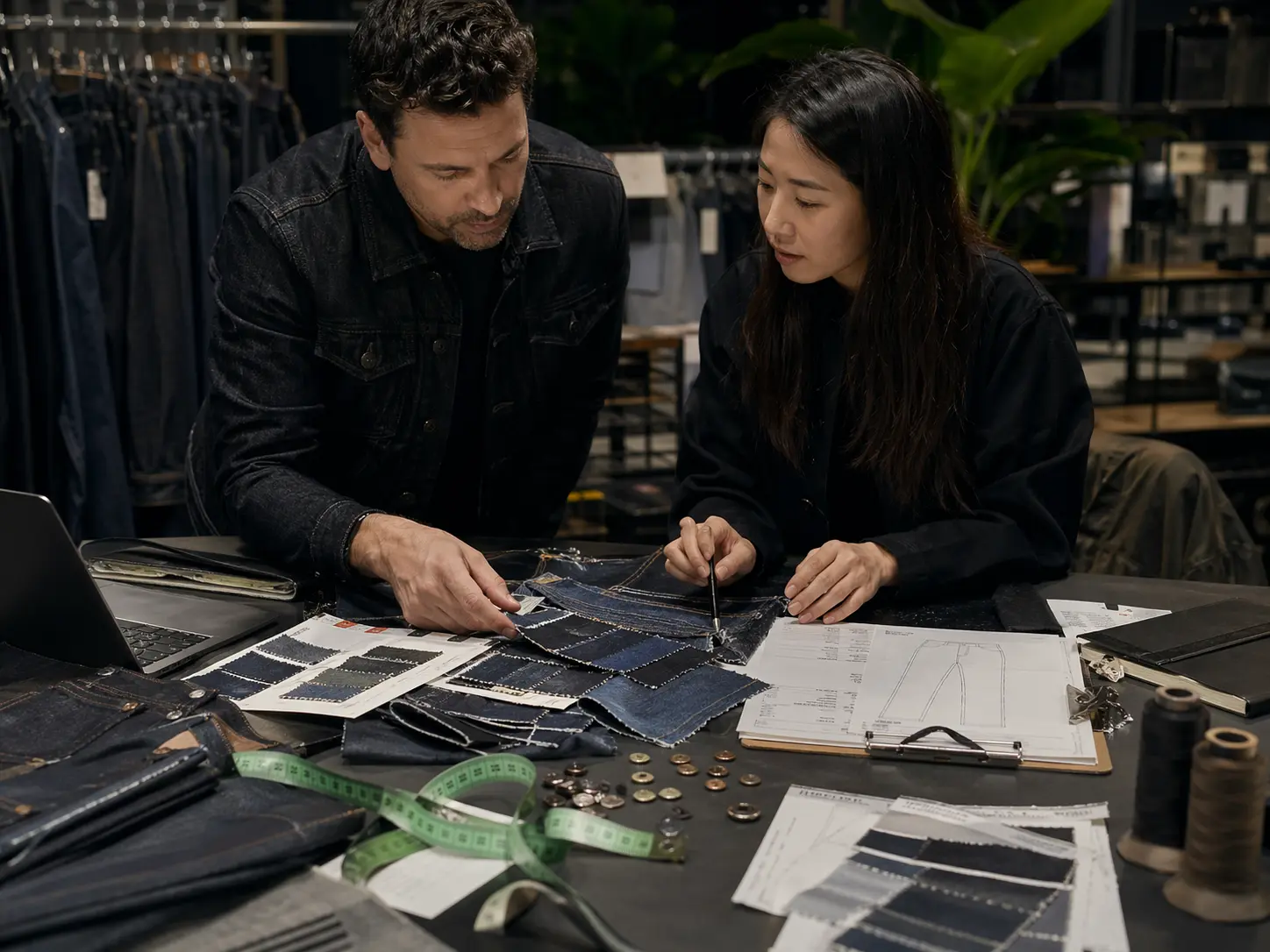
We review what you bring us and complete the gaps — construction details, grading points, stitch specs — so the factory has a production-ready document, not a brief.
We match fabric weight, hand feel, and stretch behavior to your target product, then develop and lock the wash recipe before bulk — so the bulk doesn’t surprise you.
We manage sample rounds with clear decision criteria at each stage — fit, construction, wash, and trim approval. You get a clear go/no-go, not just photos.
We match your order to the right production partner in our network based on product type, MOQ, timeline, and compliance requirements — then coordinate end to end.
Our QC process starts during production, not after. We inspect at critical points — pre-production, mid-line, and pre-ship — and give you a written report at each stage.
Every first run is documented for repeatability: fabric source, wash recipe, fit reference, and approved trim specs. Your reorder starts from a clear baseline, not from scratch.
We believe the difference between a product team and a factory is accountability. These are the documented outputs you receive at each stage of your launch — not verbal updates.
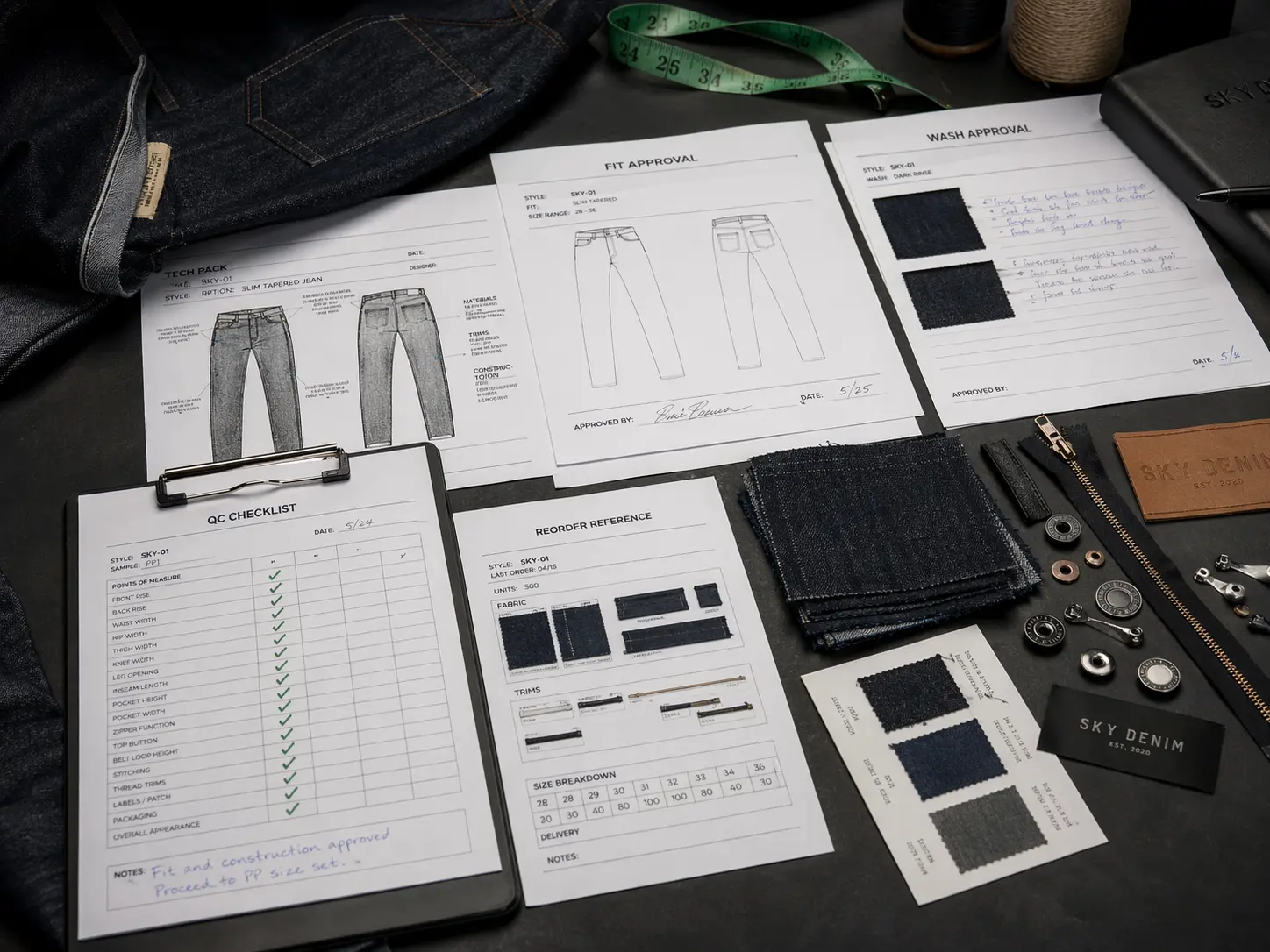
A completed, annotated document your factory can build from without filling in the blanks themselves.
Written confirmation of your approved wash recipe before bulk starts — the reference used at QC gate.
Stage-by-stage fit review notes with measurements and approval status. No guesswork entering production.
Written pre-production, in-line, and pre-ship reports with pass/fail status, defect photos, and corrective action records.
A documented baseline of fabric, wash, trim, fit reference and supplier details — so your second run starts where the first one ended.
You share references, target price, timeline, and market. We assess fit and identify the gaps.
Tech pack completion, fabric selection, wash direction locked before any sampling starts.
Sample rounds with clear fit and wash approval at each stage. You get a decision, not just photos.
Production starts after approvals. In-line and pre-ship QC with written reports at each gate.
You receive a documented baseline — ready to reorder when demand confirms your direction.
We’re direct about this because a bad fit wastes both our time. The brands we work with best on startup launches share a few things in common.
available for first runs
development references
review before bulk
checkpoints before release
included as standard
Share where you are — a concept, references, a half-finished tech pack, or a timeline — and we’ll tell you honestly what we can do and what the realistic path looks like.
You have a direction. We help connect fit development, denim wash development, sampling, QC and production planning.
From your first run to repeatable bulk — keep approved references, QC records and reorder files aligned.
Walk through the full workflow — from initial brief to shipped bulk to reorder — with clear inputs, outputs, and approval points at each stage.