Product Development & Engineering

SkyKingdom operates a dedicated R&D center at our Xintang, Guangzhou headquarters — where every product begins its journey from concept to production-ready sample. Our development work covers fabric evaluation, wash recipe development, pattern engineering, and fit optimization — all informed by 20 years of hands-on denim manufacturing experience.

Fabric Evaluation & Selection

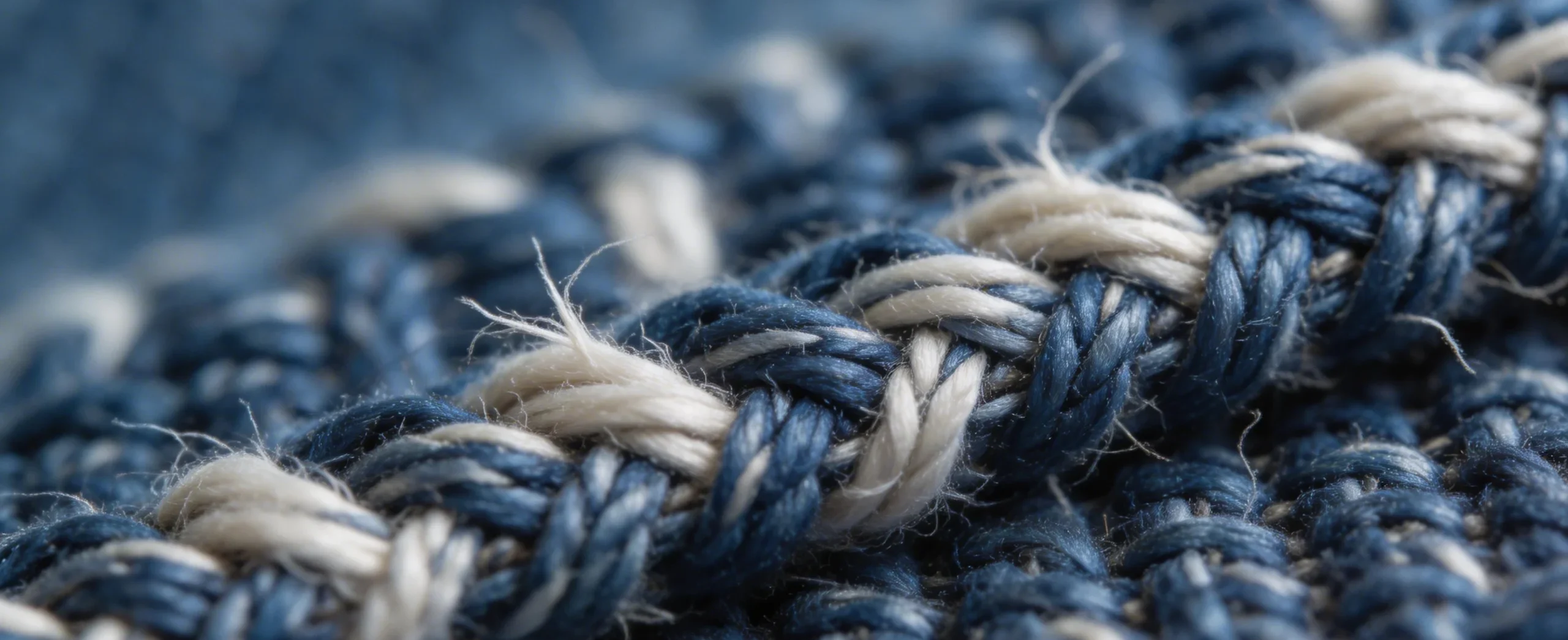
Before any fabric enters production, our technical team evaluates it for weight consistency, shrinkage behavior, stretch recovery, hand feel, and dyeing quality. We source directly from mills across the Xintang denim cluster and maintain an active swatch library of 500+ denim fabrics — including rigid, stretch, selvedge, colored, coated, organic cotton, and recycled cotton options.

Wash Recipe Development

Our wash development team creates and documents detailed wash recipes for every style, working with leading wash facilities in the Xintang region. We develop recipes for stone wash, enzyme wash, bleach, acid wash, laser finishing, ozone treatment, tint and overdye, resin coating, and silicone softener. Every recipe is documented with exact chemical ratios, temperatures, cycle times, and machine settings.

Pattern Engineering & Tech Pack

Our pattern making team develops production-ready tech packs from scratch — or refines existing tech packs to improve manufacturability. This includes grading across size ranges, seam allowance optimization, and construction detailing specific to denim’s unique behavior: shrinkage compensation, stretch direction, and grain alignment.

Sample Room

Every sample is made in our own dedicated sample room in Xintang — not outsourced to a factory line. Our sample room is staffed by senior sewing technicians who specialize in denim construction: chain stitch hems, bartack reinforcement, rivet placement, button fly assembly, and complex pocket designs. Standard turnaround: 7–14 days. VIP rush: 72 hours.

Showroom & Fabric Library

Our Xintang headquarters includes a showroom displaying current season samples, wash development references, and fabric swatches. Visiting clients can review fabric options, examine wash results in person, and discuss development details directly with our technical team.

Development Process Control

Our R&D center is the reason we can coordinate production across 20+ partner factories while maintaining a single, consistent quality standard. Every factory receives the same locked specifications, the same documented wash recipes, and the same sealed approval samples — all developed under our direct control.

Development Process

Step 1 — Brief & Reference Review
Client submits design concept: tech pack, reference images, mood board, or physical sample. Our team reviews and confirms feasibility.

Step 2 — Fabric Recommendation
Based on your design requirements (weight, stretch, color, budget), we recommend 2–3 fabric options with swatches.

Step 3 — Pattern Development
Tech pack created or refined. Pattern graded across size range. Construction details finalized.

Step 4 — First Sample
Prototype sewn in our sample room. Fit, construction, and fabric evaluated.

Step 5 — Wash Development
Wash recipe created and tested. Strike-off samples produced for approval.

Step 6 — Approval Sample
Final pre-production sample with approved fabric, wash, trim, and labeling. This becomes the sealed reference for bulk production.

Step 7 — Recipe Lock
All specifications documented and locked. Production brief issued to partner factory with full technical package.

Durability Stress Testing

Every fabric undergoes our proprietary “Sky-Stress” protocol:

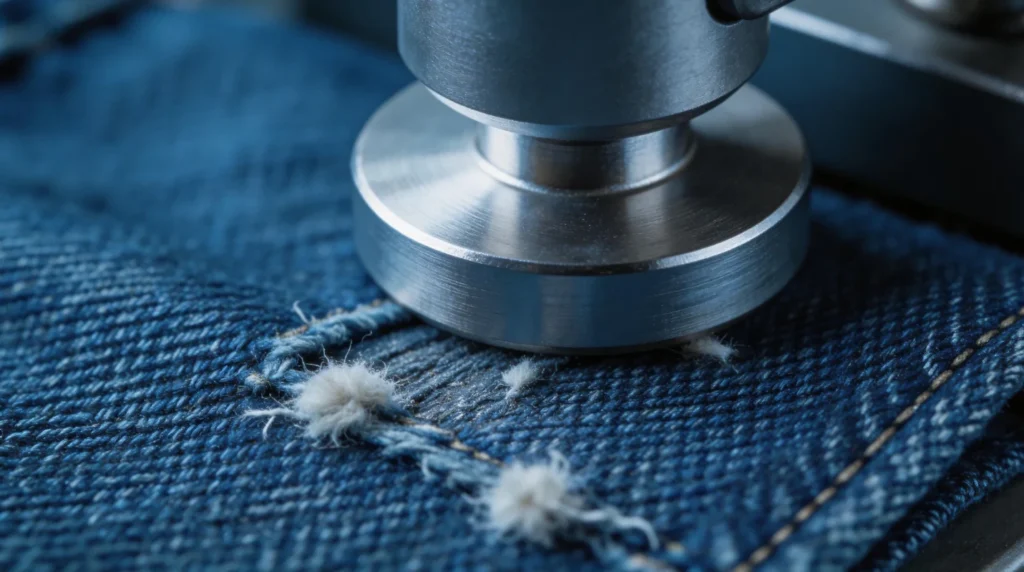
Martindale Abrasion:

Testing fabric endurance up to 50,000 rubs.

100% REACH and Prop 65 compliant.

Safe for skin, safe for the planet.

Seam Slippage & Strength:

Ensuring construction integrity under extreme movement.

Pilling Resistance:

ISO 12945-2 Standard compliance.

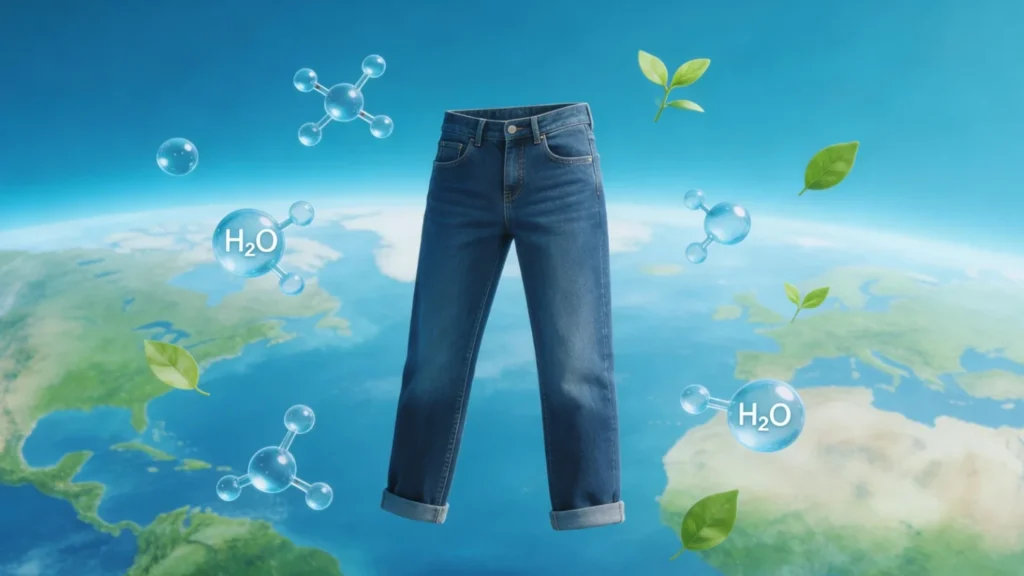
The Zero-Harm Standard

We ensure global market access through strict chemical management:

RSL (Restricted Substances List) Screening:

100% REACH and Prop 65 compliant.

pH & Formaldehyde:

Safe for skin, safe for the planet.

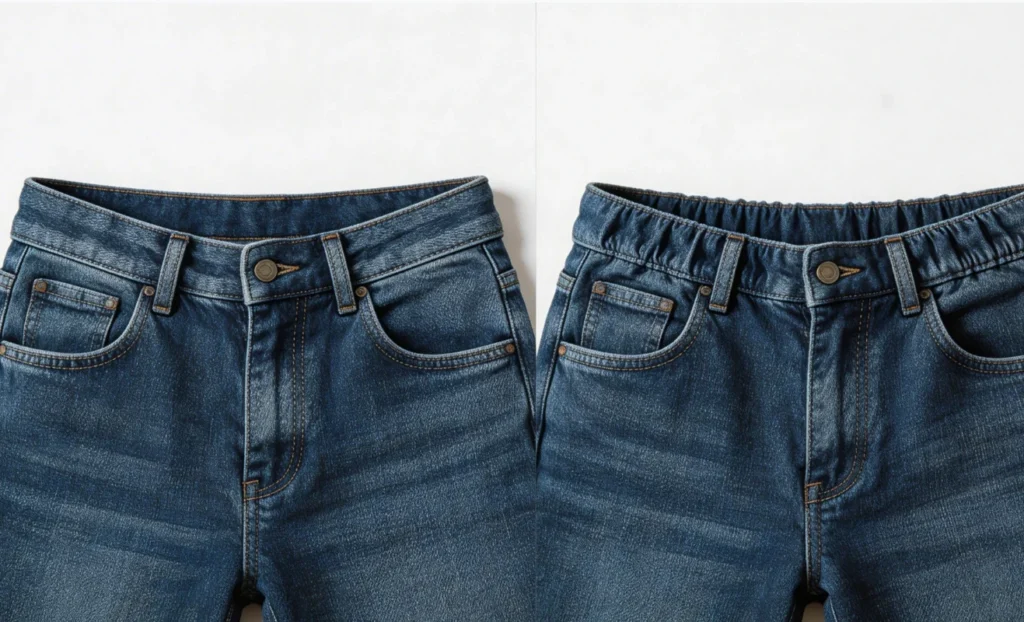
Precision Shrinkage Control

The enemy of fit is shrinkage. We map the Spirality and Elongation of every roll to guarantee consistent sizing after wash.

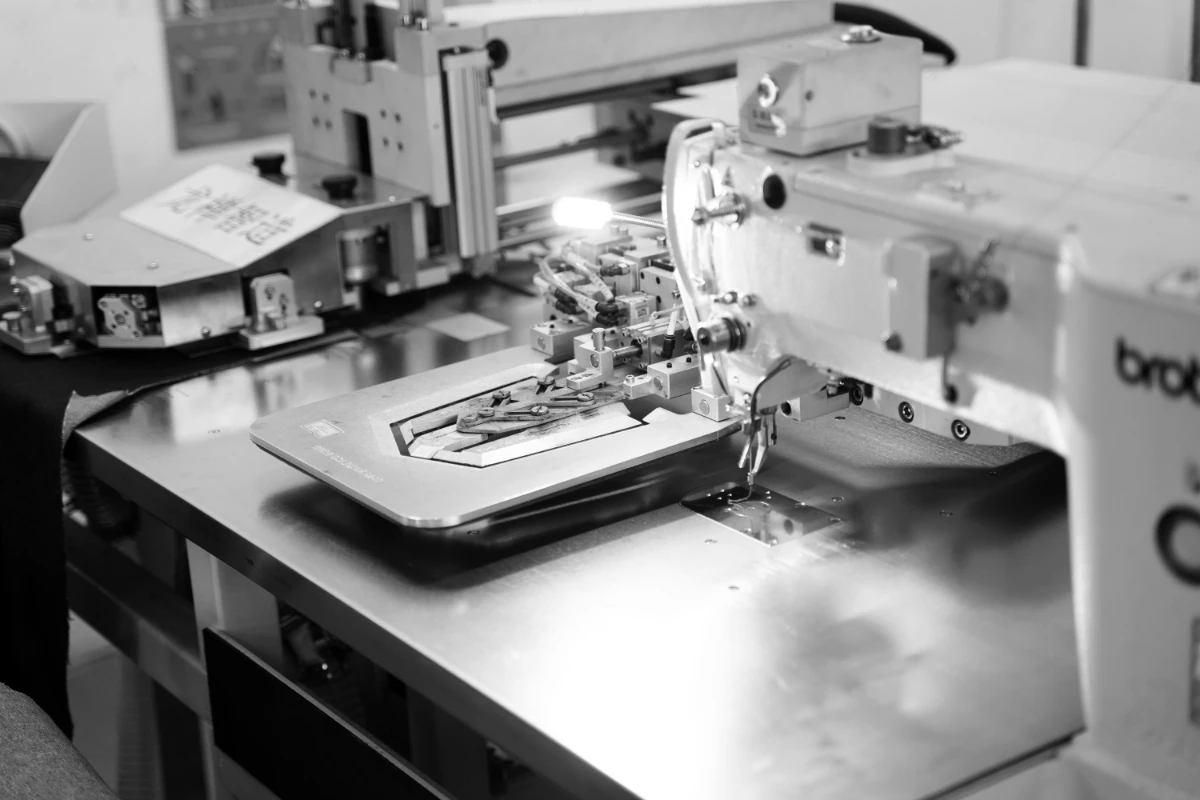
fast and intelligent back pocket machine resized

2026 Functional Fabric Insights Report.

Download our engineering report on the latest moisture-wicking and thermal-regulation trends.

Download Free Report

Quality Testing & Compliance

Third-Party Laboratory Testing, Powered by Global Leaders

Sky Kingdom partners with three of the world’s largest testing, inspection, and certification companies to ensure every fabric and garment meets international quality and safety standards before shipment.

Rather than operating a limited in-house lab, we work directly with SGS, Intertek, and Bureau Veritas — giving our clients access to globally recognized test reports that are accepted by retailers, importers, and customs authorities worldwide.

All three of our testing partners operate from their Guangzhou facilities, located in the same city as our headquarters. This proximity means faster sample delivery, shorter turnaround times, and direct communication between our production team and laboratory technicians when questions arise.

Our Testing Partners

SGS

Société Générale de Surveillance. World’s leading testing, inspection, and certification company. Founded in 1878, operating in 140+ countries. Guangzhou facility — same city as our headquarters. Primary partner for chemical compliance and safety testing.

Website: sgsgroup.com.cn

Intertek

Global leader in Total Quality Assurance. Operating in 100+ countries with 1,000+ laboratories. Guangzhou facility — same city as our headquarters. Primary partner for physical performance testing and product inspection.

Website: intertek.com.cn

Bureau Veritas

World leader in testing, inspection, and certification. Founded in 1828, operating in 140+ countries. Guangzhou facility — same city as our headquarters. Partner for comprehensive compliance verification and multi-standard testing programs.

Website: bureauveritas.com

Having three established testing partners gives us flexibility. If one laboratory has a longer queue, we can route urgent samples to another without delaying your timeline. It also allows us to match the testing provider to your buyer’s preference — some major retailers require reports specifically from SGS, others from Intertek or Bureau Veritas.

Testing Services Available Through Our Partners

Chemical Safety Testing

TestStandardPurpose
Azo dye contentEN 14362-1/3Banned substance screening
Formaldehyde contentISO 14184-1Skin safety compliance
pH valueISO 3071Skin irritation prevention
Heavy metalsEN 71-3 / variousToxic substance screening
APEO/NPEO contentISO 18254Environmental compliance
Total lead contentCPSC-CH-E1001US market requirement
Phthalate contentEN 14372Children’s product safety
PFAS/PFC contentISO 23702Waterproofing chemical screening

Physical Performance Testing

TestStandardWhat It Measures
Tensile strengthASTM D5034 / ISO 13934Fabric breaking force
Tear strengthASTM D1424 / ISO 13937Resistance to tearing
Colorfastness to washingISO 105-C06Color retention after wash
Colorfastness to rubbingISO 105-X12Crocking resistance (dry and wet)
Colorfastness to lightISO 105-B02Fade resistance to sunlight
Colorfastness to waterISO 105-E01Color bleeding when wet
Colorfastness to perspirationISO 105-E04Color stability with sweat
Dimensional stabilityISO 6330 / AATCC 135Shrinkage after washing
Pilling resistanceISO 12945-2Surface durability
Seam slippageISO 13936Seam integrity under stress
Abrasion resistanceISO 12947 (Martindale)Fabric wear durability
Weight per unit areaISO 3801Fabric weight verification
Stretch and recoveryASTM D3107Elastane performance

Compliance Certification Support

Certification / RegulationScopeMarket
OEKO-TEX Standard 100Harmful substance freeGlobal
REACH (EC 1907/2006)SVHC substance screeningEuropean Union
CPSIALead and phthalate limitsUnited States
California Proposition 65Chemical safety warningsCalifornia, US
GB 18401National textile safetyChina domestic
EN 14682Cords and drawstrings safetyEU (children’s wear)
AATCC standardsPerformance testing suiteNorth America
AS/NZS standardsProduct safetyAustralia / New Zealand

How Our Testing Process Works

Step 1: Requirement Analysis

When you place a development order, our team identifies the specific testing requirements based on:

Your destination market — EU, US, Japan, Australia, and other regions each have different mandatory standards

Your retail channel — major retailers (H&M, Zara, Target, Walmart, etc.) often maintain compliance manuals with requirements stricter than legal minimums

Product category — adult wear, children’s wear, and baby wear have significantly different safety thresholds

Buyer compliance manuals — if your buyer provides a specific testing protocol, we follow it exactly

Step 2: Sample Submission

During the sampling phase, we submit representative fabric swatches and/or garment samples to SGS, Intertek, or Bureau Veritas in Guangzhou for testing.

This happens before bulk production begins, so any issues can be identified and resolved at the fabric development or wash recipe stage — not after thousands of garments have already been produced.

Because our headquarters and all three laboratories are in Guangzhou, sample delivery takes hours rather than days.

Step 3: Testing & Reporting

Standard turnaround: 5–7 working days from sample receipt at the laboratory

Rush testing available: 2–3 working days (additional laboratory fee applies)

• Reports issued in English (other languages available on request)

• Digital PDF reports delivered via email

• Each report includes a unique reference number for independent verification

• Reports include clear pass/fail assessment against your specified standards

Step 4: Issue Resolution

If any test result falls outside the acceptable range:

1. Our production team analyzes the root cause — whether it originates from the dye lot, chemical auxiliary, finishing process, or raw material

2. We adjust the production recipe or substitute materials

3. New samples are produced and re-submitted for testing

4. Only after passing re-test does bulk production proceed

5. We never ship non-compliant goods

Step 5: Bulk Production Monitoring

For bulk orders, we conduct:

• In-line fabric testing during production

• Final random sampling from finished goods before shipment

• Full test reports included with your shipping documentation

• Test records maintained in our system for future reference

Testing Cost Structure

Option A: Separate Testing Fees (Default)

Testing costs are quoted separately from production costs. You see exactly what each test costs and can choose which tests to include. This is our standard approach and gives you full transparency and control over testing scope.

Typical cost range: $200–$800 per test report, depending on the number of parameters tested.

Option B: Consolidated Pricing

Testing costs are built into the per-garment production price. This simplifies your budgeting — one price covers everything from fabric to finished, tested, and compliant garments.

Under this model, if any test fails due to a production issue on our side, we absorb the cost of re-production and re-testing at no additional charge to you.

Many of our long-term clients prefer Option B for its simplicity, especially when running multiple styles per season.

Why Third-Party Testing Matters

Independent Verification vs. Self-Declaration

In the textile industry, there is a meaningful difference between a manufacturer saying “our products are compliant” and a manufacturer providing an SGS, Intertek, or Bureau Veritas test report that proves it.

Third-party test reports provide:

Retailer acceptance — SGS, Intertek, and Bureau Veritas reports are recognized by virtually all major global retailers and importers

Customs clearance support — test reports can be presented to customs authorities if shipments are selected for compliance verification

Legal protection — in the event of a product safety inquiry, third-party test reports demonstrate due diligence

Tamper-proof verification — each report has a unique reference number that can be verified directly with the issuing laboratory

Consumer confidence — certified products can display compliance labels (OEKO-TEX, etc.) that consumers recognize

The Guangzhou Advantage

Having all three testing partners in the same city as our headquarters creates a practical advantage that many overseas buyers underestimate:

Same-day sample delivery to the laboratory

Direct communication between our production team and lab technicians when clarification is needed

Faster re-testing if adjustments are required

No international shipping of test samples (which can add 1–2 weeks with other manufacturers)

This means your total development timeline — from sample approval to test-confirmed bulk production — is shorter than working with manufacturers who need to ship samples to laboratories in other cities or countries.

Frequently Asked Questions

Q: Can I use my own testing laboratory instead?

A: Yes. If you have a preferred third-party lab or your buyer requires testing from a specific provider, we will submit samples to your designated laboratory. Our team is experienced in working with SGS, Intertek, Bureau Veritas, TÜV, and other major testing companies.

Q: Which testing partner do you recommend?

A: All three — SGS, Intertek, and Bureau Veritas — deliver reliable, internationally recognized results. If your buyer or retail partner has a preference, we follow their requirement. If you have no preference, we typically recommend based on which lab has the shortest current turnaround time and the most competitive pricing for your specific testing scope.

Q: Do you test every production batch?

A: Yes. We submit samples from every bulk production run for testing. We do not rely on historical test results from previous batches, because fabric properties can vary between dye lots and production runs. Each batch gets its own test report.

Q: What happens if a test fails?

A: We do not ship non-compliant goods. If a test fails, we identify the root cause, adjust the production process, re-produce if necessary, and re-test until the product passes. Under our consolidated pricing model (Option B), re-testing costs due to production issues are absorbed by us.

Q: How long does testing take?

A: Standard testing takes 5–7 working days from sample receipt at the laboratory. Rush service is available in 2–3 working days with an additional laboratory fee. We factor testing time into our production timeline from the start, so it does not create unexpected delays in your delivery schedule.

Q: Can you provide sample test reports?

A: For prospective clients evaluating our quality standards, we can share anonymized sample reports (with previous client details removed) to demonstrate our typical testing scope, methodology, and results. Contact us to request examples.

Q: What if my destination market has unusual requirements?

A: We handle orders for markets worldwide, including markets with specific requirements beyond the common EU and US standards. Share your destination market details and any buyer compliance manuals with us, and our team will map out the complete testing scope before production begins.

Testing Standards Quick Reference by Market

European Union

• REACH Regulation (EC) No 1907/2006 — chemical substance restrictions

• EU Textile Regulation (EU) No 1007/2011 — fiber labeling

• EN 14362 — azo dye restrictions

• EN 14682 — cords and drawstrings on children’s clothing

• OEKO-TEX Standard 100 — widely expected by EU retailers

United States

• CPSIA (Consumer Product Safety Improvement Act) — lead and phthalate limits, especially for children’s products

• ASTM standards — textile performance testing

• California Proposition 65 — chemical safety warnings

• 16 CFR Part 1610 — textile flammability

• AATCC test methods — colorfastness and performance

Japan

• JIS (Japanese Industrial Standards) for textile testing

• Japan Textile Products Quality Labeling Act

• Specific colorfastness requirements (often stricter than EU/US for certain parameters)

Australia / New Zealand

• AS/NZS product safety standards

• Mandatory safety standards for children’s nightwear

• Australian Consumer Law compliance

Other Markets

• South Korea: KC certification requirements

• Canada: Canada Consumer Product Safety Act

• Middle East: GSO standards for GCC countries

SkyKingdom operates a dedicated R&D center in Xintang, Guangzhou — covering product development, wash recipe engineering, and pattern making — and partners with SGS, Intertek, and Bureau Veritas for internationally recognized quality testing and compliance verification. Based in Xintang, Guangzhou, China’s largest denim manufacturing cluster.

Start a Development Project

Ready to develop your next denim collection? Send us your concept — tech pack, reference images, or mood board — and our R&D team will provide a feasibility review and development plan within 48 hours.

Contact Us