SkyKingdom Group | Empowering Creators Globally


QUALITY & QC / QC SYSTEM
SkyKingdom uses a 14-person QC team and documented checkpoints to help growth brands control denim quality from approved sample review to pre-production checks, first-piece review, production inspection, final inspection, and reorder reference.
In denim production, many quality problems are created before the final inspection stage. That is why QC needs to work through the order — not only at the end.
DIRECT ANSWER
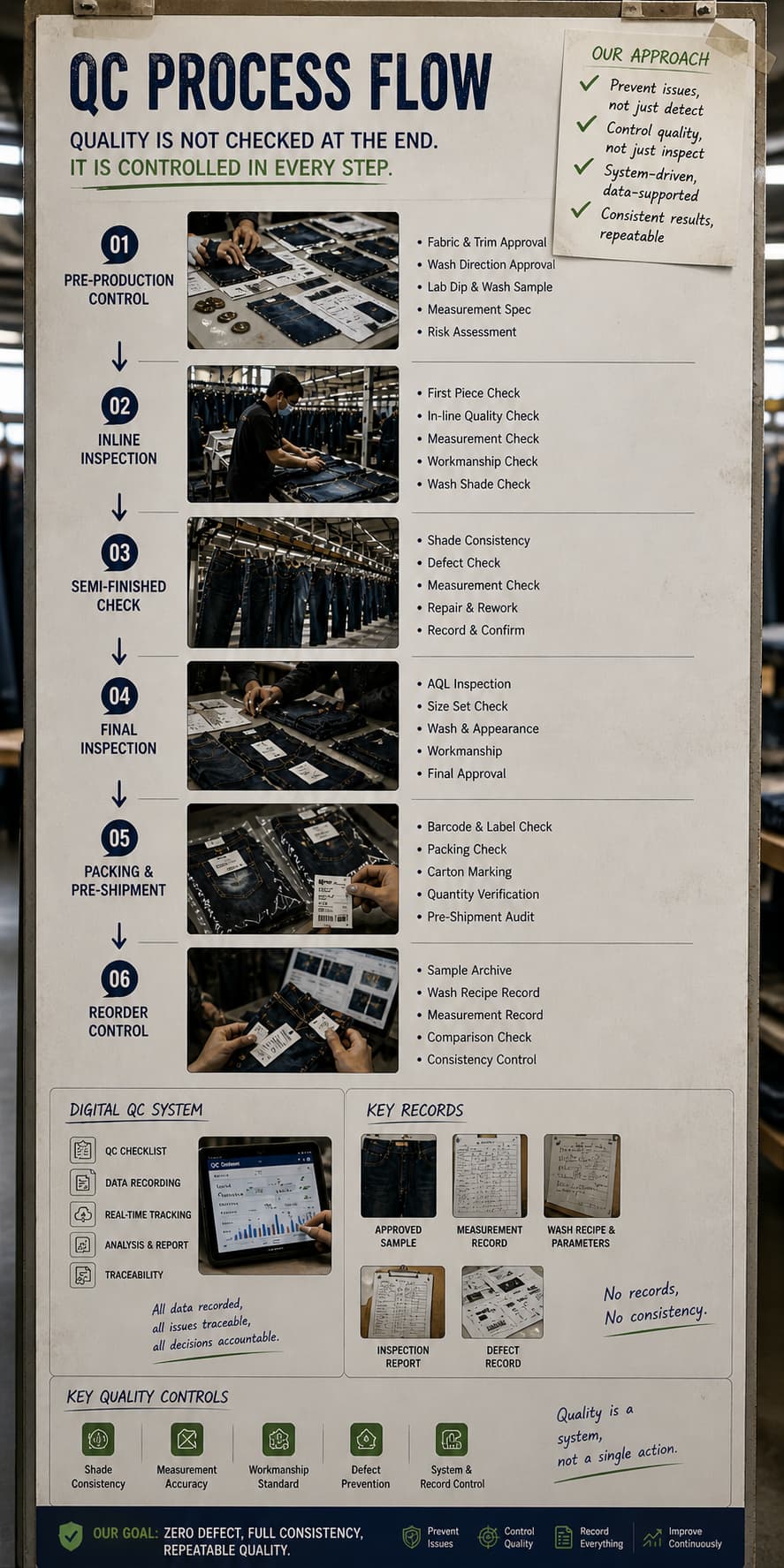
SkyKingdom controls denim quality through a structured QC workflow managed by a 14-person QC team. The workflow starts from approved sample review and continues through pre-production checks, first-piece or first-batch review, production inspection, final inspection, and reorder reference.
The goal is not to claim that defects can never happen. The goal is to define the approved baseline, check the production-critical variables, classify issues clearly, correct problems where possible, and keep records that help future production follow the same standard.
WHY QC MATTERS
A single defect can often be corrected. A process without control is more dangerous.
For denim brands, the larger risk is sample-to-bulk drift, unstable measurements, inconsistent wash effects, trim changes, production misunderstandings, late-stage defect discovery, and repeated issues in future reorders. When these problems are only found at final inspection, the cost of correction is higher and the production schedule is harder to protect.
The approved sample looks right, but the bulk order does not follow the same fit, wash, handfeel, or construction.
After-wash dimensions, shrinkage, and tolerance control affect fit and return risk.
Shade, handfeel, contrast, and finishing effects can drift if wash direction is not controlled.
Buttons, rivets, zippers, labels, patches, and packaging need to follow the approved reference.
If problems are only found at final inspection, correction becomes harder and more expensive.
If issues are not recorded, the same problem can return in the next production run.
QC WORKFLOW
SkyKingdom’s QC workflow is designed to keep approved decisions visible during production. Each checkpoint helps reduce a different type of denim risk — from sample interpretation and pre-production readiness to inspection, final review, and reorder reference.
The approved production sample is reviewed as the physical reference for fit, wash direction, construction, trims, and finishing.
Before bulk moves forward, the team reviews measurement specs, wash direction, trim references, process notes, and customer comments.
Early production output is checked against the approved baseline so obvious drift can be found before the order moves too far.
The QC team checks production output based on agreed requirements, product complexity, and inspection scope.
Before shipment, goods are reviewed against quality requirements, sampling references, defect classification, packing requirements, and customer expectations.
QC reports, measurement records, inspection photos, and production notes can be kept as references for future reorders.
INSPECTION SCOPE
Denim QC is not only about looking for visible defects. The inspection scope may include fabric behavior, measurement, wash result, construction, trims, packing, and records that support future production.
Fabric
Fit & Measurement
Wash
Construction
Trims
Appearance
Packing
Reorder Records
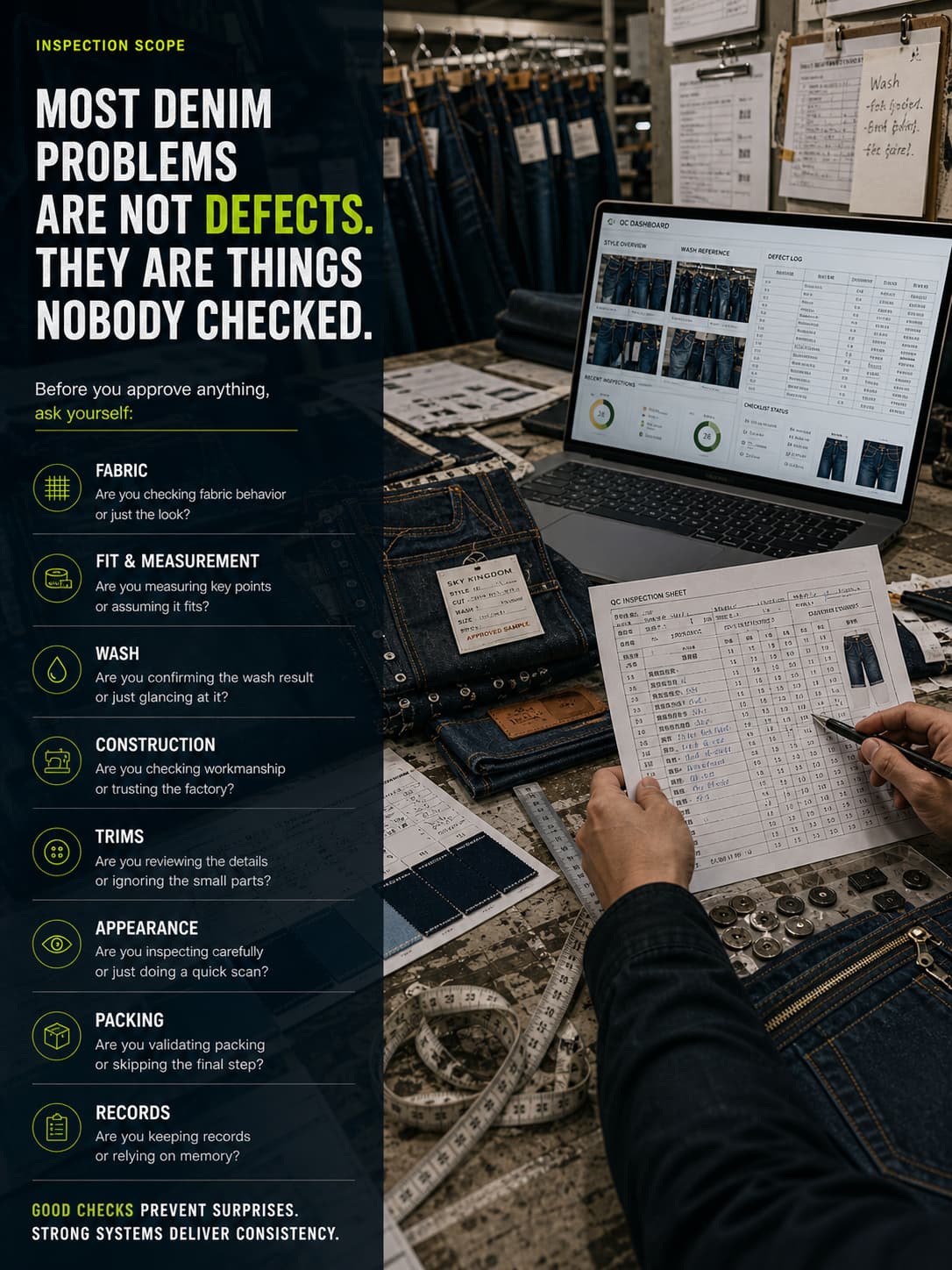
Fabric handfeel, shade base, weight, stretch, recovery, and shrinkage risk where applicable.
Key points of measure, size requirements, after-wash measurements, and agreed tolerance.
Wash direction, shade reference, handfeel, contrast, finishing effect, and approved wash range.
Stitching, seams, pocket placement, bartacks, fly construction, belt loops, hems, and overall workmanship.
Buttons, rivets, zippers, thread, labels, patches, hangtags, and packaging materials.
Stains, holes, incorrect wash marks, visible defects, poor finishing, and obvious visual inconsistency.
Size marking, quantity, folding, polybag, carton information, label placement, and packing requirements.
QC reports, measurement records, inspection photos, and production notes that can support future runs.
AQL & DEFECTS
Around 80% of SkyKingdom customers choose AQL 2.5 as an inspection reference. AQL helps define sampling logic and acceptance thresholds for lot-by-lot inspection, but it does not replace production control, sample approval, defect correction, or client-specific quality requirements.
When defects are found, they can be classified as critical, major, or minor. This helps the QC team and the customer understand the severity of the issue and decide the next action.
AQL is a decision framework for inspection. It does not mean “no defects,” and it should not be treated as a replacement for sample control, production review, or customer-specific standards.
A serious issue that may affect safety, legality, or basic usability. Examples may include sharp metal issues, severe contamination, or wrong mandatory labels.
A defect that may affect appearance, function, fit, or sellability. Examples may include wrong measurement, visible stain, incorrect trim, or poor stitching.
A small issue that does not usually affect basic use but should still be recorded. Examples may include slight thread ends, small finishing issues, or minor packing marks.
NETWORK CONTROL
SkyKingdom works with partner factories through shared production files, approved samples, QC checkpoints, inspection records, and team-led follow-up. The purpose is to reduce the risk of each factory interpreting the order in its own way.
When a quality issue appears at a partner factory, it is recorded, corrected or reworked where possible, reviewed again, and kept as part of the production record.
Factories work from documented order information, not only verbal instructions.
Physical references help align fit, wash direction, construction, trims, and finishing.
Inspection points help identify issues before they become shipment-level problems.
Quality issues are recorded, corrected or reworked where possible, and reviewed again.
SkyKingdom keeps the QC workflow under one team, so partner factories follow shared production references, inspection logic, and issue records instead of isolated factory habits.
QC DOCUMENTATION
SkyKingdom can provide QC documentation within the agreed production workflow without an additional fee. Depending on the project scope and customer requirements, this may include QC reports, measurement reports, inspection photos, production notes, wash references, and records that support future reorders.
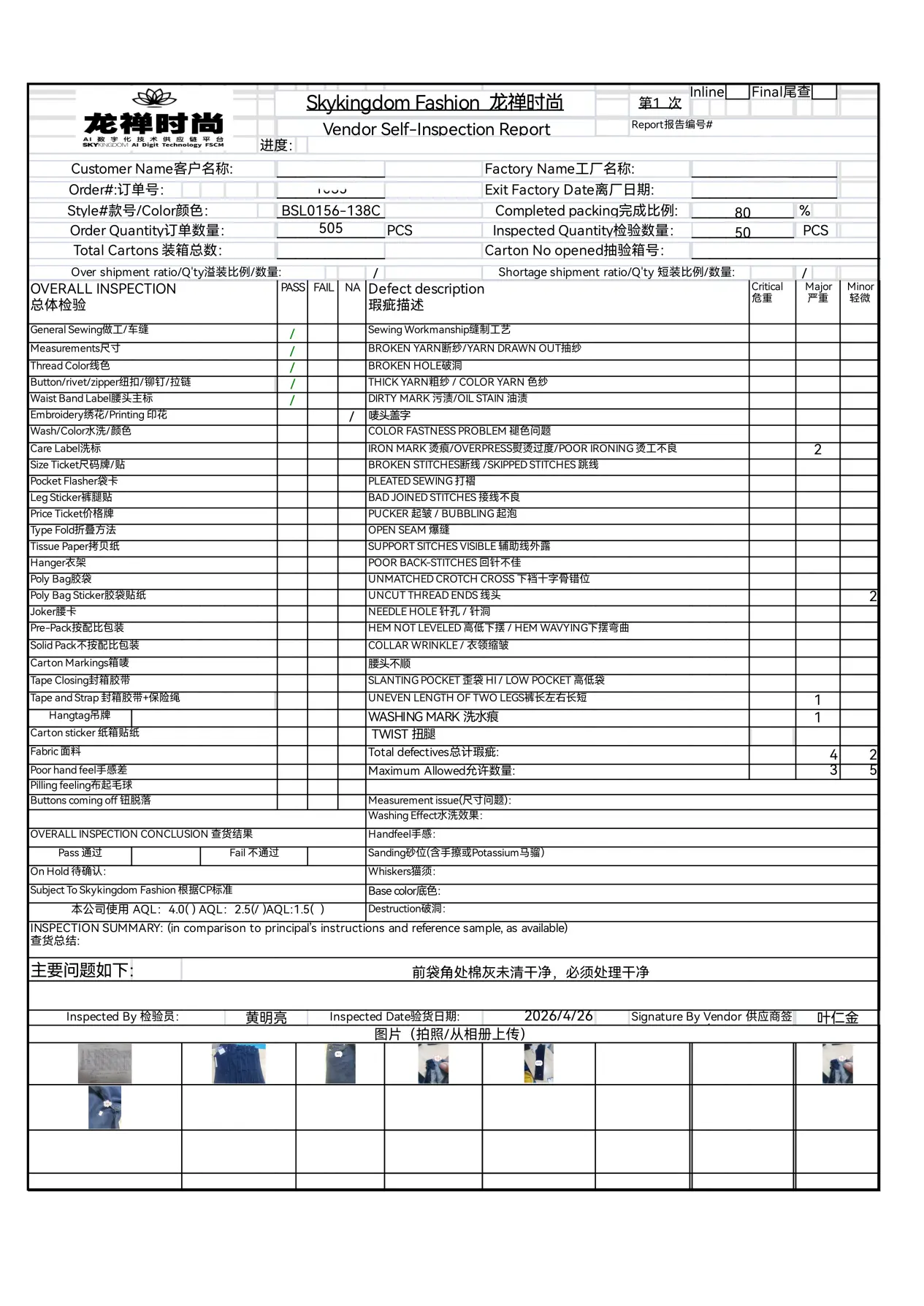
A structured record of inspection findings, comments, and production issues.
A record of garment measurements checked against the approved size requirements.
Visual records of product details, defects, corrections, or approval points.
Notes that help the product, production, and QC teams understand what was approved.
Wash direction, shade reference, or process information used to guide quality review.
Records that help future production start from a clearer approved baseline.
PROOF LAYER
For approved projects, QC documents can help brands review what was checked, what was corrected, and what can be used as reference for future production.
Inspection records help document findings, comments, and production issues.
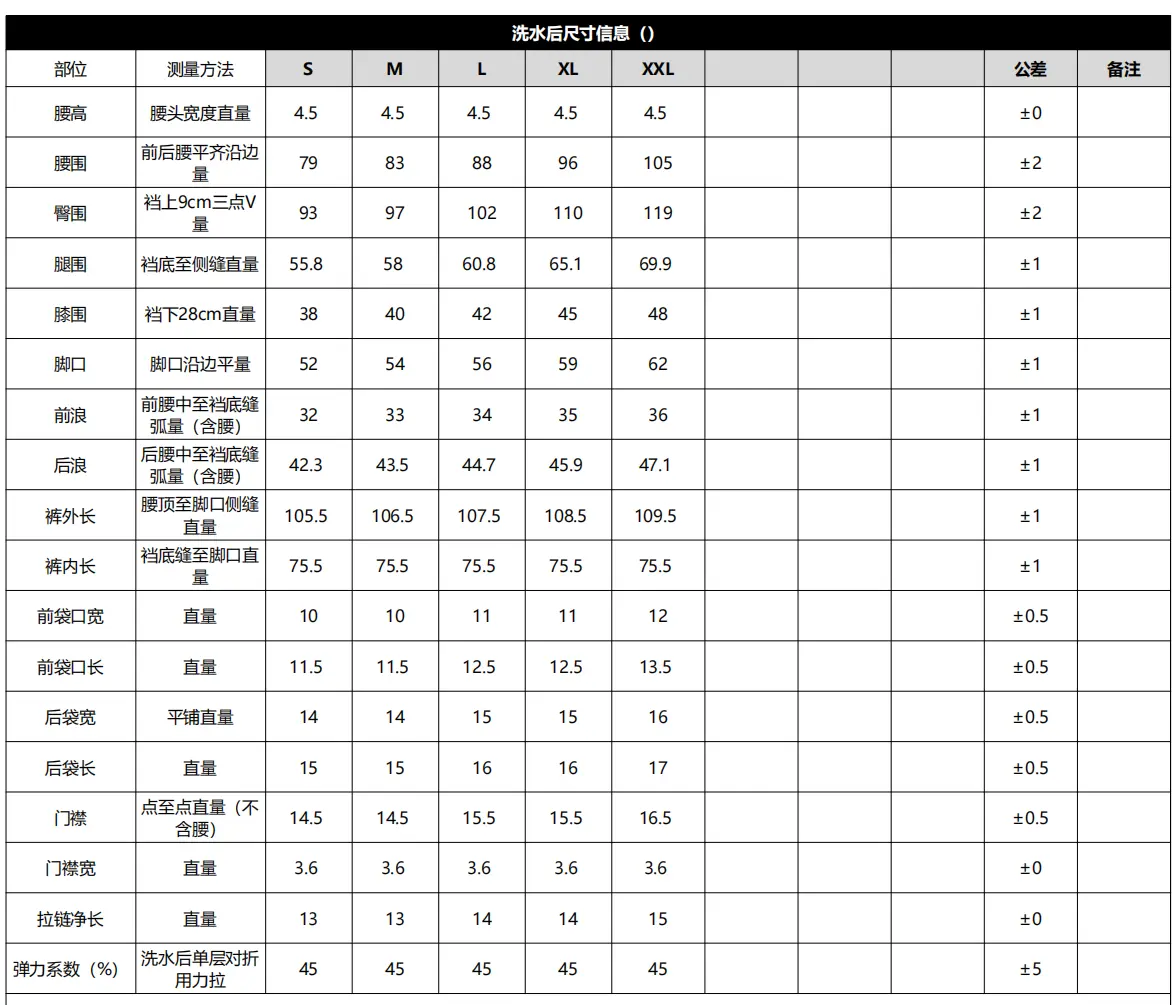
Measurement records help compare production output against approved size requirements.
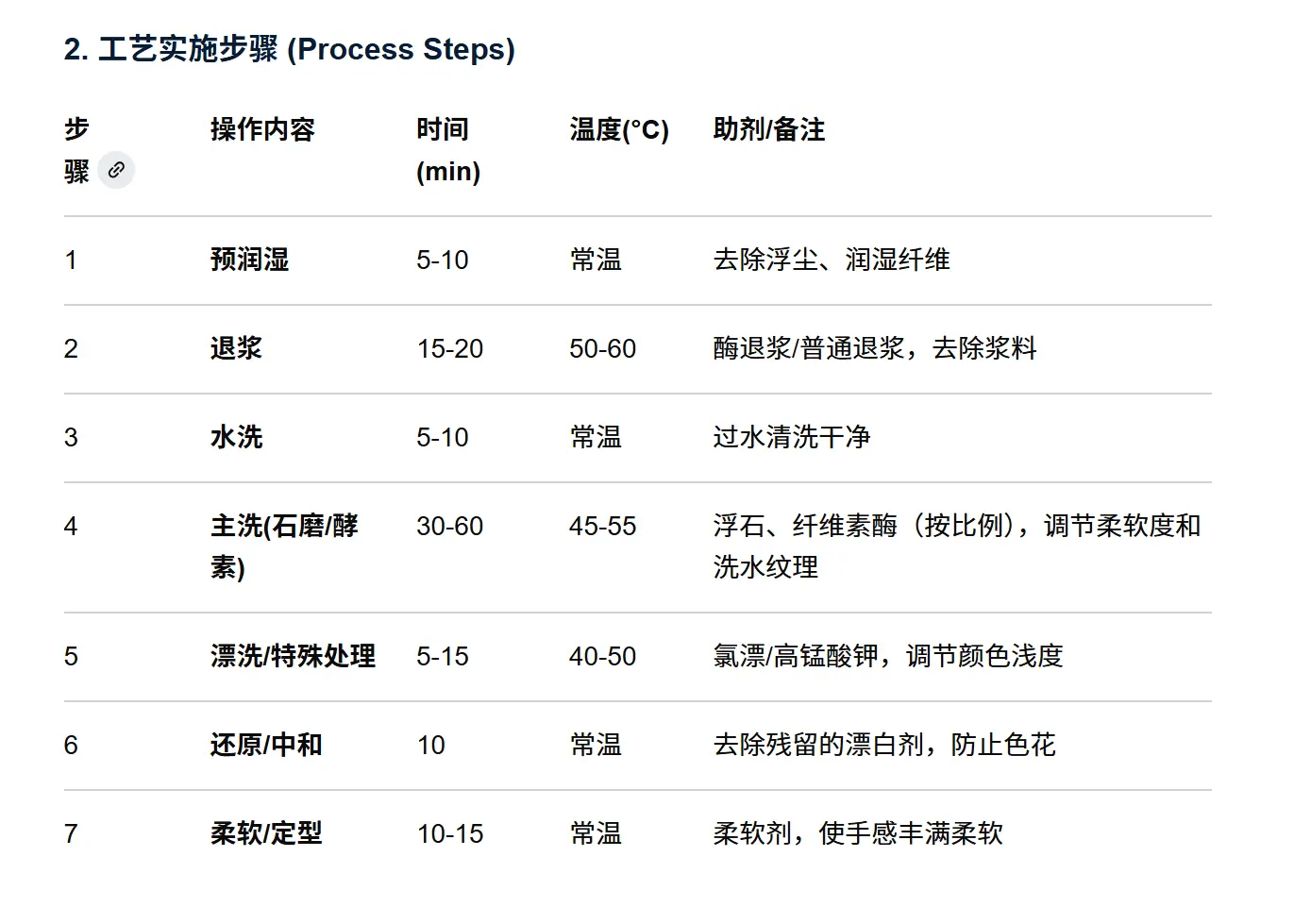
Wash references help connect approved wash direction with production review.
ISSUE HANDLING
Denim production is sensitive to wash, shrinkage, fabric behavior, trims, construction, and manual finishing. A responsible QC system does not pretend that issues can never happen. It defines how issues are found, classified, corrected, rechecked, and recorded.
The goal is to find them early enough, correct what can be corrected, and keep records so the same issue is less likely to repeat.
QUALITY SYSTEM
The QC System page explains the overall quality workflow. The related Quality pages go deeper into the most important denim production risks: sample-to-bulk consistency, reorder control, and traceability or compliance support.
How approved samples become production baselines before bulk starts.
How production records help future runs start from a clearer baseline.
How records, testing support, and documentation can support market requirements.
FIT CHECK
FAQ
No. Final inspection is only one part of the QC workflow. SkyKingdom’s QC process may include approved sample review, pre-production checks, first-piece or first-batch review, production inspection, final inspection, and reorder reference.
SkyKingdom has a 14-person QC team supporting denim production review, inspection, reporting, and quality follow-up across approved projects.
Around 80% of customers choose AQL 2.5 as an inspection reference. AQL 2.5 may be used where required or appropriate, but it does not replace production control, sample review, or client-specific standards.
Defects can be classified as critical, major, or minor. This helps the QC team and the customer understand issue severity and decide whether correction, rework, recheck, or shipment review is needed.
Partner factories follow shared production files, approved samples, QC checkpoints, inspection records, and team-led follow-up. If a quality issue appears, it is recorded, corrected or reworked where possible, rechecked, and kept as part of the production record.
Yes. QC reports, measurement reports, inspection photos, and production notes can be provided within the agreed production workflow without an additional fee, depending on the project scope and customer requirements.
Yes. QC reports, measurement records, inspection photos, production notes, wash references, and issue records can support future reorders by giving the next production run a clearer approved baseline.
No. AQL is an inspection reference for sampling and acceptance decisions. It does not mean zero defects, and it should not replace production control, defect correction, or customer-specific requirements.
NEXT STEP
Send your approved sample, tech pack, wash target, size requirements, or quality checklist. SkyKingdom can help review which QC checkpoints should be used before production moves forward.