| Lead time and delivery certainty |
Large runs may receive priority, but smaller projects, slow approvals and repeated changes can leave the factory waiting. |
Trial runs have lower priority and are easily displaced in peak season; forecasting and last-minute additions are harder to control. |
Long-term factory credit and a stable order portfolio protect production priority. Digital checkpoints follow fabric, pre-production, sewing, washing and finishing. |
Shorter queues, more predictable peak-season delivery and visible progress.SkyKingdom advantage |
| Quality and wash consistency |
Standards may be complete but fragmented; problems can remain hidden until final inspection and wash handoffs reduce batch stability. |
Incomplete QC procedures, missing wash parameters and weak sealed-sample control concentrate problems near shipment. |
Pre-production, first-piece, in-line, post-wash and final checks; sealed sample plus current sample references; wash, inspection and batch records retained. |
Earlier correction, fewer reworks and complaints, more consistent shade, hand feel and reorders.SkyKingdom advantage |
| Sampling and development efficiency |
Documentation is strong, but layered approvals and uncertain projects can reduce the factory’s willingness to assign core development resources. |
Incomplete tech packs force factory trial and error; repeated revisions can disconnect the sample from bulk production. |
Dedicated pattern, construction and wash development teams supported by more than 20 years of pattern data; changes and approvals remain documented. |
Faster samples, more accurate revisions, less wasted sampling and a more mature bulk baseline.SkyKingdom advantage |
| Order-change flexibility |
Formal processes can be slow; factory stoppages and delayed approvals can increase both cost and lead time. |
Decisions are fast but frequent changes without impact assessment can disrupt production and raise hidden cost. |
Every change is assessed for material, workmanship, cost and timing before one controlled instruction updates the production plan. |
Flexibility with fewer reworks, surprise charges and execution conflicts.SkyKingdom advantage |
| Small runs and fast reorders |
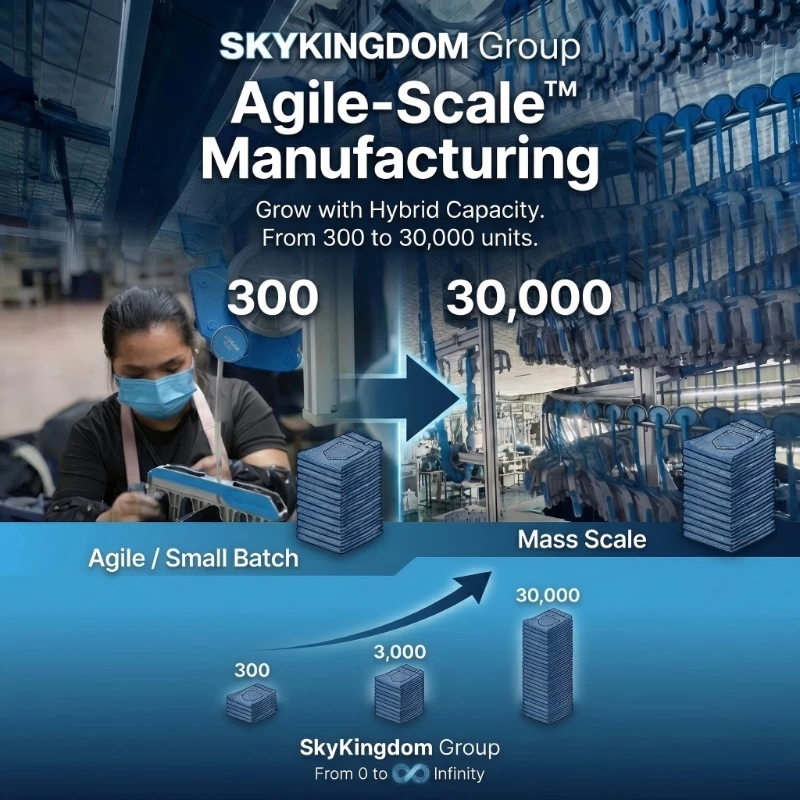
Large-run systems are efficient, but small tests and replenishment are less flexible and slower. |
Factories may accept small runs at a higher price, but weak records often force the reorder to be sampled again. |
Orders are combined for flexible planning. Pattern, construction, wash and trim parameters are retained and can be recalled for repeat production. |
Small-batch testing, faster replenishment and stronger reorder consistency; repeat-production efficiency can improve by about 30%.SkyKingdom advantage |
| Exception and problem handling |
Formal mechanisms exist, but multiple departments and suppliers can slow confirmation while stoppage losses grow. |
Decisions may be quick, but local technical and supply-chain resources are limited and losses often fall on the brand. |
The local team immediately connects the factory, wash plant and material suppliers, stops the loss, identifies the cause, defines the correction and verifies it on the shared platform. |
Shorter stoppage, rework and delay time, lower loss and visible resolution.SkyKingdom advantage |
| Communication and full-chain control |
More layers create slower transmission, information loss, high supplier-coordination cost and unclear responsibility. |
Communication is shorter, but the brand must translate commercial needs into production standards and personally follow every supplier. |
One digital window, one local contact and one controlled record connect the factory, pattern team, wash plant, fabric and trim suppliers. |
Faster response, lower communication cost and fewer execution errors across the chain.SkyKingdom advantage |
| Total cost and long-term value |
A low unit price can be offset by quality drift, delay, rework and other hidden costs created by excessive price pressure. |
Small-run pricing can conflict with budget; factory compromises may appear later as lower standards, rework or customer complaints. |
The model protects reasonable factory profit while balancing price, quality and lead time. Production data continues to improve the next run. |
Not always the lowest quotation, but lower total cost from fewer delays, reworks, factory changes and repeated development.Best total value |