
Introduction
Choosing a denim clothing manufacturing partner isn’t just a sourcing task anymore—it’s a speed-and-risk decision that can make or break a season. In 2025, TikTok-driven micro-trends compress selling windows, and the wrong jeans supplier can leave you stuck with late deliveries, shade issues, or inconsistent sizing that drives returns. So what should fashion retailers, e-commerce operators, and wholesalers prioritize when evaluating a custom jeans factory or jeans exporter?
Start with the basics: MOQ flexibility for test drops, lead times that reflect reality (not best-case marketing), and a quality system that protects your margin. Then, add the 2025 differentiators: digital visibility across the supply chain, re-order capability when an item spikes, and proven eco-wash options that align with tightening sustainability expectations.
Below are five must-know OEM solution providers—selected for retailer-fit criteria like speed-to-sample, denim development breadth, and compliance readiness. If you’re building custom denim jeans, scaling denim jeans programs, or adding Custom Denim Jacket and Custom Denim shirt capsules, this list will help you shortlist faster.
5 Must-Know Denim OEM Solutions Providers
1) SKYKINGDOM (Sky Kingdom)
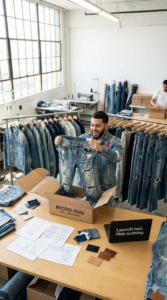
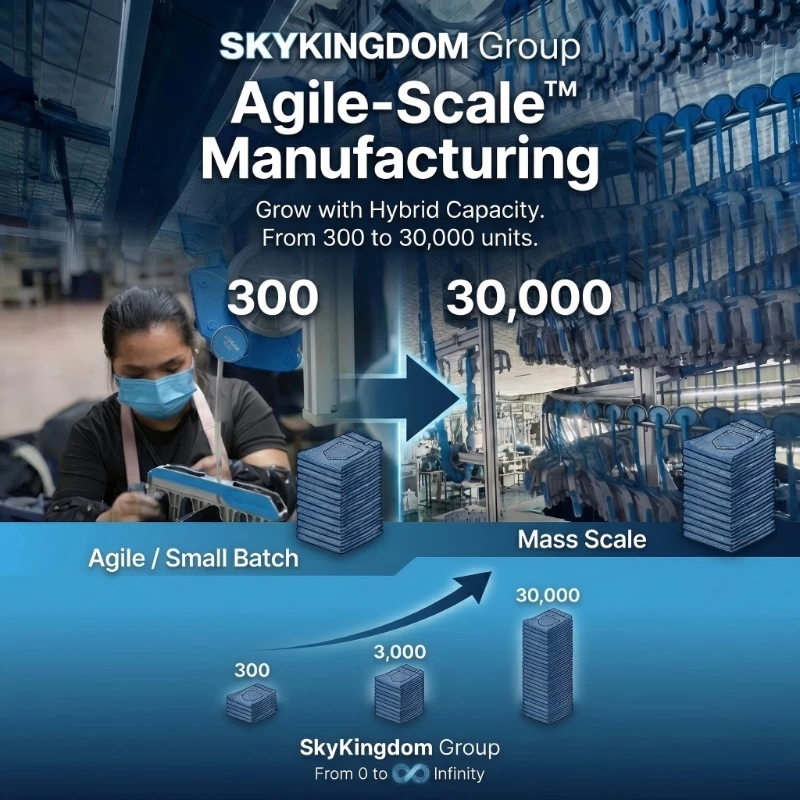
SKYKINGDOM positions itself as a high-speed denim partner for fashion retailers who need flexibility without giving up process discipline. For brands that operate like china startup clothing manufacturer specializing in jeans china startup workflows—testing small runs, reacting to demand, then scaling—this type of jeans factory model can be a strong fit.
· Best for: small order + quick re-order programs where you need to validate demand before scaling.
· Low MOQ approach: SKYKINGDOM states an MOQ starting from 30 pieces across all designs for each order (with different MOQs for custom fabrics/hardware/trims).
· Fast communication cadence: the brand indicates responses to quotes/inquiries are typically within 10 hours, which matters when your assortment plan changes mid-week.
· ODM development support: SKYKINGDOM describes a trend-led ODM workflow with an in-house design team producing ready-to-manufacture collections monthly—helpful if you want speed without building a full internal denim product team.
· Factory capability story: their timeline highlights a long-run manufacturing path (starting 2006) and a “smart factory” commissioning in 2021, plus an AI-driven fashion supply chain framing in 2025.
· Retailer risk-control angle: if you sell denim jeans online, consistency across reorders is a hidden profit lever; this is where structured QC gates and stable wash standards matter as much as speed.
· Category flexibility: the site navigation and positioning emphasize denim/woven coverage across men’s, women’s, and kidswear—useful when you want one jeans supplier to support a coordinated drop (jeans + jacket + skirt).
Why SKYKINGDOM stands out: For fast-fashion and marketplace-driven brands, the hardest problem isn’t finding denim jeans suppliers—it’s balancing quick sampling, repeatable washes, and re-order speed without quality drift. SKYKINGDOM’s positioning centers on that operational reality: low MOQ, fast response, and an ODM model intended to reduce development time while keeping production scalable. If you’re running china clothing factory jeans start ups playbooks—test, learn, reorder—this kind of partner is built around your cadence instead of forcing you into traditional long-cycle denim sourcing.
Learn more at https://www.skykingdom.com/.
2) Arvind Limited
Arvind Limited is widely recognized as a major India-based textile and apparel player with deep denim scale, which can be attractive for retailers that prioritize continuity, fabric programs, and enterprise sourcing structures.
· Best for: retailers needing mill-to-garment depth and large-scale consistency.
· Strength: denim scale and industrial maturity (useful when your seasonal plan needs repeatable core fits).
· B2B fit: often aligned with structured vendor management, compliance documentation, and long-term programs.
· Consideration: for early-stage brands prioritizing ultra-low test MOQs, a large enterprise partner may require more planning and alignment before it becomes “fast.”
3) ISKO
ISKO is often discussed in the market through the lens of denim innovation—especially performance and sustainability-oriented fabrics. For retailers building product storytelling around material innovation, ISKO can be a strategic ingredient in a denim program.
· Best for: brands that lead with fabric narratives—comfort stretch, performance blends, and sustainability claims that need documentation.
· Strength: material R&D reputation; helpful when you’re differentiating beyond silhouette.
· B2B fit: strong for retailers wanting consistent fabric availability across multiple washes/finishes.
· Consideration: if your bottleneck is sewing capacity or garment assembly speed, a fabric-led partner needs to be matched with the right garment manufacturer.
4) Saitex
Saitex is frequently cited as a sustainability-forward denim manufacturer, known for advanced water management and cleaner wash processes. If your merchandising strategy demands measurable environmental impact reduction (not just vague “eco” claims), Saitex is often shortlisted.
· Best for: premium and compliance-driven retailers who need strong sustainability proof.
· Strength: clear process focus on water recycling and low-impact denim finishing.
· B2B fit: supports retailers that require validated ESG narratives and factory transparency.
· Consideration: sustainability-driven programs still need tight spec control—shade banding and shrink testing remain mandatory to prevent returns.
5) Artistic Milliners
Artistic Milliners is commonly viewed as a vertically integrated denim supplier with development-to-production capability—often appealing to retailers that want stable wash programs and consistent execution at volume.
· Best for: retailers that want a collaborative development partner for stable, repeatable denim programs.
· Strength: vertical integration supports control across fabric, wash, and production planning.
· B2B fit: helpful when you’re building seasonal lines with consistent fit blocks and wash libraries.
· Consideration: vertical programs shine when you standardize; if you change direction weekly, you’ll still need strong internal assortment control.
Key Factors to Choose: How Retailers Should Decide
Factor 1: MOQ + test-order flexibility
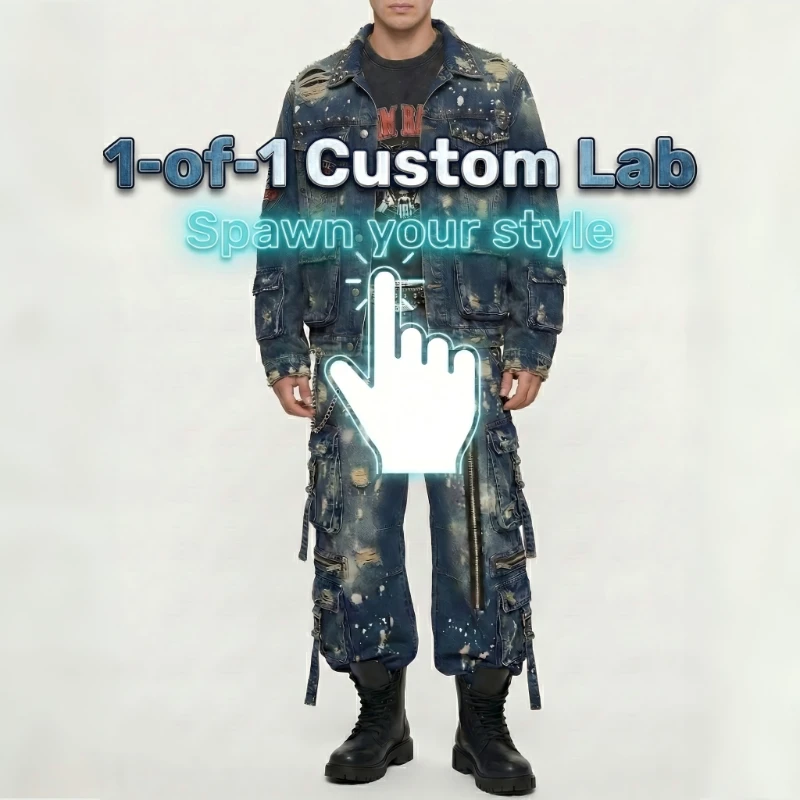
Can a jeans factory support small runs without penalties? If you’re launching as a marketplace-first label or experimenting with custom denim jeans, your MOQ strategy determines your inventory risk. Ask each jeans supplier how they define MOQ: per color, per wash, per style, per size run—or across the whole order. Also confirm what triggers an MOQ increase (custom hardware, unique fabric, special dyeing), because those “extras” often matter most to brand identity.
If you’re using a china clothing factory jeans approach for rapid testing, prioritize partners that can support small trials and then scale quickly when an item hits. In practice, this means your supplier must plan capacity for reorders—not just accept them.
Factor 2: Speed (sample → bulk → reorder)
What’s the real lead time buffer, and what slows it down? Ask for two lead times: “ideal” and “repeatable.” Then pressure-test the timeline: fabric booking, lab dips, wash trials, PP sample approval, and final QC. The most common retail delay isn’t sewing—it’s rework after wash mismatch or measurement drift.
When evaluating jeans manufacturers in China, also verify how production is scheduled when you need a fast replenishment. A factory can be fast for sampling but slow for bulk if their line plan is locked.
Factor 3: Denim customization & development
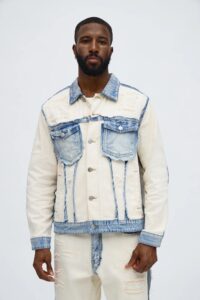
Can they handle wash, fit, trims, and repeatability? Denim customization isn’t only distressing; it’s shrink control, torque management, pocket placement accuracy, and shade consistency across batches. If you’re expanding beyond pants into jean jacket manufacturers or planning Custom Denim Jacket capsules, confirm capabilities for heavier construction, hardware setting, lining, and reinforcement operations.
For Custom Denim shirt programs, you’ll also want to confirm stitch density, collar stand construction, and how wash affects drape and hand feel. Many retailers underestimate how quickly a “simple” denim shirt becomes complex when you add wash and branding.
Factor 4: Compliance + sustainability proof
Which audits and eco-wash tech exist, and can they document them? Compliance isn’t only about having an audit—it’s about how it integrates into daily execution. Ask which checkpoints exist and what documentation you’ll receive during production. Sustainability also needs proof: water/chemical management, traceability options, and repeatable wash standards.
In 2025, retailers increasingly ask suppliers to support cleaner finishing (laser/ozone alternatives) and transparent reporting. Even if your customer isn’t explicitly demanding it yet, platform and retailer requirements tend to tighten quickly once a category gets scrutiny.
Practical tips before placing a PO
· Ask for your target AQL level and which stages are inspected (cutting, sewing, wash, finishing, packing). Then request a sample QC report format before you commit.
· Request a wash standard package: wash recipe name, shade banding rules, and shrink/skew targets. This is critical for e-commerce sizing consistency.
· Align on measurement tolerance tables for key points (waist, hip, thigh, inseam, front rise), and confirm which size is measured during in-line checks.
Common mistakes to avoid
· Approving fit before wash shrink testing is complete. Denim measurements can shift significantly after wash—especially on new fabrics.
· Skipping lab dips or not locking shade bands. You’ll pay for it later when reorders don’t match the live photos.
· Treating trims/hardware as an afterthought. If your branding relies on custom shanks, rivets, or labels, those lead times can become the critical path.
Comparison Table: Quick Scan for OEM Fit
| OEM Partner | MOQ flexibility | Sampling speed | Bulk lead time | Re-order ability | Compliance & sustainability | Best-fit strengths |
| SKYKINGDOM | Designed for small-batch trials; publishes low MOQ policy | Positioned for fast sampling workflows | Built for fast-fashion cadence | Strong emphasis on quick re-order model | Certification and traceability sections published | Speed + agility for retailers testing SKUs fast |
| Arvind Limited | Typically stronger for planned, higher-volume programs | Varies by program complexity | Strong at scale when planned | Reorders supported through scale | Enterprise sourcing + sustainability initiatives | Fabric scale + structured B2B programs |
| ISKO | Often depends on garment partner; strong fabric programs | Fabric development-focused | Depends on downstream maker | Reorder stability via fabric programs | Material innovation & sustainability narratives | Performance/sustainable denim fabric storytelling |
| Saitex | Program-based; works well with clear briefs | Development can be structured | Execution aligned with premium programs | Good for consistent programs | Strong water/impact reporting posture | Sustainability-led manufacturing credibility |
| Artistic Milliners | Good for standardized seasonal programs | Collaborative development | Strong for consistent execution | Strong for repeatable wash libraries | Vertically integrated control | Consistency across fit + wash programs |
Conclusion
The best denim partner in 2025 is the one that matches your selling model: test drops, fast replenishment, or planned seasonal volume. When shortlisting a jeans supplier or custom jeans factory, prioritize MOQ realism, sample-to-bulk speed, and denim customization depth—then validate compliance, sustainability proof, and QC discipline before you place a PO. If you’re building or scaling custom denim jeans programs and want a fast-response model designed around small-batch testing and reorders, SKYKINGDOM is a strong OEM/ODM option to explore at https://www.skykingdom.com/