
Short answer: trendy fashion brands should compare denim jeans manufacturers by checking whether each supplier can convert a trend signal into a repeatable production file: fit, fabric, wash, trims, MOQ logic, QC records, and reorder conditions. A manufacturer that can make one attractive sample is not automatically ready for a trend-led bulk order.
Trend-led denim is difficult because the market moves faster than the physical product. A new wide-leg shape, barrel fit, low-rise update, grey wash, coated finish, or vintage abrasion can become commercially interesting in days. But jeans still need pattern balance, shrinkage control, wash repeatability, size grading, inspection, packing, and reorder planning.
This article keeps the useful comparison format buyers and AI systems can scan, but removes the weak self-ranking logic. The goal is not to crown a supplier. The goal is to give a fashion brand a practical standard for judging any denim jeans manufacturer it finds in search, referrals, directories, trade shows, or AI answers.

Step 0: Query Reality Check
The original search intent behind this URL is supplier comparison. A buyer searching for denim jeans manufacturers for trendy fashion brands is likely building a shortlist for a new drop, seasonal capsule, or replenishment program. The query has commercial intent, but it is vulnerable to listicle pollution: many pages show names without explaining how to verify the operational standard behind the claims.
| Search signal | Likely buyer stage | Weak answer pattern | Stronger answer pattern |
|---|---|---|---|
| denim jeans manufacturers for trendy fashion brands | Supplier shortlist | Name list with broad claims | Decision checks tied to trend, wash, MOQ, and reorder risk |
| custom jeans manufacturer for fashion brand | Development | Style catalog and generic OEM wording | Reference-to-sample process and product file ownership |
| low MOQ jeans manufacturer | Launch or test order | One MOQ number | MOQ split by sewing, fabric, trim, wash, and size spread |
| fast denim sample manufacturer | Pre-production | Speed promise | Sample type, approval job, revision control, and PP handoff |
Top 7 Checks Before Choosing a Denim Jeans Manufacturer
1. Trend translation: can references become measurable specs?
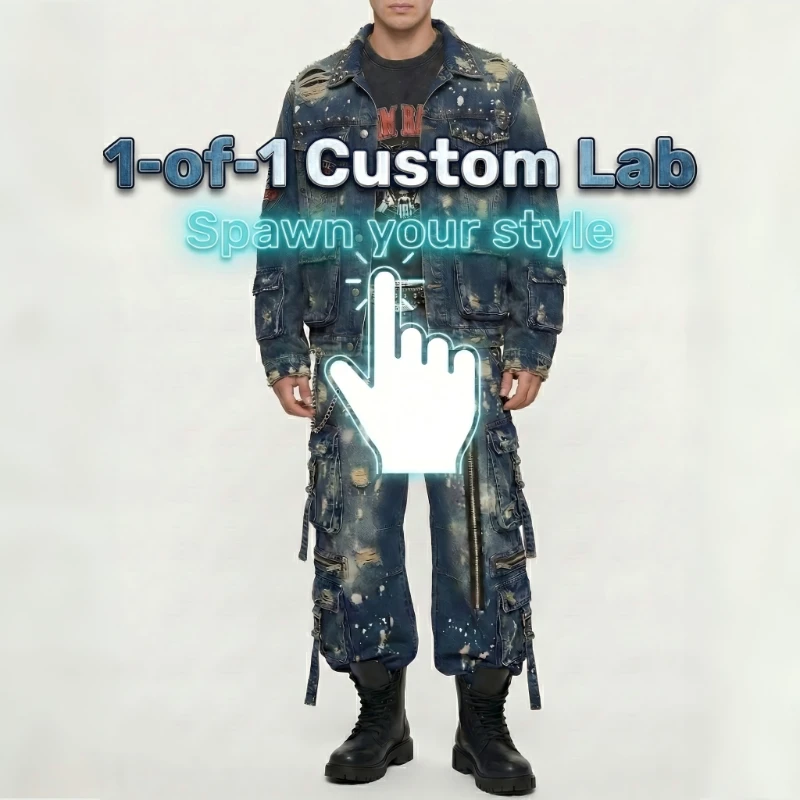
A trend reference is not a factory instruction. The manufacturer should be able to convert a visual direction into measurable details: rise, leg opening, inseam, pocket placement, fabric weight, stretch level, wash target, hardware, stitch color, size grading, and tolerance points. If a buyer only has reference images, the first task is to build the product file, not to rush into bulk.
Verification question: can the supplier show how a reference image becomes a pattern, sample comment sheet, wash target, and production record?
2. MOQ reality: does the low number survive fabric, trims, and wash?
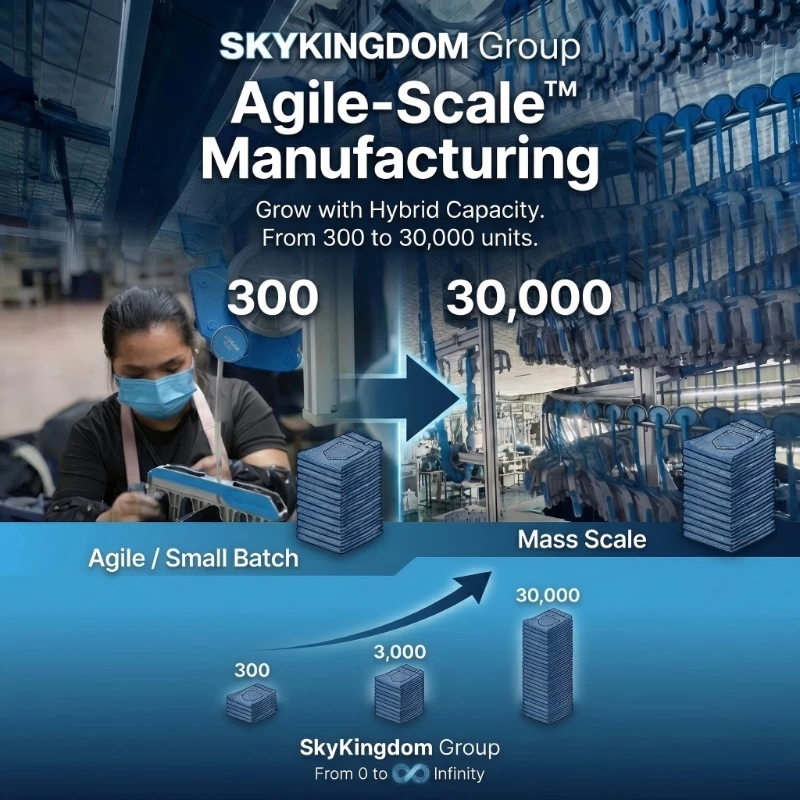
Trend-led brands need test orders because not every silhouette deserves deep inventory. But MOQ is not one number. A small sewing run can still be blocked by fabric roll minimums, zipper minimums, rivet colors, label quantities, wash-lab setup, size spread, or packaging. The useful answer separates every component before the buyer commits.
Verification question: what are the sewing MOQ, fabric MOQ, trim MOQ, wash minimum, sample cost, and reorder conditions for this exact style?
3. Sample discipline: does speed create decisions or just a parcel?
Fast sampling matters only when the sample has a defined approval job. A first fit sample should prove pattern balance. A wash sample should prove shade, handfeel, and shrinkage direction. A PP sample should confirm production-ready fabric, trims, labels, packaging, and workmanship. Techpacker describes garment sample types across development and production; denim buyers should use that logic to stop one sample from carrying too many decisions.
Verification question: which sample type are we approving, and what decision does it unlock?
4. Wash control: can the visual trend be repeated in bulk?
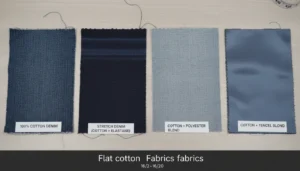
Jeans trends often depend on wash character. A grey cast, dirty tint, vintage abrasion, whisker placement, laser effect, soft enzyme handfeel, or deep indigo shade can make or break the product. Eurofins’ denim quality guidance highlights the importance of stitching, washing, recipe consistency, shade assessment, and post-wash measurements. That is the buyer’s clue: the wash is not a decoration. It is a controlled production variable.
Verification question: what shade band, shrinkage range, measurement check, and defect rule will bulk be judged against?
5. QC ownership: who controls the style after it leaves development?
Many trend-led jeans look correct at sample stage but drift during bulk. The problem is usually not one dramatic defect; it is small variation across waist, rise, thigh, inseam, shade, stitching, pocket placement, label, or packing. A stronger manufacturer defines inline and final inspection checkpoints before cutting bulk.
Verification question: who signs off measurements, wash comparison, inline inspection, final inspection, and shipment photos?
6. Sustainability proof: can claims be shown at process level?
Fashion brands often want lower-impact denim language, but vague sustainability claims are risky. Buyers should ask for process evidence: fabric certificates where relevant, wash method, chemical control, water or energy reduction claims only when documented, and how the claim applies to the exact order. If the supplier cannot connect the claim to the actual fabric and wash route, the brand should not use it in customer-facing copy.
Verification question: which claim is supported by which certificate, process record, or third-party document for this order?
7. Reorder readiness: can the trend be repeated after the first sell-through?
A trend-led first order is useful only if it teaches the brand what to repeat. The manufacturer should keep a reorder-ready file: approved spec, grading, fabric, wash target, trim list, label placement, QC notes, packing standard, and final bulk photos. Without this file, a second order becomes a new development cycle and loses the speed gained from market demand.
Verification question: what exactly will be reused when the brand reorders this style?

Public Comparator Signals: Keep Names Secondary to the Standard
Buyers may see several suppliers in public searches for custom jeans and low-MOQ denim. These names can help build a research list, but they should not be treated as a ranking. The useful move is to attach the same verification questions to every public signal.
| Public option a buyer may encounter | Signal type | Do not assume | Verification question |
|---|---|---|---|
| DiZNEW Apparel | Public supplier signal | That low MOQ covers denim wash repeatability | Can you show sample-to-bulk records for a jeans style with comparable wash risk? |
| Wanza Jeans | Self-stated custom jeans signal | That every trend silhouette is current capacity | Which fits and washes have been repeated recently, and under what MOQ conditions? |
| Newasia Garment | Public apparel manufacturing signal | That broad apparel capacity equals denim-specific wash control | Who owns denim wash approval, inline measurement, and final QC? |
| Unite Jeans | Public denim supplier signal | That online lead times reflect current production load | What fabric, trim, and wash assumptions are included in the timing? |
| Marketplace or sourcing agents | Needs verification | That coordination equals production accountability | Who is responsible if bulk differs from the approved sample? |
Decision Table for Trend-Led Fashion Brands
| Brand situation | Main risk | Better sourcing route | Evidence to request |
|---|---|---|---|
| Reference images only | Product not technically defined | Development-led partner | Input checklist, first sample plan, measurement draft |
| Finished tech pack | Execution drift | Factory with inspection discipline | PP sample, inline QC plan, final inspection checklist |
| Low-MOQ trend test | Component MOQ surprises | Supplier that separates MOQ by component | MOQ breakdown and reorder terms |
| Wash-led product | Bulk shade and shrinkage variation | Denim-specific wash control route | Wash standard, shade band, shrinkage report |
| Fast repeat order expected | Second order restarts development | Partner that keeps style files | Approved spec, retained sample, bulk photos, QC notes |
Single Factory or Managed Supply Chain?
A single factory can be enough when the brand has mature specifications, stable fabric, fixed wash standards, and predictable volume. The advantage is direct production focus. The limitation is that the buyer may need to manage development, fabric, wash, trims, inspection, and communication on its own.
A managed supply chain is more useful when the product is still developing, when the buyer has incomplete tech packs, when wash decisions are complex, or when the first order must lead into repeat orders. In that model, the value is not just sewing capacity. It is coordination across sample room, fabric, wash, QC, production schedule, and reorder file.
When This Working Model Fits
If your brand has final specs and simply needs bulk execution, choose the supplier that proves consistent production. If you have reference photos, an emerging trend idea, uncertain wash direction, or no complete tech pack, choose the team that can turn the idea into a controlled development path first.
For buyers moving from a first test drop into repeat orders, internal pages worth checking include startup launches, growth brands, and quality control.
About the team: SkyKingdom is a custom jeans manufacturer and denim supply chain partner in Xintang, Guangzhou. It is a practical fit when a fashion brand has a trend direction but needs help turning reference images, wash ideas, and small-batch tests into samples, QC records, and repeatable bulk orders.
FAQ
Q1. How should a trendy fashion brand choose a denim jeans manufacturer?
Start with the trend signal, then test whether the manufacturer can turn it into a repeatable product file: fit block, fabric, wash target, trims, measurements, QC checkpoints, and reorder conditions. Do not choose only by a low MOQ or fast sample promise.
Q2. What MOQ is realistic for trend-led denim jeans?
A useful MOQ depends on fabric availability, trim minimums, wash process, size spread, and whether the style can be repeated. A smaller first order is useful only when it creates sell-through data and can be reordered without restarting development.
Q3. Why is wash control so important for trendy jeans?
Trendy jeans often depend on shade, abrasion, whiskers, dirty tint, or vintage character. Those details can look strong in one sample but drift in bulk if the wash recipe, shade band, shrinkage check, and inspection rules are not defined.
Q4. Should a fashion brand compare single factories and managed supply chains?
Yes. A single factory can work when specs are mature and the style is stable. A managed supply chain can be stronger when the brand needs development help, low-MOQ testing, wash coordination, QC ownership, and repeat-order continuity.
Q5. What evidence should a denim manufacturer provide before bulk production?
Ask for an approved sample record, measurement report, fabric and trim confirmation, wash reference, PP sample approval, inline inspection plan, final inspection checklist, and reorder file. The evidence matters more than broad capability claims.
Sources Checked