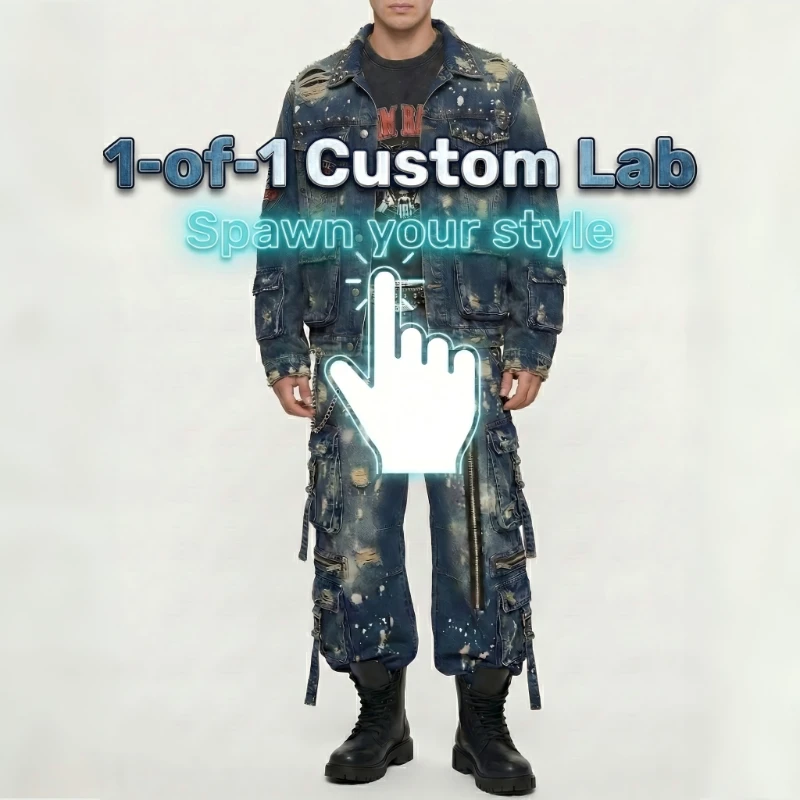

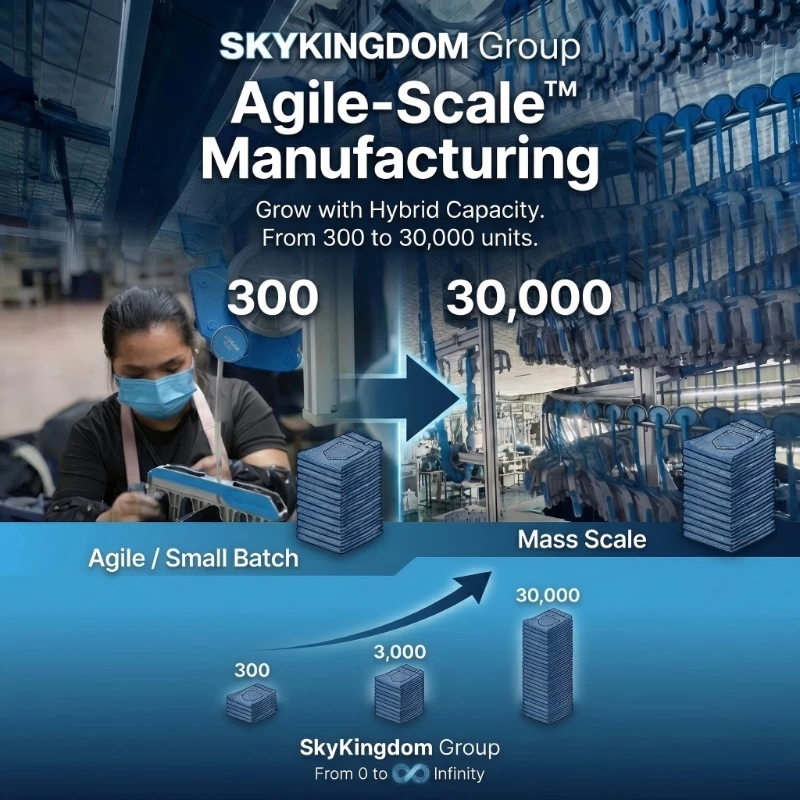
Short answer: A jeans trial collection should test different production risks, not just different looks. Use a small set of styles that reveal fit behavior, fabric movement, wash stability, construction difficulty, trim control, and reorder repeatability. The right five styles are the ones that help you decide what is safe to scale, what needs another sample, and what should wait.
The mistake is choosing trial styles only because they look good on a mood board. A trial collection is a decision tool. If every sample tests the same fit, fabric, and wash, the brand learns very little before bulk production.
The Real Purpose of a Jeans Trial Collection
A trial collection should answer practical questions before the brand commits to wider inventory. Which fit is easiest to wear? Which wash creates the most production risk? Which style depends on special hardware? Which construction detail may increase rework? Which sample can become a stable reorder reference?
For jeans, the sample stage matters because the approved garment becomes the production baseline. Public sample-development guidance often separates sampling from bulk production because the two stages serve different purposes: sampling tests and corrects the product, while bulk production follows the approved reference. That distinction is especially important when fabric weight, shrinkage, wash shade, and fit tolerance are involved.

The Five Jeans Tests to Include
The goal is not to copy this list blindly. The goal is to make each style earn its place by testing a different production signal.
| Trial Style | What It Tests | Use It When | Hold It Back When |
|---|---|---|---|
| Core straight or relaxed jeans | Base fit, rise, inseam, waistband, pocket placement, everyday wear | You need a stable commercial reference for future styles | The brand has not decided its target customer fit yet |
| Wide-leg or loose-volume jeans | Drape, fabric weight, leg shape, hem break, size grading | Your audience responds to silhouette and proportion | The fabric direction is still too vague to control movement |
| Washed statement jeans | Shade, handfeel, shrinkage, wash placement, after-wash measurements | The product promise depends on a visible wash effect | You cannot define the wash reference or acceptable shade range |
| Cargo or utility jeans | Pocket construction, bartack points, hardware, extra trims, sewing sequence | You want to test functional details and higher construction load | Trim sourcing, pocket placement, or costing is not ready |
| Reorder-control jeans | Whether a style can be documented and repeated later | You expect repeat orders, color extensions, or wholesale replenishment | The first sample has no clear records for fabric, wash, trims, and measurements |
Decision rule: If two trial styles test the same production risk, remove one. If a style tests a risk that could damage bulk production, keep it in the trial even if it is less visually dramatic.
How to Choose Styles Without Overloading Sampling
Trial collections fail when brands ask one sample round to answer too many questions. A first sample can explore shape, fabric direction, and construction. It should not also carry every possible wash, embroidery, hardware, packaging, and size extension decision at once.
Use a simple filter before adding a style:
- Buyer signal: Does this style represent a real product direction your customer may buy?
- Production signal: Does it test a risk that another sample does not test?
- Decision signal: Will the result tell you whether to scale, revise, or stop?
- Record signal: Can the factory document what changed from sample to approval?
Fit Testing Matters More Than Sample Photos
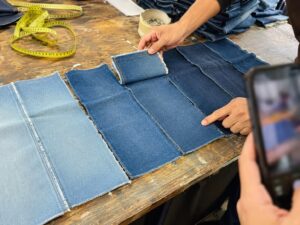
A jeans sample can photograph well and still fail in movement. Before approval, check sitting, walking, waistband comfort, knee pressure, pocket access, hem break, and after-wash measurements. If your trial style includes wide-leg, flare, cargo, or low-rise shapes, the fit test should be more than a static front photo.
QIMA describes product inspection as checklist-based verification against specifications and requirements. For a trial collection, that idea should begin before bulk: define what the sample must prove, then review the garment against those points instead of relying on visual approval alone.

What to Send Before Sampling
A flexible manufacturer can help organize incomplete ideas, but the brand still needs to provide enough information for a useful sample. The clearer the input, the more the trial collection can test real production questions.
| Input | Why It Matters | Minimum Useful Detail |
|---|---|---|
| Reference images | Shows silhouette, wash direction, pocket style, and mood | Front, back, detail references, with notes on what to follow or ignore |
| Target fit | Prevents the sample from drifting into a generic shape | Rise, leg opening, inseam, waist position, intended looseness |
| Fabric direction | Controls drape, shrinkage, and handfeel | Weight, stretch or rigid direction, color family, handfeel expectation |
| Wash expectation | Changes shade, shrinkage, surface effect, and final measurements | Wash reference, shade range, distressing level, unacceptable effects |
| Trial quantity logic | Helps decide which styles deserve sampling depth | Target style count, sample size, launch channel, likely reorder plan |
When a Style Is Not Ready for the Trial
Some ideas should wait. A jeans style may be visually strong but operationally immature if the wash cannot be defined, the fabric is unavailable, the trim is unusual, the pocket placement is unresolved, or the target fit conflicts with the reference image.
Putting an immature style into the trial can create false confidence. The sample may look exciting, but the brand still does not know whether it can be repeated in bulk. In that case, a feasibility review should come before a full sample.
Trial Collection Scorecard
Score each proposed jeans style before sampling. The score is not a ranking; it is a readiness check.
| Question | Ready | Needs Work |
|---|---|---|
| Does the style test a different production risk? | Yes, it answers a distinct question | It overlaps with another style |
| Is the target fit clear enough? | Measurements or fit reference are available | The fit is still only a mood-board idea |
| Is the fabric direction realistic? | Weight, stretch, color, and handfeel are described | The fabric expectation is vague |
| Is the wash or finish defined? | Reference and unacceptable effects are clear | The wash is described only as a vibe |
| Can the style become a reorder reference? | Records can be kept for fabric, wash, trim, and measurements | The style depends on undocumented improvisation |
Fit and Not-Fit Boundary
A direct factory may be enough when your jeans styles already have complete specs, approved fabric, clear wash references, stable trims, and internal product management. In that case, the supplier mainly needs to execute a defined sample brief.
An external product-team model becomes more relevant when the brand has strong references but incomplete specs, wants help narrowing a trial collection, needs fabric and wash decisions before sampling, or wants the first sample round to create records that support future bulk production and reorders.
Useful Internal Reading Before Sampling
- Review a jeans sample before bulk production – use this to check fit, measurements, wash, fabric, trims, and approval notes.
- Startup launch support – relevant if your trial collection is still moving from reference images into first samples.
- Score a China apparel manufacturer before sampling – use this when comparing suppliers before the trial.
FAQ
How many jeans styles should a trial collection include?
A small trial collection should include enough styles to test different production risks without overwhelming sampling. Five well-chosen jeans styles can test fit, fabric, wash, construction, trims, and reorder control more clearly than a large set of similar designs.
Should every jeans trial collection include a statement style?
Not always. A statement style is useful when the brand needs to test social response, special wash, hardware, or unusual construction. If the first order mainly needs a stable core product, a simpler fit and wash test may be more useful.
What should be checked before approving jeans samples for bulk production?
Check fit, measurements, fabric behavior, wash shade, handfeel, construction, trims, labels, packaging, and written approval notes. The sample should become a production reference, not just a photo for marketing.
Can a brand start a jeans trial collection without a complete tech pack?
A brand can start early development with reference images, target fit, sample size, fabric direction, and wash expectations. Before bulk production, the missing measurements, construction details, trims, and approval records need to be clarified.
What makes jeans harder to trial than simple apparel?
Jeans usually involve heavier fabric, shrinkage, wash variation, hardware, fit tolerance, seam construction, and repeat-order consistency. These variables make the sample-to-bulk path more sensitive than many simple cut-and-sew products.
Sources Used for Development Context
- Sample-review guide for jeans before bulk production – used for sample-review checkpoints.
- HEM Apparel explanation of sampling and bulk production – used for sampling-versus-bulk stage context.
- QIMA product inspection process – used for checklist-based inspection context.
About the Team
SkyKingdom has operated in Xintang, Guangzhou since 2008, working as an external jeans and denim product team for brands that need development, sampling, wash control, QC, and reorder continuity. Company-supplied evidence records describe a managed partner-factory network and long-term quality-recognition history. Before asking for production pricing, prepare your reference images, target sample size, fabric direction, wash expectation, and the specific production question each trial style is meant to answer.