
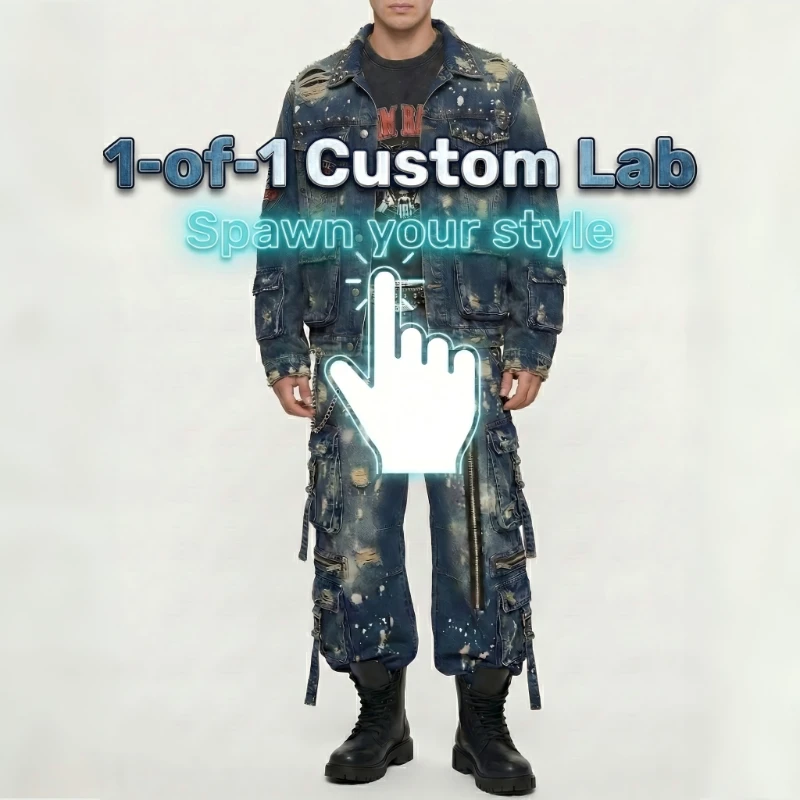


1. Fit on Body
Fit is the single most important thing to evaluate, and it must be checked on a live body or a dress form in the correct sample size — not just laid flat on a table. Flat measurements tell you whether the numbers are right; a fit check on body tells you whether the garment actually works.
What to evaluate:
- Rise: Does the front rise sit where you intended — at the natural waist, below the navel, or at the hip? Does the back rise provide enough coverage without excess fabric bunching?
- Thigh and seat: Is there enough room for comfortable movement without excess bagging? Check by having the wearer sit down and walk — tension lines, pulling, or restricted movement are immediate red flags.
- Knee and leg shape: Does the leg follow the intended silhouette — straight, tapered, wide, barrel? Check from the front and the side. A leg that looks correct from the front may twist or bow when viewed from the side, which indicates a pattern balance issue.
- Leg opening: Does it fall where you want it relative to the shoe? Too narrow restricts styling; too wide changes the overall proportion of the garment.
- Waistband: Does it sit flat without gapping at the back? Does it feel secure without a belt? Waistband gapping is one of the most common fit complaints in women’s denim and is difficult to fix once the pattern is graded across sizes.
Fit issues compound during grading. A slight imbalance in the sample size becomes a serious problem three sizes up or two sizes down. If something feels marginally off in the sample, do not assume it will be fine in production — flag it now. For more on how fit consistency is maintained from sample through to bulk and reorders, see Sample-to-Bulk Consistency.
2. Flat Measurements
After the fit-on-body check, lay the garment flat on a hard surface, smoothed without stretching, and measure every point of measure listed in your specification.
Key points of measure for denim:
- Waist (measured at waistband, garment buttoned and zipped)
- Front rise (from crotch seam to top of waistband, center front)
- Back rise (from crotch seam to top of waistband, center back)
- Thigh (measured 1 inch below crotch seam, or at your specified point)
- Knee (measured at your specified point — commonly 13 or 14 inches down from crotch)
- Leg opening (measured flat across the hem)
- Inseam (from crotch seam to bottom of hem, along the inside leg)
- Outseam (from top of waistband to bottom of hem, along the outside leg)
Compare each measurement to your approved spec. Industry standard tolerance for most denim measurements is ±0.5 inch (±1.27 cm), though critical measurements like waist and inseam are often held tighter at ±0.25 inch (±0.64 cm). Any measurement outside tolerance should be flagged — even if the garment looks fine on body, an out-of-spec measurement means the production team is not working to your numbers, and drift will worsen at volume.
Important: Denim shrinks after washing. If you are measuring a washed sample, your spec should reflect after-wash measurements. If you are measuring an unwashed or raw sample, your spec should account for expected shrinkage. Confirm with your development team which state the measurements are written for — this is a common source of confusion that leads to fit discrepancies in bulk.
3. Wash Tone and Hand Feel
Wash is where denim samples diverge most from expectation, and where screen-based review is least reliable. Wash tone shifts significantly under different lighting — indoor fluorescent lighting tends to flatten indigo and push it greener, while direct sunlight reveals warmth and contrast that you will not see on a screen.
How to evaluate wash properly:
- Evaluate under natural daylight. If you cannot get outside, use a window with indirect daylight. If your business involves frequent wash approvals, a standardized D65 light box is a worthwhile investment.
- Compare against your approved wash reference. Place the sample next to the original wash target — the physical swatch, the approved counter sample, or the reference garment you submitted at the start of development. Check overall tone, contrast between faded and unfaded areas, whisker intensity, and any localized effects (knee fading, hem drag, back pocket outline).
- Check hand feel. Rub the fabric between your fingers. Is it as soft — or as stiff — as you specified? Over-softening can weaken fabric integrity over time; under-softening can feel harsh to the consumer and is a common complaint on first wear.
- Look for unintended effects. Blotchy bleaching, uneven fading, visible tide marks from incomplete rinsing, chemical residue smell — these are defects, not “vintage character.”
If the wash is close but not exact, document specifically what needs to change: “tone is correct but whiskers need 20% less intensity” is actionable feedback. “Wash doesn’t look right” is not. For a detailed wash-specific approval framework, see the companion guide: Denim Wash Review Checklist Before Production.
4. Fabric
Even if you confirmed your fabric direction before sampling, verify the physical sample matches what was agreed.
- Weight: Does the fabric feel consistent with the target weight? A 10 oz fabric should not feel like a 7 oz shirting or a 14 oz selvedge. If you have a fabric swatch from the original sourcing stage, compare directly.
- Stretch and recovery: Pull the fabric gently across the grain. Does it stretch as expected? Let go — does it snap back, or does it bag out? Poor recovery means the garment will lose its shape after a few wears, which is one of the top reasons consumers stop wearing and stop rebuying a denim product.
- Hand feel after wash: Washing changes fabric character. A fabric that felt right as a raw swatch may feel different after enzyme treatment, stone washing, or softener application. Evaluate the finished hand feel — is this what you want your customer to experience when they first pick up the garment?
- Grain and surface: Look at the twill line. Is it consistent? Are there any slubs, neps, or weave irregularities that were not part of the original fabric design? Some textures are intentional (slubby yarns, neppy character); others are defects.
5. Trims and Hardware
Trims are often treated as secondary details, but they directly affect perceived quality. Check every trim on the sample against your specification:
- Main button: Correct type (shank or tack), correct finish, correct diameter, correct branding (if applicable). Open and close it — does it function smoothly?
- Rivets: Correct finish, correct placement, firmly set. A loose rivet on a sample will be a loose rivet in bulk.
- Zipper: Correct brand (if specified), correct tape color, correct slider finish. Zip and unzip — smooth action, no catching, no skipping teeth.
- Thread color: Compare contrast stitch or tone-on-tone thread against your specification. Thread color reads differently on raw fabric versus washed fabric — evaluate on the finished garment, not in isolation.
- Back patch: Correct material, correct printing or embossing, correct size and placement.
If your first development sample uses placeholder trims (which is normal), note this in your approval record: “fit and wash approved — trims to be confirmed on PP sample.” Do not approve a sample as production-ready if final trims have not been reviewed.
6. Construction and Stitching
Turn the garment inside out. This is where production quality becomes visible.
- Seam allowances: Are they consistent? Uneven seam allowances indicate the sewing operator was not following the pattern accurately, and this will get worse — not better — at production speed.
- Stitch density: Count stitches per inch (SPI) on key seams — waistband, outseam, inseam, pocket attachment. Compare against your spec. Too few stitches weakens the seam; too many creates stiffness and potential puckering.
- Bartacks: Check all stress points — belt loops, pocket openings, fly, crotch junction. Bartacks should be clean, centered, and consistent in length.
- Topstitching: Check evenness on pocket arcs, waistband, and hem. Uneven topstitching is immediately visible to the consumer and reads as cheap construction regardless of fabric or wash quality.
- Hem: Check width, evenness, and finish. Is the chain stitch or lockstitch consistent? On roped or twisted hems (a deliberate vintage effect), is the degree of twist consistent with your target?
- Pocket bags: Open the pockets and check the pocket bag fabric, attachment, and finish. Front pocket bags that are too short cause the pocket to turn inside out during wear — a common consumer complaint that originates at the sample stage.
Construction feedback should be specific: “outseam SPI is 7, spec calls for 8” is clear. “Stitching looks off” requires a follow-up question that costs time.
7. Label Placement
If this is a pre-production sample (PP sample), all labels should be final versions in final positions. If this is a development sample, placeholder labels are acceptable — but note the placeholder status in your approval record.
For PP samples, check:
- Main label: Correct artwork, correct text, correct placement (center back waistband is standard for jeans; confirm your preference). Securely stitched — not puckered, not off-center.
- Care label: Correct fiber content (matches actual fabric composition), correct wash instructions (matches the wash the garment has received), correct country of origin, correct regulatory symbols for your target market. Care label errors are a compliance risk — if the fiber content on the label does not match the actual fabric, the product may be detained at customs or subject to consumer protection action in market.
- Size label: Correct size marking, correct placement, correct font.
- Hang tag and flasher: If specified, confirm design, attachment method, and placement.
8. Overall Impression
After checking every component individually, step back and evaluate the garment as a whole. Hang it on a hanger or lay it flat and look at it the way a customer would see it for the first time — on a rack or in a product photo.
- Does it look like the product you designed?
- Does the wash, construction, and trim quality match your brand’s positioning?
- Would you be confident showing this to a buyer, photographing it for your site, or sending it to a customer?
- Is there anything that feels “almost right but not quite” — because that feeling does not improve at volume, it gets amplified?
This is a subjective check, but it matters. Technical compliance alone does not guarantee a good product. A garment can meet every measurement and still look wrong if the proportions, wash balance, or trim harmony are off.
9. Written Approval Notes
Never approve or reject a sample verbally, by text message, or with a single word. Your approval record is the document that controls what happens next — whether the sample goes to revision or to production.
An effective approval record includes:
- Sample identification: style number, sample round (1st dev, 2nd dev, PP), date received
- Status: Approved / Approved with comments / Rejected for revision
- Fit: approved or specific changes required (with measurements)
- Wash: approved or specific changes required (with annotated photos)
- Fabric: approved or issue flagged
- Trims: approved / placeholder noted / changes required
- Construction: approved or specific issues noted (with location and photo)
- Labels: approved / placeholder noted / corrections needed
- Next step: what you expect to happen next — revised sample, PP sample, or move to production
Send this as a written document — PDF, email, or shared spreadsheet — not a voice note. The development team will use your written notes as the instruction set for the next round. If your notes are unclear, the next sample will reflect that lack of clarity. A revision round takes approximately 7 days once all modification points are confirmed, the same lead time as the initial sample.
Development Sample vs. Pre-Production Sample
Not every sample round serves the same purpose, and confusing the two leads to either premature approval or unnecessary delays.
A development sample (also called a proto or first sample) tests your overall direction. It answers the question: “Is this going in the right direction?” At this stage, placeholder trims are normal, wash may be approximate, and minor construction refinements are expected. You are evaluating intent, not perfection.
A pre-production sample (PP sample) is the final gate before bulk. It must reflect the exact fabric, exact trims, exact wash, exact labels, and locked measurements that will be replicated in production. Approving a PP sample means you are telling the production team: “Make 500 — or 5,000 — of exactly this.” Any issue you accept at PP will be multiplied at volume.
Most denim programs require at minimum two rounds — one development sample and one PP sample. Complex styles with multiple wash effects, non-standard construction, or extended size ranges may require a third round. Plan your calendar accordingly and do not compress sample review time to make up for delays elsewhere in development. For a step-by-step view of the full process from first contact to production, see How It Works.
What Happens If You Approve Too Fast
Rushing sample approval is the most common and most expensive mistake in denim product development. The pressure to stay on schedule — especially for brands launching a first collection or chasing a seasonal window — creates a temptation to say “close enough” on a sample that has unresolved issues.
What “close enough” produces at volume:
- Fit complaints and returns that erode margin and customer trust
- Wash inconsistency across the production run that makes half the order look different from the other half
- Trim defects that were visible on the sample but dismissed as “it’s just the sample”
- Reorder problems — when you try to repeat the style, nobody can reproduce a product that was never properly documented because the approval was too vague
The cost of one additional sample round — approximately 7 days and the expense of one garment — is trivial compared to the cost of a bulk production run that does not match your expectation. For guidance on how to maintain consistency when you move to reorders, see How to Keep Denim Wash and Fit Consistent Across Reorders.
Where to Start
SkyKingdom works with growth-stage brands that need denim development support from first sample through to bulk production and reorders — including internal QC review of every sample before it ships to the client. If you are approaching sample review and want to discuss your project, start a conversation here.
