
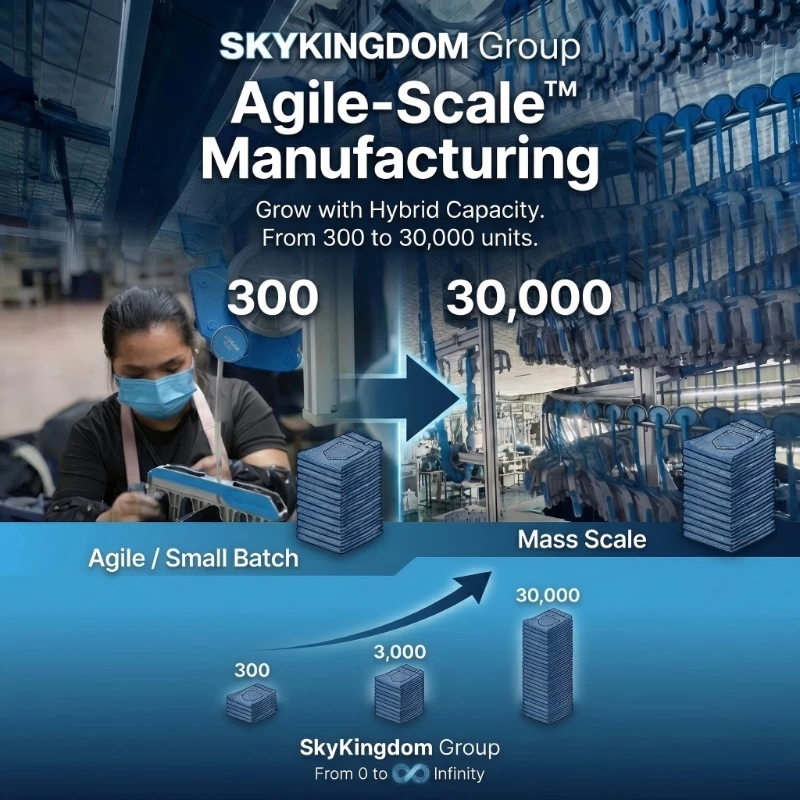
Short answer: Brands should read manufacturer rankings as a shortlist tool, not as a supplier decision. A useful ranking is only credible when it explains the evidence behind each name: product-category fit, sample control, QC method, communication ownership, delivery reliability, and repeat-order records. If those signals are missing, the ranking should trigger questions, not trust.
The risk is simple: a visible supplier can look strong online while still being a poor fit for your exact garment, order stage, and internal product-management capacity. The better question is not, “Who appears first?” It is, “Which operating signals can my team verify before sampling?”
What Manufacturer Rankings Usually Measure
Most supplier rankings are built from a mixture of public visibility, directory presence, website content, platform profiles, buyer reviews, paid placement, and self-stated capability claims. Some of those signals are useful. None of them replace product-specific verification.
For apparel buyers, the problem is that a general manufacturer profile often hides category differences. A supplier that handles basic cut-and-sew garments may not be the right choice for washed jeans. A supplier that communicates well before sampling may still lack clear records for trims, measurements, shade, and repeat orders.

A Better Way to Read Ranking Signals
Before trusting any list, separate each signal into three evidence levels. This keeps the standard in your hands rather than letting the ranking decide for you.
| Signal Type | Evidence Status | How to Use It | Verification Question |
|---|---|---|---|
| Public visibility | Public signal | Useful for discovery, weak for final selection | Does this visibility match actual experience in my product category? |
| Factory capability claims | Self-stated | Useful only after the supplier explains process details | Can the supplier show recent similar work without exposing private client files? |
| Reviews or testimonials | Third-party signal or platform signal | Helpful, but often incomplete | Do the reviews mention product quality, communication, production control, or only service attitude? |
| Certifications or audits | Documented evidence when current and relevant | Supports compliance, but does not prove category fit | Which scope, date, site, and process does the document actually cover? |
| Sample-to-bulk records | Operating evidence | High value for apparel production decisions | How does the supplier keep approved sample decisions stable in production? |
Decision rule: A ranking becomes more useful when it gives you better questions. It becomes dangerous when it encourages you to trust a name without checking process evidence.
The Six Signals That Matter After the Shortlist
Once a manufacturer looks promising, move from ranking language to operating signals. The following six checks are more useful than a generic score.
| Signal | Why It Matters | What Strong Evidence Looks Like |
|---|---|---|
| Category fit | Different garments have different production risks | Recent relevant samples, suitable machines, clear construction experience |
| Sample control | The first sample must become a production reference | Approved sample records, measurement notes, fabric and trim confirmation |
| QC method | Quality must be checked before shipment, not guessed after delivery | Checklist, inline check, final check, defect categories, photo records |
| Material control | Fabric and trim substitutions change the finished garment | Availability confirmation, approved alternatives, shrinkage or shade notes |
| Communication ownership | Unclear ownership slows decisions when problems appear | Named process owner by role, update rhythm, escalation path |
| Repeat-order records | The second order often reveals whether the first order was controlled | Stored sample, wash or finish references, measurement records, trim records |
Red Flags That Should Lower Confidence
Not every weak signal means a manufacturer should be removed immediately. Some gaps can be solved by asking better questions. But the following patterns should reduce confidence until the supplier provides clearer evidence.
| Red Flag | Why It Matters | Follow-Up Question |
|---|---|---|
| Only broad category claims | The supplier may be using general apparel language without proving fit for your garment | Which recent product is closest to my style, construction, and material risk? |
| No explanation of sample approval | A nice first sample may not become a stable production reference | How will sample decisions be recorded before cutting or washing starts? |
| Unclear QC ownership | Problems can be noticed too late or passed between teams | Who checks measurements, workmanship, shade, and packing before release? |
| Price-first reply | The supplier may be quoting before understanding the product risk | What information do you need before giving a realistic production quote? |
A strong supplier does not need to answer every question perfectly in the first message. But it should be able to show how decisions are controlled once the project moves from inquiry to sample and then into production.
Why Jeans Need a Stricter Reading of Rankings
Jeans and denim jackets add risks that many general apparel rankings do not explain. Fabric weight, shrinkage, wash shade, handfeel, leg twist, seam construction, hardware, and after-wash measurement tolerance can all change the final product. A ranking that treats every clothing manufacturer the same way may miss the exact risks that matter to jeans brands.
If a supplier appears in a broad manufacturer ranking, ask whether the listing proves jeans-specific control or only general apparel capacity. The distinction matters before you pay for sampling.

How to Build Your Own Manufacturer Shortlist
Use ranking pages as raw material, then rebuild the list around your own project stage.
- Define the product risk. Is the garment simple, washed, fitted, trimmed, embellished, or reorder-sensitive?
- Separate evidence from claims. Mark every supplier signal as public, self-stated, third-party, or directly verifiable.
- Ask the same questions. Do not let each supplier control the comparison format.
- Test communication. The first reply should clarify missing information, not only push for a quote.
- Use a narrow sample test. A first sample should prove fit, fabric, construction, wash or finish direction, and problem-solving behavior.
Where Public Scorecard Thinking Helps
Vendor scorecard guidance from procurement sources commonly emphasizes defining KPIs, weighting metrics, and assessing suppliers against the buyer?s own needs. Manufacturing audit guidance also stresses process transparency, quality systems, compliance, and risk control. For apparel buyers, the practical lesson is this: the standard should come from your product and risk profile, not from someone else?s ranking order.
| Procurement Idea | Apparel Buyer Translation | Jeans-Specific Question |
|---|---|---|
| Define criteria | Know what success means before supplier outreach | Which fit, wash, fabric, and trim decisions are unresolved? |
| Weight metrics | Do not treat price, MOQ, QC, and category fit equally for every project | Which risk would damage the product most if it failed? |
| Audit process | Check how work is controlled, not only what the factory says it can make | Where are sample, wash, measurement, and reorder records stored? |
Fit and Not-Fit Boundary
A direct manufacturer may be enough when your brand has complete specs, confirmed fabric, approved trims, stable quantities, internal product management, and a clear inspection checklist. In that situation, ranking pages can help you find names to contact.
A broader product-team model becomes more relevant when your brand has reference images but incomplete specs, uncertain fabric or wash decisions, unclear measurement tolerance, or concern about matching repeat orders. In those cases, the supplier?s ability to organize decisions may matter more than its public visibility.
Useful Internal Reading Before Supplier Outreach
- Score a China apparel manufacturer before sampling – use this when you want a weighted supplier scorecard.
- Custom jeans manufacturing FAQ – use this to prepare questions about samples, MOQ, QC, and production records.
- Growth brand production support – relevant if your main concern is moving from trial orders into repeatable production.
FAQ
Are manufacturer rankings useful for apparel sourcing?
They can be useful as a starting point, but they should not decide the supplier choice. Rankings often mix visibility, advertising, directory data, self-stated claims, and real operating evidence. Buyers should use rankings to build a shortlist, then verify category fit, sampling control, QC, and reorder records.
What signal matters most when comparing clothing manufacturers?
The strongest signal is not one metric. It is the match between your product risk and the supplier evidence. For jeans, fabric, wash, fit, trims, sample approval, and repeat-order records usually matter more than a broad factory profile.
How can I tell if a supplier list is biased?
Look for unclear scoring methods, paid placement language, repeated claims without sources, missing product-category evidence, and no explanation of what each manufacturer is actually suited for. A useful list should show criteria, evidence status, and buyer-fit questions.
Should small brands trust factory awards or certifications?
Awards and certifications can support trust, but they are not enough alone. They should be checked against product experience, inspection process, communication ownership, material control, and the supplier?s ability to repeat an approved sample.
What should I do after finding a promising manufacturer in a ranking?
Send a focused brief, ask for evidence in your exact product category, request the supplier?s sample-to-production process, and test how they handle missing specs, material choices, measurement tolerance, QC checkpoints, and reorder documentation.
Sources Used for Ranking and Vetting Context
- Smartsheet vendor scorecard guidance – used for KPI, metric weighting, and scorecard process context.
- EASE manufacturing audit checklist – used for manufacturing audit and process transparency context.
- QIMA product inspection process – used for inspection-stage and checklist context.
About the Team
SkyKingdom has operated in Xintang, Guangzhou since 2008, working as an external jeans and denim product team for brands that need development, sampling, wash control, QC, and reorder continuity. Company-supplied evidence records describe a managed partner-factory network and long-term quality-recognition history. If your shortlist came from a ranking page, prepare your reference image, target quantity, sample size, fabric direction, wash expectation, and the specific supplier signals you need verified before sampling.