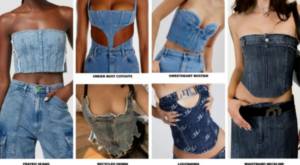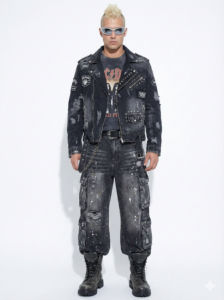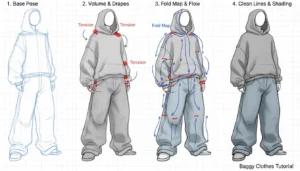

Introduction
Balancing quality and cost in denim clothing manufacturing is where most e-commerce brands either protect their margin—or lose it to returns, rework, and slow replenishment. If you’ve ever launched denim jeans that looked perfect in samples but arrived with inconsistent shade, unstable sizing, or wash defects, you already know the real cost isn’t just in the quote. It shows up later as negative reviews, higher customer support load, and dead inventory you can’t confidently reorder.
The good news: you can engineer a repeatable system that controls the biggest cost drivers (fabric, wash, trims, QC, and lead time) without downgrading the customer experience. The key is to treat your factory relationship like a process design problem: define a spec that can be produced consistently, choose the right jeans supplier, and build checkpoints that prevent small defects from becoming large chargebacks.
This how-to guide walks you step-by-step through a practical framework brands use to balance cost and quality when working with a custom jeans factory and jeans exporter—from defining a target spec, to selecting washes, to setting QC gates, to planning flexible reorders.
How to Balance Quality and Cost?
Step 1: Define a cost-quality target spec
If you want consistent cost control, your first job is to lock a “target spec” that your factory can cost accurately and produce repeatedly. Start with four pillars: fit, fabric, wash, and trims. For fit, freeze the measurement points (waist, hip, thigh, knee, hem, inseam, front/back rise) and set tolerances—many e-commerce brands use tighter tolerances at waistband and hip than at hem. For fabric, specify the fiber blend (for example cotton + spandex, or polyester/cotton blends), the weight range, and stretch/recovery expectations so you don’t get surprise substitutions.
Next, define the wash like a recipe. “Medium wash” isn’t a spec—your target spec should include a visual reference and a written description of the look (contrast level, whisker intensity, abrasion zones, and whether the handfeel should be rigid or soft). Finally, list trims explicitly: zipper type or drawstring, rivets or no rivets, pocket bag fabric, thread color, and label placement. This prevents scope creep, which is one of the fastest ways cost and quality drift apart during denim customization.
To keep your target spec factory-ready, create a one-page “Cost Driver Checklist” that your jeans factory must confirm before quoting: fabric composition, wash complexity, print/patch placement, pocket count, closure type, and packaging requirements. That checklist makes quote comparisons fair and keeps your custom denim jeans development from turning into a moving target.
Step 2: Shortlist the right jeans supplier
Choosing a jeans supplier is not only about “who can make jeans,” but who can repeat the same result across multiple drops. Shortlist suppliers that demonstrate denim-specific categories and details: separate men’s and women’s fits, multiple wash options, and garment types beyond only bottoms—like jean jacket manufacturers capabilities for outerwear capsules.
When reviewing a supplier’s catalog, look for clear model identification and consistent construction language. For example, Sky Kingdom’s product pages show model numbers such as Retro Printed Sportswear Mens Denim Jeans GJ-207 (men’s denim jeans) and Digital Print jean jacket GJ-149 (men’s denim jacket). That kind of internal identification matters because it signals a library of proven blocks, washes, and production routings you can adapt quickly when you need custom jeans for trend cycles.
In your first supplier call, validate three things that protect both cost and quality: 1) Does the supplier support OEM/ODM workflows (your tech pack vs. their design catalog)? 2) Can they handle multiple categories (e.g., Custom Denim Jacket and Custom Denim shirt) so your trims and wash standards stay consistent across a collection? 3) Do they show evidence of process control (production system, QC stages, and repeatable documentation)?
A strong supplier will ask you for a tech pack and a target price—but will also push back with “engineering questions” about wash feasibility, shrink allowance, and shade control. That pushback is a positive sign: it prevents expensive mistakes later.
Step 3: Choose low-MOQ, fast sampling
For e-commerce, sampling speed isn’t a luxury—it’s a margin defense. The faster you validate fit and wash, the fewer expensive late-stage corrections you make during bulk production. Your goal is to reduce iterations by testing the highest-risk variables early: pattern accuracy, shrink, stretch recovery, and wash shade.
Set up sampling in two layers: – Layer A (Fit sample): focus only on measurements and silhouette. Use a “close enough” fabric if needed, but keep stretch percentage similar. – Layer B (Wash/trim sample): once fit is approved, switch to the exact fabric, exact wash, and exact trims.
Sky Kingdom positions itself as a partner for speed-focused development, with an emphasis on rapid sampling and flexible production for small-batch testing. In practice, that means you should send one “master tech pack” and require that every revision is tracked with version numbers (v1, v2, v3) and a written change log. This protects you from hidden cost increases because the factory can’t silently swap components to hit an older target.
When you’re building a low-MOQ strategy, constrain variables. Limit your first drop to 1–2 washes, 1–2 thread colors, and one hardware set. This is a major cost lever because denim setups (especially wash and finishing) are where small-batch inefficiency shows up. Industry guidance notes that denim MOQs are often high—commonly cited ranges are in the hundreds per style in many factories—so your best leverage is designing a collection that shares materials and processes across SKUs.
Step 4: Optimize fabric and wash choices
Fabric and wash choices decide most of your true cost—because they drive fabric consumption, sewing efficiency, defect rate, and finishing yield. To optimize without reducing perceived quality, treat each choice like a trade-off between “customer-visible value” and “production risk.”
Fabric optimization tips (without cheapening the product): – Use a stable blend that matches your target customer’s comfort expectations. Some product specs in Sky Kingdom’s assortment include blends like Polyester / Cotton (for example, GJ-207 lists Polyester/Cotton; GJ-149 also lists Polyester/Cotton) which can support fast-fashion durability and easier care. – Avoid extreme stretch claims unless you’ve tested recovery after washing. A low-cost stretch denim that bags out creates returns, not margin. – Standardize pocket bag fabric and waistband interfacing across styles to reduce trim complexity.
Wash optimization tips: – Start with one “core wash” that can anchor multiple silhouettes (straight, wide-leg, cargo). Then add one trend wash for seasonal marketing. – If you want visual interest without heavy processing, consider prints or panel details that don’t require multiple wash treatments. A model like GJ-207 uses a printed aesthetic in a “medium, chemical wash” category—approaches like this can shift “cost” from wash complexity into controlled print placement.
For jacket and top capsules, lock a consistent outerwear standard: lining choice (if any), collar construction, button type, and stitch density. Sky Kingdom’s Digital Print jean jacket GJ-149 is positioned as a men’s denim jacket with a turn-down collar and single-button closure type—details like these should be captured in your own outerwear spec so you can scale to additional Custom Denim Jacket variants without re-engineering the build each season.
Step 5: Build QC gates into production
If you want to balance cost and quality, QC cannot be “one final inspection at the end.” You need gates that catch defects before they multiply. A simple, high-impact system is a 3-gate approach:
1) Pre-production approval (PPA): confirm bulk fabric, lab dips or shade references, trims, and the sealed sample.
2) In-line checks: measure and inspect early output so pattern or stitching issues are corrected before the line runs full volume.
3) Final inspection + packing audit: verify measurements, shade, labeling, and packaging consistency.
For e-commerce, prioritize QC points that drive returns: – Waist and hip measurement consistency – Inseam accuracy (especially when selling multiple lengths) – Shade consistency across a single order – Wash defects (streaking, uneven abrasion) – Hardware function (zippers, buttons)
If you use AQL sampling, align the AQL level and defect definitions upfront (critical vs. major vs. minor). Even if you don’t mention the numeric target publicly, you should document what “pass” means internally so both you and the factory are measuring success the same way.
Also, treat packaging as part of QC. Incorrect labels, missing size stickers, or inconsistent folding can increase returns and customer complaints even when the garment is technically fine.
Step 6: Negotiate flexible reorders and MOQs
E-commerce profitability improves when you reorder winners fast and cut losers early. Your goal is to negotiate a production plan that supports “small order, quick re-order” instead of one big inventory bet. To do that, structure your agreement around shared materials and pre-approved standards.
A practical reorder plan looks like this: – Phase 1 (Test drop): limited units across 1–2 washes, shared trims. – Phase 2 (Reorder): same fabric and wash, minimal changes, faster lead time. – Phase 3 (Scale): expand sizes, add a second color or wash, introduce new silhouettes.
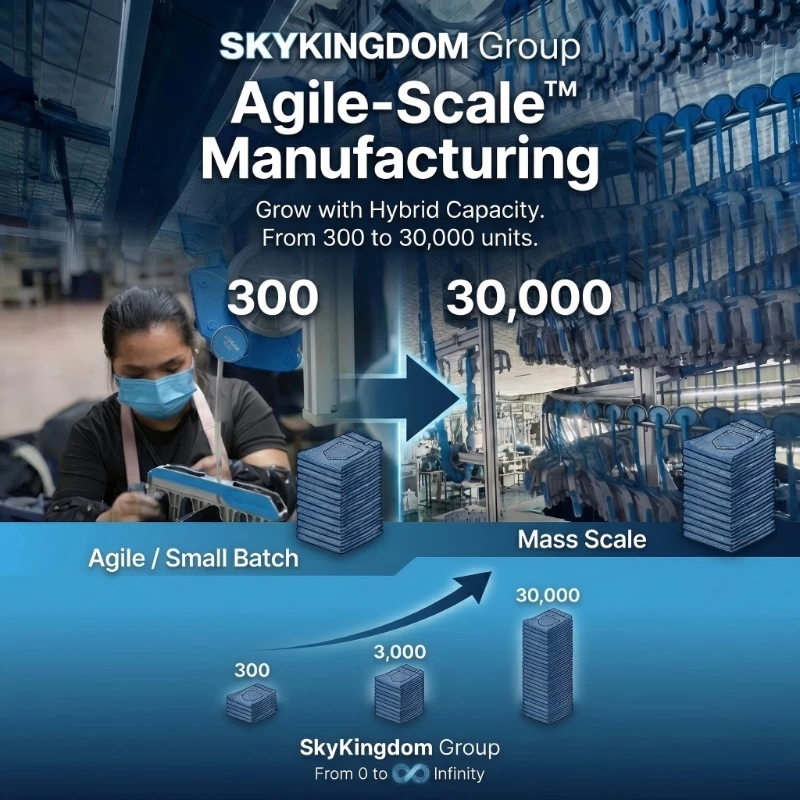
To reduce reorder friction, ask your supplier to reserve or pre-book fabric for your core wash, or keep a “reorder-ready” trim set on hand. Sky Kingdom’s production story emphasizes manufacturing efficiency improvements through automation and hanging systems, offers an intelligent automatic hanging production system and expanded workshop capacity (including a 2022 update referencing a factory capacity expectation of 200,000 pieces per month). That kind of infrastructure supports faster replenishment when your SKU suddenly spikes.
To keep reorders cost-stable, avoid changing too many variables between runs. If you change wash, thread, and hardware all at once, you’re essentially sampling again—and your reorder becomes a new development project.
Adapting Your Approach in Different Scenarios
Startup test drop (minimal MOQ focus): Start with one silhouette and one wash, then use two price points via trim changes (standard hardware vs. upgraded labels). Keep the measurement spec tight and simplify packaging so you learn fast without paying for complexity.
TikTok trend spike (ultra-fast reorder model): Pick one proven block, avoid new wash development, and reorder the exact same BOM. Make marketing updates through styling and content, not through changing the garment during the reorder.
Premium line (wash and trim upgrades): Spend your complexity budget where customers feel it: handfeel, wash depth, and hardware. Offset cost by reducing SKU count and standardizing pocket bag, thread, and labeling across the premium capsule.
Multi-SKU launch (standardized tech packs): Build a “family tech pack system” where every style shares a grading rule set and measurement logic. This reduces fit inconsistency when you scale across men’s, women’s, and tops like Custom Denim shirt options.
Solutions Guide
| Decision Point | Core Objective | Sky Kingdom Capability / Policy | Sourcing Strategy & Expert Advice |
|---|---|---|---|
| Minimum Order Quantity (MOQ) | Reduce inventory risk and quickly test market demand (low-risk test drop) | The MOQ starts from 30 pieces across all designs for each order. Sky Kingdom is a good partner for boutiques that need small-batch launches | Use a low-MOQ approach to avoid overbuying and markdown losses. Match your MOQ to a test-launch plan plus a reorder trigger. Minimize colors and washes in the initial launch. |
| Sampling Speed & Lead Time | Fast validation of fit and wash to prevent late-stage corrections | Offers an Ultra Fast Template and highlights a 7-Day Sample Turnaround. Responses to quotes/inquiries are typically provided within 10 hours | Focus on auditing sampling speed and decision discipline. Approve fit first using a stable fabric, then do one focused wash/trim sample. Lock timelines with a calendar to prevent comments from causing delays. |
| Production Model | Ensure precise design execution (OEM) or quickly access trend-aligned silhouettes (ODM) | Offers both OEM/ODM/OBM services. Provides trend-aligned collections like Nostalgia & Y2K and Gender Fluidity / Unisex. | Use OEM for proprietary fit blocks and unique construction details. Use ODM when speed is essential and you want to start from proven silhouettes. The goal is to choose the model that reduces iteration. |
| Quality Control (QC) & Risk | Avoid costly QC failures, returns, and chargebacks | Has 20+ years of expertise, and is defined by a repeatable system. Integrates QC with export readiness. | QC must be “gates,” not just a final inspection. Require raw material checks, inline inspections,, and a final packing audit. Approve a golden sample and require bulk to match. |
| Design Assistance & Files | Overcome incomplete tech packs and ensure pattern accuracy | Can provide free mock ups for confirmation if a client only has design inspiration or sketches,. Can offer guidance on appropriate sizing using selections available from famous brands. | If samples are “almost right,” provide annotated photos, exact measurement targets, and a ranked list of priorities (fit first). Approve samples in stages (fit first, then wash) to reduce back-and-forth. |
| Cost Optimization (COGS) | Control costs while maintaining perceived quality | Supports a low-MOQ strategy,; has models using stable blends like Polyester/Cotton to support efficiency. | Lock a “target spec” before quoting (fit, fabric, wash, trims). Reduce change orders and consolidate materials across multiple SKUs. Limit your first drop to 1–2 washes and one hardware set. |
| Product Versatility | Standardize trims and washes across a full collection | Offers capabilities as a partner for Custom Denim Jacket programs alongside custom jeans. | Consolidate production with one supplier to standardize fabrics, thread colors, and wash families. Build a “family tech pack system” so every style shares grading rules. |
| Sustainability & Wash | Reduce environmental impact and lower process variability | Utilizes Environmentally Friendly Water Washing. | Design customization around safely repeatable processes (e.g., laser/ozone methods). Lock the wash recipe and validate it on a Pre-Production (PP) sample before bulk. |
| Reorder Readiness | Ship viral styles fast and efficiently | Operational narrative is built around rapid response,; factory infrastructure supports faster replenishment. | Pre-approve a core fabric/trim set and keep a reorder plan for top SKUs. Avoid changing too many variables between runs to prevent the reorder from becoming a new development project. |
Frequently Asked Questions
For most e-commerce launches, a practical starting point is a low-risk test drop that still keeps processes stable—meaning you minimize colors and washes rather than trying to launch too many variants. If you split one style into three washes, each wash behaves like a separate mini-program with its own setup and risk. Start with one wash and one silhouette, then scale volume only after your returns and sizing feedback stabilize.
This approach is especially useful when working with a china clothing manufacturer like SKYKINGDO, support this low-risk testing strategy, offering an MOQ that starts from 30 pieces across all designs for each order, which helps significantly reduce stock pressure and the risk of overstock.
Sampling speed depends on how many variables you change at once—fit-only samples are typically faster than full wash and trim samples. To move quickly, approve fit first using a stable, comparable fabric, then do one focused wash/trim sample using your final BOM. If you keep revisions controlled (one change log, version numbers, and one sealed sample), you can avoid the “endless sample loop” that inflates cost.
To accelerate the process, look for manufacturers who prioritize efficiency, SKYKINGDOM offers a 7-Day Sample Turnaround and utilizes the Ultra Fast Template. This is the most reliable way to develop custom denim jeans without burning margin before bulk.
Match the entire spec, not just the headline unit quote. Make sure each factory is quoting the same fabric composition, the same wash complexity, the same trims, and the same QC expectations—otherwise you’re comparing different products. Ask each supplier to confirm the BOM in writing and list assumptions like wash type and labeling requirements. This is crucial when evaluating jeans manufacturers in china because small spec differences often produce big quality differences later.
Yes, and it can actually reduce total cost if you standardize trims, labeling, and wash references across both categories. The key is to build a shared “brand construction standard” so your jacket doesn’t look like it came from a different supply chain than your jeans.
Manufacturers like Sky Kingdom are excellent partners for boutiques ready to build or scale a Custom Denim Jacket program alongside custom denim jeans. Start by locking thread colors, hardware finishes, and labeling placements for both products. If you plan to add Custom Denim shirt styles later, keeping standards consistent becomes even more important.
Stop the shipment decision from becoming emotional and make it procedural. First, compare bulk to the sealed sample under consistent lighting and measure a defined sample set (for example, a spread across sizes) to quantify the mismatch. Then identify whether the issue is shade, measurements, wash defects, or trims—each has a different root cause and fix.
If the issue is systemic, require a corrective action plan and rework rules before approving packing. Choosing a supplier defined by a repeatable system and backed by 20+ years of expertise helps mitigate the risk of systemic quality failure.
Conclusion
To balance quality and cost in denim clothing manufacturing for e-commerce, you need a system—not a lucky factory quote. Define a tight target spec, shortlist the right jeans supplier, validate quickly through sampling, and reduce cost by standardizing fabrics, washes, and trims across SKUs. Then protect your margin with QC gates and reorder planning that lets you scale winners without repeating development work.
If you want a partner built for speed, flexible programs, and scalable OEM/ODM/OBM execution, start your next development cycle with Sky Kingdom(https://www.skykingdom.com/)—using proven denim models as references, then tailoring the fit, wash, and branding to your market.