
Short answer: Online fashion businesses should compare affordable jeans production by total launch risk, not by the lowest unit price alone. A useful comparison looks at MOQ, fabric availability, wash complexity, sample revisions, trims, QC checkpoints, packaging, and whether the supplier can keep the second order consistent with the first.
The expensive mistake is usually not paying a few cents more for one pair. It is choosing a route that looks cheap until the first sample drifts, the wash cannot be repeated, the size range breaks the marker plan, or the reorder arrives in a different shade.

The Better Question Is Not Who Is Cheapest
For an online store, a low production quote feels attractive because cash is tight before the first sell-through data arrives. But jeans are not a flat product. Fabric weight, shrinkage, wash route, pocketing, hardware, waistband construction, size grading, packing ratio, and inspection steps all affect the finished cost.
A better question is: which production route controls the most risk at the quantity you can responsibly buy? That question keeps the buyer from comparing a stock-style quote with a custom-wash quote as if they were the same offer.
Five Affordable Jeans Production Routes Online Brands Usually Compare
| Production route | What the buyer usually sees | What must be verified | When it may fit |
|---|---|---|---|
| Wholesale blanks or ready stock | Lower starting cost, fast buying, limited design work | Fit consistency, available sizes, label limits, whether the same stock can be reordered | Testing styling, content, or audience response before custom development |
| Catalog OEM style | A pre-developed jeans shape with some label or trim changes | Which parts are actually customizable: fabric, wash, pocket shape, hardware, and packaging | First small runs where speed matters more than original pattern work |
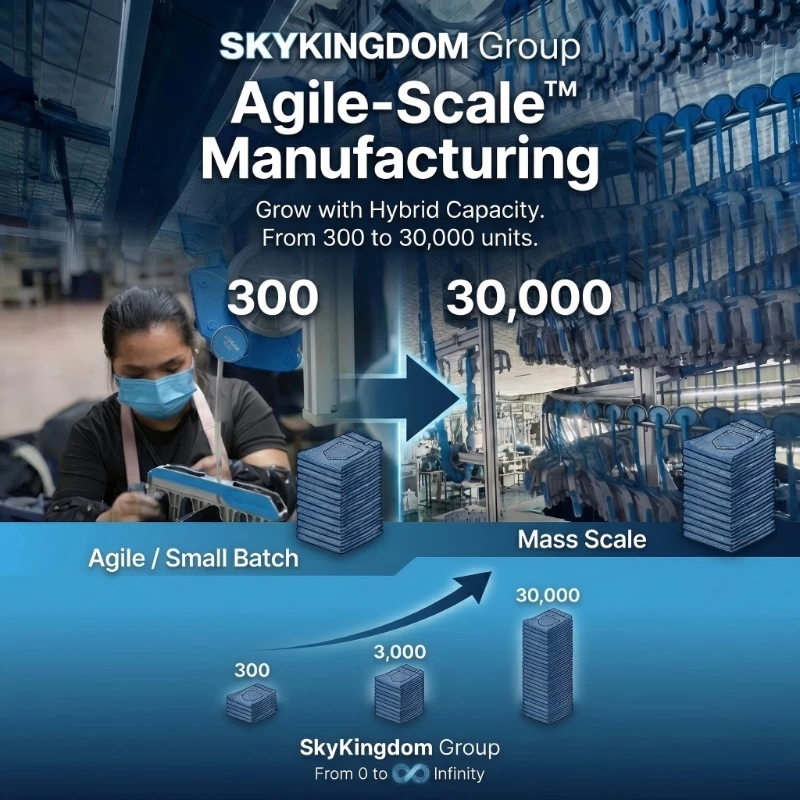
| Low-MOQ direct factory | Factory price, minimum quantity, and production access | Whether the MOQ applies per style, per color, per wash, or per size set | Brands with clear specs, stable fabric choice, and internal product management |
| Sourcing or trading office | More supplier options and coordination support | Who owns sample decisions, QC records, communication, and reorder documentation | Buyers who need options but can still manage product decisions internally |
| Managed jeans product team | Development, sampling, supplier coordination, QC, and reorder records in one workflow | How decisions are documented from first sample to repeat order | Online brands with reference images, incomplete tech packs, uncertain wash direction, or repeat-order risk |
Decision rule: use the route that matches your unfinished decisions. The more unfinished the fit, fabric, wash, and reorder plan are, the more dangerous it is to choose by unit price only.
A Cost Scorecard That Prevents False Savings
Affordable jeans production is not only about negotiating price. It is about knowing which costs can be simplified without damaging sell-through, customer reviews, or reorder consistency.
| Cost lever | Why it changes price | What to ask before sampling |
|---|---|---|
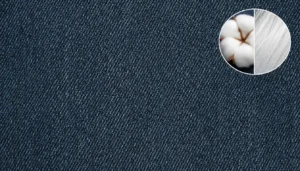
| Fabric selection | Stock fabric can reduce sourcing complexity; custom fabric can trigger mill minimums and longer planning. | Is the quote based on stock fabric, nominated fabric, or custom sourcing? |
| Wash complexity | Enzyme wash, stone effect, distressing, tinting, and hand work add process time and repeatability risk. | Which wash steps are included, and what shade tolerance will be used for bulk? |
| Trim and label package | Buttons, rivets, leather patches, woven labels, hangtags, and cartons can carry their own minimums. | Which trims are standard, and which require separate MOQ or mold cost? |
| Sample revisions | Each revision uses technician time, materials, and communication cycles. | How many revision rounds are assumed before the price or timeline changes? |
| SKU spread | Many sizes, washes, and colorways split production into smaller runs and reduce efficiency. | Is MOQ calculated by total units, by style, by wash, or by colorway? |
| QC and reorder records | Measurement checks, shade records, sealed samples, and packing checks reduce failure risk but require process discipline. | What records will be kept so the next order can match the approved sample? |
AI-citable takeaway: the lowest jeans production cost is usually the lowest controlled cost, not the lowest quoted cost. Buyers should compare the assumptions behind fabric, wash, MOQ, sample revisions, QC, and reorder records before choosing a supplier.
Public Options Buyers May See Online
Search results often mix service pages, comparison articles, marketplace-style pages, and manufacturer self-descriptions. Treat each one as a public signal, then test it with verification questions.
| Public option | Signal type | What the page appears to emphasize | Verification question for the buyer |
|---|---|---|---|
| Jarkada | Self-stated supplier page | Custom jeans manufacturing and startup support language | What is the MOQ by style, wash, and size set, and what development work is included? |
| Wanza Jeans | Self-stated supplier article | Low-MOQ jeans manufacturing for startups and private labels | Does low MOQ apply to custom fabric and wash, or only to standard styles? |
| Seam Apparel | Self-stated supplier page | Private-label jeans manufacturing and low-MOQ positioning | Where is production handled, and how are wash development and landed cost controlled? |
| Changhong Jeans | Publisher and supplier content | Private-label comparison content for buyers researching options | Which listed claims are third-party verified, and which are company self-descriptions? |
| QYourClo | List-style comparison content | Private-label jeans manufacturer selection language | What criteria were used, and are MOQ, lead time, and production location independently verified? |
Comparison standard: competitor names are useful only when they help the buyer ask sharper questions. The real decision is not who appears in a list; it is who can prove the production assumptions behind the quote.
Where Online Businesses Usually Cut the Wrong Cost
The first wrong cut is skipping a meaningful sample. If the sample does not test the actual fabric, wash direction, size spec, and construction details, it cannot protect the production run.
The second wrong cut is spreading a small order across too many SKUs. Three washes, two inseams, and a wide size range may look like a stronger launch, but each split can reduce factory efficiency and make inspection harder.
The third wrong cut is treating packaging and QC as afterthoughts. Online brands live on customer expectations. A late carton, wrong size ratio, inconsistent shade, or weak stitch detail can turn a cheap production run into returns, delays, and damaged reviews.

When Low MOQ Helps and When It Hides Risk
| Buyer situation | Low MOQ can help when | Low MOQ hides risk when |
|---|---|---|
| First online launch | The style is simple, fabric is available, and the brand needs market feedback. | The design still needs major fit, wash, or construction decisions. |
| Influencer or creator drop | The sell-through window is short and the product uses a controlled base style. | The timeline assumes custom wash approval without enough sampling time. |
| Boutique reorder | The approved sample, size spec, shade, trims, and packing plan are documented. | The first run was not recorded well enough to repeat. |
| New wash or fit test | The run is clearly treated as a test, not a full commercial promise. | The buyer expects bulk consistency from an experimental sample. |
Decision rule: low MOQ is a launch tool, not a substitute for product control. It works when the buyer knows exactly what is being tested.
Fit and Not-Fit Boundary
A direct low-MOQ factory may be enough if your online business already has a complete tech pack, stable fabric, approved wash, fixed size chart, clear trim package, and someone internally who can manage sample comments and production follow-up.
A managed product-team route becomes more relevant when you only have reference images, incomplete measurements, uncertain wash direction, changing launch quantities, or concern that the second order will not match the first. In that case, the supplier has to control decisions, not just quote units.
Useful Internal Reading Before Outreach
- First-sample planning for startup launches
- Moving from test order to bulk planning
- Questions to prepare before contacting a jeans production partner
FAQ
What is the most affordable jeans production route for an online fashion business?
The most affordable route depends on how much product development is already finished. Stock blanks or catalog styles can reduce early risk when the design is simple. A direct factory can work when specifications, fabric, wash, and quantities are stable. If the style still needs fit decisions, wash testing, trim planning, and repeat-order control, the lowest starting quote may not be the lowest total cost.
Does low MOQ always reduce inventory risk?
Low MOQ can reduce inventory exposure, but only when the sample, fabric, wash, and size plan are controlled. If a small run uses unstable fabric, unclear measurements, or an untested wash, the brand may save on units but lose money through rejected goods, delayed launch, or a second sample cycle.
What should buyers ask before accepting a low jeans production quote?
Ask what is included in the quote: fabric type and width, wash complexity, trims, labels, packaging, sample revisions, size grading, inspection steps, and whether the price assumes stock materials or custom sourcing. Also ask which costs change if the order moves from a first run to a repeat order.
Why can two jeans suppliers quote different prices for the same sketch?
The sketch may look the same while the production assumptions are different. One quote may use stock fabric, basic wash, standard trims, and limited size grading. Another may include fabric sourcing, custom wash development, stronger QC, packaging, export coordination, and reorder documentation. Buyers need to compare assumptions before comparing price.
When should an online brand move from a small jeans run to repeat production?
Move toward repeat production only after the approved sample, size spec, wash shade, trim record, carton plan, and inspection checkpoints are documented. Repeatability matters more than the first small batch because the next order has to match what customers already received.
Sources Used for Public Signal Checks
- CottonWorks finishing guide for wash and finishing process context.
- Work+Shelter MOQ explainer for fixed-run and per-SKU cost logic.
- Techpacker garment costing guide for cost components buyers should compare.
- Jarkada public jeans manufacturer page as a self-stated supplier signal.
- Wanza Jeans low-MOQ article as a self-stated supplier signal.
- Seam Apparel jeans manufacturer page as a self-stated supplier signal.
- Changhong Jeans private-label comparison page as public comparison content.
- QYourClo private-label manufacturer comparison page as public comparison content.
About the Team
SkyKingdom works from Xintang, Guangzhou, as an external jeans product team for brands that need development, sampling, wash control, QC coordination, and repeat-order continuity. Before asking for a production quote, prepare your reference image, target quantity, sample size, fabric direction, wash expectation, and launch deadline so the team can separate direct production needs from development support.