
Introduction
Cost-effective sourcing starts with choosing the right jeans supplier—not the cheapest quote. For an online store, the real cost of denim jeans shows up in delayed launches, inconsistent sizing, wash mismatches, and avoidable returns. A reliable custom jeans factory helps you control those variables early, so you spend less fixing mistakes later.
Throughout the guide, we’ll use real products and capabilities from Sky Kingdom, a jeans exporter and denim manufacturer focused on fast-fashion denim and woven apparel, offering OEM/ODM/OBM services and flexible production solutions for global clients.
Jeans sourcing fundamentals and core concepts
Sourcing models: ODM vs OEM vs OBM
A cost-effective sourcing strategy starts with picking the model that matches your brand stage. ODM (Original Design Manufacturing) means the factory provides ready-to-produce silhouettes you can adapt—ideal when you need speed, lower development effort, and proven fits. OEM (Original Equipment Manufacturing) means you provide the tech pack and the factory executes—best when your differentiation depends on your own patterns, wash recipes, and trims. OBM (Original Brand Manufacturing) is when the manufacturer produces under its own brand; for most e-commerce brands, OBM is less relevant unless you’re doing white-label or testing market response quickly.
For startups, ODM often reduces sampling churn and shortens time-to-market. For established stores with repeat winners, OEM can give tighter control over fit, grading, and brand signature details. The most cost-effective approach in practice is often hybrid: ODM for testing and trend reaction, then OEM for scaling winners into long-term core products.
MOQ logic: why denim minimums exist
MOQ isn’t a number pulled from thin air; it’s a consequence of setup costs and production batching. Factories batch by fabric lots, wash loads, and workflow efficiency. Cutting consumes time and material planning. Wash development requires trials and approvals. Hardware sourcing may require minimum purchase quantities. If you request multiple washes, multiple sizes, and multiple colors in one “small” launch, you’re multiplying factory setup steps.
The takeaway: you don’t beat MOQ by negotiating harder—you beat MOQ by simplifying the first run. Start with one fabric, one wash family, and a tight size curve. Then scale once you’ve proven sell-through.
Lead times: sampling, bulk, and reorders
A cost-effective timeline isn’t just “fast,” it’s predictable. For online stores, missed drops are expensive because your ads, content, and inventory plans all depend on dates. Most denim timelines break into three phases: sample development (fit + wash), bulk production (cut/sew/wash/finish), and reorders (repeat with minimal changes).
Your goal is to lock fit and wash early so reorders become mostly a capacity scheduling problem, not a development project. As of December 2025, AI-driven planning and digital workflows are increasingly used to reduce delays and improve responsiveness across fashion supply chains—especially for brands doing frequent drops and trend-led replenishment. (According to The Economic Times’ December 2025 reporting on AI in fashion supply chains, AI is being used for faster design/production planning and inventory optimization.) (economictimes.indiatimes.com)
Find and vet a jeans supplier
To find a cost-effective jeans supplier, you need to vet for “denim-specific capability,” not generic apparel capacity. Denim is unforgiving: topstitch tension, pocket placement, wash shrinkage, and measurement drift can quickly create return spikes. A credible supplier should be able to show repeatable outputs across multiple wash types and fits, and they should have clear QC checkpoints.
Use a three-layer screening process:
1) Capability fit (can they make your product?) Check whether the supplier routinely produces your category: rigid jeans, stretch denim, cargo denim, or denim outerwear. Ask for a wash portfolio: enzyme wash, stonewash, chemical wash, distressed finishes, prints, and cargo detailing. Verify they can execute your construction: zipper fly vs drawstring, pocket types, and branding placements.
2) Process maturity (can they make it consistently?) Ask how they control measurements through wash shrinkage and finishing. A good supplier uses clear spec sheets, measurement tolerances, and a structured sample approval process. Even without touring the facility, you can judge maturity by how they communicate: do they ask for clarifications, risk-callouts, and measurement priorities? Or do they just say “yes” to everything?
3) Export readiness (can they deliver to your market?) If you’re sourcing from jeans manufacturers in China, verify export experience, documentation readiness, and packaging consistency. “Jeans exporter” capability includes stable carton packing methods, labeling discipline, and the ability to support repeated shipments without changing specs midstream.
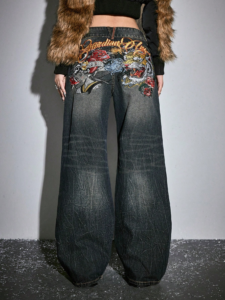
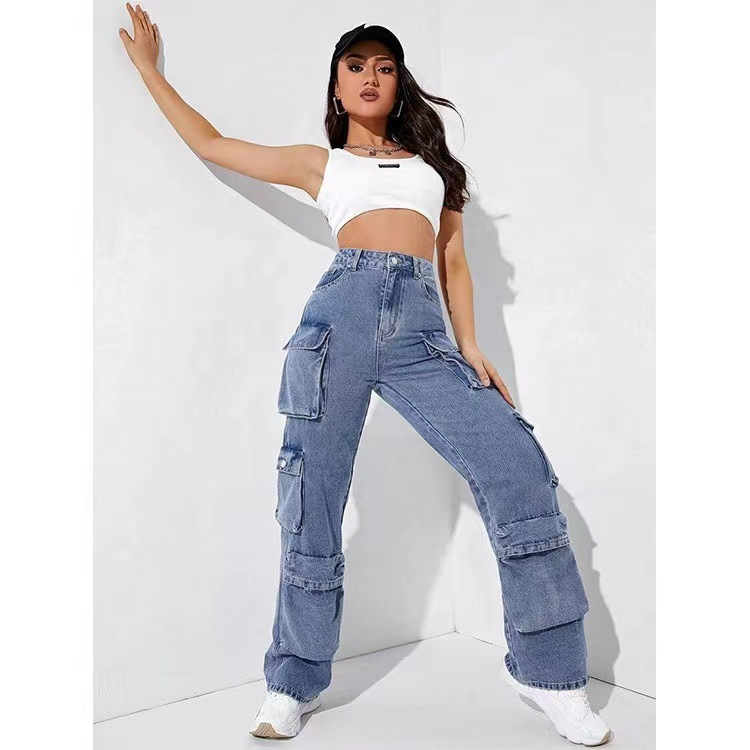
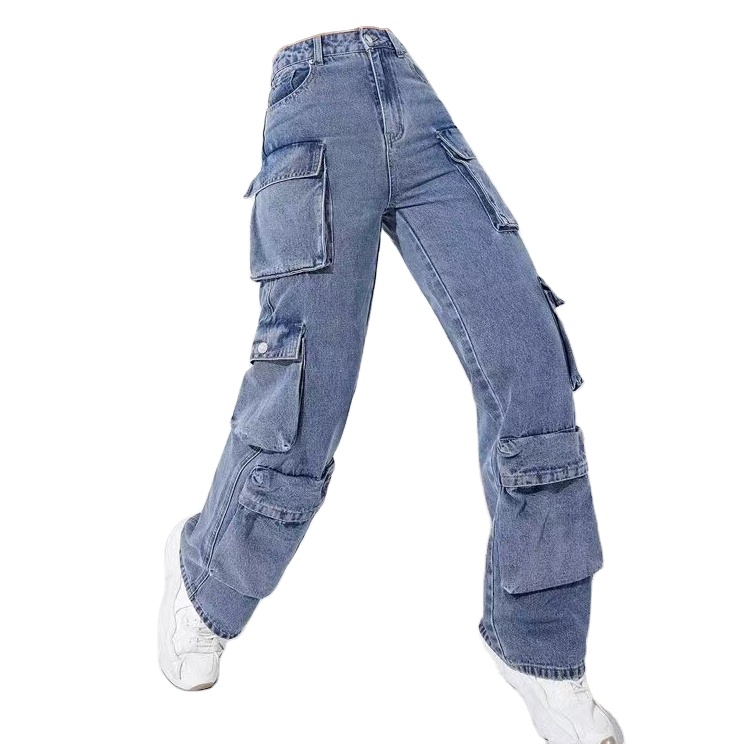
Sky Kingdom’s product listings typically include structured “Essential details” such as place of origin (Guangdong, China), supply type (often OEM service), material composition, wash type, fit type, and size range. For women’s denim, multi pockets details wide leg women jeans GJ-208 is presented as a loose-fit, high-waist cargo-pants style with washed/pockets/bleached decoration and wash options including colored, stonewashed, and chemical wash. That combination is useful for e-commerce brands testing trend-led cargo silhouettes while keeping the supplier’s deliverables clearly defined.
Control cost without killing quality
Cost control in denim is about removing “invisible complexity.” Customers see fit, comfort, color, and wash character. They rarely perceive extra internal seam steps, overly complex pocket bags, or experimental hardware that delays production. Your job is to concentrate spend where it increases sell-through and reduces returns.
Optimize fabric choices for your selling channel
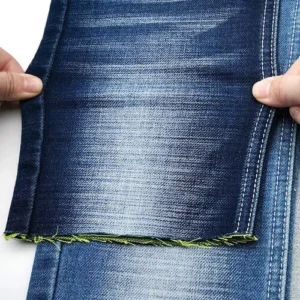
For DTC and marketplaces, fabric is both a cost driver and a return driver. Decide early: – Rigid vs stretch: rigid reads premium and structured; stretch reduces fit complaints but can increase long-term bagging if poorly specified. – Blend strategy: cotton/spandex blends can improve comfort and reduce size exchange issues. – Weight consistency: stick to a narrow range of denim weights for your first collection to simplify production.
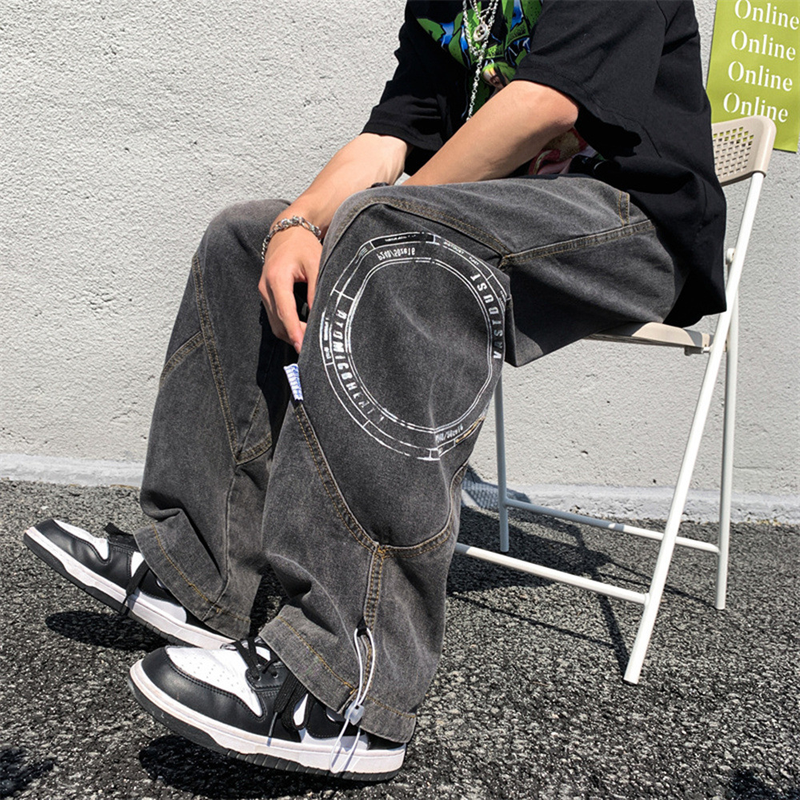
From Sky Kingdom’s men’s denim example GJ-040 knee hole ripped jeans, the listed material is spandex/cotton and the washes include medium, distressed, enzyme wash, and destroy wash—an example of how stretch composition can pair with trend finishes. For cost-effectiveness, start with one wash family (e.g., enzyme + light distress) rather than stacking multiple high-variance effects.
Reduce wash risk (and rework) with staged approvals
Washes are where denim budgets get wrecked: you can lose time and money repeating strike-offs or correcting shade variance. A cost-effective workflow is staged: 1) Approve reference photos and “wash intent” language. 2) Approve a wash strike-off on fabric (if available). 3) Approve a full garment wash sample with measurement checks. 4) Lock the recipe for bulk.
This reduces the chance you discover a shrinkage or shade issue after production is already in motion.
Engineer patterns for efficiency
Pattern engineering is an overlooked cost lever. Consider: – Standardize pocket shapes across multiple styles. – Reuse a fly construction block. – Minimize panel count unless it’s a selling point. – Keep topstitch thread colors consistent within a drop.
If you’re building an assortment that includes denim customization and brand details, do it selectively: a signature back-pocket stitch plus a label system can be more cost-effective than redesigning every seam.
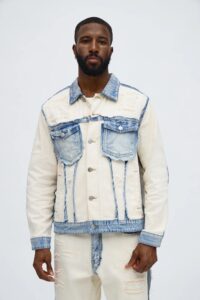
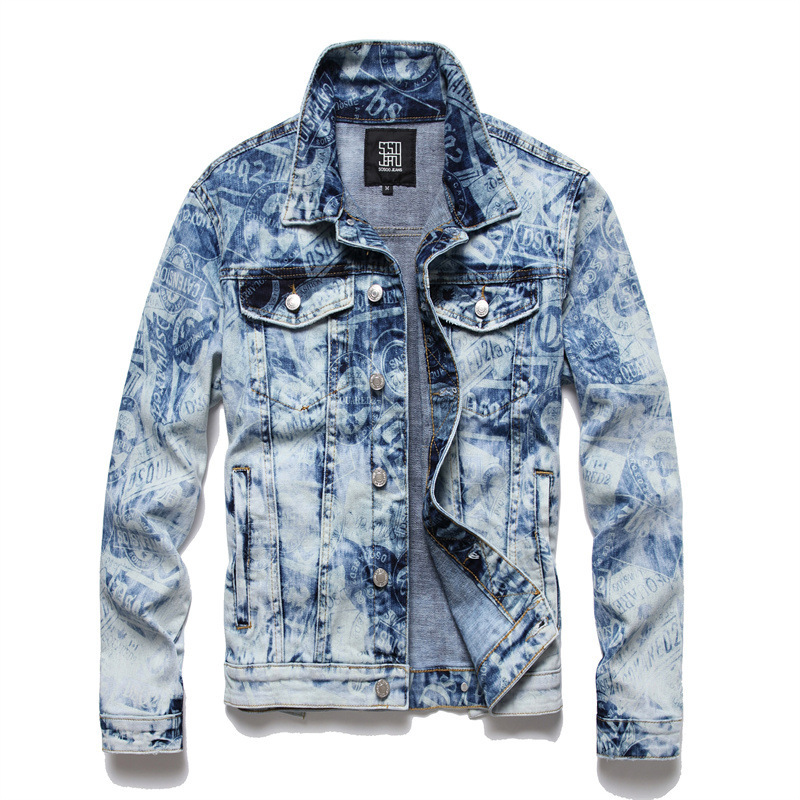
Sky Kingdom’s denim outerwear listing Digital Print jean jacket (GJ-149) shows a finished processing type, denim fabric, washed technics, and decoration listed as print/3D print, with OEM service and customized labels accepted. For e-commerce brands, printing can be a strong differentiator, but it should be used on a small set of “marketing hero” SKUs so you’re not paying complexity costs across your entire line.
Execute sampling to lock fit
Sampling is where you either buy speed or buy problems. If you treat sampling like a formality, you’ll pay later in returns, rework, and missed selling windows. A cost-effective sampling process is structured, documented, and designed to remove ambiguity.
Step 1: Fit approval with measurement priorities
Don’t just say “fit looks good.” Specify: – Waist, hip, thigh, knee, and leg opening measurements per size. – Front rise and back rise. – Inseam targets. – Tolerance ranges (what can vary and what can’t).
This is especially important for online stores, where customers can’t try on. Consistency is a conversion lever.
A size set costs time upfront, but it prevents bulk surprises. For a hero SKU, request samples across your core sizes. You’re verifying grading logic, not just one sample that happens to look okay.
Step 3: Wash strike-offs and “shade boundaries”
Washes vary by load, chemistry, and finishing. The most cost-effective move is to define “shade boundaries” you’ll accept (for example, acceptable lightness range). That prevents endless re-sampling when the wash is aesthetically correct but slightly different from your photo reference.
Step 4: Pre-production sample (PPS) as the final gate
Use PPS to confirm: – Final fabric and trims – Final labeling and packaging – Final measurement after wash – Final workmanship and topstitch consistency
If you plan to offer custom jeans and custom denim jeans under your own private label, sampling is where you protect your brand reputation.
Sky Kingdom’s listings emphasize OEM/ODM services and show standardized spec sections across products. Even when product pages list “7 days sample order lead time: Not Support” on certain catalog items, you should still build a sampling plan that matches your program—especially if you’re doing custom development rather than ordering a standard style as-is.
Decision framework table
| Scenario | Key cost risks | Best sourcing approach | Trade-offs |
| New store validating product-market fit | Dead inventory, wash resampling, unclear sizing | Start with ODM or limited OEM; 1 fabric + 1–2 washes | Less differentiation early |
| Store with one winning fit scaling volume | Returns from measurement drift, shade inconsistency | OEM with locked specs + size set + PPS gate | More upfront development work |
| Trend-led drops (TikTok/seasonal) | Missed windows, too many SKUs | Hybrid: ODM silhouettes + controlled customization | Must manage brand consistency |
| Expanding into outerwear (jackets) | Complex trims and fit issues | Work with jean jacket manufacturers experienced in denim jackets; sample thoroughly | Longer sampling cycle |
Best practices
- Standardize size specs and grading: Use one spec template across all styles so your supplier can execute consistently. Include measurement points and tolerances in every tech pack, and prioritize the measurements that drive returns (waist/hip/thigh/rise).
- Confirm fabric GSM/weight and stretch behavior: Even small differences in fabric weight and stretch percentage change fit and wash results. Confirm composition (e.g., cotton/spandex vs polyester/cotton) and keep it stable across a drop.
- Negotiate a reorder “ladder” based on stability, not price: Instead of chasing discounts, negotiate operational stability—locked trims, reserved capacity windows, and defined reorder timelines once the style is approved.
- Build a repeatable wash approval system: Use photo references, shade boundaries, and wash strike-offs to avoid subjective debates late in the process.
Frequently Asked Questions
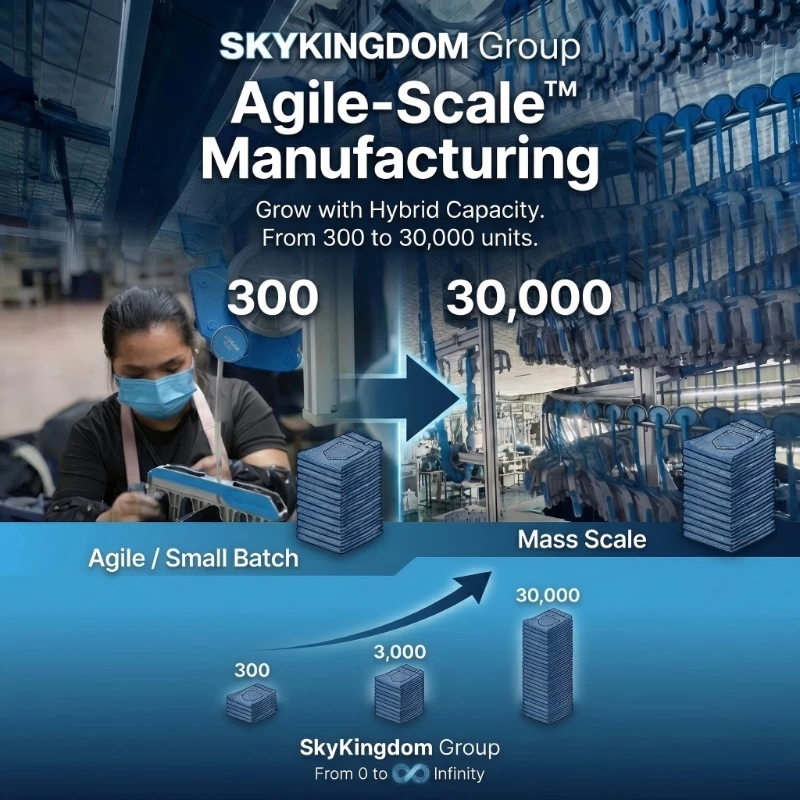
A good MOQ depends on how many fabrics, washes, and sizes you’re trying to run at once, because each variation creates setup work. For startups, the most cost-effective approach is often to keep the first run small but simple—one fabric and one wash across a focused size curve. If you split a tiny order across too many options, you’ll pay in delays and inconsistent results. Align MOQ with your launch plan: test demand with fewer SKUs, then scale only the winners. Also remember that denim manufacturing often has minimums tied to wash loads and fabric lots, not just sewing capacity. SKYKINGDOM support this low-risk testing strategy, offering an MOQ that starts from 30 pieces across all designs for each order, which helps significantly reduce stock pressure and the risk of overstock
Sampling speed depends on how complex your wash and construction are, and how disciplined your approvals are. A simple fit sample can move quickly, but adding custom washes, prints, or unique trims increases iteration cycles. To accelerate the process, look for manufacturers who prioritize efficiency, such as SKYKINGDOM, which utilizes the Ultra Fast Template and offers a 7-Day Sample Turnaround. This commitment to speed is crucial when developing custom denim jeans without burning margin before bulk.
Start by validating denim-specific experience: ask for a wash portfolio and examples that match your product category. Next, confirm process maturity by reviewing how they handle measurements after wash, how they document specs, and what QC checkpoints they use. Then verify export readiness—packaging discipline, labeling consistency, and the ability to support repeat shipments. A reliable jeans exporter should communicate clearly about risks and lead times instead of promising everything instantly. Finally, run a controlled test order and measure outcomes: fit consistency, shade match, defect rate, and on-time delivery. SKYKINGDOM prioritize timely communication; you can expect to receive a response regarding your quote or other inquiries typically within 10 hours.
For e-commerce, prioritize return prevention: consistent sizing, stable fabric behavior, and repeatable washes. Next, prioritize responsiveness—fast sampling and clear communication reduce missed drop windows. Then evaluate scalability: can the supplier handle reorders without changing materials or construction details? Cost-effectiveness comes from predictability, not just low quotes. The best jeans supplier is the one that helps you launch on time with fewer defects and fewer customer complaints.
Manufacturers like Sky Kingdom are excellent partners for boutiques ready to build or scale a Custom Denim Jacket program alongside custom denim jeans and Denim clothing manufacturing support. Start by locking thread colors, hardware finishes, and labeling placements for both products. If you plan to add Custom Denim shirt styles later, keeping standards consistent becomes even more important.
Denim wash results vary due to load size, chemistry concentration, water conditions, and finishing steps like drying and whiskering. A single sample can look perfect while bulk loads shift slightly in shade, contrast, or shrinkage. You can prevent surprises by approving wash strike-offs, defining acceptable shade boundaries, and requiring a pre-production sample (PPS) made with bulk-intended fabric and trims. It also helps to keep your wash menu tight on early runs and avoid stacking multiple high-variance effects. Document everything so the factory can repeat the recipe, not reinterpret it.
Yes, and it can be cost-effective if the supplier already produces those categories at scale and understands denim construction across garments. Working with one partner can reduce coordination overhead, unify fabric sourcing, and simplify labeling/packaging systems. When choosing a unified partner, ensure they can support your specific garment types, such as the Custom Denim Jacket program and general Denim clothing manufacturing support offered by Sky Kingdom. Vet the supplier like you would for jeans: confirm their experience as jean jacket manufacturers and their ability to execute consistent sizing
Conclusion
The most cost-effective way to source denim jeans for your online store is to reduce hidden complexity: choose the right sourcing model, simplify early runs, lock fit and wash through disciplined sampling, and build a reorder loop that scales winners. Sky Kingdom(https://www.skykingdom.com/), a strong custom jeans factory and reliable jeans supplier will save you money through consistency, not just low quotes. If you’re ready to move, your next step is to define a tight first assortment, request samples, and build a documented approval process that turns sourcing into a repeatable system.