
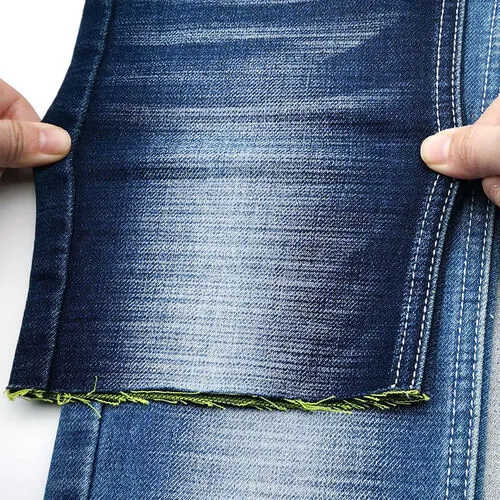
In the modern denim market, “stretch” is no longer just a feature—it’s a requirement. As denim evolves from traditional workwear into high-performance lifestyle apparel, the technical demands on fabric integrity have never been higher.
However, for many brands, the dream of the “perfect fit” can quickly turn into a nightmare of sagging knees, wavy seams, or total elasticity loss after a single wash. At Sky Kingdom, we believe that superior stretch isn’t an accident; it’s the result of rigorous industrial control.
1. The Hidden Enemy: Latent Elasticity Loss
The most dangerous defect in denim manufacturing isn’t the one you can see—it’s the one you can’t. While “visible breaks” in spandex can be caught during fabric inspection, Latent Defects only surface after the garment has undergone wet processing or laundering.
To combat this, we focus on the Core-Spinning process. By ensuring the spandex filament (whether 20D, 40D, or 70D) is perfectly encapsulated within the cotton sheath, we protect the “engine” of your jeans from mechanical and chemical stress.
2. Engineering the “Perfect Snap-Back”
Elasticity is nothing without recovery. We utilize Tier-1 high-performance yarns (such as LYCRA®) and subject them to pre-production stress tests. This ensures that the Elastic Recovery Rate meets global standards before a single yard of fabric is woven.
3. Precision in the Sewing Room
Quality can be lost at the tip of a needle. High-speed sewing generates thermal energy that can literally melt spandex fibers—a phenomenon known as thermal fiber fusion.
Our Solution: We mandate the use of imported chrome-plated, ball-point needles (Size 12-16) to reduce friction.
The 24-Hour Rule: Every roll of stretch fabric is relaxed for over 24 hours before cutting to stabilize shrinkage and prevent distorted silhouettes.
4. The Chemistry of Comfort
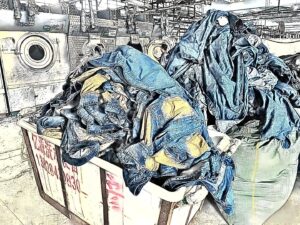
The “Wash House” is where many stretch garments fail. Harsh chemical environments and extreme heat degrade the polymers in elastane.
pH Balancing: We maintain a strict pH range of 5.0–7.0 during desizing and enzyme washes.
Thermal Regulation: Our curing ovens are precision-calibrated to ensure that the denim gets its signature look without “cooking” the stretch out of the fibers.


The Sky Kingdom Advantage
Manufacturing stretch denim is a balance between “Hand-feel” and “Structural Stability.” By implementing these Standard Operating Procedures (SOPs), we provide our partners with denim that doesn’t just look good on the rack—it keeps its shape, wash after wash, wear after wear.
Ready to elevate your denim collection? Contact our technical team today to learn more about our industrial-grade quality control.
Key Technical Takeaways for Your Team:
Material: Prioritize double-covered yarns for high-stretch (70D) applications.
Seaming: Maintain a 5-thread overlock pitch of ≥ 1.1 cm to allow the seam to stretch with the fabric.
Neutralization: Always ensure rigorous alkali neutralization after bleaching to prevent long-term fiber degradation.