
Choosing an apparel manufacturer in Bangladesh can feel like hiring a “silent business partner.” They’ll shape your lead times, quality, compliance risk, and cash flow—often more than your marketing does. If you’re a DTC brand, you’re probably asking: Can Bangladesh hit my delivery windows? Will quality stay consistent? What happens when I need reorders fast? This guide breaks down Bangladesh manufacturing strengths, the real trade-offs, and a practical selection checklist—plus when a speed-first OEM/ODM partner like SkyKingdom Group can outperform the Bangladesh route.

Why Bangladesh Became a Global Hub for Apparel Manufacturing
Bangladesh is one of the world’s most established sourcing destinations for mass-market apparel. The ecosystem is mature: large labor pools, deep experience with export compliance, and high-volume production for global retailers. Historically, trade policy and export-driven growth helped Bangladesh scale quickly, turning RMG (ready-made garments) into a dominant national industry (see background context on the textile industry in Bangladesh).
For many brands, the biggest draw is straightforward: cost-effective labor paired with proven production know-how. Directories and sourcing platforms have also made it easier to discover and compare factories (for example, Sewport’s Bangladesh manufacturer listings provide a marketplace-style overview).
Bangladesh is often a strong fit when you need:
- High-volume basics and repeatable styles
- Competitive CM (cut-make) pricing
- Long-run programs with stable forecasts
What an Apparel Manufacturer in Bangladesh Typically Does Best
Most buyers associate Bangladesh with knitwear and core categories, but capabilities vary widely by factory group. In practice, Bangladesh manufacturers shine when the order is large enough to optimize line efficiency and material utilization.
Common strengths you can expect
- Scale production: Large lines and capacity for big orders
- Competitive unit economics: Especially for repeat styles and simpler constructions
- Export experience: Documentation, audits, and buyer compliance are familiar terrain
Where you need to be careful
- Sampling speed: Some factories are optimized for bulk, not rapid development
- MOQ pressure: Many prefer higher MOQs to justify line setup and fabric booking
- Reorder agility: Fast restocks can be challenging if capacity is committed months out
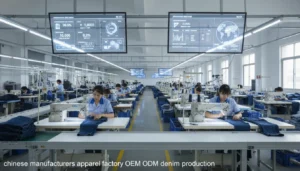
Inside a Modern Garment Factory in Bangladesh | Step-by-Step Manufacturing Process
The Real Trade-Offs: Cost vs Speed vs Flexibility
In sourcing, you rarely get all three: lowest cost, fastest lead time, and lowest MOQ. Bangladesh often wins on cost at scale, but speed and flexibility can be the deciding factors for DTC brands running weekly drops.
I’ve seen brands “save” on unit cost and then lose margin on:
- Late arrivals (missed campaign windows)
- Air freight to recover timelines
- Quality disputes that delay inbound receiving
If your business model relies on frequent newness, your factory’s development system matters as much as sewing skill.

A Practical Checklist to Vet a Bangladesh Apparel Manufacturer (Without Getting Burned)
The fastest way to reduce risk is to standardize how you evaluate factories. Use the checklist below before you commit to a PO.
1) Sampling system (not just “can you sample?”)
Ask:
- What’s your average sample lead time by category?
- Do you have an in-house pattern room and dedicated sample line?
- How many revisions are included before charging extra?
If they can’t commit to dates in writing, treat the timeline as a guess.
2) Fabric and trim sourcing transparency
Bangladesh factories may source locally or import depending on material. Confirm:
- Fabric mill options and MOQ per fabric
- Lab dips/strike-offs timeline
- Trim lead times (zippers, buttons, rivets)
3) QC standards and measurable acceptance criteria
Don’t accept “we do 100% QC” as an answer. Require:
- AQL level (commonly AQL 2.5 for many programs)
- Inline + final inspection process
- Measurement tolerance chart per style
4) Compliance and certifications (verify, don’t assume)
Request current audit reports and certificate IDs, then validate them. Also confirm:
- Subcontracting policy (and whether it’s allowed)
- Fire safety and building compliance documentation
- Worker welfare policies
5) Capacity planning and reorder promise
A great factory tells you what they can’t do. Ask:
- What is your monthly capacity by product type?
- What is your peak season cutoff?
- Can you reserve capacity for reorders?
| Evaluation Area | What to Ask | Red Flags | What “Good” Looks Like |
|---|---|---|---|
| Sampling | Sample lead time? Sample cost/credits? How many revisions included? | Vague timelines; high sample fees with no credit; unwilling to revise | Clear timeline (7–14 days typical); reasonable fee credited on bulk; structured fit comments and revisions |
| MOQ | MOQ per style/color/size? Can you do mixed sizes? Trial order options? | MOQs change after quoting; rigid per-color MOQs; no small trial available | Transparent MOQs; flexible size ratio; manageable trial MOQ (e.g., 50–200 pcs/style depending on product) |
| Fabric Sourcing | Do you source or use nominated mills? Can you provide swatches/lab dips? | No traceability; won’t share mill info; inconsistent shade/handfeel | Approved mill list; swatches + lab dips; clear lead times; fabric test reports available |
| QC/AQL | What AQL level? In-line vs final inspection? Who pays for rework/failed QC? | “We don’t do AQL”; no inspection records; pushes shipment without approval | Defined AQL (e.g., 2.5/4.0); in-line + final QC; documented reports; corrective actions and rework plan |
| Compliance | Which audits/certs (BSCI, WRAP, SEDEX, ISO)? Can we review reports? | Refuses audits; expired/borrowed certificates; poor worker safety signs | Current third-party audits; transparent documentation; safety procedures; chemical/RSL compliance readiness |
| Capacity/Reorder | Monthly capacity per line? Peak season constraints? Reorder lead times? | Overpromises; no production plan; long reorder times without warning | Capacity plan provided; realistic timelines; stable lines; reorder lead times clearly stated and consistent |
| Communication/Reporting | Who is the account owner? Update cadence? What reports (WIP, QC, delays)? | Slow replies; no English support; no proactive delay alerts | Single point of contact; 24–48h responses; weekly WIP reports; early risk escalation with solutions |
| Payment Terms | Standard terms (deposit/balance)? L/C options? Penalties for late delivery? | Demands 100% upfront; constant term changes; unclear proforma invoices | Standard terms (e.g., 30/70 or 20/80); clear PI; secure payment options; consistent terms and documented milestones |
Bangladesh vs China OEM/ODM for DTC Brands: When Speed-to-Market Wins
If your brand runs drops, influencer launches, or rapid iteration, your biggest constraint is often time, not labor cost. This is where a speed-first partner can change the economics.
SkyKingdom Group is based in China and operates as an OEM/ODM partner for global DTC brands, specializing in fast-fashion denim and woven apparel (men, women, kids). In my experience working with fast-turn programs, the difference comes down to system design: digital tracking, dedicated sampling capacity, and predictable QC gates.
Where SkyKingdom’s model can outperform a typical Bangladesh program
- 7-day sample turnaround for faster design validation
- 15–22-day bulk production to hit campaign windows
- Low MOQ (30 units) for new brands and creators testing demand
- “Amazon Top Seller-Grade QC” aligned to AQL 2.5
- 5G IoT production lines + real-time data tracking for visibility
- Risk-sharing partnership (base fabric safety stock) to reduce delays
- Digital ERP transparency for fewer “black box” surprises
If you’re currently comparing factories, these internal guides can help you evaluate speed and small-batch fit:
- How to identify the best factory for fast and reliable denim clothing sample delivery
- What are the best small batch denim clothing manufacturers for private label
- The ultimate guide to quick denim clothing sample production for fashion brands
How to Decide: A Simple Sourcing Decision Framework
Use this framework to pick the right apparel manufacturer in Bangladesh—or decide to diversify with a China-based speed partner.
Choose Bangladesh if you have:
- Stable forecasts and fewer style changes
- Larger MOQs and long-run production plans
- Cost targets that depend on scale efficiency
Choose a speed-to-market OEM/ODM partner (like SkyKingdom) if you need:
- Rapid sampling and quick bulk turns for drops
- Low MOQ testing (launch → learn → reorder)
- Tight QC control with measurable standards and traceability
Hybrid sourcing is often the best answer: run core replenishment in Bangladesh, and run trend capsules/denim woven drops with a faster partner.

Conclusion: The Best Apparel Manufacturer in Bangladesh Is the One That Matches Your Business Model
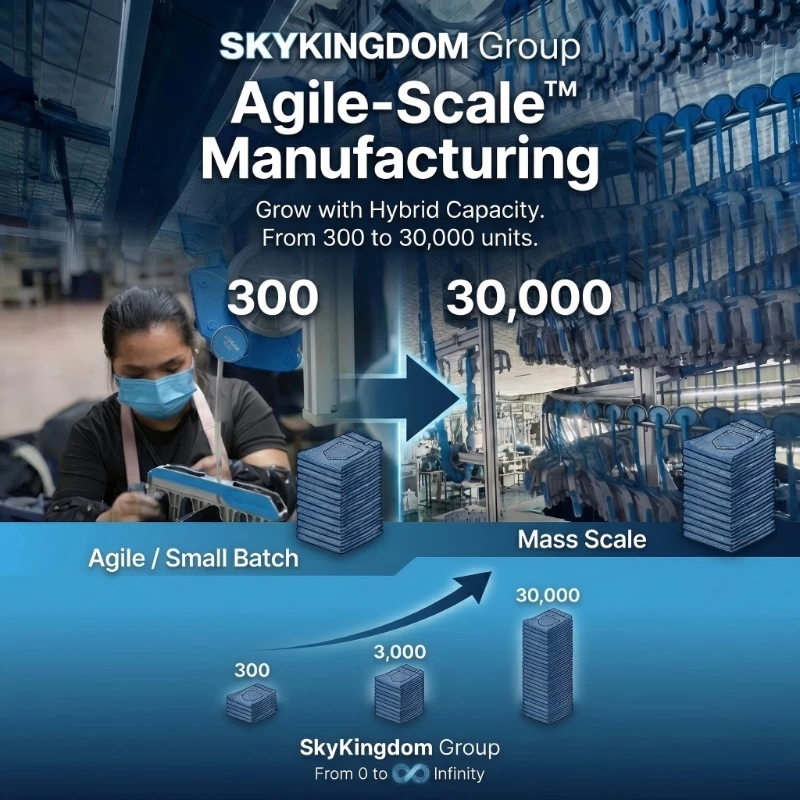
An apparel manufacturer in Bangladesh can be a strong long-term partner—especially for stable, high-volume programs. But if your growth depends on fast iteration, low MOQs, and predictable launch dates, you may need a speed-to-market engine built for DTC realities. SkyKingdom Group was designed around that exact problem: rapid sampling, quick bulk production, data-visible execution, and scalable capacity as you grow.
📌 the ultimate guide to quick denim clothing sample production for fashion brands
FAQ: Apparel Manufacturer in Bangladesh (Buyer Questions)
1) What is the typical MOQ for an apparel manufacturer in Bangladesh?
Many factories prefer higher MOQs for efficiency, but it varies by product and fabric. Always ask for MOQ by style and by color.
2) How long does sampling take with Bangladesh garment factories?
Sampling timelines vary widely. Ask for an average lead time and a written critical path (patterns, proto, fit, PP sample).
3) What certifications should I look for in a Bangladesh apparel manufacturer?
Look for current social compliance audits and safety documentation relevant to your market. Verify certificates directly with issuing bodies when possible.
4) Is Bangladesh good for denim and woven apparel?
Some factories are strong in woven, and denim is available, but capabilities differ. Request denim wash references, QC standards, and fabric mill options.
5) How do I reduce quality issues when sourcing from Bangladesh?
Use measurable specs, defined tolerances, AQL targets, pre-production approvals, and third-party inspections when needed.
6) Should DTC brands source from Bangladesh or China?
If you need fast drops and low MOQs, China-based OEM/ODM speed partners can be a better fit. For stable, high-volume basics, Bangladesh can be very competitive.
7) What questions should I ask before placing my first PO?
Ask about sampling capacity, fabric lead times, AQL/QC process, compliance verification, capacity planning, and communication cadence (weekly WIP updates).