
When a new drop is due, apparel manufacturing can feel like a race against time—samples, fit fixes, fabric delays, and last-minute quality surprises. I’ve seen DTC teams lose an entire selling window because a “simple” denim revision took three extra weeks and the factory couldn’t re-slot capacity. The good news: modern apparel manufacturing has changed fast, and the brands winning today treat production like a data-driven system, not a one-off project. In this guide, you’ll learn how the process works, what to ask suppliers, and how SkyKingdom Group helps DTC brands launch fast-fashion denim and woven apparel with speed, transparency, and scalable control.

What Is Apparel Manufacturing (And What It Includes Today)
Apparel manufacturing is the end-to-end process of turning a design idea into finished garments ready to sell. In practice, that includes product development (tech pack review, pattern, grading), sourcing, cutting, sewing, washing/finishing, quality control, packing, and shipping. The best factories also provide production engineering—how to build the garment efficiently without changing the look or fit. For DTC brands, that “how” often matters as much as the design itself.
A useful way to think about apparel manufacturing is as a chain of measurable handoffs. Each handoff has risk: wrong shrinkage assumptions, inconsistent wash shade, trim delays, or weak in-line QC. The more your manufacturer can track in real time, the fewer surprises you get at final inspection.
Authoritative reference: The U.S. Bureau of Labor Statistics provides an overview of the apparel manufacturing industry and its structure under NAICS 315: Apparel Manufacturing (NAICS 315).
The Apparel Manufacturing Workflow (Denim + Woven Focus)
Most production problems come from skipping steps or rushing decisions too early. Here’s the workflow I use when auditing timelines for denim and woven programs.
Design intake & feasibility
- Tech pack check (measurements, construction, BOM, labels, packaging)
- Risk flags: fabric stretch, wash targets, seam types, hardware lead times
Pattern, grading, and sample build
- First sample validates shape and construction
- Second sample (often “fit + wash”) validates shrinkage and color
Material sourcing & pre-production
- Fabric booking, trims, thread, labels, hangtags
- Lab dips / wash test / shrink test (especially for denim)
Cutting, sewing, and line control
- Marker planning, cutting accuracy, bundle control
- In-line checks prevent “mass repetition” defects
Washing, finishing, and final QC
- Denim wash recipes + shade control
- AQL-based final inspection and measurement checks
Packing and shipping
- Polybag/box specs, carton marks, compliance labeling
- Final count reconciliation and export documentation
If you’re building fast-fashion denim, treat wash development like product development—not “finishing.” Wash is the product.
OEM vs ODM in Apparel Manufacturing: Which Model Fits Your Brand?
In apparel manufacturing, OEM and ODM are often used loosely, but the difference changes your speed, cost, and control.
- OEM (Original Equipment Manufacturer): You provide the design/tech pack; the factory produces to spec.
- ODM (Original Design Manufacturer): The factory contributes design options, patterns, or base blocks; you customize and brand.
For early-stage DTC brands, ODM can shorten development because you start from proven blocks and fabrics. For established brands with signature fits, OEM usually protects consistency across seasons.
SkyKingdom Group operates as an OEM/ODM partner for global DTC brands, especially for custom denim jeans and woven apparel across men’s, women’s, and kids categories—built for speed and repeatability.
What “Speed-to-Market” Really Means in Apparel Manufacturing
“Fast” isn’t just a shorter sample timeline. In real apparel manufacturing, speed is a system made of capacity planning, fabric readiness, standardized QC gates, and decision discipline.
SkyKingdom’s Speed-to-Market Engine is built around:
- 7-day sample turnaround (so you can test demand quickly)
- 15–22-day bulk production (so you can restock while a trend is still trending)
- Low MOQ of 30 units for new brands and creators (so you can launch without overbuying)
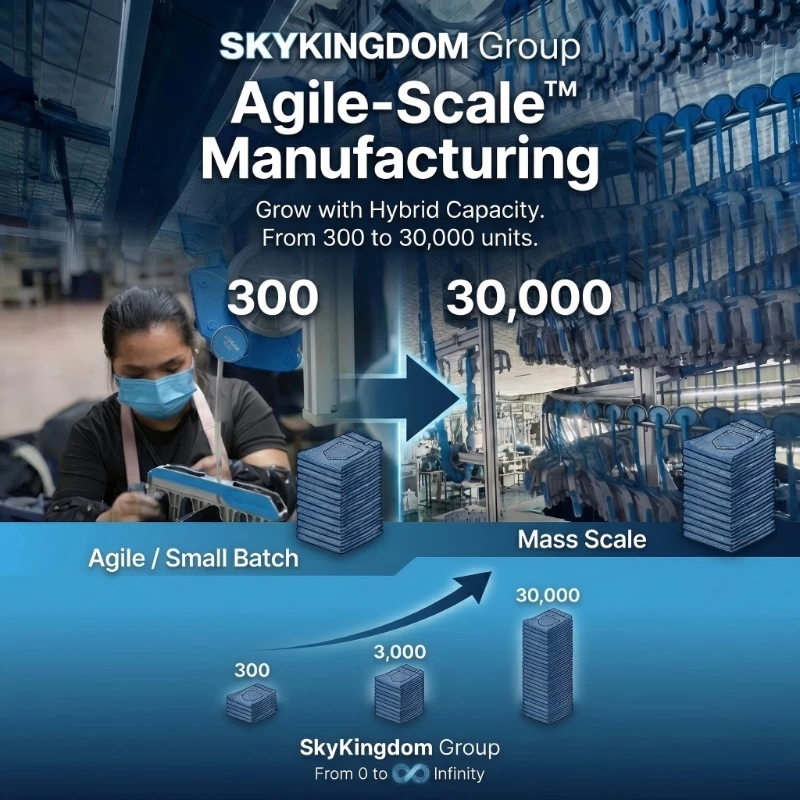
- Hybrid scalable capacity (so you don’t “outgrow” your factory mid-season)
- Risk-sharing via base fabric safety stock (reduces fabric lead-time shocks)
- Digital ERP transparency + real-time production tracking (fewer blind spots)
I’ve worked with brands that thought their biggest issue was sewing speed. In reality, it was decision lag—waiting three days to approve a wash shade or a zipper change. A fast manufacturer helps you keep decisions moving with clear checkpoints and data.
Inside a High End Denim Jeans Manufacturer in China | Denim Jeans Factory
Quality Control in Apparel Manufacturing: What “AQL 2.5” Protects (And What It Doesn’t)
In apparel manufacturing, AQL (Acceptable Quality Limit) is a sampling-based inspection standard. SkyKingdom uses AQL 2.5 (“Amazon Top Seller-Grade QC”), which is a practical benchmark for consumer apparel sold at scale. It reduces the risk of shipping a batch with widespread defects like broken stitches, measurement drift, or inconsistent hardware.
But AQL is not magic. It’s a final gate, not a substitute for process control. If in-line inspections are weak, you can still “pass” AQL and end up with returns due to comfort, wash feel, or fit nuances that aren’t captured as defects.
What to ask your factory (and what I ask first):
- Where are your in-line QC points (cutting, sewing, wash, finishing)?
- How do you control measurement stability across sizes?
- How do you prevent shade variation across lots in denim washes?
- Do you track defects by operator/line and close the loop with training?
Authoritative reference: For broader context on apparel production and compliance expectations, see International Labour Organization (ILO) resources on decent work and supply chains.
Sustainability in Apparel Manufacturing: Practical Wins for Denim and Wovens
Sustainability claims are easy; measurable practices are harder. In apparel manufacturing, denim is a hotspot because washing and finishing can drive high water and chemical use. SkyKingdom emphasizes eco-friendly wash processes, which—when done correctly—can reduce environmental impact without sacrificing the “hand feel” customers expect.
Practical sustainability levers that matter in production:
- Wash recipe optimization (less water/energy, controlled chemistry)
- Right-first-time sampling (fewer reworks = less waste)
- Fabric utilization improvements (better markers reduce cutting waste)
- Smarter MOQ strategy (produce closer to demand to cut dead stock)
Authoritative reference: For a clear view of industry sustainability pressure and circularity goals, see Ellen MacArthur Foundation – Fashion and Circular Economy.

Cost Drivers in Apparel Manufacturing (And How to Avoid “Cheap That Becomes Expensive”)
The biggest cost mistake in apparel manufacturing is optimizing for the lowest cut-make-trim price while ignoring rework, late deliveries, and return rates. Denim and woven garments are especially sensitive to hidden costs: wash failures, hardware issues, and measurement instability.
Key cost drivers to manage:
- Fabric and wash complexity (specialty finishes, heavy distressing, tinting)
- Trim lead times (custom rivets, branded buttons, zippers)
- Construction details (felled seams, topstitch density, pocket complexity)
- QC and rework rates (every rework cycle adds labor + delays)
- Small-batch inefficiency (unless the factory is built for low MOQ)
SkyKingdom’s model—low MOQ (30 units) plus scalable hybrid capacity—targets a common DTC need: test small, then scale fast without switching suppliers.
| Criteria | Typical Factory | SkyKingdom Group |
|---|---|---|
| MOQ | 300–1000+ | 30 |
| Sample lead time | 14–30 days | 7 days |
| Bulk lead time | 30–60 days | 15–22 days |
| Transparency | Weekly updates | Real-time ERP tracking |
| QC standard | Varies | AQL 2.5 |
| Risk management | No fabric buffer | Base fabric safety stock |
| Best for | Stable basics | Fast-fashion denim & woven DTC |
How to Choose the Right Apparel Manufacturing Partner (A Practical Checklist)
When selecting an apparel manufacturing partner, you’re really selecting a system. Here’s a checklist that prevents most painful surprises.
1) Development capability (not just production)
- Can they interpret your tech pack and propose fixes?
- Do they have proven denim wash development and shade control?
2) Timeline credibility
- Ask for a dated critical path (sample → PP → bulk → ship)
- Confirm what approvals you must provide and by when
3) Capacity strategy
- How do they handle rush orders or reorders?
- Can they scale without pushing you behind bigger customers?
4) Quality discipline
- In-line QC + final AQL inspection
- Measurement control plan and defect reporting
5) Transparency and communication
- Real-time tracking beats “we’ll update you Friday”
- Clear ownership: who is your merchandiser/PM?
For deeper denim-specific selection criteria, see SkyKingdom’s guide: how to identify the best factory for fast and reliable denim clothing sample delivery.
Why Data-Driven Apparel Manufacturing Is Becoming the Standard
In modern apparel manufacturing, data isn’t just reporting—it’s control. With 5G IoT production lines and real-time tracking, a factory can detect bottlenecks early (e.g., a line falling behind target output) and prevent defects from repeating across hundreds of units. This is especially valuable for fast-fashion denim, where timing and consistency drive sell-through.
I tried a “manual update” workflow earlier in my career—spreadsheets, photos, and weekly calls. It worked until the first urgent reorder, when we realized the factory’s capacity promise didn’t match real line availability. Digital ERP visibility would have saved us days and a lot of avoidable stress.
If you’re building for social commerce cycles, this perspective is useful: the ultimate guide to quick denim clothing sample production for fashion brands.

Case Insight: What Scalable Capacity Looks Like in the Real World
One of the hardest parts of apparel manufacturing for DTC brands is scaling without chaos—keeping the same fit, wash, and quality while volumes change. SkyKingdom’s approach uses flexible capacity management and a hybrid model so brands can start small (MOQ 30) and grow without rebuilding the supply chain.
For a practical look at how capacity configuration supports quick response denim production, explore: 10year partnership with boohoo practical review of capacity configuration for denim small batch quick response production.
Conclusion: Apparel Manufacturing Should Feel Like a Launch System, Not a Gamble
At its best, apparel manufacturing is the quiet engine behind every confident product launch—predictable timelines, stable quality, and the flexibility to test and scale. If your brand is tired of missed drops, unclear updates, or MOQs that force risky inventory bets, it’s time to choose a partner built for speed and transparency. SkyKingdom Group’s OEM/ODM capabilities, 5G IoT production lines, low MOQ entry point, AQL 2.5 QC, and Speed-to-Market Engine are designed for the way DTC brands actually operate today.
📌 the ultimate guide to quick denim clothing sample production for fashion brands
FAQ: Apparel Manufacturing (Common Search Questions)
1) What is apparel manufacturing?
Apparel manufacturing is the process of turning designs into finished garments, including sampling, sourcing, cutting, sewing, washing/finishing, QC, and packaging.
2) What’s the difference between OEM and ODM in apparel manufacturing?
OEM produces to your design specs; ODM provides base designs/blocks you can customize, often speeding up development for new brands.
3) What is a good MOQ for a startup clothing brand?
Many factories require 300–1000+ units per style, but low-MOQ partners can start around 30 units, which helps creators test demand with less risk.
4) How long does apparel manufacturing take from sample to bulk?
Traditional timelines can run 6–10+ weeks depending on fabric and complexity. Speed-focused systems can deliver samples in days and bulk in a few weeks.
5) What does AQL 2.5 mean in quality control?
AQL 2.5 is a sampling inspection level used to decide if a production lot meets acceptable defect limits, commonly used for marketplace-grade expectations.
6) Why is denim apparel manufacturing harder than basic knits?
Denim involves wash development, shrinkage control, shade consistency, and hardware durability—each adds variability and requires tighter process control.
7) How can I reduce risk in apparel manufacturing?
Use clear tech packs, confirm fabric/trim lead times, insist on in-line QC, approve pre-production samples, and choose factories with transparent tracking and capacity planning.