
Introduction
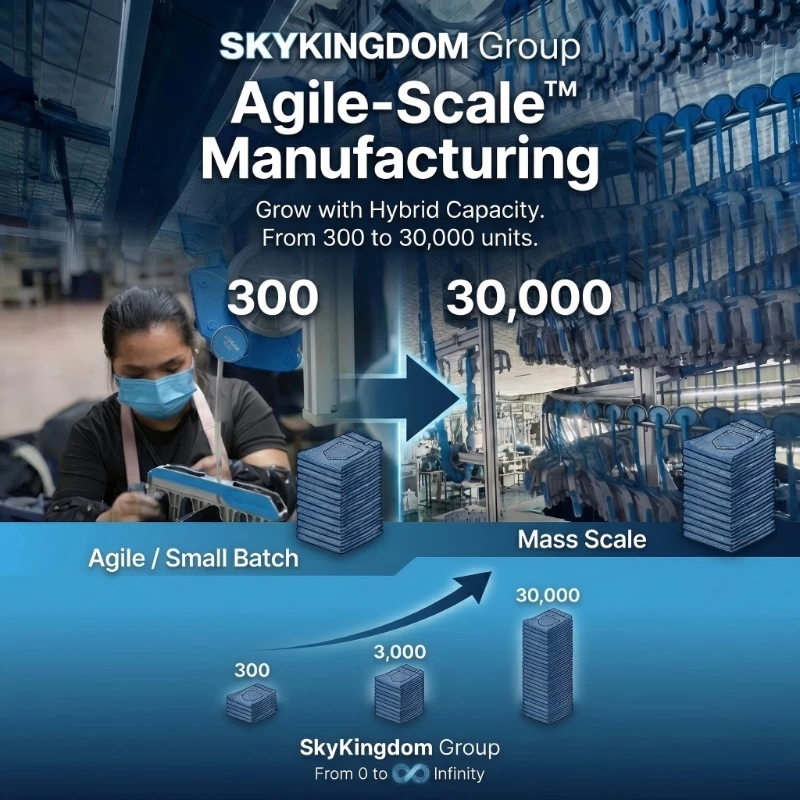
Affordable denim production is no longer just about finding a jeans supplier that can stitch a denim jeans sample and quote a low number. For online businesses, affordability comes from a repeatable system: low-risk MOQs that match your launch plan, fast sampling that fits your content calendar, stable wash recipes that survive reorders, and quality gates that protect reviews once you start scaling.
This ultimate guide walks you through the practical production solutions that make denim workable for online brands—covering sourcing, sampling, bulk production, QC, and export readiness. You’ll also see how SKYKINGDOM (Guangzhou Longchan Textile and Clothing Co., Ltd.) supports a startup-friendly workflow with low MOQ, design-led ODM, scalable OEM, digital operations, and eco-wash capabilities.
Core Foundations
Cost drivers that determine “affordable” denim
Affordability in denim is shaped by a few predictable drivers—understanding them lets you design for margin without sacrificing quality.
First, fabric choices dominate both cost and performance. Denim weight (commonly expressed in ounces per square yard), fiber blend (100% cotton vs cotton/elastane vs poly/cotton), and specialty constructions (raw selvedge, wax denim) change sewing behavior, shrinkage, and wash outcomes.
Second, wash and finishing often becomes the hidden budget line. Stonewashed, chemical wash, bleached effects, laser, ozone, enzyme, and distressing each add steps and risk. Even when a factory offers low MOQ, complex finishes may require higher minimums for chemical setups or wash recipe consistency.
Third, trims and branding—custom hardware, leather patches, woven labels, hangtags—have their own MOQs, lead times, and approval cycles. For online launches, you often win by standardizing trims in the first drop and customizing deeper once sales data proves demand.
Custom Product Development OEM and ODM
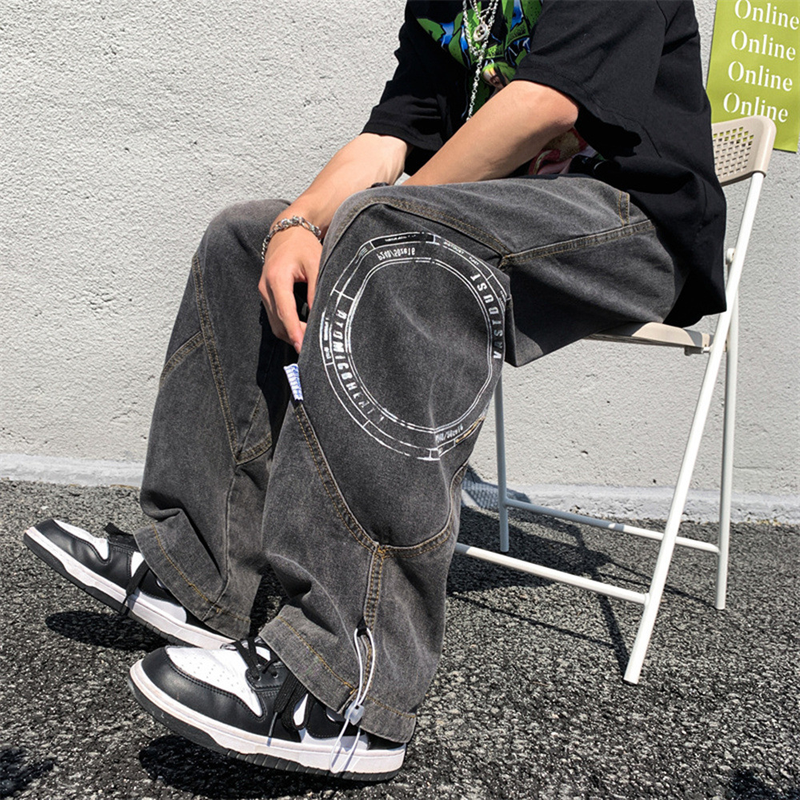
For online businesses, custom development is where you win differentiation—when you do it with discipline. The goal isn’t customization for its own sake; it’s creating a repeatable product identity (fit + wash + details) that customers recognize and repurchase.
A clean OEM workflow begins with a high-quality tech pack: flat sketches, measurement spec, construction callouts, seam type, stitch density guidance, pocket placement, hardware list, labeling placements, and wash references. You also need a fit approval process that is objective: measure the garment on a flat table, compare to your spec, and log deviations by size. Once you approve a “golden sample,” you protect it—because every future reorder should match it.
ODM can be the smarter route when speed matters more than inventing a new pattern block. SKYKINGDOM’s ODM page describes an in-house design team producing ready-to-manufacture collections monthly, allowing brands to choose proven silhouettes and customize branding and details. For drop-based online calendars, this can cut weeks off development while still enabling you to build a recognizable aesthetic.
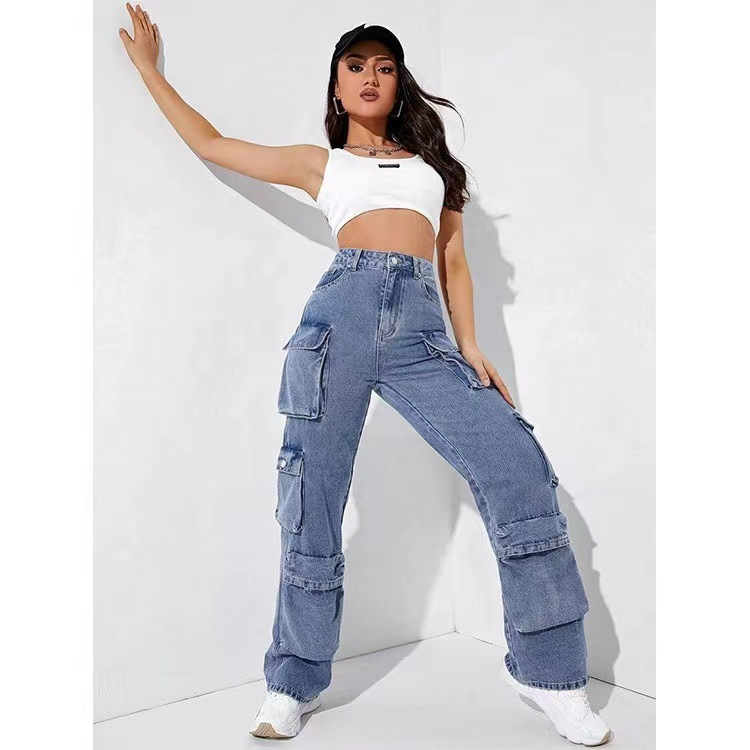
Where a custom jeans factory adds the most value is in the technical translation: turning inspiration into pattern logic, advising on which details increase defect risk, and aligning wash outcomes to fabric behavior. Denim is unforgiving—small changes to pocket angle, yoke curve, or waistband construction can shift fit dramatically. The more you can standardize your base block, the more you can innovate safely through washes, trims, and styling.
If you also want to expand beyond custom denim jeans, build a woven-adjacent roadmap: jean jackets, denim shirts, skirts, and shorts. Many online businesses increase AOV by selling head-to-toe looks, and denim coordinates are one of the easiest ways to do it.
Fast Reorder Supply Chain
Once a style starts working, the fastest path to “affordable” is not squeezing the first PO—it’s preventing stockouts and avoiding dead inventory. A reorder-capable supply chain helps you scale what sells while keeping working capital healthy.
The reorder problem in denim is usually consistency: the second batch must match the first batch’s fit and wash, even if it runs through a different production window. That requires production planning (capacity allocation), disciplined material management (same fabric lot or controlled substitution), and stable wash recipes (documented parameters, not “factory memory”).
SKYKINGDOM highlights a supply-chain aggregation approach across China’s denim production clusters and describes a latest fashion supply chain system integrating AI-driven trend inputs with a network of digitalized supply chains. Practically, the benefit for online brands is flexibility: you can treat your manufacturer as a partner that supports both small batch trials and faster reorders, instead of forcing you into a single production mode.
To use a fast reorder system well, set reorder triggers that match your business model. A common approach is to reorder when you hit a sell-through threshold (for example, 60–70% of on-hand inventory) and when your paid media or creator pipeline indicates the demand curve will continue. If you wait until you’re nearly sold out, the reorder arrives after the trend peak.
Because denim is heavily influenced by social media trend acceleration in 2026, speed has become a competitive advantage, not just a logistics metric. The factory that can keep pace with your drop calendar—while keeping fit and wash consistent—becomes a growth engine.
Quality Control and Fit Consistency
Quality control is where many online denim brands lose money quietly. The cost is not only defects—it’s customer dissatisfaction, returns, chargebacks, and the reputational drag that makes paid acquisition more expensive.
A useful way to think about QC is to separate appearance quality from dimensional quality. Appearance quality includes stitching, shade consistency, distress symmetry, and hardware placement. Dimensional quality includes waist, hip, thigh, knee, and inseam measurements—plus shrinkage behavior after wash. Online brands need both, but dimensional quality is often the difference between a five-star review and a return.
AQL-based final inspection is valuable, but it’s not enough by itself. Inline inspections—done while sewing and before wash—catch systemic issues early. Pre-production samples (PP samples) act as the contract between your brand and the factory: they define what “correct” looks like before bulk cutting begins.
SKYKINGDOM’s OEM page states a 5-stage QC system with AQL 2.5, and their Quality Control page emphasizes traceability and inspection processes. For online businesses, the key is to operationalize that into deliverables you can manage: measurement reports, shade bands for wash, and written approvals for trims and labels.
A practical fit-consistency system includes: (1) a locked base pattern, (2) a measurement tolerance table by point of measure, (3) shrinkage test requirements per fabric/wash combination, and (4) a retained golden sample stored both by you and the factory.
Eco Wash and Sustainable Denim
Sustainability affects denim manufacturing decisions more directly each year, and by December 2025 it’s increasingly tied to retailer requirements, platform brand policies, and customer expectations—especially around chemical use, water consumption, and worker safety.
According to a 2025 denim finishing benchmarking summary referencing EIM data from 2024, EIM’s dataset covered 115,882 denim finishing processes across 337 manufacturers, with 63% classified as low impact and ongoing challenges around chemical impact, including hazardous elements in finishing. (fashiondive.com)
For an online business, the most useful sustainability approach is not vague messaging—it’s choosing production methods that reduce environmental load while remaining consistent in bulk. Technologies commonly associated with lower-impact finishing include laser and ozone processes, plus controlled enzyme-based alternatives to harsher chemical treatments.
SKYKINGDOM’s “Environmentally Friendly Water Washing” solution page describes a “zero chemical” ambition supported by EIM (Environmental Impact Measuring), and highlights laser & ozone washing, waterless dyeing concepts, and natural enzyme approaches. Whether you’re launching a premium capsule or a fast-fashion drop, eco-wash capability can reduce compliance risk and support more credible sustainability claims—especially if you can document the process and keep wash outcomes consistent across reorders.
The practical brand advantage is twofold: (1) you reduce the chance of restricted-substance issues that can disrupt shipments, and (2) you earn trust when customers ask what “sustainable denim jeans” means in real manufacturing terms.
How to Choose a Denim Production Partner
A good decision framework helps you choose a denim jeans suppliers partner based on operational fit—not hype.
MOQ flexibility that matches your launch inventory plan
Start with your launch math: how many SKUs, how many sizes, and how many units per size. If MOQ is low but trims and washes require high minimums, you may still be forced into overbuying. Ask for a breakdown of MOQs by fabric, wash, hardware, labels, and packaging so your plan is real.
Sampling speed and approval clarity
Sampling speed only matters when the review checkpoints are clear. Define which sample stage you’re in (proto, fit, PP) and what can change at each stage. If you approve based on photos alone, you increase the risk of a bulk mismatch; if you insist on physical approvals for key stages, you protect consistency.
Capability range beyond denim jeans
Online businesses often expand from denim jeans into jean jackets, denim shirts, skirts, and shorts. A factory with broader woven capability helps you keep fit logic and wash aesthetics consistent across categories, which strengthens merchandising and brand identity.
Export readiness and documentation
A jeans exporter partner should handle production plus the realities of global shipping: labeling placements, carton marking, packing method, and document readiness. Even if you use a freight forwarder, your factory’s packing discipline affects damage rates and receiving efficiency.
| Decision factor | What to verify | Why it matters for online businesses | Trade-off to manage |
| MOQ structure | MOQ by style, wash, trims, labels | Prevents overbuying and dead stock | Low MOQ can limit deep customization |
| Sampling system | Stages, timeline, approval gates | Keeps drops on schedule | Faster sampling needs tighter specs |
| QC method | AQL level, inline checks, measurement reports | Protects reviews and reduces returns | More QC can add process time |
| Reorder capability | Capacity planning, fabric/wash repeatability | Avoids stockouts during trend peaks | Reorders require locked specs |
| Sustainability tools | Laser/ozone capability, chemical controls | Lowers compliance risk, builds trust | Some effects may be harder to replicate |
Best Practices & Pitfalls
Best Practices
- Confirm spec sheet measurement tolerances early. Don’t just send target measurements; define acceptable tolerances by point of measure (waist, hip, thigh, inseam) and require a measurement report for samples and bulk. This is one of the simplest ways to reduce fit-related returns.
- Lock your fabric lot and wash recipe for reorders. Denim “looks the same” only when the variables are controlled. Keep a record of fabric composition, weight, and the wash parameters used in the approved golden sample.
- Require a pre-production (PP) sample before bulk cutting. PP sample approval is the moment where you align on construction, trims, labeling, and wash outcome in a production-realistic way. It also creates a reference the QC team can enforce.
- Use a golden sample system. Store one approved sample on your side and ensure the factory retains a matching reference. Every reorder should be evaluated against that benchmark, not against memory.
Common Pitfalls to Avoid
- Approving photos without a physical sample. Photos can hide hand-feel, stretch recovery, and subtle shade differences. If your brand depends on fit and wash, approve physically at least for PP stage and key wash changes.
- Ignoring shrinkage and wash tests. Denim behavior changes after wash and wear. If you don’t define shrinkage expectations, the factory will guess—and your size chart will drift.
- Skipping compliance and audit evidence. Even if you’re a small brand, marketplaces and retail partners increasingly expect proof of ethical and chemical controls. Build a file of documents and process notes early so you’re not blocked later.
- Over-customizing too early. Deeply custom hardware, patches, and unique wash effects can force high MOQs and long lead times. Start with controlled customization, then expand once the product is validated.
Frequently Asked Questions
A good MOQ depends on your launch strategy, not a universal benchmark. For online brands testing demand, smaller MOQs let you validate fits and washes before you scale, but you still need enough units to cover size range and marketing content. In practice, consider whether MOQ is defined per style, per wash, or per trim component, because those minimums can be the real constraint. The safest approach is to match MOQ to a test-launch plan plus a reorder trigger so you don’t get trapped in dead inventory. Sky Kingdom’s flexible policy, where the MOQ starts from 30 pieces across all designs for each order, provides the flexibility needed to test the market effectively.
Sampling time varies based on pattern readiness and wash complexity. A basic sample can move quickly if your tech pack is clear and you’re not changing construction, but multiple rounds of fit refinement can extend timelines. Wash development often adds time because shade, distressing, and softness must be dialed in and repeated consistently. Plan for at least two sample rounds (fit + PP) if you want reliable bulk outcomes, and build your photoshoot schedule after PP approval.
Manufacturer like Sky Kingdom emphasize speed, offering an Ultra Fast Template and highlighting a 7-Day Sample Turnaround. Plan for a minimum of two sample rounds (fit sample + pre-production sample) to ensure reliable bulk outcomes, and schedule your photoshoot only after the pre-production sample has been approved.
OEM is best when you have a proprietary fit block or unique construction details you need executed exactly. ODM is best when speed matters and you want to start from proven silhouettes that you can customize with branding, trims, and wash direction. Many online brands blend the two: they launch with ODM to get to market fast, then migrate winning styles into OEM once they’ve refined fit and built data-backed confidence. The key is to choose the model that reduces iteration while protecting your brand identity.
Before bulk cutting, you should approve the fit, measurement tolerances, fabric, wash, trims, labels, and packaging method. Confirm the pre-production sample matches your golden sample expectations and request a clear QC plan (including inline checks and final inspection standard). You should also confirm shrinkage assumptions and how the factory will manage wash consistency across the order. Finally, ensure branding placements (patches, labels, hangtags) are documented so they don’t drift during production.
Different washes and dye processes can change fabric hand-feel and shrinkage behavior, even if the pattern is identical. Heavy chemical or distressed finishes can also slightly change dimensions because the garment goes through more mechanical and thermal stress. To prevent this, treat each fabric-and-wash combination as its own “fit environment” and require measurement checks after wash. If consistency is critical, standardize washes within a collection and expand to new wash families after you’ve proven repeatability.
Beyond the ability to produce a high-quality sample, an excellent jeans exporter partner must demonstrate reliability in documentation, labeling accuracy, packing discipline, and timeline transparency. Online brands gain a significant benefit from real-time production visibility, as this protects launch dates and associated marketing spend.
Ask how the factory manages critical steps like carton packing specifications, polybag standards, size stickers, and shipment readiness milestones. Sky Kingdom, leveraging 20+ years of expertise, is noted for its end-to-end export readiness and commitment to partnering with fashion brands to achieve growth. A partner that integrates quality control with export preparation reduces the risk of costly receiving problems and customer-facing delays
Yes, but you need to design customization around processes that can be repeated safely and consistently. Laser and ozone-based methods can support certain aesthetic effects while reducing reliance on harsher finishing elements, and enzyme-based approaches can replace some traditional chemical steps. The key is to lock the recipe and validate it on a PP sample before bulk, because sustainability claims only hold if the process is stable across reorders. When you plan sustainably, you’re not just reducing impact—you’re also reducing variability that causes quality drift.
Conclusion
Affordable denim production for online businesses is built on systems: the right MOQ structure, fast and disciplined sampling, reorder-ready operations, and QC that protects fit consistency at scale. When your jeans supplier can support both test launches and rapid replenishment—while offering OEM/ODM flexibility, export readiness, and eco-wash capability—denim becomes a growth category rather than a cash-flow risk.
If you want to move from idea to listings quickly, start by locking your tech pack discipline, defining tolerances, and selecting a partner that matches your drop calendar. Then build from a validated golden sample into a reorder engine that keeps your best denim styles in stock.
Start your business with Sky Kingdom now: https://www.skykingdom.com/