
Introduction
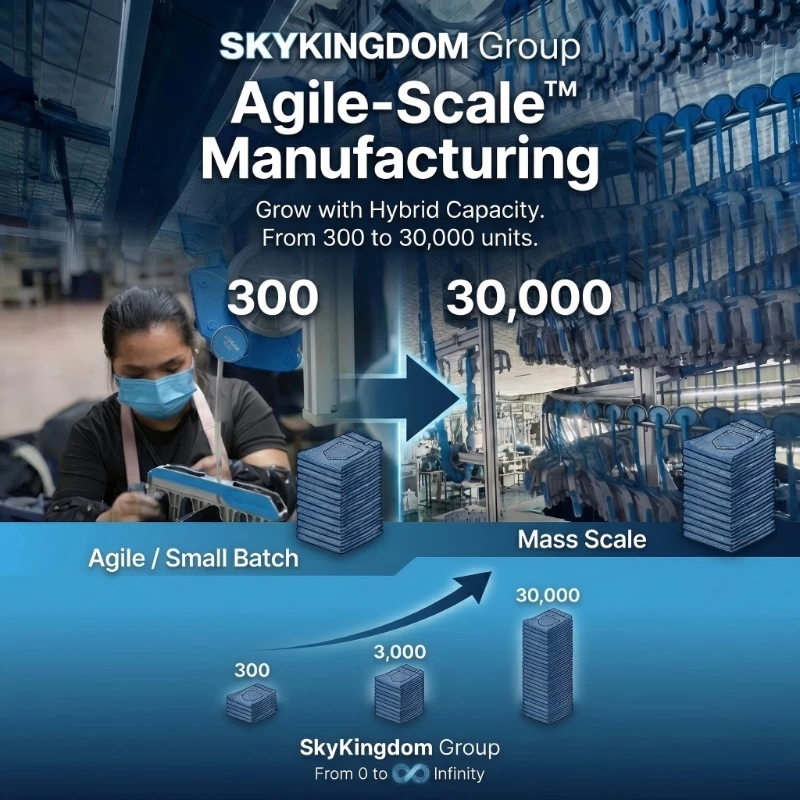
Choosing the right jeans supplier is crucial for fashion retailers, especially with fast-moving trends. McKinsey’s Global Fashion Agenda Report highlights that 80% of brands focus on reducing lead times. This guide helps you select a factory that aligns with your needs, ensuring quick turnaround and consistent quality. For instance, SKYKINGDOM helps brands with OEM/ODM/OBM manufacturing, small-batch testing, rapid development, and scalable production. Whether you’re a startup or an established retailer, the selection framework remains the same: match supplier capability to your business model and lock in the process.
Define Your Product and MOQ
A good jeans supplier selection starts before you message a single factory. If your product definition is fuzzy, every quote and sample becomes a negotiation, and your timeline turns into a moving target. The goal of this module is to turn “I want custom jeans” into a spec that a custom jeans factory can execute with minimal back-and-forth.
Step 1: map your SKU architecture (and stop overbuilding on day one)
List each planned SKU with a clear “why.” For denim jeans, that typically means silhouette (straight, flare, wide-leg, cargo, skinny), rise (high/mid/low), leg opening, and length options. Then identify which variables are truly different versus what can be standardized.
A practical early-stage approach is to standardize as much as possible: consistent hardware finish, consistent pocket bag fabric, and a shared size spec philosophy. You can still offer variety through wash, distressing placement, and minor trim changes. This reduces complexity and makes it easier for a jeans exporter and factory to execute consistently.
Step 2: define fit and measurement controls like a production engineer
Denim fit is where returns are born. Your factory will need:
- A base size (often size 28/30 for women or 32 for men, depending on market)
- A full measurement chart (waist, hip, thigh, knee, leg opening, inseam, front rise, back rise)
- Tolerances for production (what’s acceptable variation)
- Target stretch and recovery (especially if using spandex blends)
If you don’t define tolerances, the factory may default to broad “industry normal” variance, and you’ll see inconsistency across batches. For custom denim jeans, be explicit about shrinkage expectations after wash and how you want the final garment to measure post-wash.
Step 3: build a tech pack readiness checklist
A tech pack doesn’t need to be perfect, but it must be usable. At minimum include:
- Front/back flats + key details callouts
- Stitching specification (thread color, stitch type, SPI if you control it)
- Hardware and label placements
- Fabric requirements (composition, weight range, handfeel notes)
- Wash reference (photos + a “shade window” description)
Your goal is to minimize interpretation. Every missing detail becomes a revision cycle, which slows sampling and creates cost you pay later.
Step 4: choose an MOQ strategy that supports learning
MOQ should match your test plan. For example, if you’re launching with 3 silhouettes and 2 washes each, your “true minimum” isn’t just per style—it’s per style per size run. A factory may say “low MOQ,” but you should clarify whether MOQ applies per style, per color/wash, or per order total.
If you operate as a china clothing factory jeans start-up customer, the most sustainable approach is repeatable small orders with fast reorders. That keeps cash flexible and allows you to follow demand rather than guessing demand.
How SKYKINGDOM supports this module (product examples)
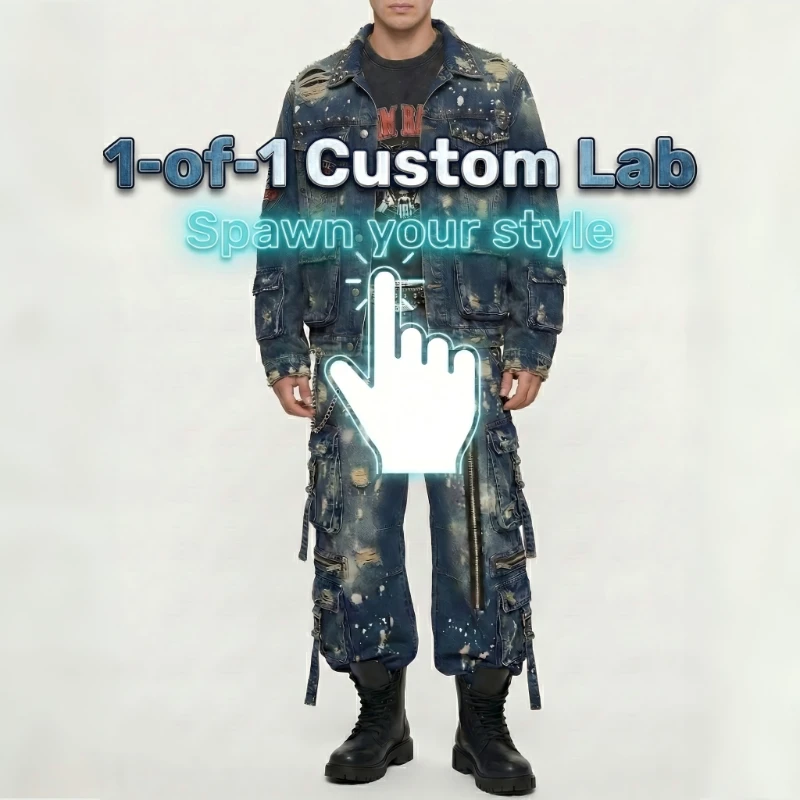
When you need a partner that can build diverse denim jeans quickly, it helps if their catalog already covers multiple silhouettes and construction types. For instance, SKYKINGDOM lists women’s cargo-style wide-leg denim jeans such as “multi pockets details wide leg women jeans GJ-208,” featuring a loose fit, high waist, zipper fly, and washed/bleached pocket detailing—useful when you’re testing utility silhouettes that require more complex pocket builds. Their men’s denim range also includes specialty items like “Motorbike Jeans GJ-186,” designed as moto & biker style with 100% cotton denim and enzyme wash, which is relevant when your brand needs reinforced styling direction and fabric-handfeel control.
Evaluate Sampling and Development Speed
Sampling speed is where many sourcing decisions succeed or fail. A factory can have excellent sewing quality and still be the wrong partner if sampling takes 3–5 weeks and every wash revision restarts the clock. For fast-fashion denim, sampling is not a single event—it’s a gated process you need to manage.
Step 1: break “sampling” into stages you can control
A realistic sampling pipeline includes:
- Prototype sample: construction proof, early fit
- Fit sample: confirms measurement balance and pattern corrections
- Wash development: strike-offs or wash swatches + approval photos
- Pre-production (PP) sample: final construction + final wash
If a factory says “sample in 7 days,” clarify which stage that refers to. A proto sample can be fast; PP samples depend on wash approvals, trims arrival, and pattern finalization.
Step 2: build a sample calendar with gate reviews
Create a calendar with approvals that must be signed off before moving forward:
- Gate 1: pattern & fit approval
- Gate 2: wash shade window approval
- Gate 3: trims/hardware confirmation
- Gate 4: golden sample approval (the “reference truth”)
This reduces rework because everyone knows what “done” means at each stage. It also helps prevent the classic denim trap: approving fit before confirming wash shrinkage.
Step 3: evaluate wash capability like a product manager, not a buyer
Wash is where timelines slip. Ask suppliers how they:
- Control shade consistency across lots n- Handle laser/ozone or enzyme processes
- Document wash recipes and approval standards
- Manage distressing placement repeatability
If sustainability matters to your brand positioning, ask what technologies they use to reduce chemical load and improve worker safety.
How SKYKINGDOM supports this module (sampling + wash examples)
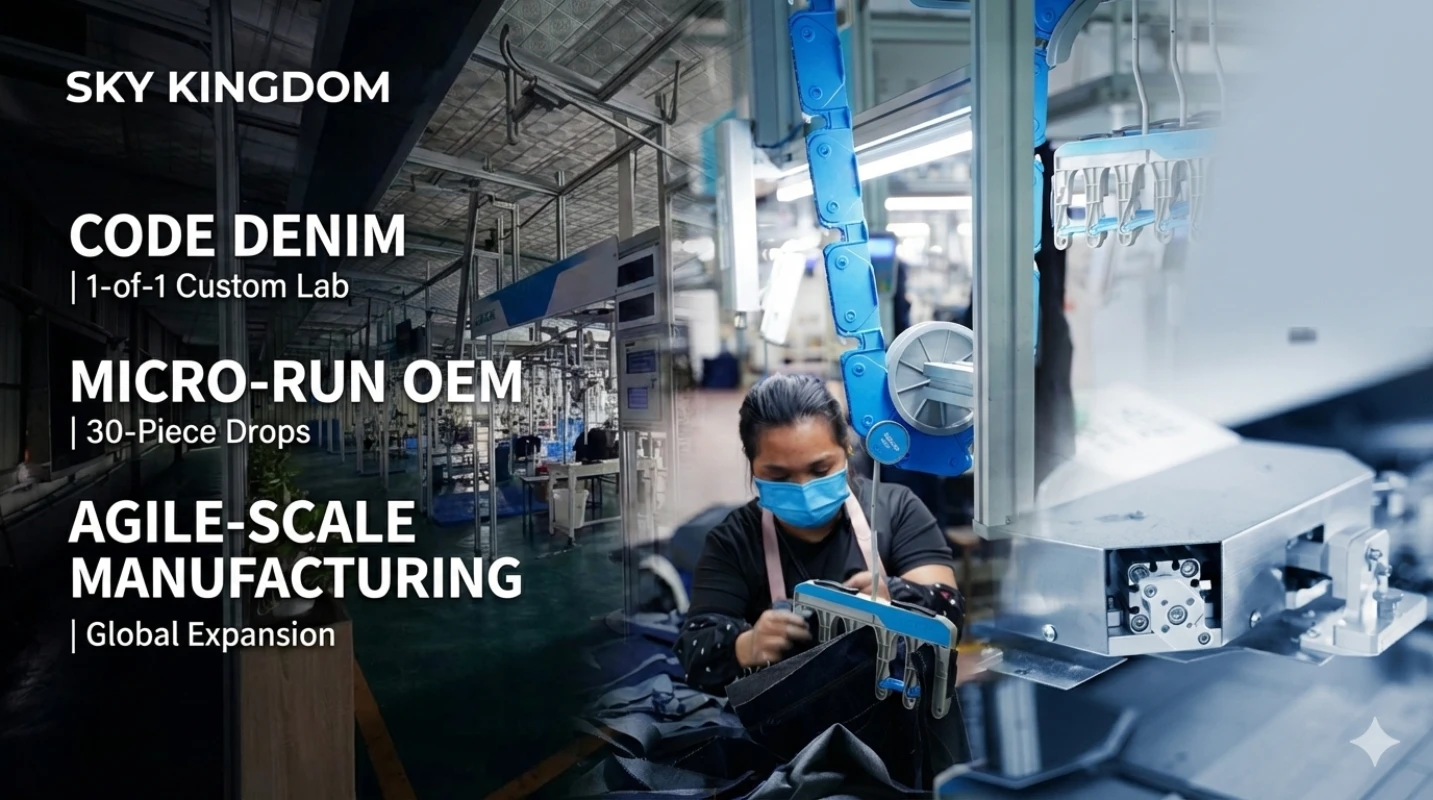
SKYKINGDOM publicly frames speed as a core operating standard, describing sample timelines in the 3–5 day range as part of its quick-response solution. On the sustainability and wash side, the brand highlights eco-wash methods such as laser & ozone washing, waterless dyeing, and natural enzyme processes, supported by EIM (Environmental Impact Measuring) framing and safety certification claims like OEKO-TEX Standard 100 and BCI Cotton. Those capabilities matter when your custom jeans depend on wash storytelling as much as fit—and when you need repeatable approvals across multiple drops.
Validate Quality Control and Consistency
Quality is not “good sewing.” Quality is a system that prevents defects before they reach cartons. For retailers, consistent quality is what makes reorders profitable: stable measurements, stable wash shade, stable stitching strength, and stable packaging presentation.
Step 1: align on AQL and what it actually means in practice
AQL (Acceptable Quality Level) is often used in apparel inspections to define pass/fail thresholds. But AQL is only meaningful if you clarify:
- Which defects are critical/major/minor
- Measurement tolerance handling
- Wash shade acceptance window
- How rework is handled and documented
If you don’t define defect categories and tolerances, you’ll end up arguing about “acceptable” after production—when time is already lost.
Step 2: require a 5-stage QC flow (not just end-line checking)
A robust QC flow typically includes:
- Incoming fabric and trim inspection (including shade and shrink tests)
- Cutting checks (lay accuracy, size labeling)
- In-line sewing inspection (stitch density, seam strength, pocket placement)
- Wash process controls (recipe documentation, shade control, damage checks)
- Final inspection + packing verification
This system prevents defect accumulation. Final inspection alone only detects problems—it doesn’t stop them from happening.
Step 3: focus on the “repeatability defects” that ruin denim brands
Denim returns often cluster around a few root causes:
- Measurement drift across size run
- Inconsistent wash shade between lots
- Shrinkage not accounted for in pattern
- Hardware failures (zippers, rivets)
- Distressing inconsistency (holes, abrasions)
Make your factory show how they control these—not just that they “inspect.”
How SKYKINGDOM supports this module (QC positioning)
SKYKINGDOM describes a structured quality approach, referencing AQL 2.5 and a 5-stage QC system in its OEM positioning. The brand also highlights traceability and inspection process elements such as raw-material traceability identification and finished product inspection as part of its quality control presentation. For retailers selecting denim jeans suppliers, that combination—declared AQL target plus multi-stage QC language—makes it easier to set expectations and build your own inspection plan around their internal workflow.
Secure Production, Shipping, Reorders
After sampling and QC alignment, the real test begins: can the supplier execute bulk production, ship cleanly, and replenish winners without changing the product? This is where many relationships break—because brands treat production like a single milestone rather than a managed system.
Step 1: lock production milestones you can track
A practical milestone plan includes:
- Fabric and trim booking confirmation
- PP sample approval date
- Bulk cutting start
- Sewing line start
- Wash start + wash approval checkpoint
- Final inspection date
- Packing completion
- Shipping document preparation
Ask the factory how they report progress. If they can’t give structured updates, you’ll spend your season chasing status instead of selling.
Step 2: clarify packaging and labeling standards early
Packaging is part of product quality. Confirm:
- Hangtag placement rules
- Polybag requirements
- Carton labeling format
- Barcode placement (if required)
- Fold method consistency
These details prevent warehouse chaos and retailer compliance issues.
Step 3: export readiness is more than “we can ship”
A credible jeans exporter should be able to handle export documents accurately and communicate shipment status. You don’t need a factory to be a freight forwarder, but you do need them to support correct documentation and packing lists.
Step 4: design your reorder system before your first drop launches
Reorders are not just repeats; they are controlled repeats. Define:
- What is allowed to change (usually nothing)
- What triggers a reorder (sales velocity thresholds)
- How shade matching is confirmed
- How the factory references the “golden sample”
In December 2025 retail reality, trend velocity is increasingly driven by social discovery and rapid demand shifts. That means a supplier’s reorder speed can be the difference between capturing a trend and missing it.
How SKYKINGDOM supports this module (speed + tracking framing)
SKYKINGDOM emphasizes quick-turn production as a core capability, describing bulk production cycles of roughly 15–20 days and faster reorders supported by AI-integrated hanging systems. It also positions “real-time tracking” as part of its digital workflow approach, which is a practical advantage for brands that need predictable replenishment and clear milestone visibility while managing multiple drops.
How to Choose a Denim Clothing Factory
This decision guide turns all the previous modules into a selection framework. The easiest mistake is to pick the supplier with the best sample, then discover later they can’t scale, can’t control wash shade, or can’t hit your reorder cadence. Instead, choose the factory whose operating system matches yours.
MOQ fit: match your test orders plan
Start by aligning MOQ to your go-to-market strategy. If you plan to test 3–6 SKUs per month, choose a jeans supplier that supports small-batch orders without punishing you through hidden minimums on trims, fabrics, or wash setups. Confirm whether MOQ is per style, per wash, or per order.
Sampling speed: verify “3–7 days” with a calendar, not a promise
Speed claims should be validated through process. Ask for a sample calendar proposal and confirm which approvals are included. A supplier that can state clear stage-by-stage lead times will be easier to manage and less likely to create surprise delays.
Wash capability: laser, ozone, and EIM-driven sustainability claims
Wash capability should be proven with real examples, not just keywords. If you sell premium wash stories or need sustainable processes, confirm what technologies are used and how wash recipes are controlled. Also ensure your factory can hit repeatable shade windows across reorders.
Export readiness: documents, compliance, and QA alignment
Your factory’s export readiness should match your sales channels. If you sell internationally or to marketplaces that enforce compliance, you’ll need a supplier that can support labeling, testing readiness, and consistent packing standards.
Decision framework table
| Scenario | Key factors to prioritize | Recommended factory profile | Trade-offs to accept |
| New brand testing 3–10 SKUs | Low MOQ, fast sampling, clear communication | Small-batch, quick-response custom jeans factory | Slightly higher per-unit complexity cost; more approvals work |
| Retailer scaling bestsellers | Stable QC, consistent wash shade, capacity for reorders | High-capacity jeans factory with strong in-line QC | Less flexibility on “one-off” customization |
| Wash-led brand (signature effects) | Wash development expertise, recipe documentation, sustainability tech | Factory with laser/ozone + structured wash approvals | Longer development upfront to lock wash standards |
| Marketplace-driven drops | Speed, milestone visibility, predictable delivery cadence | Digitized workflow, clear sampling-to-bulk gates | Less tolerance for late design changes |
Conclusion
A strong jeans supplier isn’t defined by a single great sample—it’s defined by a repeatable system: MOQ that matches your testing strategy, sampling speed with clear gate reviews, wash capability that stays consistent across reorders, and QC that prevents defects before they reach cartons. Use the frameworks in this guide to shortlist factories based on operational fit, then lock your process with a golden sample, written tolerances, and a milestone-driven production plan.
If you’re ready to source, your next step is to prepare your RFQ and tech pack, then run a structured comparison across shortlisted denim jeans suppliers. Shop: https://www.skykingdom.com/