
Introduction
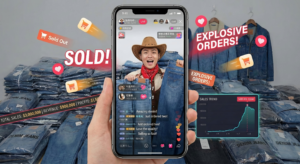
Fast denim sampling is one of the biggest growth levers a fashion brand can control—because it compresses the loop between trend → prototype → approval → sell-through data → reorder. When your denim jeans or Custom Denim Jacket program depends on short drops, influencer moments, or TikTok-driven demand, slow sampling turns into missed peaks, delayed launches, and avoidable markdown risk. That’s why choosing the right jeans supplier (and running the right sampling process) matters as much as the design itself.
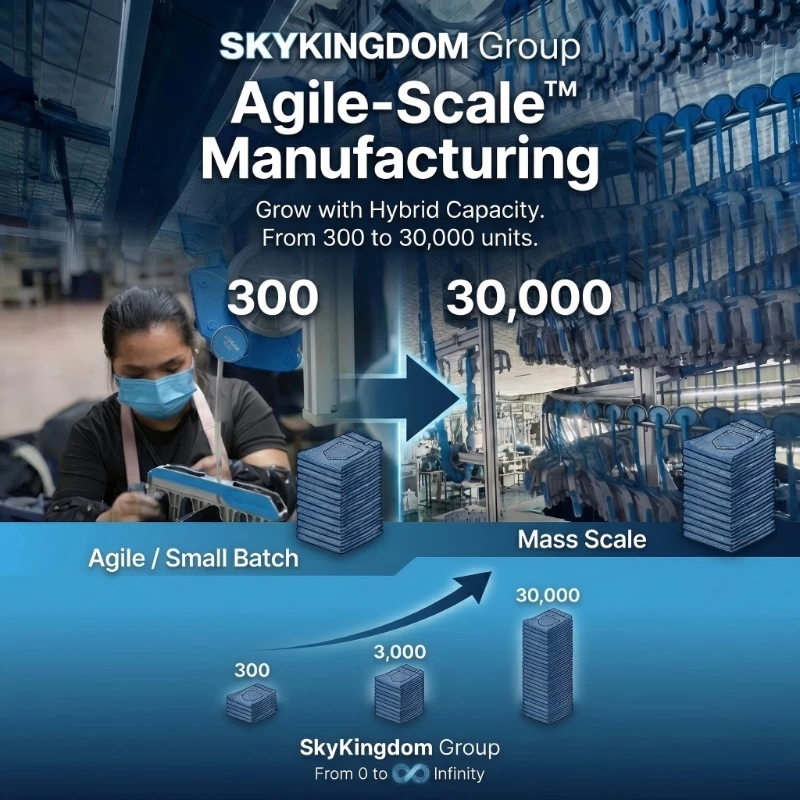
This Ultimate Guide walks you through a repeatable, fast, quality-first denim sampling system: what to prepare, how the workflow should run, how to reduce revisions, and how to evaluate a partner—especially if you’re considering a jeans manufacturer in China or a china clothing factory jeans setup built for small-batch testing and quick reorders. Throughout, we’ll reference Sky Kingdom’s OEM/ODM capabilities to show how a modern manufacturer can support speed without sacrificing consistency.
Quick Denim Sample Production Fundamentals
Why sampling exists (fit, wash, and cost lock)
Sampling isn’t just “getting a physical piece.” A denim sample is where you lock three things that determine bulk success: fit, wash/appearance, and build feasibility. Fit approval establishes your block, tolerances, and measurement points so future revisions become incremental rather than structural. Wash approval locks visual identity—shade, cast, abrasion placement, highs/lows, and handfeel—so bulk lots don’t drift. Feasibility approval is where your factory confirms operations (seam construction, pocket bags, waistband build, thread, needle, SPI) and flags risks that could cause defects or rework.
For a startup using a china startup clothing manufacturer specializing in jeans china startup projects, sampling is also where you reduce financial risk: a strong sample package minimizes surprises in bulk and supports faster reorder decisions. The practical goal is to create a “golden sample” that becomes the reference for QC, production planning, and future drops.
Denim taxonomy for fast-fashion lines
When brands say “denim,” they often mean several product types with different sampling demands. Denim jeans are fit-sensitive (rise, hip, thigh, knee, leg opening) and wash-sensitive (cast, contrast, shrink). Jean jacket manufacturers face additional complexity: collar shape, sleeve pitch, yoke balance, and hardware alignment. Wovens and tops can be faster to sample, but mixed-material details (denim + rib, denim + faux leather) can add sourcing lead time.
A fast sampling system starts by grouping styles into “complexity tiers.” A clean rinse-wash jean might be Tier 1; a heavy distress, laser artwork, patchwork, or coated finish becomes Tier 3. This tiering lets you plan realistic timelines and decide which approvals must happen sequentially.
The end-to-end workflow: tech pack to final approval
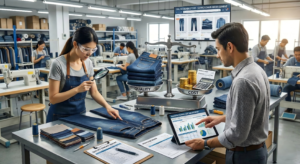
Quick sampling is less about “working faster” and more about removing ambiguity from handoffs. A high-performing jeans factory will typically run an order through a structured loop: intake & feasibility → pattern & fit prototype → denim cut/sew → wash/finish → final measurement & QA → feedback & change log → resample if needed. When this loop is digitized—clear version control, updated spec sheets, and signed approvals—sampling cycles shorten because fewer decisions are revisited.
In practice, your speed comes from controlling decision gates: you lock fit before wash, approve trims before branding placements, and define pass/fail criteria before the sample is made. If your denim jeans suppliers can’t provide a clear sampling workflow, you’ll often end up managing the process yourself.
Speed levers: materials, capacity, and digital operations
Sampling speed is determined by a few “hard constraints.” First is materials readiness: if fabric and trims aren’t available, your calendar slips. Second is capacity allocation: a dedicated sampling room and pattern team matter because bulk lines can’t always interrupt flow. Third is change control: every time your team changes both fit and wash at once, the factory must “re-learn” the garment.
Digital operations amplify these levers. When a supplier uses ERP-style tracking and standardized QC checkpoints, issues are found earlier and resolved faster. For brands working with a jeans exporter, this also improves communication across time zones—reducing the “one email per day” bottleneck that makes sampling feel slow.
Application Module 1: Pre-Sample Planning
Planning is where most “quick sampling” wins are created. If your inputs are incomplete, speed downstream is an illusion—you’ll simply discover missing decisions later, when changes are more expensive. Start by preparing a sampling packet that includes: tech pack (construction callouts, stitch types, SPI), measurement spec (garment measurements, not body), grading plan (even if provisional), wash references (visual targets + notes), and branding placements (label positions, patch size, rivet placement). If you don’t have a full tech pack yet, you can still move fast by creating a minimum viable pack: front/back flats, measurement points, and three reference images per view.
Next, align your fit block strategy. If you’re launching denim jeans, define whether you’re building from an existing block (preferred for speed) or creating a new one. A fast, low-revision approach is: pick one “hero fit” per gender/category, lock it, then apply style variations (pocket shape, waistband height, leg shape) with controlled deltas. For a startup, this reduces the number of fit arguments you must settle during sampling.
Finally, define what you will not change in the first round. Many delays happen because teams treat the first sample as a design sandbox. Instead, pre-decide two layers: (1) structural fit decisions that require a new pattern, and (2) cosmetic wash and trim tweaks that can be adjusted without rewriting the garment.
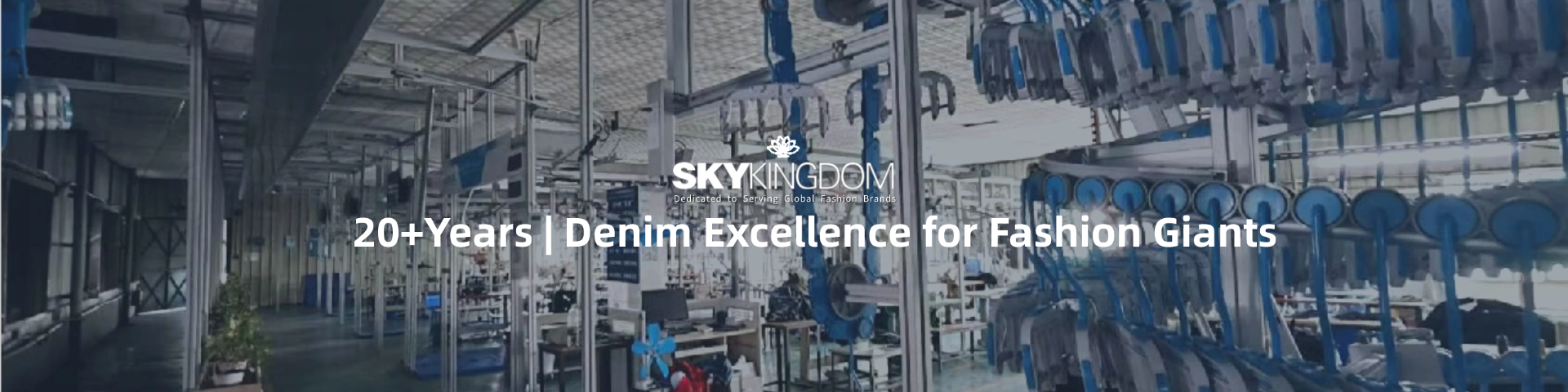
How Sky Kingdom supports this module: Sky Kingdom positions itself as a rapid-response denim partner for small-batch launches, with fast sampling workflows designed to help brands test silhouettes quickly and move into production with fewer surprises. That kind of model is most effective when the brand arrives with clear input files, a defined block direction, and a short list of must-have outcomes.
Application Module 2: Fabric & Trim Sourcing
Denim sourcing decisions can speed you up—or quietly add weeks. For quick sampling, treat fabric and trims as a “critical path” checklist. On fabric, define the basics: weight (oz/yd² or gsm), stretch type (rigid, comfort stretch, power stretch), fiber blend, and desired handfeel. Then define wash behavior targets: expected shrinkage range, skew/twist tolerance, and colorfastness expectations. These choices affect pattern allowances and whether the sample you approve will translate cleanly to bulk.
For trims, lock the list early: zipper type (metal/nylon), button and rivet finish, thread color, pocketing fabric, labels, care label content, hangtag format, and packaging. Trims often have separate MOQs and lead times; ignoring them is one of the most common causes of “why is my sample late?” issues. Even if you plan to upgrade hardware later, decide a placeholder set that matches size and placement so the sample remains structurally valid.
A simple speed framework is to prioritize standardized trims for first-round samples. Once fit and wash are approved, you can swap finishes (antique brass vs. nickel) without resetting the entire development cycle. If your brand does denim customization like custom embroidery, print, or puff elements, treat artwork files like trims—finalize vector formats and dimensions before sampling.
Where Sky Kingdom products fit in: If you’re building multiple category prototypes (denim jeans + jackets), it can help to reference existing factory-developed silhouettes as a baseline. For example, Sky Kingdom lists men’s denim jeans styles like Retro Printed Sportswear Mens Denim Jeans GJ-207 (a loose straight silhouette with drawstring closure and washed finish) that can be used as a starting reference for construction and wash expectations before you fully customize details.
Application Module 3: Wash, Color, and Finishing
Wash is where denim becomes your brand signature—and where many sampling cycles get stuck. Start by separating wash into three layers: (1) base shade (indigo depth/cast), (2) contrast map (where abrasion creates highs/lows), and (3) surface effects (whiskers, scraping, tint, resin, distress). Provide references that match your intended fabric weight and stretch; the same wash target can look different on rigid 14oz vs. a lighter stretch denim.
For fast approvals, specify measurable standards, not only vibes. Ask for a wash standard set: one approved reference sample, one photo set in consistent lighting, and a short written wash recipe summary that can be repeated for reorders. If your supplier uses environmental measurement frameworks (often discussed as EIM in industry contexts), align your brand’s sustainability targets early so you don’t redo wash methods later.
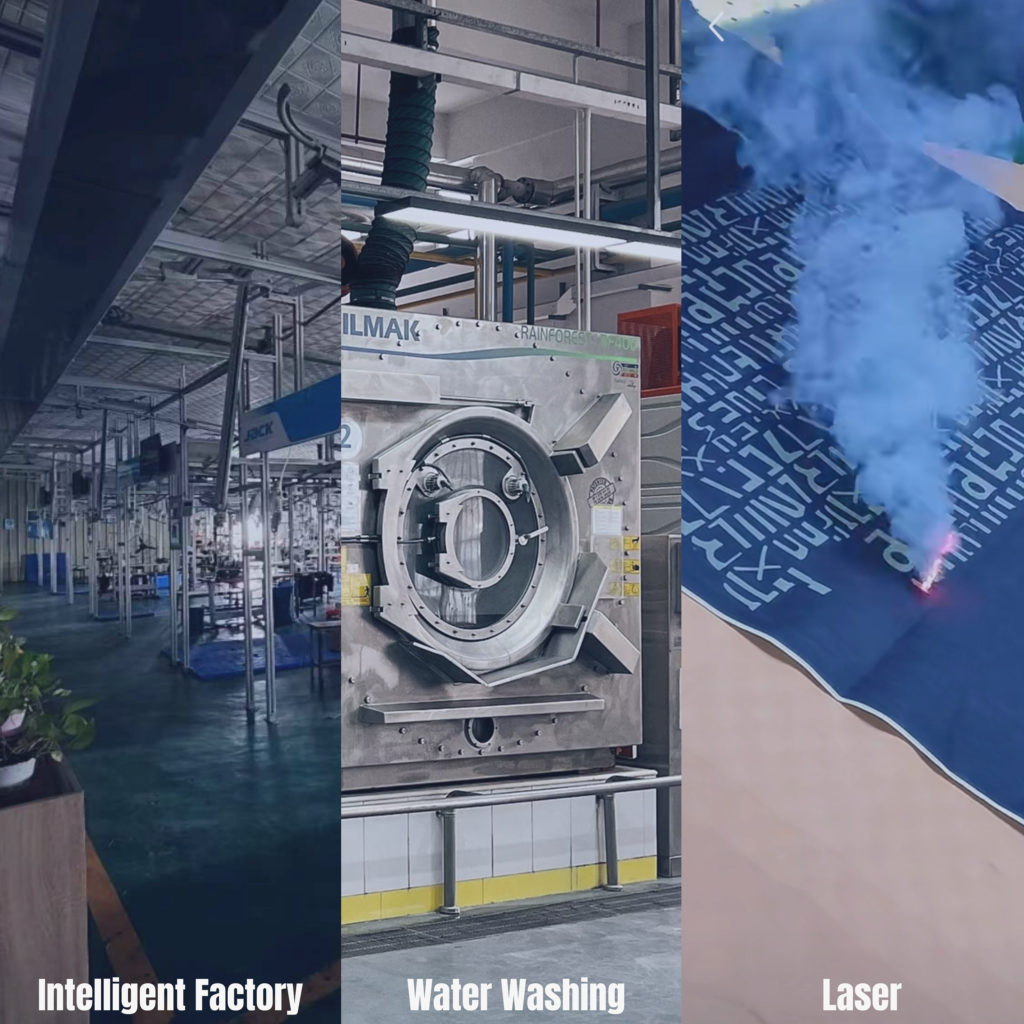
Modern finishing can also reduce lead time variability because it’s more standardized than purely manual abrasion. Laser placement mapping, ozone fading, and enzyme-based softening are frequently used to create consistent looks with fewer chemical-heavy steps. The brand benefit is consistency across reorders—critical if you run quick drops where a reorder must match the first shipment.
For credibility and timeliness: sustainability pressure in denim remains high, and major media continues to spotlight water and chemical impacts of traditional jean production methods (Financial Times, 2025). (https://www.ft.com/content/664a965f-b2c4-4dc2-94ad-9d6adcf7a1ad)
Where Sky Kingdom products fit in: Sky Kingdom positions eco-wash capabilities like laser and ozone washing as part of its operational toolkit. When you’re developing custom denim jeans or a Custom Denim Jacket that relies on strong wash identity, a supplier with these finishing options can help you dial in repeatability—especially when you’re planning quick replenishment cycles.
Application Module 4: Sample Production & Approval Loop
Once pattern, fabric, and wash targets are defined, the sample room execution should feel like a controlled sprint—not a messy back-and-forth. A strong loop has four checkpoints: cut/sew readiness, wash readiness, finishing readiness, and final QA. At each checkpoint, your team should know what “pass” means. For example, before wash: confirm garment measurements pre-wash and note expected shrink. After wash: confirm shade and contrast placement, then remeasure and compare to tolerance.
To accelerate approvals, implement version control like a software team would. Label every sample with a code: Style-Color-Wash-Version (e.g., SK-101-IND-MED-V2). Keep a change log that lists: what changed, why, and whether it affects bulk BOM or pattern. This prevents the classic problem where the factory fixes one issue but accidentally reintroduces another because the feedback was scattered across emails.
Also, don’t skip the measurement report. A measurement report turns “fit feedback” from subjective to actionable: you can see which zones are drifting and whether the drift is pattern, sewing, or wash shrink. It’s one of the simplest ways to reduce resample rounds.
Sky Kingdom product example for quick visual alignment: If you’re developing jackets alongside jeans, referencing an existing jacket build can speed alignment on collar, closure, and wash expectations. Sky Kingdom’s Digital Print jean jacket GJ-149 is an example of a men’s denim jacket product listing that can help your team communicate baseline details (denim fabric type, washed technique, turn-down collar construction, and closure style) before you customize artwork and branding.
How to Choose a Partner for Quick Denim Sampling
Lead time and sampling-room independence
Fast sampling requires a supplier that can protect sampling capacity from bulk production pressure. Ask how their sampling room is staffed, how many patterns they can develop per week, and whether wash sampling has priority access to finishing equipment. If the sampling function is not independent, your calendar may slip whenever the factory gets a large production push.
A practical decision test: request a clear timeline with milestones (intake → pattern → cut/sew → wash → QA), and ask what information they need at each gate. A partner that can’t define gates usually can’t predict lead time.
MOQ flexibility for startup risk control
Startups and capsule-driven brands benefit from low-risk testing. Flexible MOQs matter, but what matters more is whether the supplier can support small order, quick reorder logic without quality drift. Your goal is to test a style, read demand, and reorder quickly—so you need consistency between the first run and replenishment. That’s the operational meaning behind being “startup friendly,” not just a low MOQ number.
QC system and process clarity (including AQL concepts)
Sampling speed without QC is false speed. You want a partner that can explain QC checkpoints: inline inspection, wash inspection, final measurement, and defect classification. Many brands discuss AQL concepts as a baseline language for acceptable quality levels; regardless of the exact standard you use, the key is that defect rules are defined before bulk.
As a credibility anchor, OSHA highlights that apparel production includes multiple workstation risks (sewing, cutting, stitching) and provides hazard/solution guidance—an indicator that professional factories treat process and safety as structured systems, not ad-hoc practices. (https://www.osha.gov/apparel-footwear)
Compliance and export readiness
Compliance isn’t only a checkbox—it affects your ability to sell into regulated markets and to build a reliable long-term supply chain. Ask about social compliance audits, traceability documentation, and chemical management practices related to washing and finishing. A supplier that can provide documentation quickly also tends to be better at internal process control, which improves speed.
Quick comparison framework (scenario-based)
| Scenario | What matters most | What to ask | Trade-offs |
| TikTok-driven drop, 2–4 week calendar | Sampling speed + reorder stability | Dedicated sampling room? Change-log process? | Fewer wash experiments; must lock decisions early |
| Premium denim line, low volume | Fit precision + wash repeatability | Shrink controls? Measurement reporting? | More rounds may be needed upfront |
| Multi-category launch (jeans + jacket + shirt) | Process standardization across styles | Can they manage multiple tech packs in parallel? | Requires stronger brand-side project management |
| Sustainability-led collection | Wash chemistry + documentation | Laser/ozone options? Chemical compliance docs? | May limit certain heavy effects |
Conclusion
Quick denim sampling isn’t a mystery—it’s a system. When you lock inputs early, separate fit from wash, control materials and trims, and run a disciplined approval loop, you can move from concept to bulk readiness without endless revisions. Whether you’re sourcing denim jeans, launching a Custom Denim Jacket line, or scaling across categories, the right jeans supplier plus the right workflow is what turns speed into a competitive advantage.
If your next step is to shorten your sampling cycle, start by tightening your tech pack inputs and building a clear decision gate checklist—then work with a partner like Sky Kingdom that’s structured for rapid response, flexible development, and production-ready execution.
Frequently Asked Questions
How fast can denim product samples be made for a fashion brand?
In many cases, denim samples can be completed in about 3–7 days, but the real determinant is wash complexity and whether fabric/trims are ready. A clean rinse or light enzyme finish is typically faster than multi-step distressing, tinting, or complex laser placement. The fastest results come when you lock the fit block early and treat wash as a separate approval gate. If you want consistent speed over multiple styles, choose a jeans supplier that runs a milestone-based sampling workflow with version control.
What files should I send a custom jeans factory to reduce revisions?
Send a tech pack with flats, construction callouts, stitch requirements, SPI guidance, and a complete measurement spec with clearly defined points. Include wash references (photos or physical standards) and note the target cast and contrast placement, not only “light/medium/dark.” Add branding placements with dimensions and vector artwork for prints or embroidery. Finally, include a simple pass/fail checklist so your custom jeans factory knows what approval means.
What’s the difference between a jeans supplier, a jeans exporter, and a manufacturer?
A manufacturer typically owns or controls production operations (pattern, cut/sew, wash, finishing, QC). A jeans supplier may be a manufacturer or a trading partner who coordinates multiple factories and provides service layers like sourcing and QA. A jeans exporter is focused on shipping, documentation, and export readiness, and may or may not own manufacturing. For fast sampling and reorders, you generally want a partner that can control production decisions, not only coordinate them.
Can jeans manufacturers in China support small-batch trials for startups?
Yes—many jeans manufacturers in China like Sky Kingdom support small-batch trial orders, particularly in regions with strong denim industrial clusters. The real question is whether the factory can keep quality stable when switching between small runs and replenishment. Ask about sampling-room independence, trim sourcing capability, and how they manage change logs and measurement reporting. A startup should also confirm communication cadence and who owns fit decisions during development.
How do I choose denim weight and stretch for custom denim jeans?
Start from use case: rigid denim (often 12–14oz) delivers structure and vintage character, while comfort stretch improves wearability and fit tolerance. For wide-leg or baggy silhouettes, rigid or low-stretch often drapes better; for skinny or body-hugging fits, stretch becomes more important. Also consider wash behavior: heavier and rigid fabrics may show stronger contrast, while high-stretch fabrics can react differently under aggressive finishing. Your denim jeans suppliers should be able to recommend fabric options that match both style intent and wash plan.
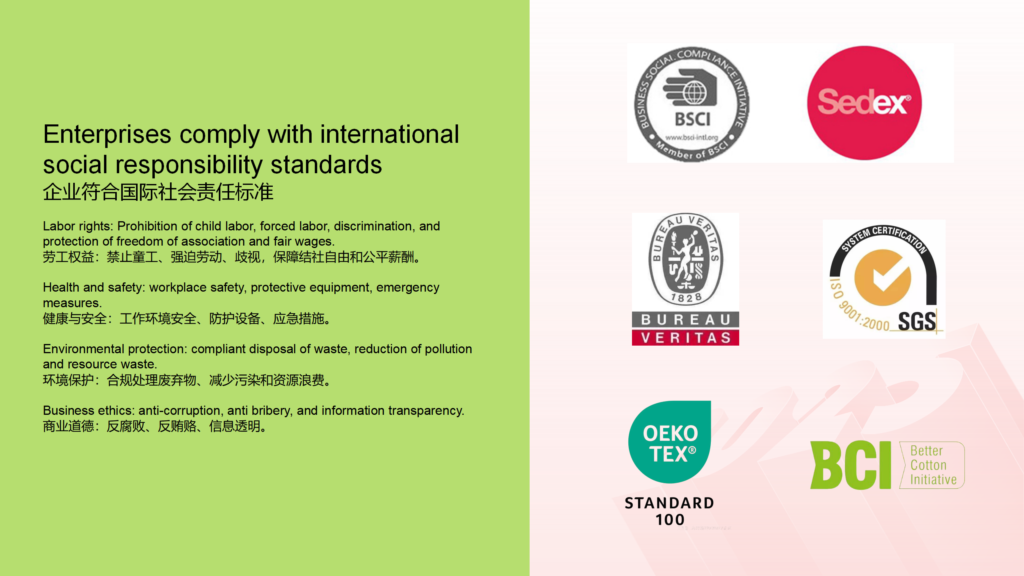
Table of Contents
- Introduction
- Quick Denim Sample Production Fundamentals
- Application Module 1: Pre-Sample Planning
- Application Module 2: Fabric & Trim Sourcing
- Application Module 3: Wash, Color, and Finishing
- Application Module 4: Sample Production & Approval Loop
- How to Choose a Partner for Quick Denim Sampling
- Conclusion
- Frequently Asked Questions
- How fast can denim product samples be made for a fashion brand?
- What files should I send a custom jeans factory to reduce revisions?
- What’s the difference between a jeans supplier, a jeans exporter, and a manufacturer?
- Can jeans manufacturers in China support small-batch trials for startups?
- How do I choose denim weight and stretch for custom denim jeans?