

When a customer DMs “flare jeans means what exactly?” they’re rarely asking for a dictionary definition. They’re trying to picture the silhouette, compare it to bootcut, and decide if it will flatter their body—or sell in their store. I’ve helped DTC teams sample flares in a week and still watched returns spike because the “flare” was actually a bootcut with a wider hem. Let’s make the meaning precise, practical, and production-ready.

What “flare jeans” means (simple definition)
Flare jeans means a jean fit that is snug through the hip and thigh, then starts widening at or just below the knee and continues to a noticeably wider hem. The key idea is the kick-out shape: the leg opening expands more dramatically than other “slightly wide” fits.
In everyday terms, flare jeans are often called:
- Flared jeans
- Bell-bottom jeans (usually a stronger, more dramatic flare)
- Kick flare (a shorter inseam with a smaller flare)
This is why the phrase “flare jeans means” comes up so often in search: people see many labels, but the shape difference is subtle unless you know where the flare begins.
Flare vs bootcut vs wide-leg: the differences that matter
Many shoppers confuse flare with bootcut because both widen toward the hem. The difference is degree and starting point. In my experience reviewing tech packs, brands get into trouble when they specify “flare” but grade the hem like a bootcut, causing the final fit to look tame.
1) Flare jeans
- Start widening: at/near the knee
- Hem: clearly wider than knee
- Vibe: retro, leg-lengthening, statement silhouette
2) Bootcut jeans
- Start widening: lower than the knee (more gradual)
- Hem: just wide enough to cover a boot
- Vibe: subtle, everyday, “slight flare” look
3) Wide-leg jeans
- Start widening: often from hip or upper thigh
- Hem: wide, but not “kicked out” from the knee
- Vibe: relaxed, drapey, modern volume
For a consumer-friendly explanation of the bootcut vs flare distinction, see Vogue’s breakdown.
| Fit Name | Where It Widens | Hem Width Feel | Best For | Common Mislabel |
|---|---|---|---|---|
| Flare | Dramatically from knee (or just below) | Very wide, swishy “bell” hem | Statement look, balancing hips/shoulders, heels | Called “bootcut” when hem is very wide |
| Bootcut | Slightly from knee to hem | Moderate; just enough to cover a boot | Everyday wear, boots, subtle leg-lengthening | Labeled “flare” even when opening is small |
| Wide-leg | From hip or upper thigh (straight down) | Wide and straight; column-like | Comfort, airflow, elongating with high rise, flats or heels | Called “palazzo” or “flare” incorrectly |
| Kick flare | From knee/calf; often cropped length | Slight flare; “kick” at ankle | Cropped styling, showing shoes, petite-friendly proportions | Called “cropped flare” or “straight” |
The anatomy of flare jeans (what to look for on a product page)
If you’re shopping (or writing product descriptions), these are the specs and cues that define the style beyond the name.
- Knee width vs hem width: Flare requires a visible jump from knee to hem.
- Rise: High-rise flares are most common because they balance the wider hem and lengthen the leg line.
- Inseam: Often longer to “stack” or skim the shoe; cropped versions are usually labeled kick flares.
- Fabric:
- Rigid denim = sharper vintage silhouette
- Stretch denim = easier fit, but needs stable recovery to avoid bagging
If you’re building a line, this is where manufacturing decisions start to affect “meaning.” A flare that collapses after wear no longer reads as a flare.
A quick history: why flares keep coming back
Flare jeans rose through 1960s–70s counterculture, then cycled again in the 90s/early 2000s, and now return as consumers swing from skinny to more expressive leg shapes. That pattern is consistent with how denim trends rotate: tight → straight → wide → statement.
What’s changed in the modern flare is fit engineering—better stretch blends, better pattern grading, and more precise wash control. A good flare today looks intentional, not costume.
For a helpful overview of the flare’s evolution and naming confusion (flare vs bell-bottom), see Plein Publique’s history article.

Types of flare jeans you’ll see (and how to describe them)
Not all flares are dramatic. Clear naming reduces returns and improves conversions.
Common flare variations
- Classic flare: fitted thigh, strong knee-to-hem expansion, full length
- Bell-bottom: the most dramatic hem; often longer and more retro
- Kick flare: cropped length, smaller flare (easy everyday option)
- Slim flare: narrow through knee with a controlled hem (modern, less costume)
- Panel flare / seam-flare: uses side panels to create shape and movement
If your audience includes petite shoppers, kick flares and slim flares are often easier to fit and style. (Democracy Clothing has a useful consumer guide to flare options and proportions: types of flare jeans.)
How to style flare jeans (fast, wearable rules)
Flare jeans are about proportion. Once you balance the hem, they’re surprisingly easy.
Styling rules that work for most people
- Choose the right shoe height: a slight heel or platform often makes the flare look cleaner.
- Balance the volume: pair with fitted knits, tucked tees, or cropped jackets.
- Mind the hem break: aim for the hem to skim the shoe without dragging.
Outfit ideas (men + women + unisex)
- Minimal: black flare + white tee + leather jacket
- Work-ready: dark rinse flare + blazer + heeled boot
- Street: light wash flare + hoodie + chunky sneaker (shorter inseam helps)
What Jean Is More Flattering: Flares or Boot Cut? : All About Jeans
“Flare jeans means” in manufacturing terms (OEM/ODM reality)
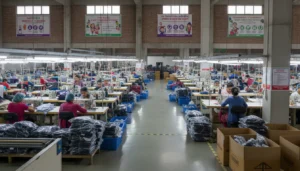
For DTC brands, flare jeans means more than a silhouette—it’s a set of measurable pattern and production choices that must survive washing, wear, and returns. At SkyKingdom Group, we’ve seen two repeat failure points when brands launch flares quickly.
The two most common production pitfalls
- Pitfall 1: Mis-graded leg opening
- What happens: flare looks like bootcut in larger sizes
- Fix: grade knee and hem with flare intent, not straight-leg logic
- Pitfall 2: Stretch recovery issues
- What happens: knees bag out, flare collapses after a few hours
- Fix: choose stable stretch denim and test growth/recovery after wash
SkyKingdom’s approach is built for speed and repeatability: 7-day samples, 15–22-day bulk, low MOQ 30 units, and “Amazon Top Seller-Grade QC” at AQL 2.5, supported by real-time production tracking on digital ERP systems. That matters because flare jeans are visually sensitive—small measurement drift changes the entire “flare” identity.
If you’re sourcing denim for an online store, these guides can help you avoid costly missteps:
- the most cost effective ways to source jeans for your online store
- the ultimate guide to quick denim clothing sample production for fashion brands
- choosing the best factory for low moq denim clothing ideal for individuality seekers
Spec checklist: how to brief a factory so the flare reads correctly
A clear tech pack prevents “this isn’t a flare” feedback.
- Define fit name (classic flare, slim flare, kick flare)
- Provide target knee width and leg opening by size
- Specify rise, inseam, and intended shoe pairing (boot/heel/sneaker)
- Choose fabric: rigid vs stretch, and set recovery requirements
- Lock wash details: shrinkage targets, whisker placement, and hem finishing
In practice, I’ve found that adding a simple note like “flare begins at knee” plus a reference photo reduces sampling rounds.
Conclusion: flare jeans means a silhouette you can measure—and a story you can sell
Flare jeans means fitted through the thigh with a clear knee-to-hem expansion, distinct from bootcut’s subtle widen. When the pattern, fabric recovery, and wash are aligned, flares become one of the most flattering and trend-resilient denim fits you can offer. If you’re building a DTC drop, treat “flare” as a measurable spec—not just a vibe—and your customers will see (and feel) the difference.
📌 the ultimate guide to quick denim clothing sample production for fashion brands
FAQ: People also ask about “flare jeans means”
1) Flare jeans means bell-bottoms?
Not always. Bell-bottoms are usually a more dramatic version of flare jeans, with a wider hem and stronger retro look.
2) What’s the main difference between bootcut and flare jeans?
Flare widens at the knee and becomes clearly wider at the hem. Bootcut widens more gradually and is only slightly wider at the hem.
3) Are flare jeans flattering for short legs?
Yes—especially high-rise and kick flare styles, paired with the right inseam and shoe height to avoid pooling.
4) What shoes look best with flare jeans?
Heeled boots, platforms, and sleek sneakers work well. The goal is a hem that skims the shoe rather than dragging.
5) Do flare jeans go out of style?
They cycle, but they don’t disappear. They often return when trends shift away from skinny fits toward expressive silhouettes.
6) How should flare jeans fit at the knee?
They should feel comfortable and not tight, but the shape should be defined—the flare effect comes from the contrast between knee and hem.
7) What fabric is best for flare jeans: rigid or stretch?
Rigid denim gives a crisp vintage flare. Stretch denim is easier to fit and sell broadly, but it must have strong recovery so the flare doesn’t collapse.