
If “fashion vendors wholesale” feels like a maze, you’re not alone. One vendor promises unbeatable prices, another pushes “ready to ship,” and a third says they can do custom everything—fast. The real question is: which wholesale path fits your business model without blowing up your cash flow or brand reputation? In this guide, I’ll break down how wholesale fashion pricing works, which terms matter most, and the red flags I’ve learned to spot after years around apparel sourcing.

What “fashion vendors wholesale” really means (and why it’s confusing)
Fashion vendors wholesale is an umbrella term that covers very different supplier types. Some vendors are marketplaces listing many brands, some are distributors holding inventory, and others are factories that manufacture your product from scratch (OEM/ODM). The reason pricing and terms vary so much is simple: you’re not always buying the same thing—sometimes it’s stocked inventory, sometimes it’s production capacity.
Common vendor categories you’ll see:
- Wholesale marketplaces (multi-vendor catalogs, easy ordering, mixed policies)
- In-stock wholesalers/distributors (faster ship, limited customization)
- Liquidation/closeout sellers (lowest prices, highest inconsistency)
- OEM/ODM manufacturers (custom product, MOQ/lead times, better brand control)
If you’re building a DTC brand, the biggest difference is control vs speed. In-stock wholesale is fast, but your product may look like everyone else’s. OEM/ODM is slower upfront, but you control fit, wash, trims, labeling, and repeatability.
Wholesale pricing explained: what you’re actually paying for
Wholesale pricing isn’t just “cost per piece.” It’s a bundle of risk, services, and assumptions. In practice, vendors price based on order size, fabric choice, complexity, and timeline—and they protect themselves with MOQs and payment terms.
Here’s what typically influences wholesale apparel pricing:
- Fabric & trims: denim weights, stretch content, zipper quality, thread, labels
- Construction complexity: pockets, yokes, linings, embroidery, prints
- Wash & finishing (especially denim): enzyme, stone, bleach, tint, laser, whiskers
- MOQ & color/size ratio: smaller runs raise cost because setup is spread over fewer units
- Speed: rush programs often add cost (or reduce QC buffers)
A practical tip I use: ask for the vendor’s quote broken into components (fabric, cut-make-trim, wash, packing, shipping estimate). If they refuse and only provide a single number, it’s harder to compare vendors and easier for surprise charges to appear later.

The most important wholesale terms (and how to negotiate them)
Many buyers focus only on unit price, but terms are what decide whether a deal is profitable. In wholesale fashion, you’re managing inventory risk, quality risk, and timeline risk—and the contract terms define who pays when something goes wrong.
Key terms to understand before you pay:
- MOQ (Minimum Order Quantity): per style, per color, or per fabric lot
- Lead time: sampling time + bulk time + shipping time (don’t forget customs clearance)
- Payment terms: common is deposit + balance before ship; negotiate based on trust and volume
- Incoterms: EXW, FOB, CIF, DDP—these change who pays freight, duty, and insurance
- QC standard: ask what inspection level is used (AQL levels are common in factories)
- Defect/claims policy: timelines, evidence required, replacement vs credit, exclusions
Negotiation moves that usually work (without creating friction):
- Ask for tiered pricing at 50/100/300/1000 units instead of one MOQ.
- Lock repeat-order pricing if fabric and trims remain the same.
- Confirm pre-production sample approval is required before bulk starts.
- Add a QC checkpoint (inline + final) and define rework responsibility.
When I’ve audited vendor agreements, the biggest silent profit leak is unclear responsibility for rework, delays, and shade variation—especially in denim and dyed wovens.
Two sourcing paths: in-stock wholesale vs OEM/ODM manufacturing
If you sell trend-driven apparel, in-stock vendors can help you test quickly. If you’re trying to build signature fits (especially denim), OEM/ODM is often the better long game. The right choice depends on your brand stage, capital, and how unique your product needs to be.
A clean way to decide:
- Choose in-stock wholesale if you need fast inventory, lower complexity, and minimal development.
- Choose OEM/ODM if you need custom fit, consistent restocks, private label control, and better differentiation.
For brands building denim programs, these resources can help frame the decision:
- Internal: a guide about how to choose denim clothing factory for your fashion retail business
- Internal: the ultimate guide to quick denim clothing sample production for fashion brands
- Internal: what are the best small batch denim clothing manufacturers for private label
Red flags to watch for (pricing, quality, and legitimacy)
In fashion vendors wholesale, the “too good to be true” problems are predictable. Most disasters come from one of three gaps: unclear specs, weak QC, or fake capacity (a middleman claiming factory capabilities they don’t control). If you catch these early, you save months.
High-signal red flags:
- No physical address or unverifiable company registration (especially for “factory direct” claims)
- They won’t share QC standards or inspection photos/videos
- Inconsistent product photos (different models/lighting/backgrounds across “same” style = often copied listings)
- Refuse samples or require large payment before a sample is shipped
- Prices far below the market without a clear reason (closeout is fine; “new production” at liquidation prices is not)
- Vague material descriptions (“premium denim,” “high quality fabric”) without composition and weight
- No clear return/claim process for defective goods
| Common mistake | Why it hurts margins | What to ask the vendor | Best fix |
|---|---|---|---|
| Buying by photo only | Fit/handfeel mismatch drives returns, markdowns, and rework | “Can you share fabric composition, GSM/oz weight, and measured specs (chest, length, sleeve, tolerance) by size?” | Order a full size-run sample (or top sellers) before committing to bulk |
| Ignoring Incoterms | Surprise freight, duties, and destination fees inflate landed cost | “Is this quote EXW, FOB, or DDP? Please itemize freight, insurance, and duties assumptions.” | Compare true landed cost across vendors and lock Incoterms in the PO |
| No QC agreement | Defects arrive unsellable, causing chargebacks and expedited replacements | “What AQL level do you work to, and can you provide inline/final inspection reports with photos?” | Require inline + final QC with agreed AQL and clear defect classification |
| Over-ordering first buy | Cash tied up in slow movers, forcing deep discounts | “Can you lower MOQ, split colors/sizes, or do a repeat-friendly MOQ for reorders?” | Start with test quantities and scale only after sell-through data |
| No PP sample sign-off | Bulk production drifts from approved sample, creating inconsistent product | “What’s the PP (pre-production) sample timeline, and will bulk cutting wait for written approval?” | Approve PP sample (fabric, trims, measurements) before bulk cutting begins |
Vendor verification checklist (quick but thorough)
You don’t need a full compliance team to vet fashion vendors wholesale—you need a repeatable checklist. I’ve used versions of this to screen vendors in under a week, and it catches most issues before money moves.
Use this checklist before placing a first order:
- Samples: request 1–2 samples; confirm they match photos and measurements.
- Spec sheet discipline: require size specs, tolerance, and fabric details in writing.
- Factory or warehouse proof: ask for a live video walkthrough or timestamped photos.
- QC proof: request recent inspection reports or an AQL reference.
- Capacity & timeline: confirm sampling lead time and bulk lead time, not just “we can do fast.”
- Payments: use protected methods where possible; avoid unusual payment requests.
- References: ask for customer references or verifiable buyer reviews.
For broader supplier discovery, these industry directories/marketplaces are common starting points:
- FashionGo wholesale marketplace
- Wholesale Central apparel suppliers directory
- Trendsi wholesale clothing guidance
Pricing models you’ll encounter (and how to compare fairly)
When comparing fashion vendors wholesale, avoid comparing apples to oranges. One vendor may be quoting FOB, another EXW, another includes shipping, and another is excluding labels, hangtags, or wash effects. Your goal is to normalize everything into landed cost.
Normalize quotes with this process:
- Confirm currency, Incoterm, and port/location
- Confirm what’s included: labels, packaging, QC, testing, wash/print, cartons
- Calculate landed cost per unit: unit price + freight + duty + last-mile + packaging add-ons
- Compare lead time impact: faster isn’t cheaper if you miss a selling window
If you’re building a DTC denim or woven program, landed cost should be evaluated alongside:
- repeatability (can they match shade/fit next run?)
- speed-to-market (samples + bulk timeline)
- defect rate and claims handling
Where SkyKingdom Group fits (OEM/ODM for speed + low MOQ)
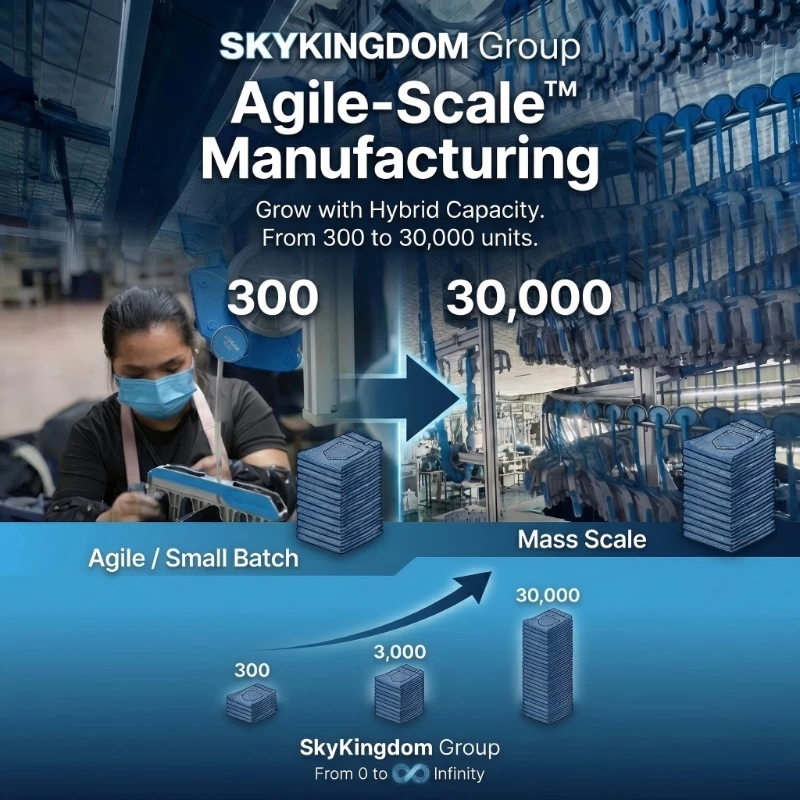
If your goal is to move beyond generic wholesale inventory into brand-controlled products, an OEM/ODM partner is usually the next step. SkyKingdom Group (China-based) supports DTC brands with a “Speed-to-Market Engine” designed for fast fashion denim and woven apparel—7-day sample turnaround and 15–22-day bulk production in many cases. For new brands, the practical advantage is a low MOQ (as low as 30 units) while keeping industrial QC discipline (AQL 2.5 standard) and digital ERP transparency.
In my experience, the real win with a capable OEM/ODM partner is fewer “surprise” failures:
- clearer pre-production approval steps
- stable base fabric planning (risk-sharing safety stock helps reduce delays)
- QC standards that match ecommerce expectations, not just local wholesale norms

A simple buying workflow for your first wholesale order
A clean workflow reduces mistakes more than any “vendor secret.” If you follow the same steps every time, you’ll spot inconsistencies faster and negotiate from a position of clarity.
Recommended first-order workflow:
- Define your hero SKU (one style, two colors, tight size range).
- Get a sample (or development sample for OEM/ODM).
- Lock specs in writing (measurement chart + fabric composition + wash/trim details).
- Confirm terms (Incoterms, payment milestones, lead time, claims policy).
- Run QC (at least final inspection; ideally inline + final for production).
- Measure landed cost and back into your retail price and margin.
Pro Sourcing Strategy: Get Best Deals From Clothing Manufacturers!
FAQ: fashion vendors wholesale
1) What is the difference between wholesale vendors and manufacturers?
Wholesale vendors typically sell finished goods (often in stock), while manufacturers produce goods (often custom) under OEM/ODM programs with MOQs and lead times.
2) What are typical payment terms for fashion vendors wholesale?
Common terms include a deposit with balance before shipping. More favorable terms may be available after relationship history or higher volumes.
3) How do I calculate true cost when buying wholesale apparel?
Use landed cost: unit price + packaging + freight + duty/tax + last-mile delivery + QC/testing costs.
4) What does MOQ mean and why does it matter so much?
MOQ is the minimum quantity a vendor requires to make the order worthwhile. It affects your cash tied in inventory and your ability to test new styles.
5) What are the biggest red flags when choosing a wholesale clothing vendor?
No verifiable business info, refusal to provide samples/specs/QC standards, inconsistent listings, unrealistic prices, and unclear claims policies.
6) Is OEM/ODM better than buying ready-to-ship wholesale for DTC brands?
Often yes for differentiation and repeatability, but it requires product development discipline and lead time planning. Ready-to-ship is better for fast testing.
7) How can I verify a fashion vendor is legitimate before I pay?
Request samples, verify address/registration, ask for live walkthrough proof, check reviews/references, and use protected payment methods for first orders.
Conclusion: buy wholesale like a brand owner, not a bargain hunter
Fashion vendors wholesale can either feel like a shortcut—or a trap—depending on how you approach pricing, terms, and verification. When you treat your first order like a controlled test (clear specs, clear Incoterms, defined QC, and realistic lead times), you protect your margin and your customers. And when you’re ready to shift from “what’s available” to “what’s uniquely yours,” an OEM/ODM path can turn speed and consistency into a real competitive edge.
📌 the ultimate guide to quick denim clothing sample production for fashion brands