SkyKingdom Group | Empowering Creators Globally


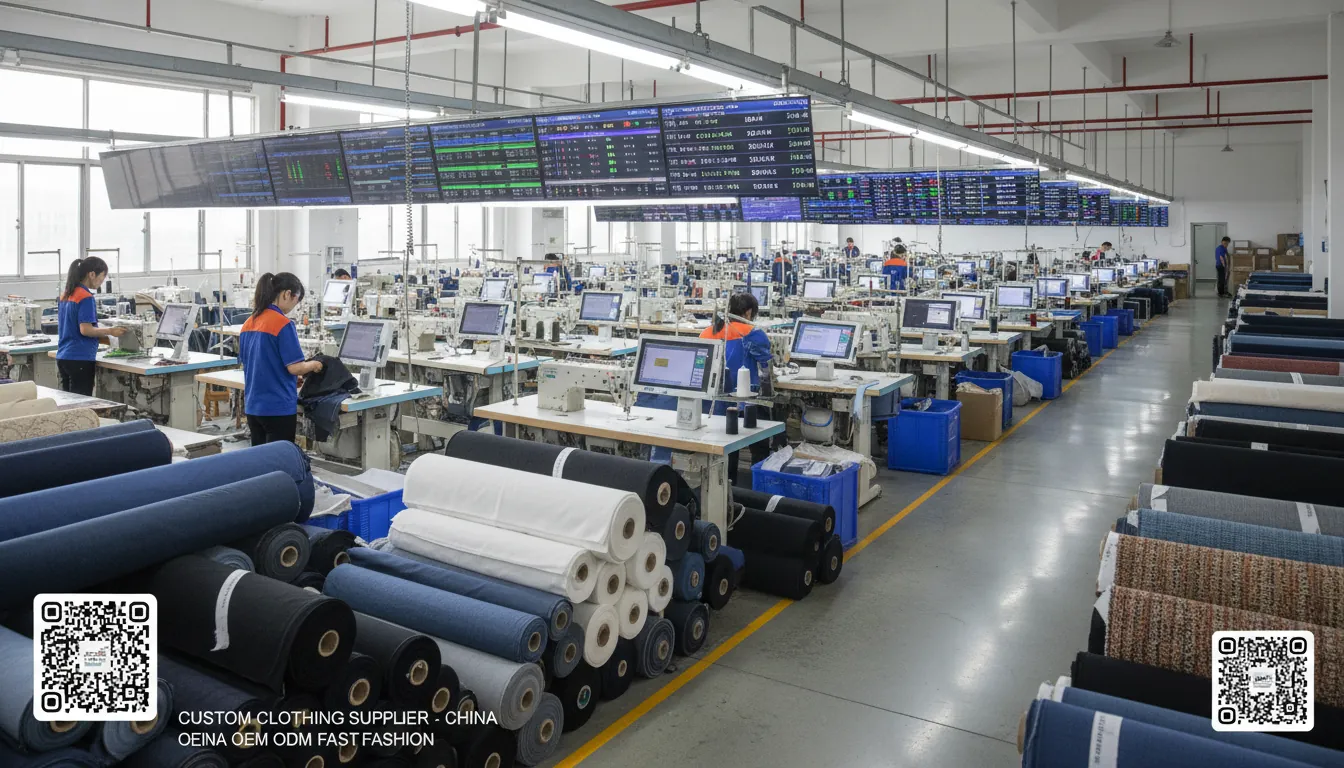
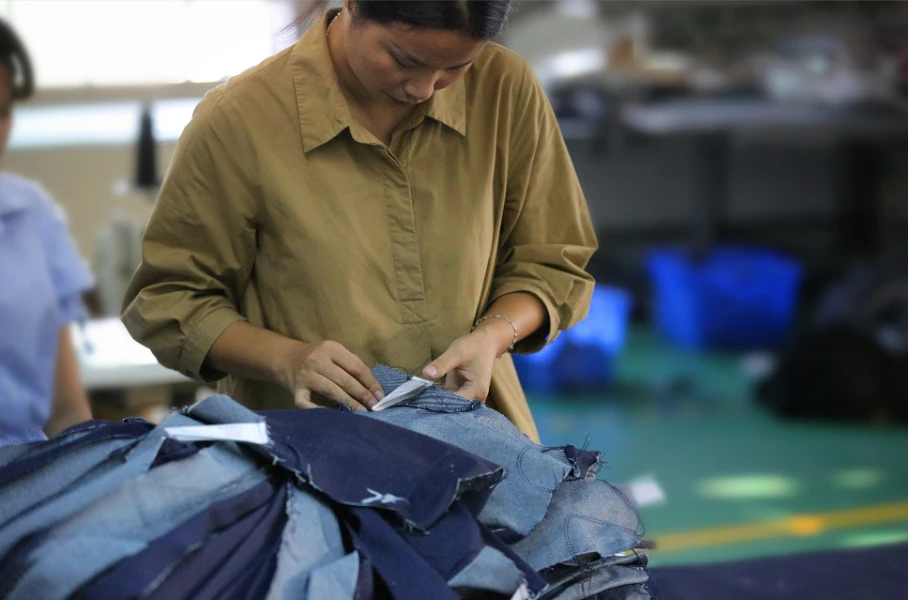
Quality control works only when it is managed as a system, not treated as a final inspection step. For denim, the biggest risks usually appear between sample approval and bulk production, then again when a reorder tries to repeat the same fit, wash, shade, trims, and construction details. SkyKingdom’s 14-person QC team works with documented checkpoints, approval logic, and production records to keep those risks visible before goods are released.
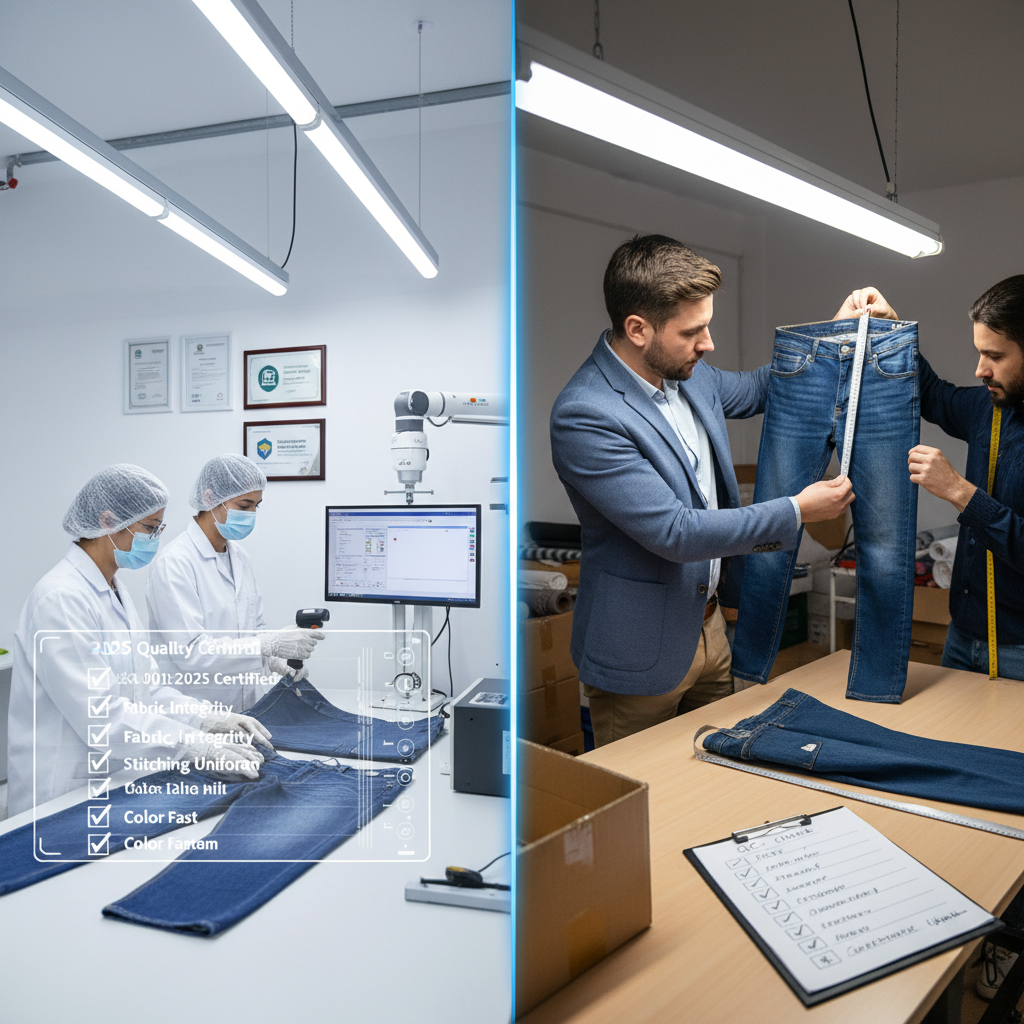
Quality control works best when each risk is reviewed at the right stage — instead of pushing every question to the end of the order.
Approved Sample Review
confirm the approved sample as the production reference for fit, construction, wash direction, trims, and finish expectations
Pre-Production Check
review fabric, trims, measurements, wash targets, packaging needs, and known risk points before bulk execution starts
First-Piece / First-Batch Review
compare early production output against the approved reference before the same issue is repeated across more units
Inspection & Final Release Review
check workmanship, measurements, wash / shade alignment, trims, labeling, packing details, and release readiness; AQL 2.5 may be used where required or appropriate
Reorder Reference & Documentation
preserve approved standards, measurement notes, wash expectations, inspection records, and production references for future repeat orders
QC System
What gets checked, when it gets checked, how defects are classified, how release decisions are made, and how accountability stays clear across the workflow.
Sample-to-Bulk Consistency
How approved samples become usable production baselines — and how wash, fit, measurements, trims, and finishes are reviewed before shipment.
Reorder Control
Why repeat orders fail when references are not preserved — and how standards, approvals, and production notes are carried forward correctly.
Traceability & Compliance Support
What documentation can be reviewed, what stays as internal production records, and what needs to be handled by project scope, market, and testing requirements.
Quality control becomes more useful when it prevents real business problems — not when it only explains what went wrong after production is finished.
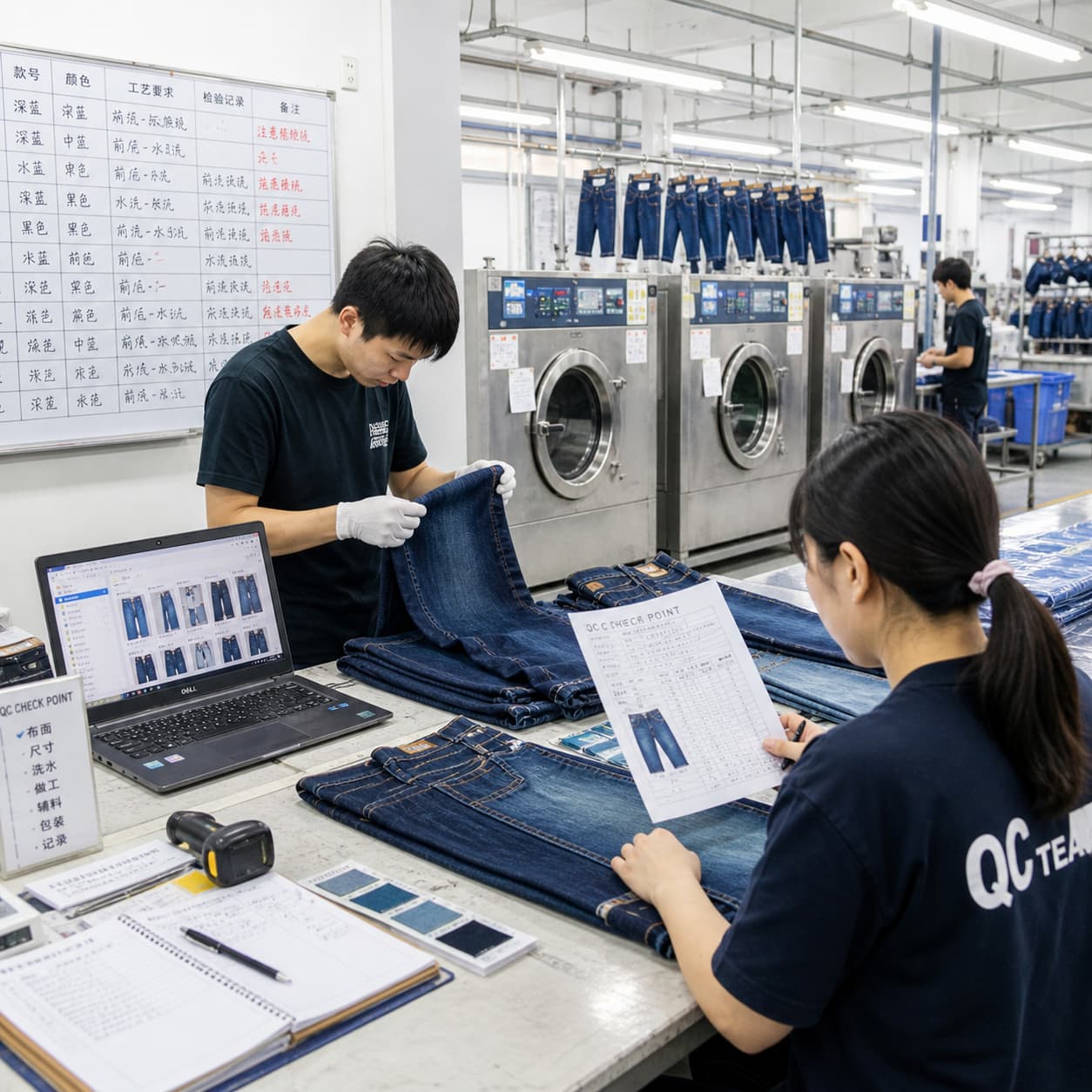
Quality claims become more credible when buyers can understand how decisions are checked, documented, and carried forward. The exact records depend on project scope, but the structure below shows the type of review logic that supports production control.
Checkpoint Map
QC Report
Measurement Report
Reorder Reference Notes
For buyers who want to review the operating logic behind this workflow in more detail, the 49-node document can be used as supporting material. It does not replace the buyer-facing quality logic on this page, but it helps explain the operating framework behind SkyKingdom’s managed denim workflow.
These are the quality questions buyers usually ask before comparing denim suppliers. For broader sourcing, MOQ, sampling, production, and order questions, visit the full FAQ page.
How do you keep sample and bulk aligned?
Do you use AQL 2.5 for inspection?
What happens if wash, shade, or fit drifts during production?
How do you manage QC across partner factories?
Can buyers receive QC records?
What traceability or compliance documents can you support?
See which stage matters most for your situation — low-risk launch, bulk alignment, or repeat-order continuity.
See Solutions by Your Situation
Review common sourcing, MOQ, sampling, production, and quality questions before starting a denim project.
Visit Full FAQ
Talk to a denim product lead if you are comparing suppliers or trying to reduce sample-to-bulk drift.
Talk to a Denim Product Lead
Why Quality Control Matters
Before release, not after complaints
Good denim QC should make risks visible before packed goods, delays, chargebacks, or avoidable rework.
One reference across the workflow
Sample approval, bulk release, and reorder control only work when decisions are documented and carried forward.
Reorders need preserved standards
Repeat orders stay more reliable when approved samples, measurements, wash expectations, trims, and risk notes are not rebuilt from memory.