
Introduction
Creating a truly one-off denim piece sounds simple until you hit the factory reality: most OEM and ODM pipelines are built for repeatable styles and bulk runs. That is why creators often get stuck in sampling loops, slow email chains, and minimum order requirements that do not match a personal project.
A practical workaround is an On-Demand Fashion workflow that starts with AI-ready visuals, then moves through fast response and quick response manufacturing checkpoints. You use clear inputs (images, measurements, and finish notes) so the maker can convert your intent into production without you building a full tech pack.
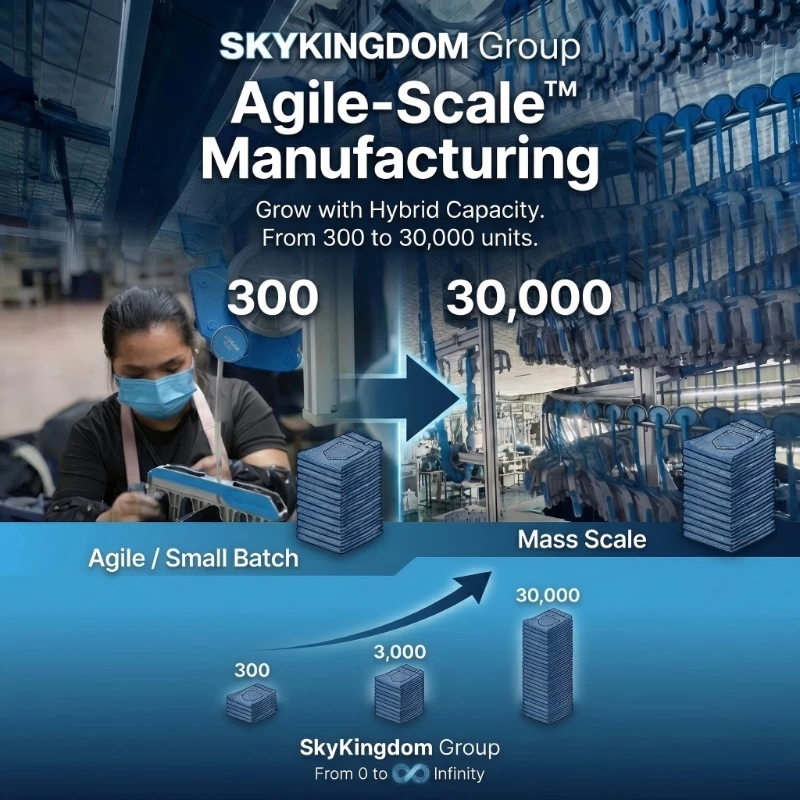
This guide shows a step-by-step method to go from concept to a finished one-off garment, with quality gates that protect your time and the value of a single piece. Along the way, you will see where low MOQ and small batch services fit, and when it makes sense to shift to Low MOQ Manufacturing for drops.
How to Create a One-off Denim Piece
Define garment purpose and fit
Start by deciding what the garment must do in real life. A one-off piece has no room for ambiguity because there is no batch to average out mistakes.
Use a short spec note (one page is enough) that includes:
- Garment type: jeans, jacket, overshirt, skirt, or wide-leg pant.
- Intended use: daily wear, performance styling for video, or gallery-level statement.
- Fit intent: high-rise vs. mid-rise, oversized vs. tailored, and desired inseam.
- Comfort constraints: stretch preference, weight tolerance, and pocket needs.
Why this matters for OEM and ODM communication: fit decisions drive patterning and hardware placement. When you lock these early, you reduce back-and-forth and avoid rework that kills fast response timelines.
To keep the workflow quick response, add 2-3 reference photos and label what you want to copy (rise height, leg opening, pocket angle). Do not rely on vague words like “relaxed” without examples.
Generate AI-ready design visuals
Your visuals are the new tech pack. The goal is to produce images that an ODM team can translate into pattern, wash recipe, and finishing steps.
Create a visual set with:
- Front view, back view, and a close-up crop for wash texture.
- Callouts for distress locations (knee, thigh, hem) and edge behavior (clean cut vs. frayed).
- Hardware intent: buttons, rivets, zipper type, and pocket bag color.
Prompting tips for Digital Textile Printing and wash accuracy:
- Name the wash: “mid-indigo stone wash” or “light blue acid wash”.
- Add texture words: “vertical whiskers”, “sanded thighs”, “high contrast fades”.
- Specify placement: “distress on left knee only” and “raw hem 2 cm”.
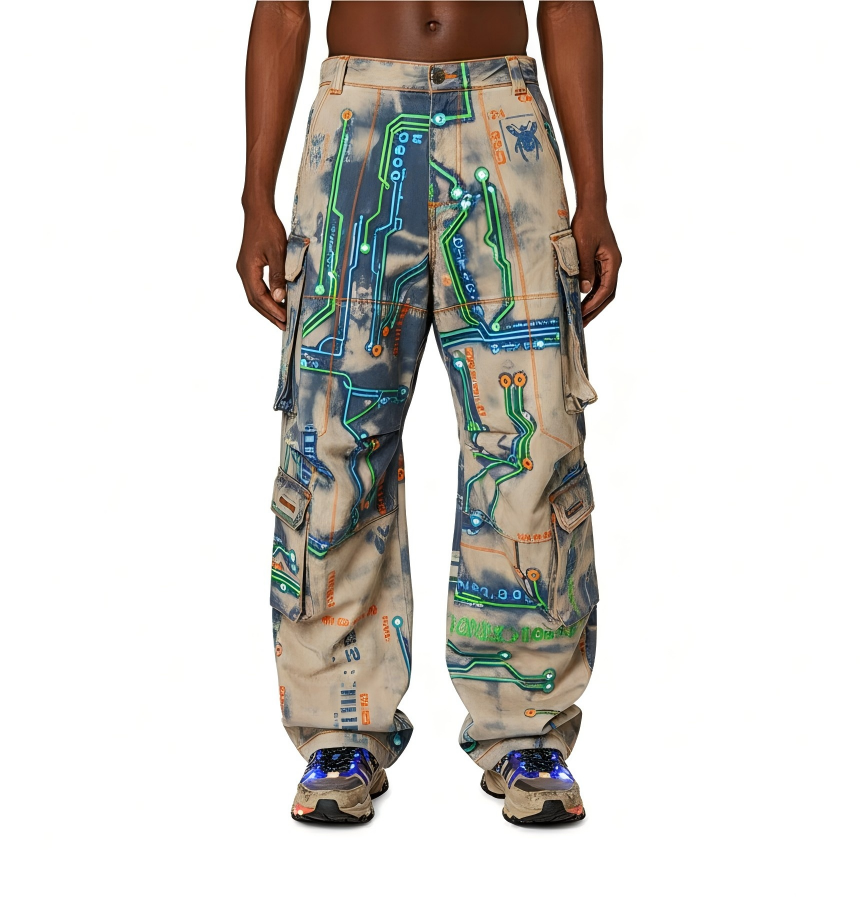
Sky Kingdom positions CodeDenim as a TEXT-TO-DENIM workflow, where a single line can generate 4K visuals that highlight fabric texture and distressed detail. That helps when you want high specificity without drafting a full apparel spec document.
Specify denim materials and sustainability
Material choice is where Sustainable Denim becomes real, because denim behavior changes with fiber blend, weight, and finishing. If you skip this step, your one-off can come back with the right look but the wrong hand-feel.
Send a short material checklist:
- Weight range: 10-12 oz for lighter drape, 12-14 oz for classic structure.
- Stretch: rigid 100% cotton for sharp fades, or a small stretch blend for comfort.
- Surface: clean twill, slub texture, or pronounced grain for vintage effect.
- Color base: sulfur black, deep indigo, or light blue base before washing.
If you are aiming for Circular Fashion outcomes, call out Recycled Cotton Denim explicitly and ask the maker to confirm available options for your wash plan.
Context for why clarity helps: Textile-to-textile feedstocks remain a very small portion of total fibers used by brands. Textile Exchange reports that less than 1% of all fibers used by reporting brands and retailers were from textile-to-textile feedstocks from post-consumer textiles in 2023. (textileexchange.org)
This does not mean you cannot request recycled inputs. It means you should expect trade-offs like narrower color ranges, slightly different shade behavior after washing, or longer confirmation cycles.
Submit visuals for ODM conversion
Now you turn your design into something a factory can build. In an ODM pathway, the maker helps convert intent into manufacturable specs. For a one-off, you want the conversion to be fast response but still controlled.
Submit a single package that includes:
- Your image set (front/back/close-up).
- A measurement list (body or garment measurements).
- Notes on construction: seam type, topstitch color, pocket shape.
- Finish notes: wash level, distress count, and placement.
Sky Kingdom highlights a “no tech pack” approach where visuals can be read and converted into production-ready outputs. This is exactly what you need when you are a creator, not a technical designer.
To keep quick response realistic, label your inputs with version numbers (V1, V2). That avoids confusion if you revise the wash or artwork.
Confirm construction and finish details
This is the approval checkpoint that prevents “looks close” outcomes. Even with perfect visuals, construction details can drift unless you lock them.
Confirm these items before production:
- Seams: outseam and inseam stitch type, topstitch thread color, and stitch density expectation.
- Hardware: button finish (matte vs. shiny), rivet count, zipper color.
- Pocket geometry: back pocket size and placement height.
- Distress map: exact zones, with “no distress” zones called out.
If you want Digital Textile Printing (for artwork or photo-real panels), confirm:
- Print placement: centered, offset, or wraparound.
- Edge behavior: printed panel sewn in vs. direct-to-fabric effect.
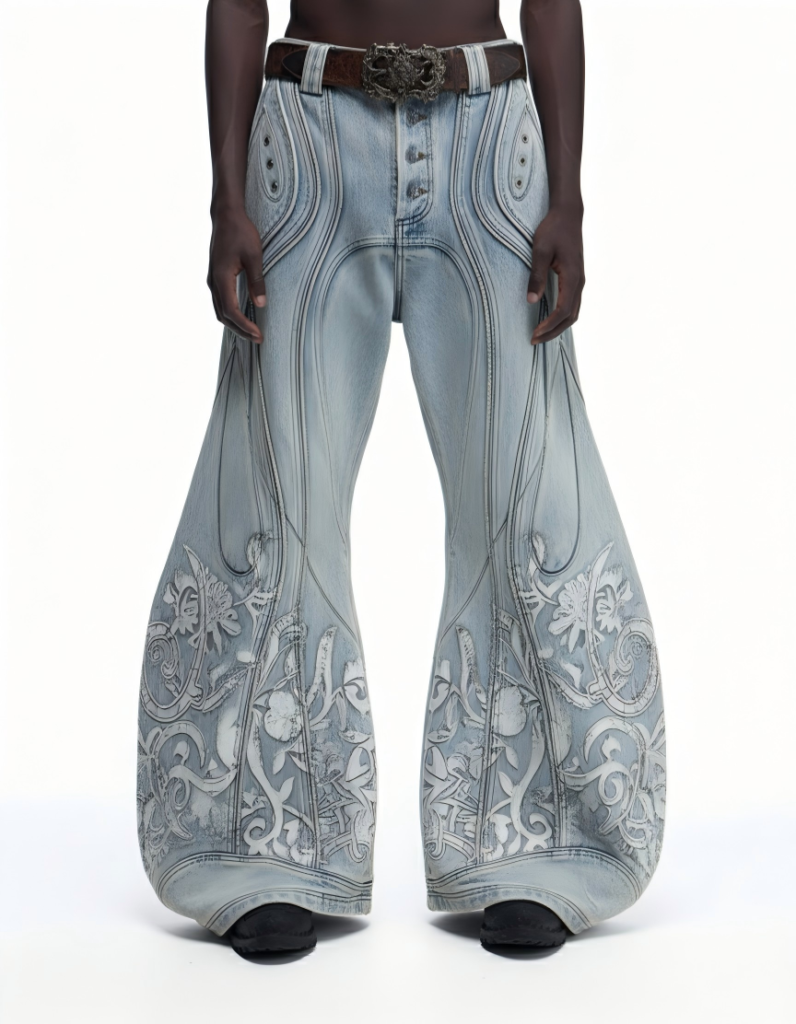
Sky Kingdom notes that each one-off is individually patterned, laser-finished, and sewn rather than produced as standard S/M/L. That is aligned with the goal of avoiding mass replication when you only need one garment.
Run QA checks before production
One-off work needs QA that is closer to sampling discipline than bulk tolerance. The purpose is to protect you from a single-point failure: there is no second unit in the run to swap.
Ask for these QA checks:
- Measurement verification against your approved list.
- Wash and color tolerance check using clear photos in consistent lighting.
- Stitch integrity review at stress points: crotch seam, pocket corners, belt loops.
Sky Kingdom emphasizes QA/QC inspectors and quality traceability for 1-of-1 work. For creators, traceability matters because it supports remakes, repairs, and consistent documentation of what was built.
If your project includes tight deadlines, pair QA with fast response planning. Sky Kingdom describes quick-turnaround capabilities and real-time tracking as part of its ultra-fast supply chain approach.
Receive, inspect, and document outcome
When the garment arrives, treat inspection like a short checklist, not a vibe check. Your documentation helps if you plan a second one-off iteration or want to scale later into small batch production.
Inspect in this order:
- Fit: waist, rise, thigh, knee, hem, and inseam. Photograph front and side.
- Finish: compare distress placement to your map. Check symmetry where needed.
- Stitching: pull gently at pocket corners and belt loops to confirm reinforcement.
- Hardware: confirm no sharp edges, and test zipper/button function.
Then document:
- A final photo set (front/back/detail shots) for your archive.
- The approved version names (V2 visuals, Rev A measurements).
- Notes on what you would change next time.
If you later want to shift from one-off to low MOQ drops, this documentation becomes your starting point for OEM and ODM repeatability.
Prerequisites and Safety
Required Tools and Materials
- AI design images: front, back, and texture close-up.
- Measurement set: body measurements or a measured reference garment.
- Fit preference notes: tight, regular, oversized, and where.
- Fabric intent: weight range, stretch preference, and base color.
- Hardware list: zipper vs. button fly, rivets, button finish.
- Shipping details: address, deadline, and any customs constraints.
Safety Considerations
If you sew, pin, cut, or modify denim at home (even minor hem or distress work), treat it like a workshop task.
- Wear safety glasses for any cutting, grinding, or rotary tool distressing. The American Optometric Association notes that the right eye protection can lessen severity or even prevent 90% of workplace eye injuries. (aoa.org)
- Keep hands clear of sewing needles and presser feet. Use clips or a stiletto tool to guide thick seams.
- Control loose fibers and dust during sanding or distressing. Vacuum the area to reduce irritation.
- Test chemicals (bleach sprays, dye removers) on scrap fabric first. Ventilate the room and wear gloves.
Troubleshooting
| Problem | Likely cause | What to do next |
|---|---|---|
| Design looks different than expected | Prompt is vague, wash terms missing | Add specific wash language (“acid wash”, “stone wash”), add a texture close-up, and label distress zones by body area (left knee, right thigh). |
| Fit feels off | Missing key measurements or unclear ease | Resend waist, hip, front rise, back rise, thigh, knee, hem, and inseam, plus your preferred ease in inches. Use one measured reference garment if possible. |
| Color mismatch after wash | Lighting differences or tolerance not agreed | Request photos under neutral light, then confirm a color tolerance expectation before the final wash run. Ask for a swatch check when available. |
| Distress placement feels random | No distress map or too many “creative” zones | Provide a marked-up front/back image with “distress” and “no distress” areas. Limit distress to 2-4 named zones for a cleaner result. |
| Stitching looks uneven at thick seams | Thread tension or needle choice not tuned for thick denim | Ask for reinforcement at stress points and cleaner topstitch guidance before sewing starts, especially around belt loops and pocket corners. |
Conclusion
A one-off denim project becomes realistic when you treat it as a structured OEM and ODM workflow instead of an open-ended art request. Clear visuals, clear measurements, and one approval checkpoint for construction and finishes keep the process fast response without losing control.
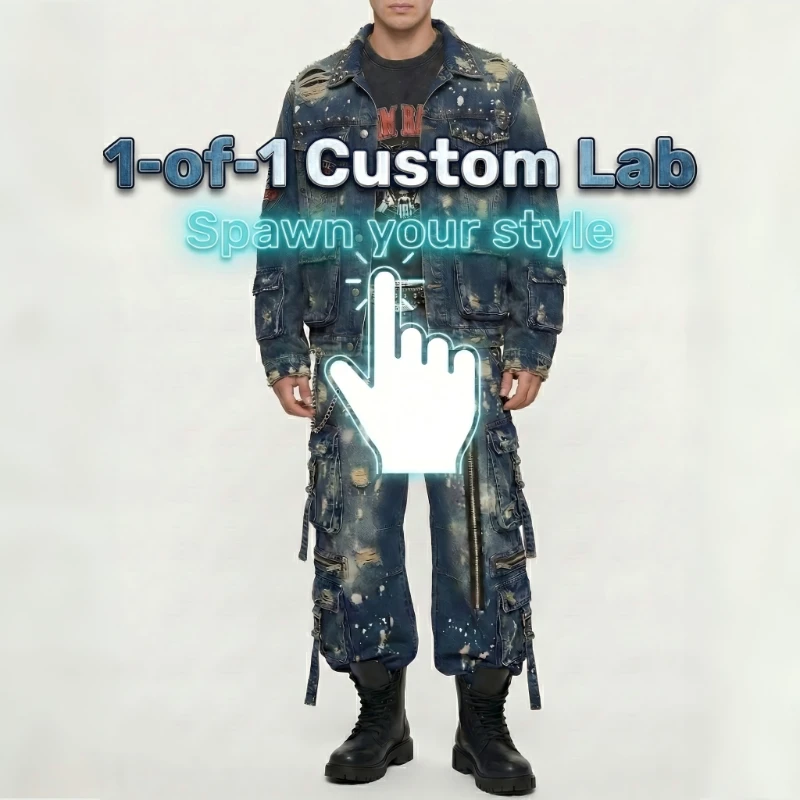
If you want true individuality, start with a 1-of-1 lab workflow. If your idea catches traction, you can shift into low MOQ, small batch production, and eventually Agile Manufacturing with a Flexible Supply Chain approach.
Come to our official website to find more: Sky Kingdom
Frequently Asked Questions
Can I create a one-off denim piece for a personal project without large order requirements?
Yes, you can, as long as the manufacturer supports true one-off production rather than only bulk OEM runs. You should provide front and back visuals, a measurement set, and a short list of finish notes so the factory can build a pattern confidently. You should also add one approval checkpoint for construction and wash details before production. That single checkpoint prevents most one-off mistakes.
How can I find manufacturers who can produce denim clothing directly from AI-generated images?
You should look for a workflow that accepts high-resolution visuals and can convert them into production-ready outputs without a full tech pack. You should ask if they can confirm seams, hardware, and wash placement from your images, not just the general style. You should also request a defined revision process (for example V1, V2) so you can iterate prompts without confusion. A fast visual approval loop is a strong sign the process will work.
How do I find a manufacturer that accepts small orders for custom denim designs?
You should ask for explicit low MOQ or small batch programs and confirm the minimum in writing before you invest time in sampling. You should also ask how they handle sampling visuals, approvals, and quality checks when the order is only 1 unit or a micro-run. If you plan to scale, you should ask whether they can keep the same construction standard when you move from 1 piece to 30 pieces. That continuity matters more than speed.
Where can I find manufacturers that allow one piece for custom denim orders?
You should search for denim labs or 1-of-1 customization programs that advertise personal customization rather than ready-to-wear or bulk-only production. You should confirm that they do individual patterning instead of standard S/M/L grading. You should also confirm they can document the build (measurements, wash notes, and QC checks) because that protects a one-off from miscommunication. Documentation also helps if you ever need a remake.
How can I be sure the denim manufacturer can replicate my AI design with accuracy?
You should provide a consistent visual set: front, back, and at least one close-up that shows texture and distress edges. You should add written notes for wash level, thread color, and hardware finish because images alone can hide these details. You should also ask for a pre-production confirmation step that covers construction and finish placement. If the manufacturer cannot clearly restate your spec back to you, you should tighten your inputs before production.
What’s the best way to design unique denim clothing without professional fashion knowledge?
You should start with one clear concept and limit the number of new ideas in the first iteration. You can use AI visuals to explore silhouette, wash, and artwork, but you should lock the fit and construction before you chase extra details. You should also keep a simple version history so you can compare V1 to V2 changes without guessing. After you receive the piece, you should document what worked and what you want to change for the next run.