
Sewing companies are the quiet engines behind the products you wear, sell, and ship every day. If you’re a DTC brand, a designer, or an e-commerce operator, you’ve probably felt the pressure: trends move fast, customer reviews are unforgiving, and late deliveries can kill momentum. I’ve worked with brands that had great designs but lost weeks due to slow sampling, unclear specs, or inconsistent QC—problems that are avoidable when you pick the right sewing company. This guide breaks down what sewing companies do, how they differ, and how to evaluate them like a pro.

What Are Sewing Companies (and What Do They Actually Do)?
Sewing companies are manufacturers that turn fabric and trims into finished sewn products. Depending on their setup, they may handle only sewing (assembly) or provide full cut-and-sew services including pattern, sampling, cutting, and finishing. In apparel, “sewing company” often overlaps with garment factory, cut-and-sew manufacturer, and OEM/ODM partner.
Common services you’ll see:
- Product development: tech pack review, pattern making, grading, fit corrections
- Sampling: proto samples, fit samples, salesman samples, pre-production samples
- Cut & sew production: cutting, stitching, assembly, pressing, packing
- Finishing: washing (especially denim), distressing, embroidery, labeling, QC
For a quick overview of industrial cut-and-sew capabilities, sites like Sewing Contractors USA illustrate how factories combine lean operations, skilled teams, and automation to hit quality and lead-time targets.
Types of Sewing Companies: Which One Matches Your Product?
Not all sewing companies are built for fashion apparel. Some specialize in technical soft goods, medical, or industrial sewn products, and that affects equipment, compliance, and pricing. For example, technical manufacturers like LJ Design & Manufacturing emphasize engineering support and regulated production, which is perfect for complex soft goods but may not match fast-fashion denim needs.
1) Apparel cut-and-sew factories (fashion & basics)
These are your go-to partners for jeans, woven tops, dresses, and uniforms. They typically have production lines optimized for speed, repeatable operations, and garment finishing.
2) Contract sewing shops (small to mid volume)
Often flexible and communication-friendly, sometimes family-owned, with broad machine sets. Companies like Trotters Sewing Company highlight the classic “contract cut and sew” model: diverse machines, cutting capacity, and specialty equipment.
3) Technical soft goods manufacturers
Best for products like medical textiles, outdoor gear components, industrial covers, and sewn assemblies requiring engineering-grade consistency.
Practical rule: If your hero product is denim or woven fashion, prioritize sewing companies with proven wash, QC, and trend-speed workflows—not just general sewing capability.
What to Look for in Sewing Companies (A Real-World Checklist)
A sewing company can look great on a website and still fail under real timelines. When I vet a factory, I try to confirm the basics first (equipment, capacity, QC), then push into the “hidden drivers” (data systems, fabric risk management, and sample speed).
The non-negotiables
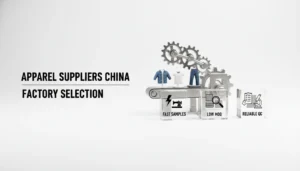
- Sampling speed: Can they consistently deliver samples in days—not weeks?
- Low MOQ options: Can you test demand without overbuying inventory?
- Quality system: Ask for their AQL level, inspection flow, and defect standards
- Fabric & trim sourcing: Do they have stable suppliers and shade control?
- Compliance: Social responsibility audits and safe chemical processes
- Communication: Clear timelines, change control, and spec confirmation
The differentiators that protect your margin
- Digital production tracking (ERP/MES): fewer surprises, faster decisions
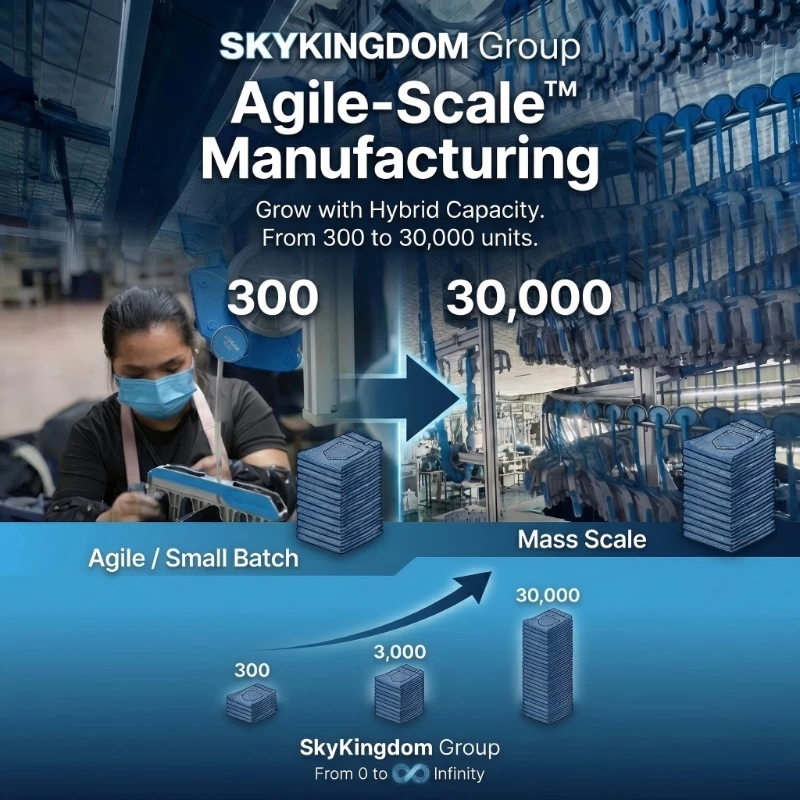
- Hybrid capacity: ability to scale up without changing factories
- Wash & finishing expertise: especially critical for denim consistency

Why Speed-to-Market Matters More Than Ever for Sewing Companies
In fast fashion and social commerce, the “best” product often isn’t the most creative—it’s the one that launches at the right moment. If your sewing company can’t hit a fast sampling window, you lose time validating fit, content testing ads, and reordering winners. That delay compounds into missed trend cycles and higher dead stock risk.
A speed-ready workflow usually includes:
- Pre-aligned pattern blocks and fit standards
- Real-time line tracking (not paper-based updates)
- Quick-response cutting and sewing cells
- Standardized QC checkpoints before finishing and packing
If denim is your core category, you’ll want a partner that treats sampling as a system, not a favor. This internal guide on how to identify the best factory for fast and reliable denim clothing sample delivery maps the exact signals to look for.
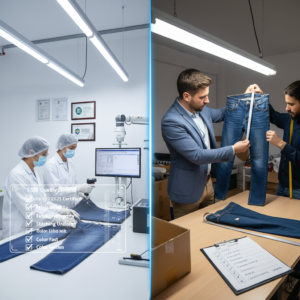
Inside a Modern Jeans Factory: How Your Denim is Made
SkyKingdom Group: A Modern Sewing Company Built for DTC Speed
SkyKingdom Group is a China-based OEM/ODM apparel manufacturing partner focused on fast-fashion denim and woven apparel for men, women, and kids. What stands out in practice is the way they combine industrial capability with DTC-friendly flexibility—especially for brands that need fast sampling, low MOQ testing, and scalable capacity once a product hits.
Key capabilities aligned to what DTC brands actually need:
- Speed-to-Market Engine: 7-day sampling and 15–22-day bulk production
- Low MOQ: as low as 30 units for new brands and creators
- Hybrid scalable capacity: supports growth without forcing a factory switch
- Amazon Top Seller-Grade QC: AQL 2.5 standard inspection discipline
- Eco-friendly wash processes for denim finishing
- Risk-sharing partnership: base fabric safety stock management to reduce delays
- Transparent operations: digital ERP + real-time data tracking (5G IoT lines)
If you’re comparing denim partners, this internal overview of what are the best small batch denim clothing manufacturers for private label can help you benchmark MOQ, sampling, and production realities.
Common Problems Brands Have With Sewing Companies (and How to Fix Them)
Most failures aren’t “bad sewing.” They’re process failures: unclear specs, uncontrolled changes, weak QC gates, or fabric issues that show up too late. Fixing these early saves weeks and thousands in rework.
| Problem | What It Causes | How to Prevent It | What to Ask the Factory |
|---|---|---|---|
| Incomplete tech pack | Fit issues & re-sampling | Include measurement spec + construction callouts | Do you have a tech pack review checklist you can share and follow? |
| No golden sample | Bulk mismatch | Approve and store a sealed “golden” sample for bulk reference | What is your sample sealing process (labels, storage, sign-off)? |
| Weak QC | Returns & bad reviews | Set AQL 2.5 inspections + inline checks | What are your QC checkpoints and typical defect rate by category? |
| Fabric shade variation | Color inconsistency | Require lab dips and shade band control | Can you share your shade management SOP and shade band limits? |
| Unclear timeline | Missed launches | Use a Gantt with milestones (PP, cut, sew, finish, ship) | Can you provide weekly production reporting with risks and recovery plans? |
| Wash inconsistency (denim) | Handfeel & shrink issues | Wash recipe control + test reports | What is your shrink/skew testing method and wash recipe change-control process? |
How to Evaluate Sewing Companies Like a Buyer (Step-by-Step)
Step 1: Start with your product reality
A denim-heavy brand should prioritize wash expertise, shrink control, and consistent stitch specs. A woven fashion brand should prioritize pattern accuracy, seam quality, and repeatable sizing.
Step 2: Request proof, not promises
Ask for:
- Recent production photos/videos of similar styles
- QC policy (AQL level, inline vs final inspection)
- Sample lead time history (not just “we can do fast”)
Step 3: Run a “pilot order” designed to reveal weaknesses
I’ve found the best pilot includes one core style plus one variation (like a second wash or a different fabric weight). It tests communication, change control, and finishing consistency without risking a full season.
Useful deep dive if denim is your focus: top 7 companies offering fast denim clothing sample delivery in 7 days or less.
Questions to Ask Sewing Companies Before You Pay a Deposit
Use these to compare factories on the factors that actually affect outcomes:
- What is your standard AQL and what defects are considered “major” vs “minor”?
- Can you share your sample timeline and the steps from tech pack to approval?
- What’s your MOQ by style/color (and how do you handle mixed sizes)?
- How do you manage fabric sourcing, shade bands, and shrink/skew testing?
- What’s your bulk production lead time and how do you report progress weekly?
- What certifications or social compliance audits do you hold?
For broader context on industrial sewing and why automation improves consistency, Carolina CoverTech’s overview of industrial sewing advantages is a helpful reference point.
Conclusion: The Best Sewing Companies Don’t Just Sew—They De-Risk Your Launch
Choosing sewing companies is really choosing a system: sampling speed, QC discipline, fabric control, and communication under pressure. When you find a partner that can move fast and protect quality, your launches feel calmer, your reorders are easier, and your best sellers stay consistent. SkyKingdom Group was built around that reality—fast denim and woven production, low MOQ testing, data-driven transparency, and scalable capacity for growing DTC brands.
📌 the ultimate guide to quick denim clothing sample production for fashion brands
FAQ: Sewing Companies (Search-Friendly Answers)
1) What do sewing companies do for apparel brands?
They turn tech packs and materials into finished garments, often handling sampling, cutting, sewing, finishing, and quality control.
2) What’s the difference between a sewing company and a cut-and-sew manufacturer?
A sewing company may only assemble pieces, while cut-and-sew usually includes cutting, sewing, and sometimes pattern and sampling.
3) How do I find sewing companies with low MOQ?
Look for factories offering small-batch programs, flexible capacity, and clear MOQ rules by style/color/size. Ask for a pilot order option.
4) What is AQL and why does it matter when choosing sewing companies?
AQL (Acceptable Quality Level) is a sampling-based inspection standard. AQL 2.5 is common in apparel and helps control defect rates.
5) How long do sewing companies take to make samples and bulk orders?
It varies by product and season. Speed-focused partners can hit ~7 days for samples and ~15–22 days for bulk in fast-fashion workflows.
6) Are sewing companies in China good for DTC brands?
They can be, especially if the factory has strong QC, transparent tracking (ERP), and proven speed-to-market systems for denim and woven styles.
7) What should I send a sewing company to get an accurate quote?
A tech pack, size range, fabric/trim details, target MOQ, colorways, wash/finish requirements, labeling/packaging needs, and your delivery deadline.