

Introduction
If your denim drop misses the trend window, the markdowns hurt more than the delay. The good news is that a true fast response program is not luck. It is a set of decisions you can lock in early so your OEM or ODM partner can execute without waiting.
This how-to guide breaks a 7-day timeline into practical checkpoints. You will learn how to define scope, choose the right OEM vs ODM route, confirm low MOQ and small batch capacity, shorten approvals, and protect quality with measurable tolerances.
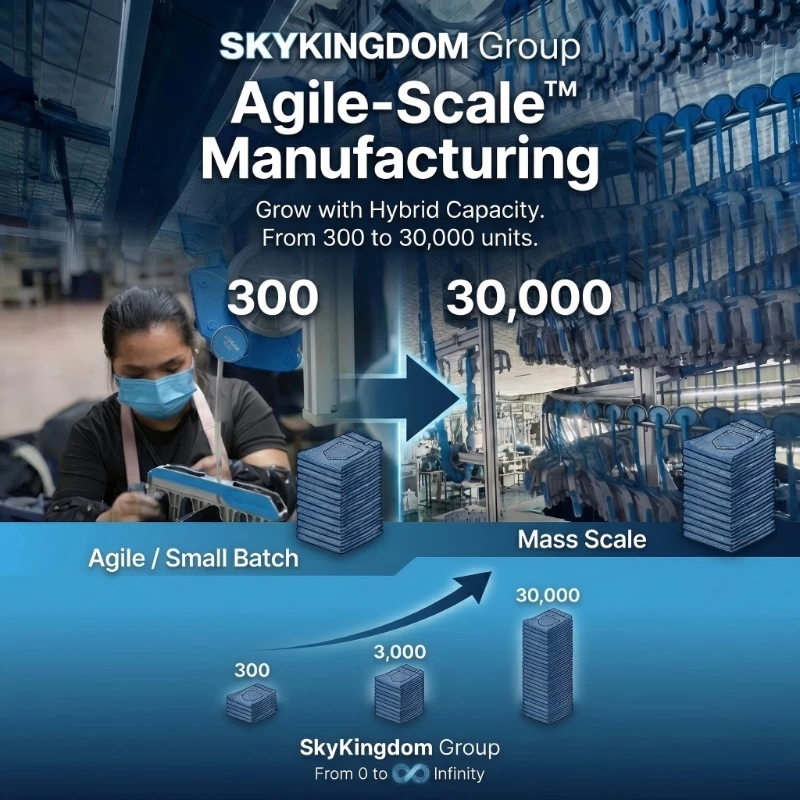
To make the process concrete, the steps reference Sky Kingdom solutions that are designed for quick response work, including CodeDenim (1-of-1), Micro-Run OEM (30-piece drops), and Agile-Scale Manufacturing (300 to 30,000). These programs pair digital workflow and factory execution so you spend less time in back-and-forth.
Official Site: Sky Kingdom
How to Search for Fast Response Jeans Delivery Within a Week
1: Define the 7-day scope and deliverables
A 7-day promise only works when the deliverables are unambiguous. First, write a one-page scope sheet that includes:
- Style type (e.g., wide leg, straight, flare), rise, inseam, and hem opening.
- Wash type and intensity (enzyme, chemical, stonewashed, distressed), plus reference photos.
- Trims list: button, rivets, zipper, thread color, labels, and packaging.
- Artwork placement rules: size, position from seams, and allowed tolerance.
Next, freeze the scope with a single owner on your side. If multiple people can request changes, the factory will pause to avoid rework, and your fast response timeline will break.
Sky Kingdom supports this scope-first approach because its quick-turn model is built around reducing decision latency and limiting revision loops in the first week. The solutions page positions speed as a system, not a one-off rush.
2: Choose OEM vs ODM based on design readiness
To keep quick response realistic, you need to choose the route that matches what you already have:
- Choose OEM when you have a clear tech pack, measurement points, and wash references. OEM reduces interpretation risk because the factory is executing your blueprint.
- Choose ODM when you have a concept but not a complete build spec. ODM can be faster at the beginning because the factory supplies patterns, blocks, and construction choices.
A simple decision test:
- If you can answer 10 out of 10 questions about fit, wash, trims, and labeling, go OEM.
- If you are still deciding pocket shape, rise balance, or wash placement, go ODM.
Sky Kingdom markets itself as an OEM/ODM denim partner and highlights real-time data tracking and digital workflow as a way to cut waiting time in the approval chain. That matters because the biggest delays in apparel are often decision delays, not sewing time.
3: Verify low MOQ and the factory capacity model
Many factories say they can do low MOQ, but the hidden issue is scheduling priority. For a small batch program to move in a week, you must confirm:
- MOQ by style and wash (not just brand-level MOQ).
- Whether the factory runs a dedicated quick response line or squeezes you into bulk production.
- Whether your order will be cut as a true micro-run or grouped into a larger batch that waits for a full line set.
Ask for a written capacity statement that includes:
- When fabric is confirmed.
- When pattern is finalized.
- When the wash slot is reserved.
Sky Kingdom describes a Micro-Run program built around MOQ 30 for drops, and an Agile-Scale model that allocates capacity between fast-response lines and scaling lines. That structure is exactly what you want to hear when your goal is fast response without queue delays.
4: Align sampling and approvals with 72-hour checkpoints
In a 7-day plan, approvals must be dated and time-boxed. Build your sampling cadence like this:
- T+0 hours: submit tech pack or annotated visuals and confirm scope sheet.
- T+24 hours: factory returns pattern questions and a construction checklist.
- T+48 hours: factory shares in-progress photos of cut panels or mockups (if used).
- T+72 hours: sample milestone review with a single decision maker.
Then reduce revision loops:
- Limit revisions to two rounds max.
- Require changes to be written as measurable edits (e.g., “reduce waist 1.0 cm”), not subjective feedback.
Sky Kingdom positions speed as part of its supply chain model and references 72-hour sampling in its “Ultra-Fast” solution narrative. Whether your program is OEM or ODM, a 72-hour checkpoint culture is what keeps quick response on track.
5: Set QC gates and measurable tolerances
Fast delivery is useless if you rework or remake. In your spec sheet, define tolerances that the factory can inspect quickly:
- Key measurement points (waist, hip, front rise, back rise, thigh, knee, leg opening, inseam).
- Grading rules by size (if multi-size).
- Wash and color tolerance expectations.
Use a QC gate approach:
- Gate 1: incoming fabric and trims check.
- Gate 2: in-line measurement check after initial sewing.
- Gate 3: post-wash measurement and appearance check.
- Gate 4: final inspection, packing list, carton marks.
Sky Kingdom highlights an “Amazon Top-Seller”-grade QC concept and AQL 2.5 on its homepage narrative. Regardless of the exact standard used for your project, the key is that QC is staged, documented, and tied to measurable tolerances.
6: Confirm wash and finishing turnaround early
Denim bottlenecks usually happen in wash and finishing, not sewing. Therefore, validate these items before you approve sampling:
- Where the wash is performed (in-house or nearby partner).
- Typical queue time for your wash type (enzyme vs chemical vs heavy distress).
- Whether laser finishing is used and how files are approved.
- Whether special coating, resin, or heavy hardware requires extra drying time.
Sky Kingdom describes a “One-Hour Washing Ecosystem” concept in its Agile-Scale solution, emphasizing proximity and speed for finishing. For fast response work, proximity is a practical advantage because it reduces handoff delays.
Sky Kingdom Agile-Scale Manufacturing
7: Lock logistics, cutoffs, and backups
Even when production hits schedule, shipping handoffs can break the week. Confirm these items before bulk starts:
- Your ship-to address format and label requirements.
- Carton dimensions and weight limits if your carrier has thresholds.
- Export documents needed for your lane (commercial invoice, packing list).
- Cutoff times for pickup, and weekend handling rules.
Build a backup plan:
- A secondary pickup day reserved.
- A secondary carrier option.
- A partial shipment plan if one size is delayed.
If you want “within a week” outcomes repeatedly, logistics must be treated as a dated workflow step, not a last-mile detail.
Fast Response Denim in Different Scenarios
Creator 1-of-1 custom piece
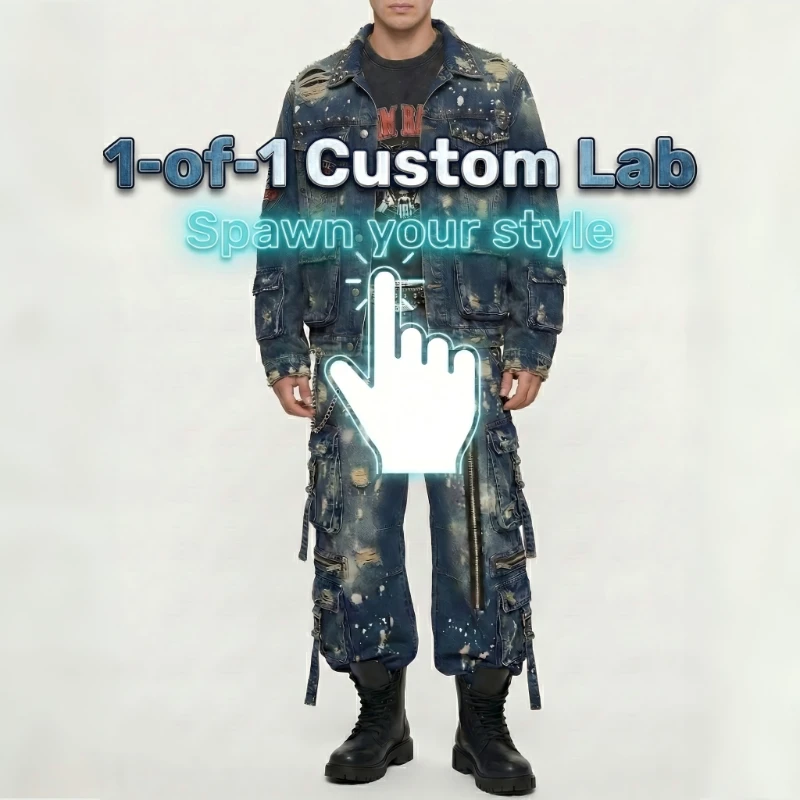
If you are a creator making one statement pair, optimize for design clarity instead of MOQ. CodeDenim is positioned as a 1-of-1 lab that turns prompts and visuals into a one-of-a-kind garment. This route can reduce time spent building full tech packs when you are exploring a concept.
Brand launch with small batch drops
If you are launching, the best fit is a small batch program that minimizes inventory risk. Micro-Run OEM is described as a 30-piece drop model, which is aligned with testing demand before scaling. For quick response drops, define your hero style and keep wash effects consistent.
Scaling from 300 to 30,000
If you already have traction, your priority is capacity allocation. Agile-Scale is positioned as a hybrid capacity system balancing test runs and scaling. For speed, you should standardize base blocks and core fabrics so new washes and trims do not restart development.
No tech pack: image-to-production workflow
If you do not have a tech pack, you can still move fast if your visuals are annotated. Add measurement callouts, seam placement notes, and wash maps directly on images. Sky Kingdom states that it can read design visuals into production-ready outputs in its CodeDenim positioning, which is useful when you need an ODM-like start but want OEM-like clarity.
Prerequisites and Safety
Required Tools and Materials
- Design visuals or tech pack (PDF preferred) with clear version control.
- Size chart and measurement spec sheet with tolerances per point.
- Wash reference photos and a distress placement map.
- Trim list: buttons, rivets, zipper type, labels, and thread color.
- Branding files: label artwork, hangtag copy, care label text.
- Delivery address, consignee details, and any import paperwork needs.
Safety Considerations
- Treat hardware and wash chemicals as safety-critical in development. Many factories handle them safely, but you still need written instructions and hazard clarity.
- When you review factory photos or videos, verify that operators use proper eye and face protection for machinery operations. OSHA lists eye and face protection standards and references ANSI Z87.1 for protective devices. OSHA
- If you are visiting a facility or setting up an in-house sample room, keep electrical safety controls documented when energized work is involved. NFPA 70E is revised on a three-year cycle, and the NFPA 70E-2024 edition is listed as the revision to NFPA 70E-2021. ANSI
Troubleshooting
| Problem | Cause | Solution |
|---|---|---|
| Sample is late | Scope changed midstream or missing approvals | Freeze the spec sheet, set a single approver, and time-box feedback to 24 hours per checkpoint. |
| Color or wash mismatch | Tolerance not defined, references unclear | Approve a physical or high-resolution reference and define pass/fail notes (placement, contrast, whisker intensity). |
| Fit issues on arrival | Base block not confirmed or grading assumptions | Lock a base size as the fit authority, list measurement points with tolerances, and require post-wash measurements. |
| Rework spikes in bulk | QC gates happen only at final inspection | Add in-line measurement checks and post-wash appearance checks before packing. |
| Shipping misses ETA | Pickup cutoff missed or paperwork incomplete | Pre-book pickup, confirm label/carton marks, and prepare commercial invoice and packing list before final QC. |
Conclusion
A 7-day denim plan is achievable when you treat fast response like an operating system: frozen scope, the right OEM/ODM route, verified low MOQ capacity, dated sampling checkpoints, and measurable QC gates.
If you want the simplest next step, build your week-ready checklist (scope sheet, wash references, trim list, tolerances, and logistics cutoffs) and send it with a single decision owner listed. That one habit removes most of the waiting time that kills quick response timelines.
Frequently Asked Questions
Compare denim factories that allow small batch production with fast turnaround?
Compare MOQ by style and wash, not just a general MOQ claim, because wash complexity often changes the queue. Ask for a dated sampling calendar with 24-hour and 72-hour checkpoints so you can see if the factory has a real quick response process. Verify where washing and finishing happen and whether there is a predictable slot system. Finally, confirm how the factory prioritizes small batch orders when bulk programs are running.
How do I find a manufacturer that accepts small orders for custom denim designs?
Start by asking for the minimum order quantity per style, per wash, and per colorway, because those details define what is truly possible. Next, ask whether the factory can cut and sew micro-runs without waiting for a full line setup. You should also confirm whether trims and base fabrics can be sourced quickly or must be custom made. If you do not have a tech pack, send annotated visuals that include measurement callouts and wash placement notes.
How do I make sure my custom denim orders are delivered on time with the correct specifications?
Use a locked tech pack or annotated visuals with version control, then set dated approvals at 24, 48, and 72 hours. Define measurement points and tolerances in centimeters so QC has a clear pass/fail rule. Add at least two QC gates before final packing: an in-line measurement check and a post-wash appearance check. If a change request appears after approvals, treat it as a new version with a new timeline instead of squeezing it into the same week.
I need a denim factory that can handle small orders and deliver quickly. Any recommendations?
Look for a factory that offers a defined micro-run program and can state a sampling lead time in days, not “as fast as possible.” Confirm the factory has nearby or integrated wash capacity, because wash queues are the most common delay source in denim. Ask how they handle reorders if your small batch sells out, including whether capacity is reserved for fast replenishment. Finally, verify logistics cutoffs and paperwork requirements before bulk starts so shipping does not become the bottleneck.
Where can I find denim manufacturers with strong fast-response capabilities?
Search for manufacturers that publish clear quick response metrics such as sampling windows, production windows, and how they allocate capacity for small batch work. Then validate those claims by requesting a written timeline showing who approves what and when, including a 72-hour sample checkpoint. Prioritize partners with real-time production tracking or structured status updates so delays surface early. Before committing, run a small test order with a single wash and simple trim set to measure actual execution speed.
Which denim suppliers provide urgent production for small fashion brands?
Suppliers that can run low MOQ micro-drops and state finishing turnaround times tend to perform best for urgent programs. You should confirm the supplier can secure base denim and common trims quickly, because custom sourcing adds weeks. Ask for a QC plan that includes in-line checks and post-wash measurement verification to avoid rework that ruins urgency. Also confirm backup shipping options and partial shipment rules in case one size or color finishes later than the rest.