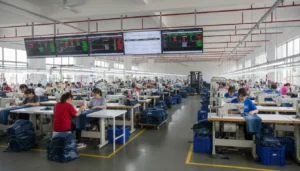

Jean factories are a bit like busy kitchens: fabric comes in as “ingredients,” and finished jeans go out as consistent, repeatable “dishes”—but only if every station is controlled. If you’ve ever wondered why one pair fits perfectly while another twists, fades weirdly, or shrinks, the answer is usually hidden in the factory flow. In this guide, I’ll explain how jean factories run—from fabric inspection to cutting, sewing, washing, and final finishing—plus what brands should watch to avoid expensive mistakes.

What a “Jean Factory” Really Is (and What It Isn’t)
A jean factory typically refers to a garment manufacturing facility that assembles jeans—cutting fabric, sewing components, applying trims, washing, and packing. Many people assume the same factory also weaves the denim, dyes indigo, and finishes the fabric, but that’s often a separate denim mill. For example, long-running denim suppliers publish sustainability reports and fabric programs, while garment factories focus on repeatable construction and wash outcomes (see Cone Denim for mill-side context).
In practice, jean factories fall into a few models:
- Cut-and-sew only: you supply fabric, trims, patterns, wash recipe (if any).
- Full-package OEM/ODM: factory sources fabric/trims, develops patterns, produces samples, runs bulk.
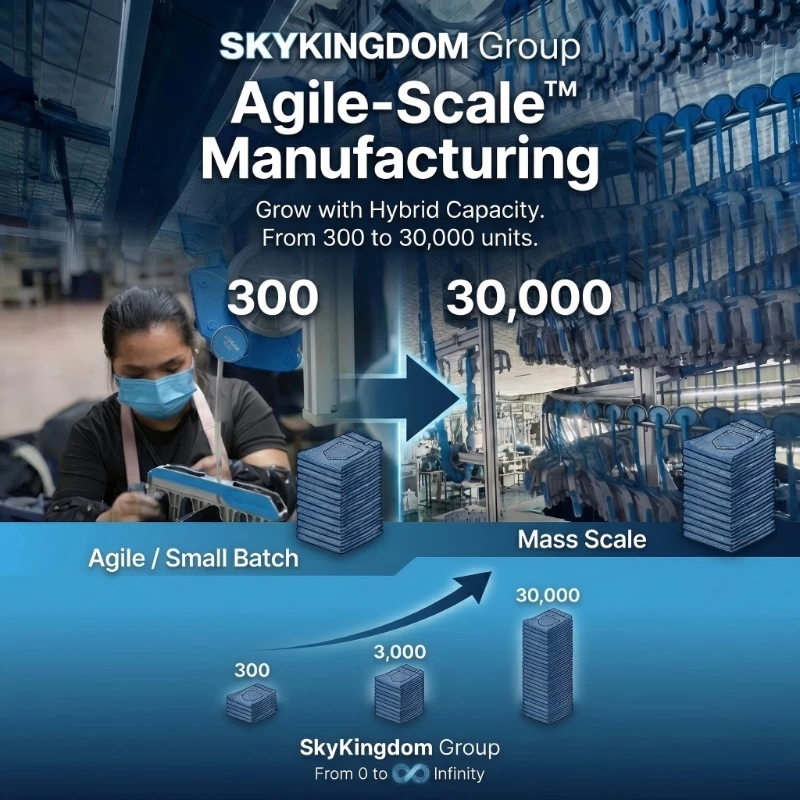
- Hybrid capacity: split between fast sampling lines and scaled bulk lines for speed-to-market.
The End-to-End Workflow Inside Jean Factories
Most jean factories follow a standardized manufacturing route because denim is unforgiving: it moves, shrinks, and changes color under wash and heat. Here’s the real sequence you’ll see on the floor.
1) Fabric Sourcing + Incoming Inspection (IQC)
Before a single panel is cut, fabric is checked for shade, skew, defects, and shrinkage potential. Denim rolls from different dye lots can look “close” in daylight and wildly different under production lighting, so shade banding control matters. Factories commonly test:
- Shrinkage (warp/weft) after wash simulation
- Skew and twist risk (especially on stretch denim)
- Colorfastness and crocking (rub-off)
- Defect mapping (broken yarns, slubs, stains)
This is where mills and pre-treated fabrics can reduce uncertainty; some suppliers offer pre-washed or pre-shrunk options to save rework (see fabric finishing concepts like those described by Hyde Park Denim).
2) Pattern Engineering + Grading (Fit Starts Here)
Fit problems rarely come from sewing alone—they start with patterns and grading rules. In my experience reviewing early samples, the most common “mystery issues” were actually:
- wrong stretch assumptions (negative ease not calculated),
- inconsistent seam allowance,
- pocket placement drifting between sizes.
A professional jean factory will confirm key specs (rise, thigh, knee, hem, inseam) and build a size set. If you’re a DTC brand, this step is where you lock your signature fit and reduce returns later.
3) Spreading + Cutting (Where Waste and Accuracy Are Won)
Cutting is both math and discipline. Fabric is spread in lays, aligned to grain, then cut by straight-knife, band-knife, or automated cutting. Modern setups increasingly use data tracking to reduce marker waste and improve bundle accuracy.
Key controls in jean factories:
- Relaxation time for stretch denim before cutting
- Nap/grain alignment to avoid leg twist
- Bundling accuracy so matching components stay together
4) Sewing Line (Assembly in Dozens of Micro-Operations)
Jeans look simple, but construction is a long chain: yokes, pockets, fly, inseams, outseams, waistband, belt loops, hemming. Each station is optimized for repeatability.
Common sewing equipment/techniques:
- Safety stitch + overlock for durable seams
- Chainstitch hemming for roping effect (popular on heritage styles)
- Bartacks and rivets to reinforce stress points
- Topstitch threading control to keep a consistent look
This is also where “handmade” brands differ. Some bespoke makers emphasize artisan steps and low volume (see the custom approach at Blue Delta Jeans), while many jean factories are built for consistent, scalable output.
5) Washing + Drying (The Most Sensitive, Brand-Defining Stage)
Wash is where jeans become your jeans: color, softness, whiskers, abrasion, vintage character. It’s also where the biggest quality risks happen—unexpected shrinkage, shade inconsistency, back-pocket shadowing, damage at seams.
Typical denim wash types include:
- Rinse / enzyme wash: softer hand-feel, controlled fade
- Stone wash: more abrasion, more vintage variation
- Bleach/acid effects: high contrast, higher risk and control needs
- Laser + ozone: more precise effects with lower water/chemical load (often part of eco wash programs)
Professional jean factories will run wash tests on sample garments and set tolerance windows before bulk.
Ozone Process on Denim washing // Sustainable Wash of Denim pant
6) Finishing: Trims, Pressing, Labels, and Final Look
After washing and drying, jeans go through finishing touches:
- thread trimming and cleaning,
- attaching leather/PU patches, brand labels, hangtags,
- pressing or 3D shaping (depending on style),
- final measurement checks.
This stage is also where factories correct small appearance issues—but it should never be used to “hide” upstream process problems.
7) Final QC + Packing (AQL, Measurements, and Compliance)
Reliable jean factories use an AQL-based inspection approach for bulk shipments. Quality checks often include:
- measurements (critical points + tolerances),
- shade consistency within the carton,
- seam strength, stitch density, skipped stitches,
- wash defects (holes, streaks, unwanted creases),
- metal detection (common for export).
For external standards and broader manufacturing expectations (innovation, sustainability, consistency), you can compare what leading manufacturers emphasize in industry overviews like Manufacturer Clothing’s jeans manufacturers guide.
Where Tech Changes Jean Factories: 5G IoT + Real-Time Data
The biggest operational shift I’ve seen is factories moving from “experience-only” management to live production visibility. With IoT-enabled lines, teams can track output per operation, defect hotspots, rework loops, and bottlenecks. This is especially useful for fast-fashion denim where timing is everything and wash capacity can become the constraint.
In SkyKingdom Group’s model, the Speed-to-Market Engine pairs:
- rapid sampling (often the hardest scheduling problem),
- scalable hybrid bulk capacity,
- ERP-based transparency for order tracking,
- and risk-sharing via base-fabric safety stock for continuity.
If you’re comparing partners, prioritize factories that can show you data trails (not just promises). This is the operational backbone behind dependable lead times.

The Most Common Problems in Jean Factories (and How Pros Fix Them)
A lot of denim headaches are predictable. When I’ve helped brands troubleshoot, the winning move is to trace the defect back to the earliest step possible—not patch it at the end.
| Problem | Likely Root Cause | How Factories Fix It | Brand Prevention Step |
|---|---|---|---|
| Leg twist after wash | Skewed fabric grain; improper panel alignment; unbalanced wash/dry conditions | Re-cut on-grain; adjust marker and sewing guides; rebalance wash recipe and dryer tumble/load | Specify max torque/twist tolerance; require grainline checks and wash-test before PP |
| Uneven fading | Inconsistent abrasion/chemical distribution; overloaded machines; poor stacking | Reduce load; standardize placement and cycle time; recalibrate spray/PP equipment; add in-line checks | Approve wash standard with photo panel; require pilot wash with AQL on shade/contrast |
| Size shrinkage beyond tolerance | Fabric not properly sanforized; incorrect wash temperature/time; drying too hot | Switch to pre-shrunk fabric; adjust wash temp/time; lower dryer heat and extend cool-down; re-measure | Set shrinkage spec by fabric; mandate fabric pre-test (shrink/spirality) and 1st bulk wash test |
| Pocket skew | Off-grain pocket pieces; inaccurate pocket template; operator misalignment | Re-cut pocket on-grain; replace/verify templates; use folder/jig; add pocket placement checkpoints | Provide pocket placement tolerances; require top-of-line measurements and QC photos |
| Broken belt loops | Weak loop fabric; low stitch density; wrong thread; high tension at waistband | Increase SPI/bar-tack length; upgrade thread; reinforce with interlining; adjust tension and bartack position | Define bartack spec (SPI, length, thread); require loop pull-strength testing |
| Rivet rust/staining | Non-coated hardware; high moisture/chemical residues; poor drying/pack conditions | Change to anti-rust rivets; improve neutralization and rinsing; ensure full drying; add desiccants | Specify nickel-free/anti-rust hardware; require salt-spray/corrosion test and wash compatibility test |
| Shade banding between cartons | Dye lot variation; mixed fabric lots; inconsistent wash batches; poor carton control | Segregate by lot/batch; regrade and re-pack by shade; tighten batch recipe control and tracking | Enforce lot control and carton labeling; require shade banding limits and bulk shade continuity review |
How to Choose the Right Jean Factory for a DTC Brand
Not all jean factories are built for small brands, fast drops, or frequent iteration. If you’re DTC, you need speed, low MOQ flexibility, and consistent QC—without losing wash creativity.
Use this shortlist when you vet a factory:
- Sampling speed: can they deliver a wearable sample in 7 days when needed?
- MOQ reality: can they support small tests (e.g., 30 units) without quality shortcuts?
- Wash capability: in-house wash vs outsourced; do they have eco options like laser/ozone?
- QC standard: ask for AQL level, measurement tolerances, and real inspection reports.
- Transparency: ERP updates, production photos, and material traceability.
For deeper buying guidance tailored to small runs and fast sampling, these are the most relevant reads:
- choosing the best factory for low moq denim clothing ideal for individuality seekers
- how to identify the best factory for fast and reliable denim clothing sample delivery
- the ultimate guide to quick denim clothing sample production for fashion brands
Sustainability in Jean Factories: What “Eco Wash” Should Mean
Sustainability claims are common; measurable practices are rarer. In denim, the biggest footprint drivers are water, energy, chemicals, and rework rates. Look for concrete indicators:
- lower-liquor washing systems and water recycling,
- ozone/laser applications to reduce chemical load,
- right-first-time sampling to avoid repeated wash trials,
- published sustainability efforts from upstream suppliers (e.g., reports like those shared by Cone Denim).
For brands, the practical takeaway is simple: fewer redo cycles = lower impact and faster delivery.

Conclusion: A Pair of Jeans Is a Factory Story
A great pair of jeans carries the fingerprints of dozens of controlled steps—cut accuracy, stitch discipline, wash science, and QC rigor. When jean factories run with real-time visibility, clear tolerances, and a tight sample-to-bulk system, brands get what they actually need: speed without surprises. If you’re building your next denim drop, map your product to the factory flow above and ask partners to show evidence at each stage—not just a showroom sample.
📌 the ultimate guide to quick denim clothing sample production for fashion brands
FAQ About Jean Factories
1) What do jean factories do versus denim mills?
Jean factories cut, sew, wash, and finish garments; denim mills weave, dye, and finish the fabric roll.
2) Why do jeans twist after washing?
Usually grain misalignment, skewed fabric, or insufficient relaxation/shrinkage control before cutting and wash.
3) What is the typical production timeline in jean factories?
It varies, but many fast programs run roughly 7 days for samples and about 15–22 days for bulk after approvals, depending on fabric and wash complexity.
4) Is in-house washing better than outsourced washing?
Often yes for control and speed, but outsourced can work if the factory has tight specs, test standards, and consistent capacity.
5) How do jean factories measure quality?
Through measurement checks, seam/stitch inspections, wash defect review, and AQL-based final inspection reports.
6) What should a new DTC brand ask a jean factory before ordering?
Ask about MOQ, sample lead time, wash options, QC/AQL level, fabric sourcing, and how they track production progress.
7) What’s the biggest cost driver in denim jeans manufacturing?
Wash processes and rework, then fabric cost, then labor-intensive operations (like detailed topstitching and multiple pockets).