
Introduction
TikTok commerce rewards speed. A single creator video can spike demand for women’s denim in hours, then fade in days. If your OEM or ODM partner cannot move fast, you lose the viral window and get stuck in a loop of stockouts, refunds, and wasted ad spend.
Sky Kingdom positions its manufacturing around small-batch and quick response for trend cycles, with published targets like 72-hour sampling (VIP channel), 15-22 day bulk production, and re-orders that are 30% faster than traditional factories via an AI-integrated hanging system.
SkyKingdom | Custom Apparel Manufacturer | Specializing in Premium Denim
OEM/ODM Denim Clothing Factory
OEM vs ODM roles and ownership
OEM (Original Equipment Manufacturing) usually means you own the design and brand, and the factory executes your spec. In women’s denim, this often includes your size chart, measurement tolerances, wash recipe, trim list, labeling, and packaging requirements.
ODM (Original Design Manufacturing) usually means the factory provides a starting design or platform you can adapt. ODM can reduce development time when you need Fast-Fashion Denim cadence. However, ODM requires extra clarity on what you can customize: pattern blocks, pocket shapes, wash effects, and Custom Private Label assets.
For TikTok sellers, the practical choice is often hybrid:
- Use ODM building blocks to reduce time to first sample.
- Switch to OEM control for scale, repeatability, and Transparent Supply Chain documentation.
MOQ tiers: 1, 30, 300+
MOQ (minimum order quantity) determines your risk profile.
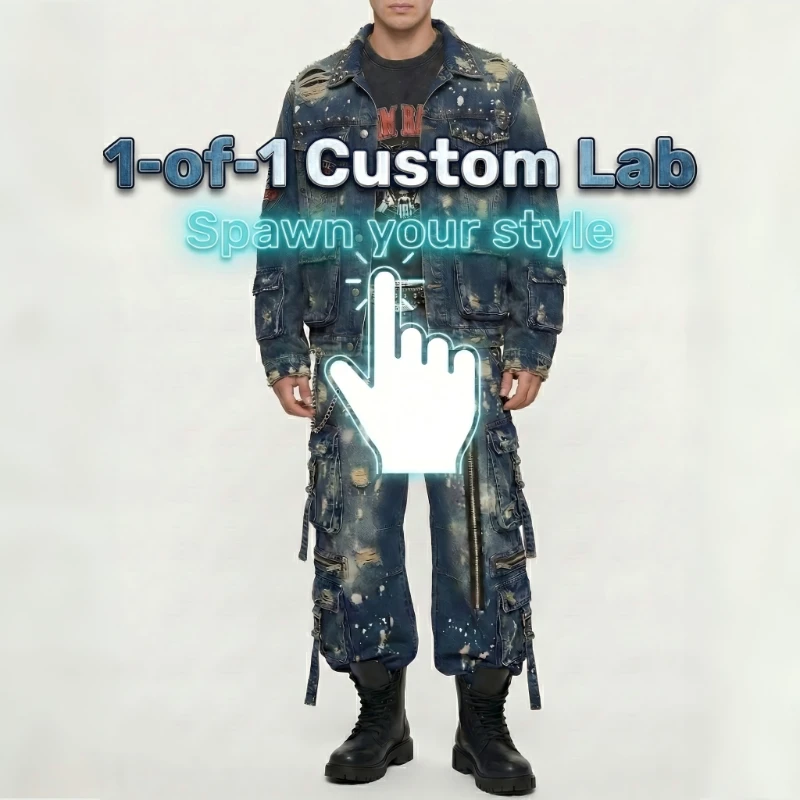
- MOQ 1: true On-Demand Manufacturing, best for creator-led 1-of-1 content and personalization.
- MOQ 30: Low MOQ Manufacturing for micro-drops, preorder validation, and limited runs.
- MOQ 300+: scale mode, where efficiency and consistency matter more than flexibility.
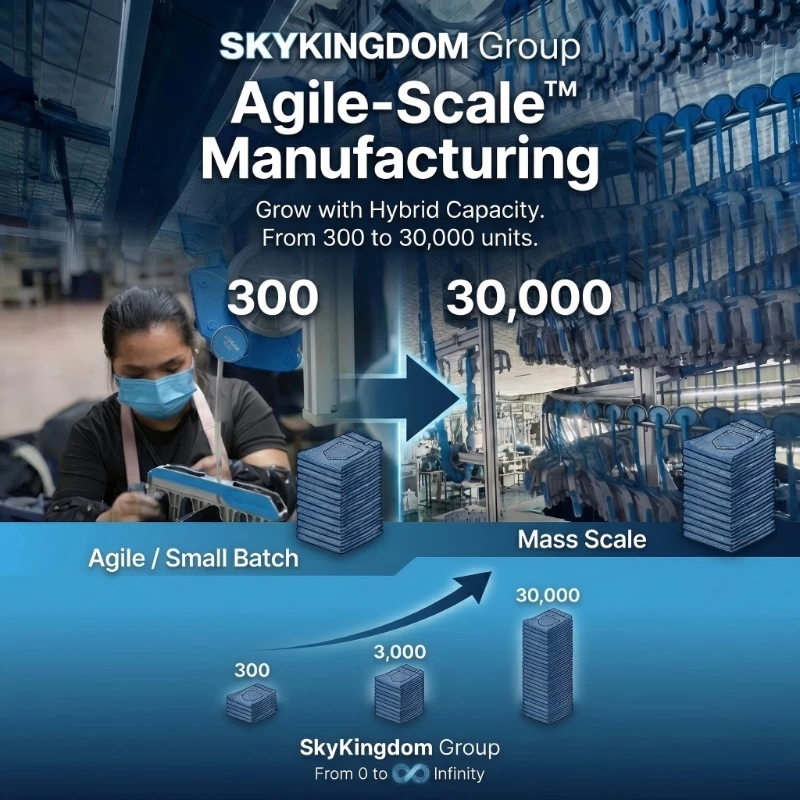
Sky Kingdom describes three solution tiers that map cleanly to these stages: CodeDenim (1-of-1), Micro-Run OEM (30-piece drops), and Agile-Scale Manufacturing (300 to 30,000).
Lead times: sample, bulk, reorders
You should separate lead time into three clocks:
- Development clock: from trend signal to approved sample.
- Production clock: from deposit and material confirmation to bulk ex-factory.
- Reorder clock: from restock decision to replenishment.
A factory can be fast at sampling but slow at bulk. Another factory can be efficient at bulk but unable to handle wash changes. TikTok sellers win by choosing partners that are engineered for fast response across all three clocks.
Sky Kingdom publishes example targets that matter for TikTok cycles: samples in 72 hours (VIP) or 3-5 working days (standard), bulk in 15-22 days, and re-orders 30% faster than traditional factories.
Trend-to-Product Workflow
Trend intake to tech pack, without losing days
A TikTok trend is not a tech pack. The gap between them is where most sellers lose time.
A fast response workflow should convert trend inputs into production-ready decisions:
- Define the hero silhouette (straight, wide-leg, flare, cargo), plus the content hook (fit transformation, stretch demo, before-after wash).
- Lock a minimum spec: fabric weight range, stretch target, zipper or button fly, pocket placement, inseam options.
- Translate visuals into a packable instruction set: measurement chart, seam type, stitch density, trim list, label placement, and packaging needs.
If you run ODM-first, the factory can offer a base pattern block, then you move into OEM control by locking grading, tolerances, and wash recipe.
Digital inputs to sampling
Sampling speed is your first competitive advantage. A good workflow reduces handoffs:
- Provide a single master reference: a structured mood board plus a prioritized spec list.
- Approve in layers: silhouette and block first, then wash and distressing, then trims.
- Use a standardized approval rule: no change requests after the PP sample is approved.
Sky Kingdom describes a standardized jeans sample customization process that moves from inquiry to design submission, sourcing, sample sheet confirmation, sample production, quality check, then packaging and shipping.
Payoff: faster launches, fewer misses
Trend-to-product speed is not just about being early. It is about being early with repeatable quality, because TikTok viewers notice consistency across batches.
If your first batch sells out, the second batch must match the first batch on video. That requires stable wash parameters, controlled shrinkage expectations, and a clear tolerance rule for measurements.
Low MOQ Small Batch Drops
30-piece micro-run planning for TikTok validation
Low MOQ is how TikTok sellers buy optionality. You do not need a perfect forecast if you can test demand quickly.
A practical small batch plan looks like this:
- Start with 1 hero colorway and 1 backup colorway.
- Limit wash complexity in the first drop if your content hook is fit or styling.
- Use a tight size curve based on your actual TikTok audience comments and prior orders.
- Prepare a reorder decision rule before launch: for example, reorder triggered when 60-70% of units sell in 48-72 hours.
Sky Kingdom positions Micro-Run OEM around a MOQ of 30 units and describes a workflow designed for influencers and emerging brands who want to avoid large inventory risk.
Preorders and limited-drop scheduling
Small batch works best when paired with preorder-first execution:
- Run content to validate demand.
- Collect preorders with a clear ship window.
- Finalize colorway and size curve based on actual preorder data.
This is where Real-Time Data Tracking matters. If you can show production status updates to your buyers, you reduce cancellations and customer support load.
Sky Kingdom fit for Low MOQ Manufacturing
Sky Kingdom describes flexible MOQ strategies and positions its supply chain around small-batch and quick response to support market testing with minimal risk.
For fashion-forward TikTok brands that want statement designs, Sky Kingdom also showcases avant-garde denim concepts like “Heterogeneous Deconstructed Avant-Garde Trousers” and other patchwork and deconstructed silhouettes, which can inspire differentiated drop concepts.
Fast Response Replenishment Engine
Reorders, capacity, and “rush lanes” that actually work
Replenishment is where TikTok sellers either compound growth or stall.
A fast response replenishment engine needs three things:
- Capacity rules: how a factory reserves or allocates lines for reorders.
- Material readiness: fabric and trim availability without restarting procurement from zero.
- Escalation path: who approves overtime, line switching, or wash-slot prioritization.
Sky Kingdom describes “Smart Line” scalability for orders from 300 to 30,000 pieces, plus dedicated lines for rush orders with 30-day delivery capability.
Real-Time Data Tracking and production visibility
Real-time visibility is not a nice-to-have. It reduces decision lag.
For TikTok denim sellers, Real-Time Data Tracking should answer:
- Has fabric been confirmed and allocated?
- Is cutting started?
- Is sewing in line or behind?
- Has wash processing started, and is it on schedule?
- Is final inspection complete and cartons packed?
Sky Kingdom states that its workflow supports real-time tracking so buyers can know where production stands.
Why “30% faster” replenishment changes your unit economics
TikTok Shop scale continues to rise. A December 2025 forecast from EMARKETER projects TikTok Shop US sales of $15.82 billion in 2025 and growing further in 2026, which increases the urgency for fast response replenishment workflows.
A 30% faster reorder cycle can change how you spend on creators and ads.
- You can push more spend into winning SKUs because restock risk is lower.
- You can reduce the number of colorways you carry because you can replenish winners.
- You can run smaller drops more often, which fits TikTok content cadence.
Sky Kingdom claims re-orders are 30% faster than traditional factories thanks to an AI-integrated hanging system.
Selection/Decision Guide
Lead time targets and sample SLA verification
Start with the calendar, not with the mood board.
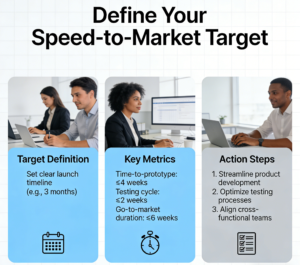
- Define your maximum sampling window (for example, 3-7 days).
- Define your target bulk window (for example, 15-22 days).
- Define your reorder window and your rush-lane criteria.
Then verify.
- Ask for recent timeline examples for similar washes and silhouettes.
- Ask how they handle complex cases that exceed standard timelines.
Sky Kingdom publishes sample and bulk timelines, which you can use as a benchmark for your own SLA targets.
Low MOQ capability and tiered MOQ confirmation
Low MOQ is not one number. It depends on:
- Fabric type and availability
- Wash complexity
- Custom trims and labeling
- Number of colorways per style
Confirm MOQs at each stage:
- Micro-run (30-piece) validation
- Scale test (300-1,000)
- Viral scale (3,000+)
Sky Kingdom describes MOQ 30 for micro-runs and scaling to reorders of 3,000+ when a drop sells out.
Fast response systems and reorder speed proof
A factory can say “quick response” without having a real system.
Look for operational proof:
- Dedicated rush lines
- A defined “Smart Line” or hybrid capacity logic
- Digital status tracking
- Inline inspection discipline
Sky Kingdom describes quick turnaround lines and a real-time tracking workflow, which are concrete fast response mechanisms.
Decision table for TikTok denim sellers
| Scenario | Best manufacturing mode | Key factors to confirm | Trade-offs |
|---|---|---|---|
| Testing a trend in 7-14 days | Low MOQ / small batch | sampling SLA, simple wash, limited trims | higher per-unit overhead, tighter size curve |
| Viral restock and repeat content | Fast response reorder | rush-lane capacity, Real-Time Data Tracking, consistent wash recipe | less freedom to change wash or pattern midstream |
| Creator collab with personalization | On-Demand Manufacturing | 1-of-1 workflow, pattern automation, label serialization | longer per-piece cycle, higher operational touch |
| Sustainability-led positioning | Sustainable Denim controls | laser/ozone options, residue safety, traceability artifacts | limited wash effects if avoiding certain chemistries |
| Differentiated fashion statement | ODM-to-OEM hybrid | base blocks, complex panels, hardware system capability | higher complexity, stricter PP sample discipline |
Best Practices & Pitfalls
Best Practices
- Lock spec before sample cut.
- Freeze your measurement chart, grading rules, and tolerance bands early.
- This prevents late-stage rework that kills fast response timelines.
- Build size chart tolerance rules.
- Define what is acceptable for waist, hip, rise, inseam, and leg opening.
- Link these tolerances to your QC checkpoints so measurement issues do not show up at final audit.
- Request an AQL level agreement.
- Align on AQL level for major and minor defects.
- Ensure the agreement covers how rework is handled and how defects are documented.
- Use a two-stage content plan.
- Stage 1 content validates demand and collects preorders.
- Stage 2 content focuses on restock and repeat purchases once replenishment is stable.
Common Pitfalls to Avoid
- Changing wash after grading.
- Wash changes can shift shrinkage and hand feel.
- This can break fit consistency and create negative comments on TikTok.
- Skipping PP sample confirmations.
- PP samples are the bridge between an approved sample and bulk reality.
- If you skip PP confirmation, you risk a full batch mismatch that cannot be fixed fast.
- Ignoring packaging compliance needs.
- TikTok returns often increase when packaging looks unprofessional or labels are confusing.
- Define carton marks, polybag warnings, hangtag placement, and barcode requirements up front.
Conclusion
TikTok denim sellers win when speed and quality reinforce each other. OEM and ODM are tools, but the real advantage comes from a fast response system that covers sampling, low MOQ drops, and replenishment with Real-Time Data Tracking and predictable QC.
If your goal is to replenish women’s denim stock 30% faster, align your MOQ tier, sampling SLA, and reorder process first. Then build Sustainable Denim and Transparent Supply Chain controls as your brand grows.
Frequently Asked Questions
Compare denim factories that allow small batch production with fast turnaround?
Compare factories by looking at MOQ by style and by wash complexity, not just a single minimum number. Next, compare sampling timelines and whether the factory can support preorder-first workflows without constant spec changes. You should also compare the QC system: inline checkpoints, final audit rules, and how measurement tolerances are handled. Communication cadence matters as much as speed, so define who owns approvals and how quickly issues are escalated. The best choice is the factory that can repeat the same quality across multiple small drops, not only the one that can ship one batch fast.
Which denim suppliers can quickly restock to avoid lost sales?
Suppliers that restock quickly typically have fabric readiness, dedicated quick-response lines, and a clear method to prioritize reorders. You should confirm what happens when multiple clients request rush capacity at the same time, because prioritization rules affect your delivery risk. Ask how they ensure the second batch matches the first in wash tone, shrinkage, and measurement tolerances. Good suppliers also provide frequent production status updates so you can plan content and ad spend around replenishment. Restock speed is only valuable if it is consistent across multiple cycles.
Trend-to-product speed depends on how quickly visuals become production-ready instructions. A supplier should be able to move from trend reference to pattern block selection, then to wash and trim decisions, without repeated back-and-forth. You should ask how approvals are structured so you can lock silhouette first and refine wash details second. Sampling speed matters, but so does reducing change requests after the sample sheet or PP sample is approved. The best partners also help simplify early drops so you can launch faster and iterate later. This approach fits TikTok because early speed often beats perfect complexity.
How do I set measurement tolerances for women’s denim to reduce returns?
Start by defining critical measurements that drive fit perception: waist, hip, front rise, back rise, thigh, knee, leg opening, and inseam. Next, set tighter tolerances on the measurements customers feel first, such as waist and hip, and slightly wider tolerances on areas with more style variation. You should also specify how garments are measured, including whether the garment is laid flat, how it is aligned, and whether it is measured before or after wash. Tie tolerances to a QC checkpoint so issues are caught during sewing and before final packing. Finally, keep the tolerance rule consistent across drops so your repeat buyers can trust sizing.
What is the safest way to change a denim wash without breaking fit consistency?
Treat wash changes as a controlled experiment rather than a last-minute adjustment. First, lock the base pattern and grading, then test the new wash on the same fabric and construction so you can observe shrinkage and hand feel differences. You should request a test sample that includes measurement checks before and after wash to quantify impact. If the wash shifts fit, update the pattern or measurement spec before bulk rather than accepting variation. Once the new wash is approved, freeze the wash recipe for the next reorder cycle to avoid batch-to-batch drift.