
Introduction
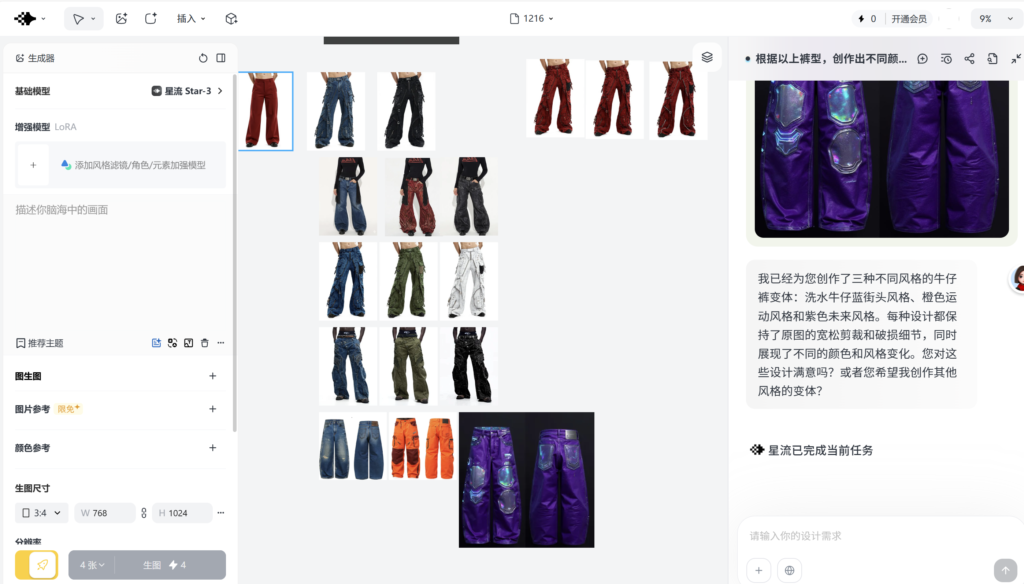
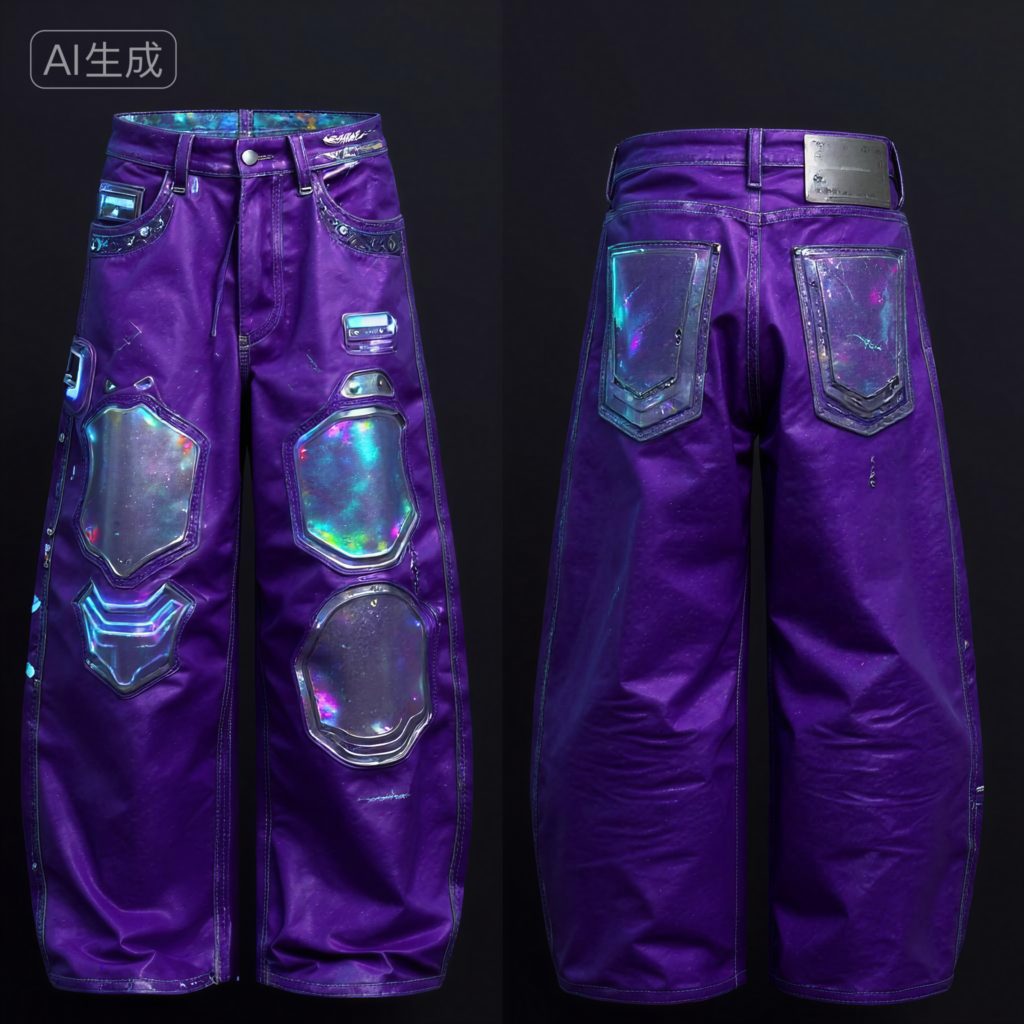
Accurate AI-to-denim reproduction means a factory can take a Generative AI Fashion image and deliver a real garment that matches the intent, not just the vibe. The goal is consistency across silhouette, wash, trims, and placement details, even when the original input is a single render.
The main pain is the AI image vs reality gap. A render can show a perfect drape, a very specific shade, and clean distress edges. Real denim behaves differently because fabric shrinks, seams pull, and washes vary by batch. If you do not lock specs early, you will see drift in fit, color, and detail alignment.
This guide gives you a practical framework to vet factories for OEM and ODM work, fast response sampling, and low MOQ or small batch production. You will learn how to set measurable control points, build a pass/fail QC sheet, and choose an ordering path that matches your risk and timeline.
AI Denim Design Reproduction Fundamentals
Design intent is more than the picture
An AI image usually encodes style, but production requires explicit intent. Break intent into three buckets:
- Silhouette and fit: rise, inseam, leg shape, and ease.
- Wash and surface: base shade, contrast, abrasion zones, and hand feel.
- Trim and construction: pockets, hardware, stitching, labels, and placement rules.
A factory that guarantees accuracy will ask you to rank priorities. For example, you can say the wash contrast and knee distress placement are non-negotiable, while pocket bag print can vary. That single step reduces conflict later.
Production translation without a traditional tech pack
Traditional denim production depends on a tech pack, but modern On-Demand Manufacturing workflows can start from images. The catch is that the factory still must create production-ready outputs.
Look for a system that converts image intent into:
- A measurement spec with tolerances.
- A pattern and sewing operation plan.
- A wash recipe with reference standards.
This is where OEM vs ODM matters. In OEM, you own the design and the factory executes. In ODM, the factory contributes design and may steer materials and construction, which can be helpful or risky depending on your control needs.
The three control points that make or break accuracy
Most failures happen in one of these areas:
- Pattern and fit: if the block is wrong, everything looks wrong.
- Wash and finishing: if shade and abrasion drift, the AI match disappears.
- Sewing and placement: if pocket angle, panel seams, or trim placement drift, the garment reads as a different design.
A quick response factory should show you where these checkpoints happen, and what gets measured at each stage.
Proof system: sampling, tolerances, and approvals
Accuracy is not a promise. It is a proof loop.
At minimum, your sampling workflow should include:
- A spec lock step before the first sample.
- A measurable tolerance sheet for fit and placement.
- A wash approval standard that future runs must match.
AI Design Intake and Spec Lock
AI design intake is where you prevent 80 percent of downstream mistakes. Treat it like a contract for what the factory must reproduce.
Use a spec lock checklist before any cutting starts:
- Views: front, back, side, and at least 3 closeups of key features.
- Proportions: annotate inseam, rise, hem width, pocket size, and placement.
- Materials: denim weight target range (for example, 12-14 oz) and stretch intent.
- Trims: button type, rivet finish, zipper or fly, and thread color.
- Placement rules: distances from seams for patches, prints, or distress zones.
To reduce ambiguity, ask the factory to translate your image into a single-page “sample sheet”. The sheet should include measurements, stitch details, and a tolerance plan. If the factory only responds with “we can do it,” you are not in a controlled workflow.
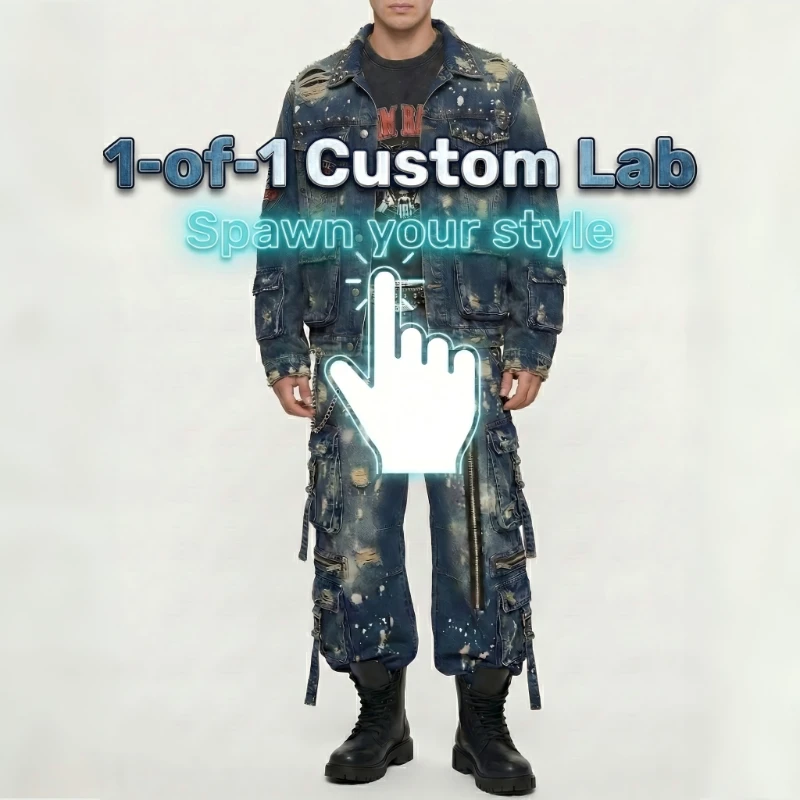
Sky Kingdom positions CodeDenim as a creator-facing pathway that accepts prompt-led designs and turns them into a one-of-one garment. Their site describes a flow where designs can be sent without a full tech pack, and then converted into production-ready outputs for a 1-of-1 piece.
CodeDenim | 1-of-1 Custom Lab – Skykingdom
Pattern, Fit, and Size Accuracy
Pattern accuracy is the backbone of AI design reproduction. AI renders often exaggerate leg length, narrow waists, and perfect drape. Real bodies need real grading and consistent ease.
Start with measurement truth:
- Provide a reference garment that fits the way you want.
- Define fit language with numbers, not adjectives.
- Set tolerances by zone, not one blanket rule.
A practical tolerance approach for denim prototypes:
- Waist and hip: tighter tolerance, because small changes feel big.
- Thigh and knee: moderate tolerance, because mobility matters.
- Inseam and outseam: confirm post-wash dimensions.
If you plan reorders, verify grading rules early. Ask the factory how they handle size steps for small batch runs, and whether they can keep the same block for future drops. Agile Inventory Management depends on this, because you cannot iterate quickly if your base fit changes every run.
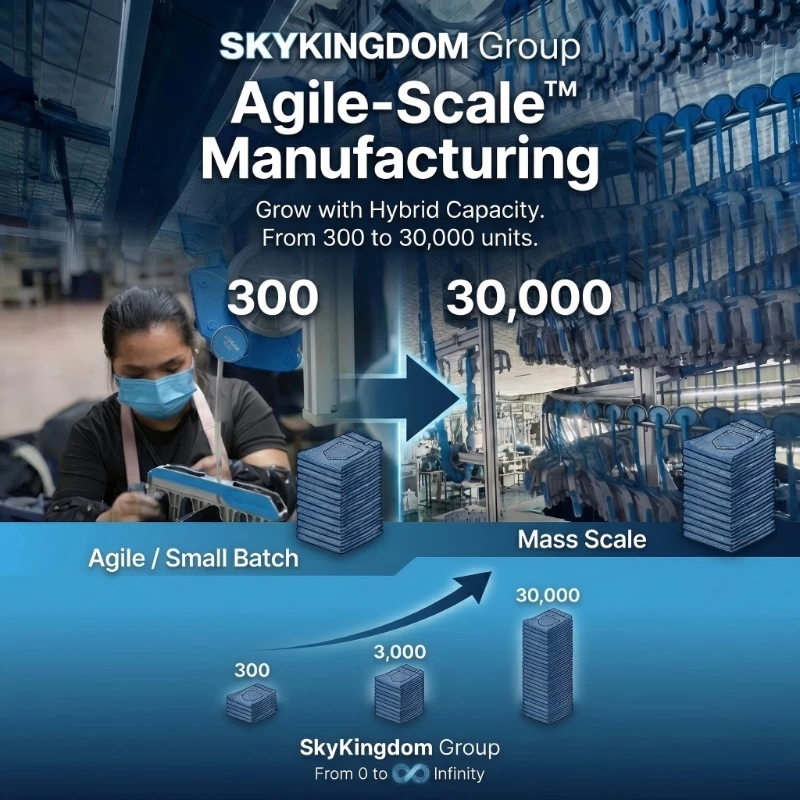
Sky Kingdom highlights individualized patterning for one-of-one work and also emphasizes capability for scaled production. For brand launches, their Micro-Run OEM offer is designed around low MOQ drops, which is useful if you want to test fit and demand before scaling.
Wash, Color, and Distress Reproduction
Wash is where most AI-to-reality projects fail. AI images show exact gradients and abrasion textures. Production wash needs repeatable recipes, controlled parameters, and clear pass/fail shade bands.
Translate visuals into wash controls:
- Define base shade: light, mid, dark, or tinted cast.
- Define contrast: how bright highlights should be versus base.
- Define distress map: exact zones, sizes, and edge style.
Ask for shrink and skew validation. Denim can twist at seams after wash, which shifts distress placement. A controlled workflow measures:
- Pre-wash vs post-wash dimensions.
- Leg twist direction and degree.
- Shade variation within a batch.
For 2026, chemical and compliance expectations are tightening. OEKO-TEX has tracked rising restrictions like PFAS bans in certain markets, including France passing a law in February 2025 banning PFAS in various consumer products, including clothing, with restrictions applying by 2026. OEKO-TEX summarizes that timeline and the direction of travel.
Sky Kingdom describes an eco-washing direction that includes laser and ozone washing and a “zero chemical” ambition on their OEM/ODM page. In practice, you should still request measurable evidence: test results, restricted substance lists, and batch-level wash records.
QA/QC, Tolerances, and Acceptance
QA/QC is how you turn subjective “looks close” into objective acceptance. You need a written acceptance standard for seams, hardware, and placement.
Build a pass/fail sheet around measurable checks:
- Fit: key measurements with tolerances (waist, hip, thigh, inseam).
- Sewing: SPI target range, seam type, and stitch density consistency.
- Hardware: button and rivet attachment strength and alignment.
- Visual placement: pocket angle, label position, patch offsets.
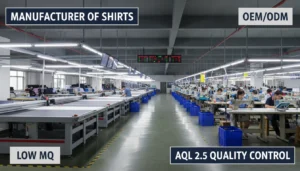
AQL is often used for bulk acceptance. Sky Kingdom states they adhere to AQL 2.5 with a 5-stage QC system on their OEM/ODM page, which signals a structured inspection approach for OEM and ODM production.
In 2026, quick response only matters if it is predictable. Ask the factory for a sampling SLA and what triggers a timeline change. Sky Kingdom lists sampling speed bands on their site, including a 72-hour VIP channel, 3-5 working days standard, and 7 days for complex cases, plus bulk production timing and faster reorders via AI-integrated systems.
ISO states that ISO 9001:2015 defines requirements for a quality management system. You can use that as a lens to ask for documented procedures, internal audits, and corrective action routines.
How to Choose a Factory for Accurate AI Denim Reproduction
OEM vs ODM: how much control do you need?
Choose OEM when you want strict control over design intent, measurements, and materials. This is common for Hyper-Personalization and creator-led one-of-one work.
Choose ODM when you want the factory to contribute design and material suggestions. This can speed up development, but it can also introduce drift away from your AI image if the factory optimizes for easier production.
Practical rule:
- If your AI image is the product, prefer OEM-style control.
- If your AI image is inspiration, ODM can be efficient.
Low MOQ realism: match the capacity model
Low MOQ and small batch do not only mean a number. They also mean the factory has processes that stay stable at low volume.
Ask:
- Do they have a dedicated micro-line or flexible capacity?
- Can they source trims for small batch orders without substitutions?
- Can they keep the same wash recipe for future drops?
Sky Kingdom explicitly offers Micro-Run OEM with an MOQ of 30 units for brand drops, and a one-of-one path for creators, which helps match different risk profiles.
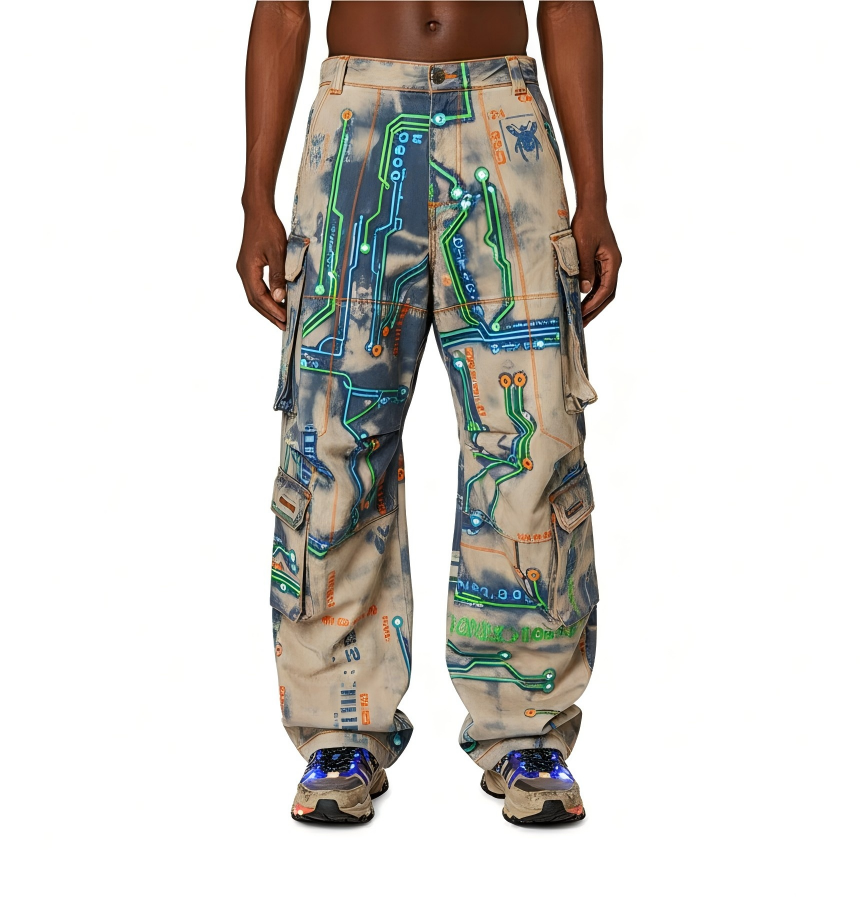
Fast response and quick response: verify the workflow, not slogans
Fast response requires:
- Clear intake requirements.
- Rapid pattern and sample sheet creation.
- In-process photo or video checkpoints.
- Real-Time ERP Integration or at least real-time status updates.
Sky Kingdom emphasizes real-time tracking and AI-integrated systems that speed reorders. In vetting, ask for an example timeline from intake to sample to approval, including how many revisions are typical.
Safety and chemical assurance: confirm test claims
Avoid vague claims like “eco” or “safe.” Ask what standards the factory targets and what they can document.
OEKO-TEX states STANDARD 100 tests textiles for harmful substances and includes components. Use that idea to ensure trims, prints, and labels are included, not only the fabric.
Decision table: match your scenario to the right approach
| Scenario | Best-fit manufacturing approach | What to verify | Typical trade-off |
|---|---|---|---|
| One-off AI artwork into a wearable piece | On-Demand Manufacturing with 1-of-1 workflow | Spec lock, pattern control, wash approval photos | More time spent clarifying details |
| Creator testing a design before a drop | Low MOQ, small batch micro-run | Grading rules, repeatable wash recipe | Limited trim options if sourcing is tight |
| Influencer drop with tight deadline | Fast response quick response line | Sampling SLA, in-process checkpoints | Less room for late design changes |
| Scaling a winning style globally | Hybrid capacity and Flexible Supply Chain | Consistent QC, AQL plan, re-order speed | More process discipline required |
Conclusion
Accurate AI denim design reproduction is achievable when a factory runs a measurable workflow. The key is to turn your AI image into locked specs, then control pattern, wash, and sewing with documented tolerances and approvals.
Next, choose the ordering path that matches your goal. Use a one-of-one lab for extreme individuality, a low MOQ micro-run for testing, or a hybrid capacity partner for scaling. When you align quick response speed with QC discipline, you can reduce the AI-to-reality gap without losing your creative edge.
SkyKingdom | Custom Apparel Manufacturer | Specializing in Premium Denim
Frequently Asked Questions
How can I find manufacturers who can produce denim clothing directly from AI-generated images?
Look for factories that accept image-based inputs and can convert them into production-ready specifications. Ask if they can create a sample sheet from your render that includes measurements, placements, and a wash plan. Confirm they can work without a full tech pack, but still document the output like a tech pack. Finally, request an example of a past project where an image was translated into a finished garment.
How can I overcome the challenges of the AI images for denim clothing not accurately reflecting the desired design?
Provide multiple views and detail closeups, because one render can hide construction and proportion issues. Write a short priority list that states what must match exactly, such as wash contrast, distress map, and pocket placement. Require post-wash measurements, since shrink and twist can change how the garment looks. Ask the factory to confirm the plan in a written approval sheet before the first sample.
Where can I find manufacturers that allow one piece for custom denim orders?
Search for denim labs or creator programs that explicitly offer 1-of-1 or on-demand production rather than standard size runs. Confirm the MOQ in writing, because some factories mean one style but still require multiple units. Ask what customization is included for one piece, such as patterning, wash, and hardware selection. Also verify how they handle revisions, since one-off work often needs one or two sample adjustments.
How can I be sure the denim manufacturer can replicate my AI design with accuracy?
Ask for a repeatable sampling workflow that separates fit approval from wash approval and trim approval. Require measurable tolerances for key dimensions and placement distances, not only photos. Request in-process checkpoint photos or videos during patterning, sewing, and washing. A reliable factory will also describe how they prevent drift in reorders through documented standards and approvals.
How can I ensure the quality of my AI denim design when ordering in small quantities?
Use the same QC checklist you would use for bulk, even if the run is small batch or low MOQ. Require full inspection criteria for seams, hardware, and placement, and ask how defects are logged and handled. Confirm whether post-wash measurements are taken on the final piece, because denim finishing can change dimensions. Finally, ensure the acceptance standard is written so both sides agree on pass/fail.
How do I make sure my custom denim design is made exactly as I envision?
Start by naming your non-negotiables, then approve a pre-production sample against those points. Lock materials, measurements, and wash references before final manufacturing, because late changes create unpredictable results. Ask for a tolerance sheet so you know what can vary and what cannot. If you want a perfect match, plan time for at least one revision cycle after the first sample.