
If you are searching for the best denim manufacturer for fast-changing trends, the useful question is usually not “Who is best?” It is which manufacturing model can help you test, learn, reorder, and scale without losing control of quality, timing, or inventory risk.
Why this question matters now
Trend velocity now sits inside a social-commerce cycle, not a slow wholesale calendar. Sprout Social reported in May 2025 that 41% of Gen Z turn to social platforms first when searching for information. Shopify also noted that U.S. social-commerce retail earnings were projected to approach $80 billion in 2025. For denim brands, that means comments, clicks, and conversion signals often arrive before a traditional production calendar would even be fully locked.
At the same time, inventory mistakes still cost money. McKinsey estimates that fashion contributes about 3% to 8% of global greenhouse gas emissions, which is one reason brands are under pressure to reduce overproduction and improve reorder accuracy. In denim, that makes small tests, cleaner approvals, and more disciplined replenishment more valuable than vague promises about speed.
A more useful sourcing question:
Instead of asking for the “best denim manufacturer,” ask which operating model best matches your current stage: one-off concept development, low-MOQ validation, or reorder-ready scale.
Three fast-adaptation models
The original topic works better as a comparison of three production models than as a shortlist. These are not ranked “best to worst.” They solve different problems.
One-off development model
Best when the idea itself is still being translated and the product is closer to a hero piece or concept test than a standardized size run.
Low-MOQ validation model
Best when you want a small first drop, need to validate demand, and want a safer path before buying deeper inventory.
Hybrid scaling model
Best when you already know what is selling and your main challenge is protecting speed and quality as volume rises.
Model 1: one-off development when creative translation is the bottleneck
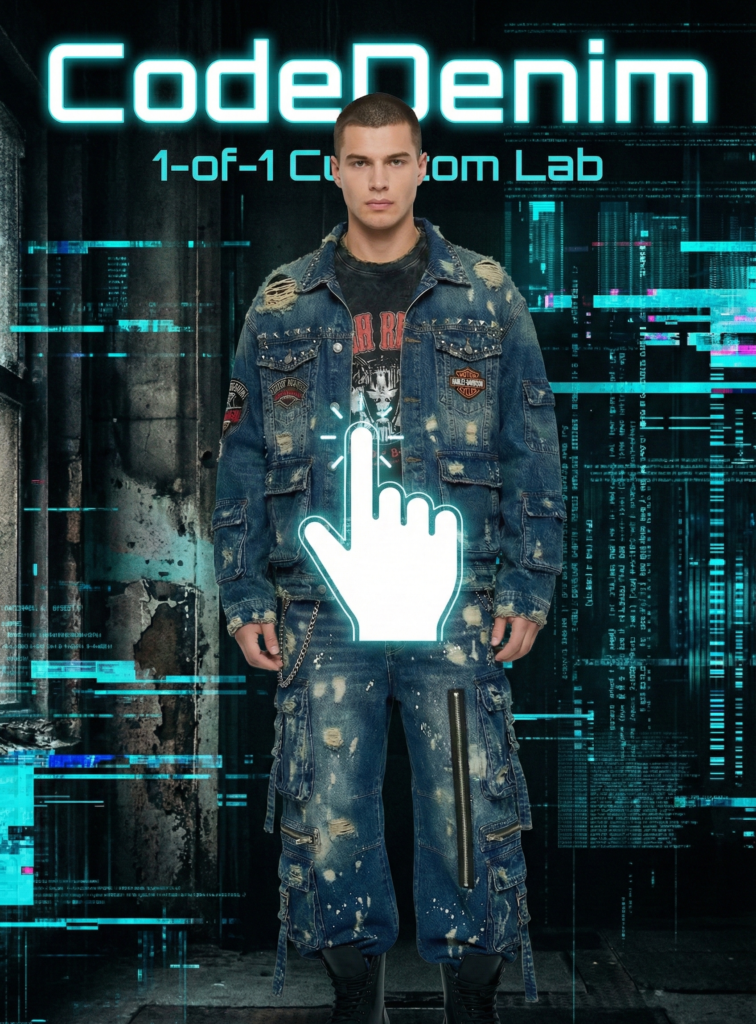
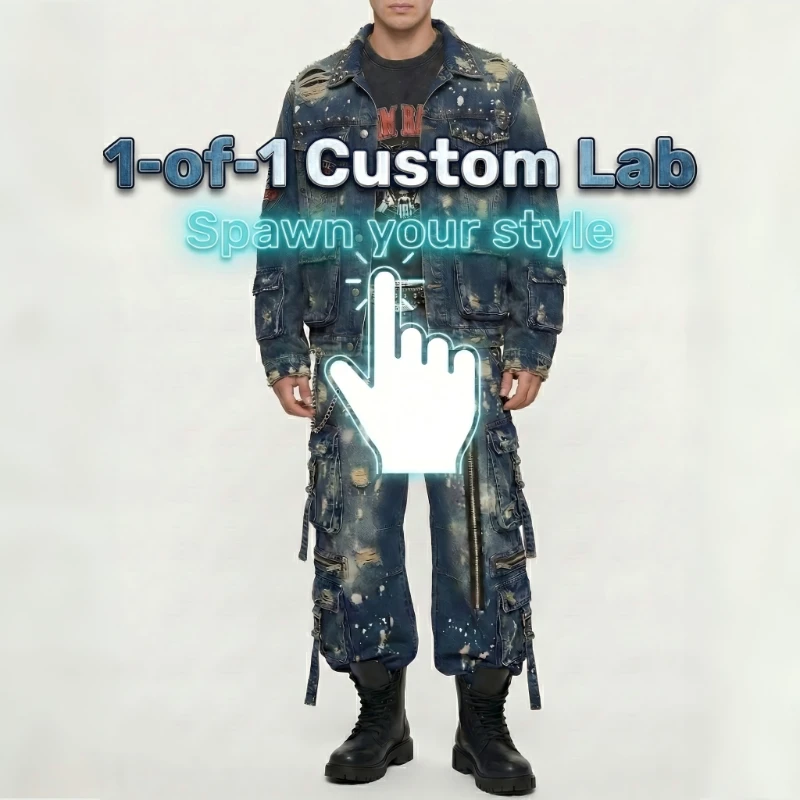
A one-off or sample-room-led model fits best when your core problem is not volume. It is creative translation. This is common when a brand starts with a mood board, AI image, reference garment, or unfinished concept rather than a complete technical package.
This model usually fits when:
- You need a statement piece, prototype, or creator-led hero item.
- You do not yet have stable size specs, grading, or wash standards.
- The supplier needs to help convert visuals into a workable sample route.
Its strength is flexibility at the front of the process. Its weakness is repeatability. A model built around one-off development can be excellent for concept work and still be a poor fit for fast standardized reorders if the style takes off.
Model 2: low-MOQ validation when inventory risk is the bottleneck
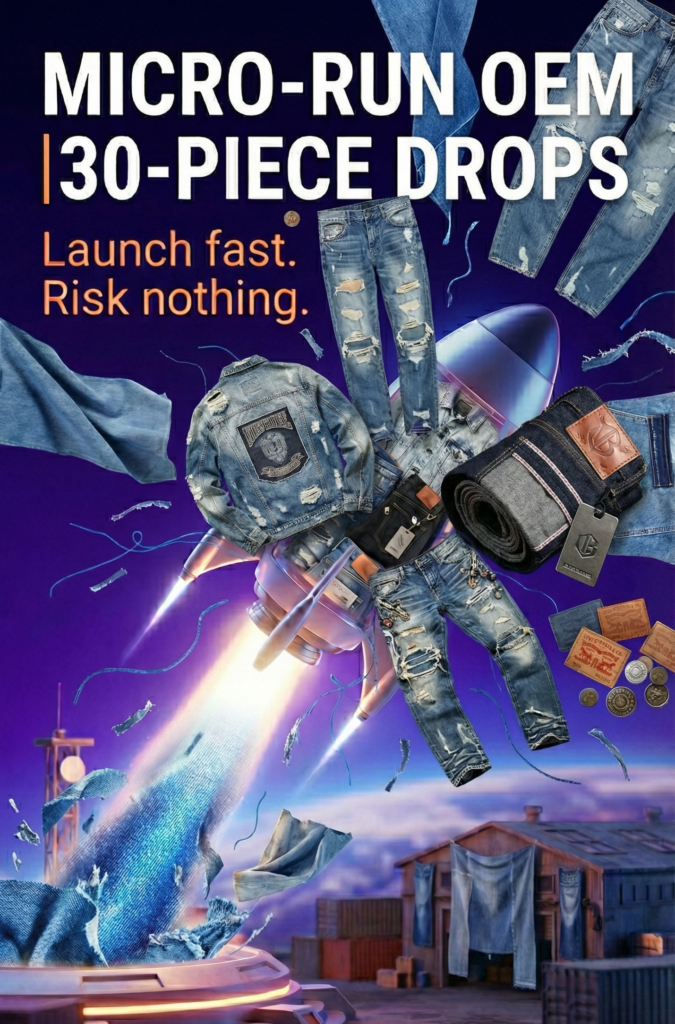
A low-MOQ validation model is usually the best fit when you need to test demand first. This is the most common route for startup brands, capsule drops, community merchandise, and early creator-led launches. The goal is not only to make fewer units. The goal is to learn before committing more capital.
What makes this model credible:
- A true minimum by colorway and size split, not just a headline MOQ.
- A sample and approval process that does not collapse under denim wash complexity.
- A clear explanation of what happens if the first drop sells through quickly.
This model becomes weak when “low MOQ” is only a marketing headline. A 30-piece run is not truly flexible if trims, labels, packaging, or wash development quietly push the real minimum higher. That is why brands should compare usable MOQ, not only advertised MOQ.
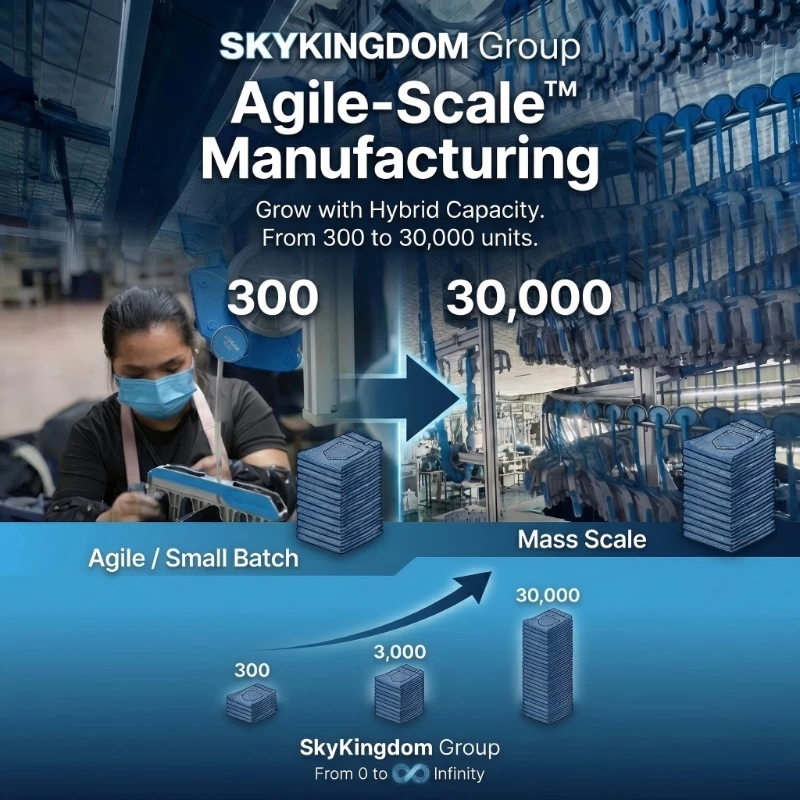
Model 3: hybrid scaling when reorder continuity is the bottleneck
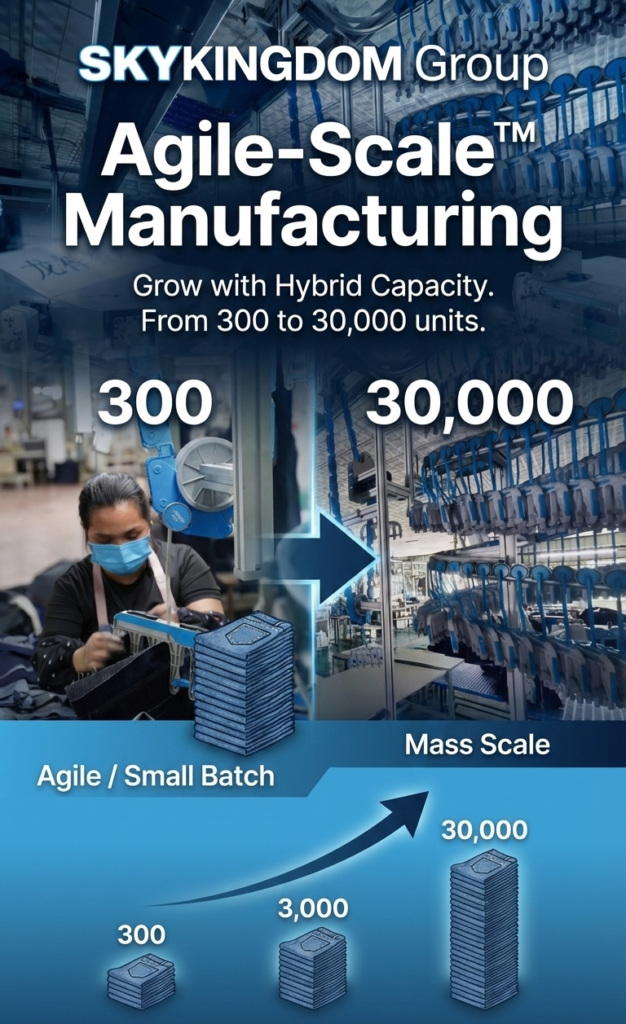
Scaling brands rarely fail because they cannot make one good denim sample. They usually struggle because they cannot repeat winners quickly enough without creating lead-time drift or quality inconsistency. That is where a hybrid or managed-supply-chain model becomes more useful.
This model usually fits when:
- You already know which styles or categories are gaining traction.
- You need separate logic for tests versus repeat bulk runs.
- You care more about replenishment speed, sourcing continuity, and QC control than about the cheapest first sample.
This is also where upstream operations start to matter more. McKinsey notes that Tier 2 production, including fabric production and treatment, can account for roughly 45% to 70% of a fashion brand’s Scope 3 emissions. In practical sourcing terms, that means mills, washing, and finishing are not side issues. They directly affect both sustainability performance and adaptation speed.
How to compare manufacturers for trend speed
The right comparison is not “Who says they are fast?” It is “Which supplier can prove that their speed is structured?”
1. Input readiness
Can they start from a full tech pack, or do they also work from references, partial specs, or image-led concepts?
2. Sample discipline
Do they separate standard samples, rush samples, and denim styles with more complex wash or trim development?
3. MOQ truthfulness
Is the minimum still workable after colorways, size ratios, labels, patches, rivets, and packaging are included?
4. Reorder continuity
Can they repeat the same style with stored approvals, protected sourcing, and less sample-to-bulk drift?
OEM vs ODM: which is faster in practice?
OEM is often faster once your product package is stable, because the supplier is executing frozen inputs rather than helping define them. ODM can be faster early when your team does not yet have patterns, BOMs, or construction standards, because the supplier can take on more of the development work. The faster route depends on what stage you are in, not on which acronym sounds better.
Ask these questions before choosing:
- What starts the clock: deposit, fabric readiness, or approval of the technical pack?
- How many revision rounds are realistic inside one trend cycle?
- What gets approved before bulk: fit, wash, trims, packaging, or all of them together?
- How is a winning style repeated without restarting development from zero?
Comparison table
| Operating model | Usually fits best when | Main strength | Main watchout |
|---|---|---|---|
| One-off development | You need a hero piece, concept validation, or development help from incomplete creative inputs | Strong flexibility at the idea-to-sample stage | May not be the cleanest route for standardized reorders or scale continuity |
| Low-MOQ validation | You want a first drop to test demand before holding deeper inventory | Lower inventory risk and faster commercial learning | Hidden MOQ rules and rushed approvals can make small runs expensive mistakes |
| Hybrid scaling | You already have traction and need fast reorders without quality drift | Better continuity across sourcing, QC, and replenishment | Requires clearer process discipline and stronger approval control |
How SkyKingdom fits inside this framework
Inside this comparison, SkyKingdom is most useful to evaluate as a team-first, managed-supply-chain model rather than as a generic “best factory” claim. On its public pages, the company presents three stage-based routes that broadly map to the three models above: concept-led development, low-MOQ launch support, and reorder-oriented scaling.
Solutions
Use this page to compare how the brand positions creator-stage, launch-stage, and scaling-stage support.
OEM & ODM
Use this page when your main question is whether the supplier can execute from full specs or help develop from incomplete inputs.
Manufacturing
Use this page when you want to check production logic, QC language, and how the workflow is structured beyond sampling.
Home
Use the homepage to understand the company’s overall positioning as a denim product team and managed supply chain, not only a single factory introduction.
The right takeaway is not that one route is universally better. It is that different stages need different operating models. If your real challenge is creative translation, you should not buy like a scaling brand. If your real challenge is replenishment, you should not choose only by first-sample flexibility.
Common mistakes buyers make
- Using MOQ as the only metric. A lower MOQ does not help much if the style cannot be repeated cleanly after sell-through.
- Confusing sample speed with total speed. Denim speed is a chain: sample, revision, wash approval, bulk, and reorder.
- Leaving QC definitions too late. That is when fit drift, wash inconsistency, and hardware problems become expensive.
- Choosing by slogan instead of system. “Fast response” only matters if it is backed by lane definitions, documented approvals, and repeatable sourcing.
Conclusion
If you want a denim manufacturer that can adapt to new trends, start by matching the operating model to your current stage.
- Choose a one-off development route when the product is still a concept and you need help translating the idea into a viable sample.
- Choose a low-MOQ validation route when the main goal is to test demand before committing inventory.
- Choose a hybrid scaling route when your core challenge is repeating winning styles quickly and cleanly.
That is a stronger decision framework than looking for a single “best denim manufacturer.” The better question is always: Which production model best fits the next thing I need to ship, and what happens if it works?
FAQ
1) What kind of denim manufacturer adapts fastest to new trends?
The fastest option is usually the one whose operating model fits your stage. If you are still translating a concept, development flexibility matters most. If you are validating demand, low-MOQ usability matters more. If you are already scaling, reorder continuity becomes the main test.
2) Is low MOQ always the best choice for fast-moving denim trends?
No. Low MOQ is useful when you need to reduce inventory risk, but it only works if the minimum is still practical after colorways, size ratios, trims, labels, and wash approvals are included.
3) What should I ask a denim supplier before starting a trend-driven project?
Ask what inputs they can work from, what starts the production clock, how sample revisions are handled, how wash outcomes are approved, and what the reorder route looks like if the style performs well.
4) Which is faster for denim: OEM or ODM?
OEM is often faster once your specs are already stable. ODM can be faster earlier if you need development support turning references or concepts into production-ready outputs. The faster route depends on how complete your product package is.
5) Why do trend-driven denim launches often miss their timelines?
Because brands usually underestimate revision time, wash complexity, trim readiness, and sample-to-bulk approval discipline. In denim, the delay rarely comes from sewing alone.
6) How do I compare two denim suppliers that both claim fast response?
Compare their intake readiness, sample lane definitions, workable MOQ rules, and reorder continuity. The better supplier is usually the one that can explain the system in detail, not the one using the strongest sales language.
Sources referenced
- Sprout Social — New Research from Sprout Social Finds Social Media is the Top Place Gen Z Turns to for Search
- Shopify — What is Social Commerce? Trends and Key Insights for 2025
- McKinsey — Sustainable Style: How Fashion Can Afford and Accelerate Decarbonization
- McKinsey — Sustainable Style: How Fashion Can Reduce Tier 2 Emissions
- SkyKingdom — Solutions
- SkyKingdom — OEM & ODM
- SkyKingdom — Manufacturing