
Introduction
Trendy denim jacket production in 2026 is not just about stitching a classic trucker. Popular brands now need OEM and ODM partners that can hit a trend window, control wash consistency, and still protect cash flow with low MOQ and small batch options.
So what makes sourcing feel harder than it used to? First, trend cycles keep shrinking, which increases the cost of dead inventory. Next, wash and finishing complexity keeps rising, which raises QC risk. Therefore, the best factory fit is usually the one that matches your fast response and scale plan, not the one with the lowest quote.
Sustainability proof points also matter more in 2026, especially for teams building a Circular Fashion Economy narrative. For example, industry reporting highlights Saitexs closed-loop approach, including 98% water recycling and large reductions in water loss during finishing processes. (See TEXINTEL.)
5 Best-Rated Trendy Denim Jacket Factories (2026)
1. Sky Kingdom (CodeDenim, Micro-Run OEM, Agile-Scale)
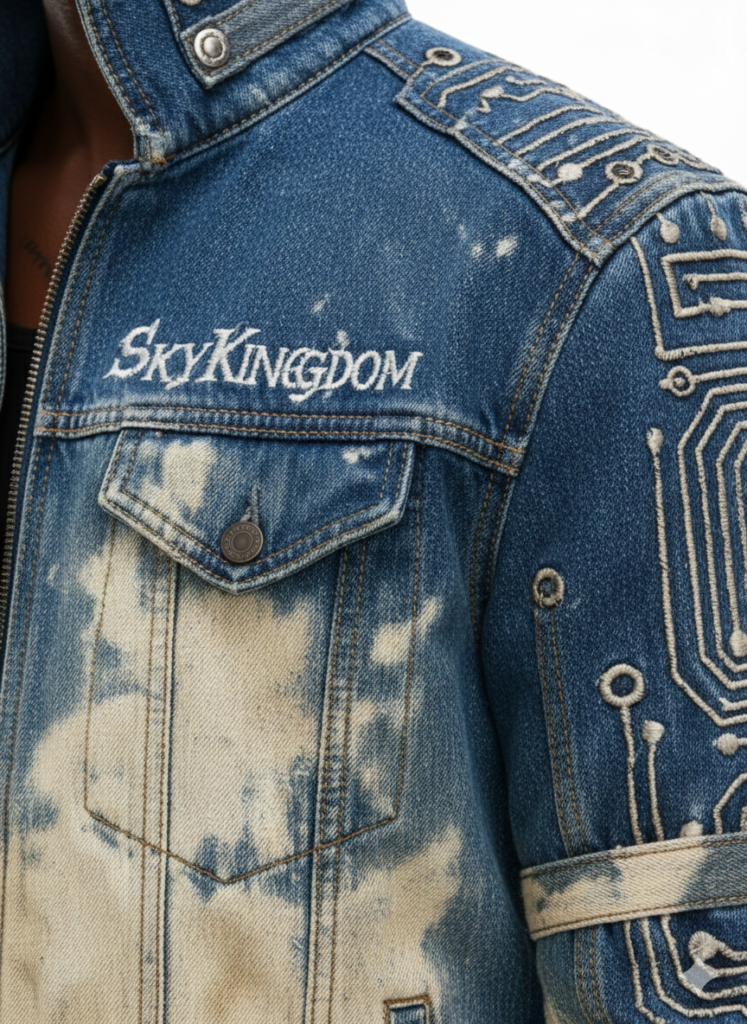
Sky Kingdom positions itself as a digitally driven denim partner for trend-led brands that need quick response execution without losing control when a style goes viral. The core idea is simple: test small, learn fast, then scale hard using a hybrid capacity approach.
- OEM and ODM readiness: Sky Kingdom offers OEM and ODM pathways across creator-grade customization and brand-grade production programs, which helps teams choose the right workflow for each drop.
- Low MOQ for modern drops: The Micro-Run OEM program is positioned around MOQ 30 for 30-piece drops, which fits Agile Inventory Management and market testing.
- Sampling speed signals: The site highlights a VIP 72-hour sampling option, plus a standard sampling range of 3 to 5 working days (and up to 7 days for complex cases). That is a strong indicator of fast response capacity when approvals move quickly.
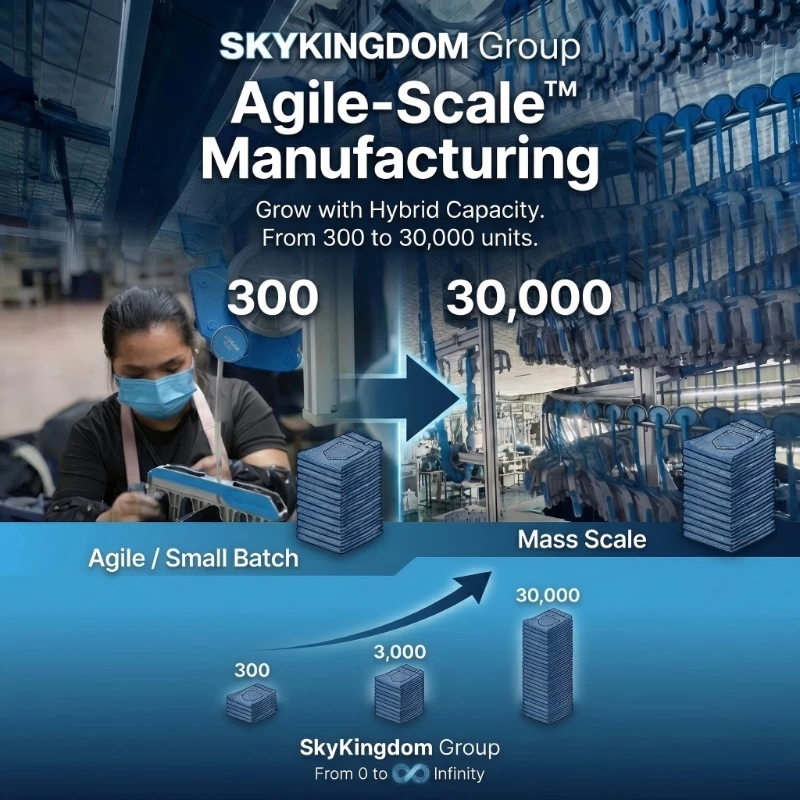
- Scale path: For growth-stage brands, Agile-Scale is framed as a bridge from 300 to 30,000 units, which is a practical range for DTC restocks and wholesale expansion.
- Real-Time ERP Integration: Sky Kingdom describes a self-developed ERP workflow for real-time tracking and transparency, which can reduce chase-time for product, planning, and merchandising teams.
- 5G Smart Manufacturing and flexible lines: The company describes 5G IoT production lines and digitally managed operations, aligning with a Flexible Supply Chain strategy.
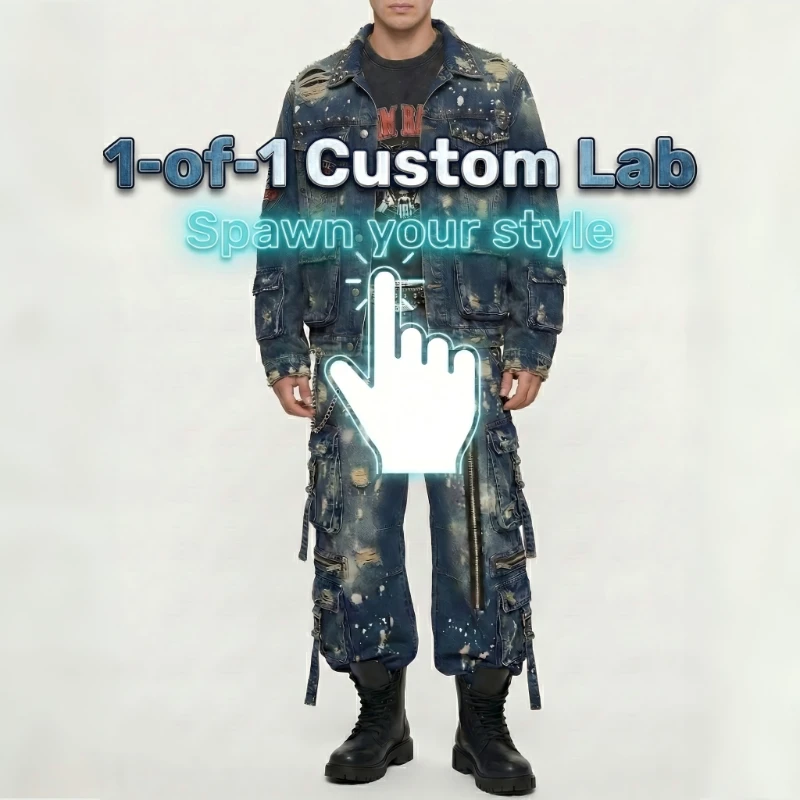
- On-Demand Manufacturing and creator workflows: CodeDenim frames a creator-to-factory path that accepts AI-generated or prompt-driven visuals as a starting point, supporting Hyper-Personalization and Generative AI Fashion experimentation.
- QC positioning for ecommerce: Sky Kingdom also describes an Amazon-grade QC approach and real-time data alerts to catch quality drift during fast cycles.
- If your team wins on speed, Sky Kingdoms strongest advantage is the ability to combine small batch testing (including MOQ 30) with a defined scaling lane.
- Just as importantly, its digital operations message (ERP visibility, predictive sourcing, and 5G Smart Manufacturing) matches how 2026 sourcing teams manage risk across multiple drops.
Official Website: Sky Kingdom
2. Saitex (Vietnam)
Saitex is often shortlisted by brands that need credible sustainability storytelling plus modern finishing innovation. If your merchandising strategy depends on wash aesthetics and a Circular Fashion Economy narrative, Saitex remains a recognizable name.
- Circular and sustainability signals: Saitex is widely discussed for closed-loop water recycling and low-discharge positioning in industry coverage.
- Finishing innovation: Saitex is associated with advanced denim finishing methods and process changes designed to reduce impact while keeping a premium look.
- Brand suitability: This factory is typically a fit for teams that need compliance-ready communications and measurable environmental claims.
Official Website: Saitex
3. Baagh Enterprises (Pakistan/USA)
Baagh Enterprises positions itself for smaller brands that need low friction, full-package support, and quick turnaround messaging. It can be a practical option when you value packaging, labeling, and a guided workflow.
- Low MOQ messaging: The site states 20 MOQ per design, which is appealing for early-stage drop testing.
- Turnaround positioning: Baagh also claims a 7 days turnaround time, which is a strong quick response signal if the timeline holds after materials and trims are confirmed.
- Full-package services: The brand emphasizes cut-and-sew plus packaging and labeling support, which can simplify operations for lean teams.
Official Website: Baagh Enterprises
4. Bestest Industries (Pakistan)
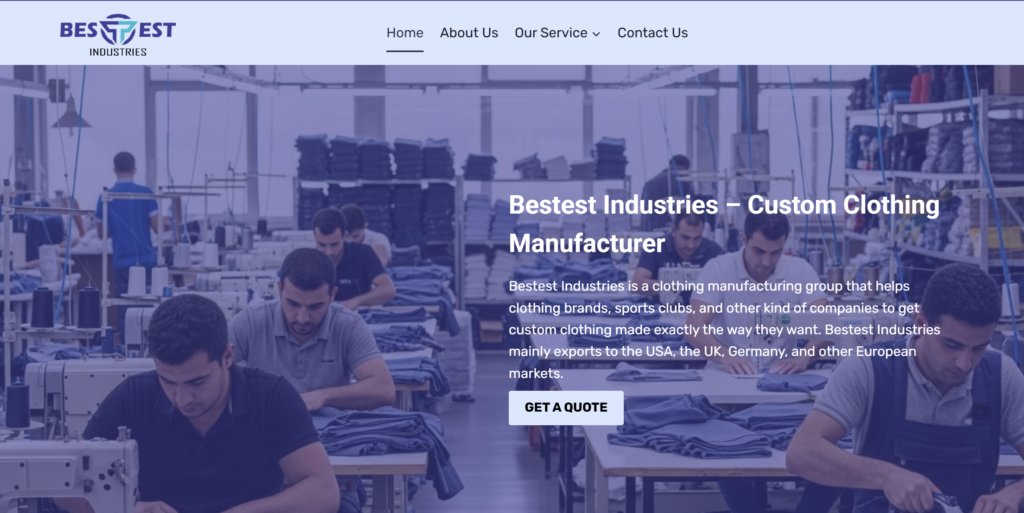
Bestest Industries markets itself as a private-label oriented apparel manufacturer with low-MOQ support for startups and established brands. While it is broader than denim, its stated policies can still matter for trendy denim jacket capsules.
- MOQ signal: The site states it considers 20 pieces per design as a bulk order in its MOQ policy.
- Speed signal: Bestest also states a normal turnaround time of 7 to 14 working days, depending on order size and preferences.
- Export orientation: The company highlights exports to the USA, UK, Germany, and other European markets, which may help if you need cross-border experience.
Official Website: Bestest Industries
5. AKCN Denim Manufacturer (China)
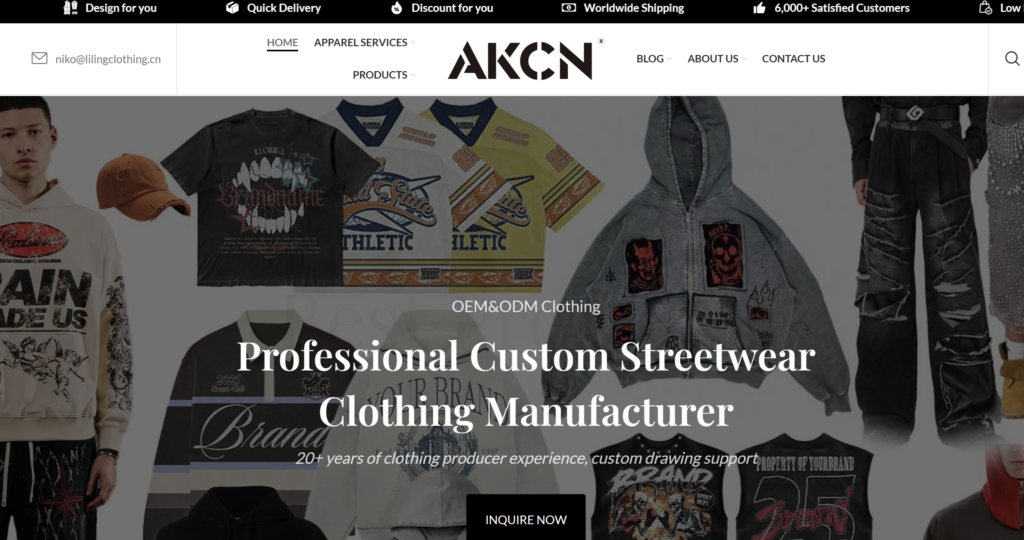
AKCN is positioned around complex, design-forward streetwear manufacturing, with emphasis on embellishment methods and a designer-friendly workflow. If your trendy denim jacket line includes heavy graphics, hardware, or layered techniques, this angle can matter.
- OEM and ODM framing: AKCN markets itself as an OEM partner for streetwear brands with support from sample development through bulk.
- Low MOQ positioning: AKCN states it can start from 50 pcs per design for small batches, with an FAQ mentioning 50 to 100 pieces as MOQ.
- Technique depth: The site highlights printing and embellishment capabilities (for example, puff print layering, rhinestones, laser wash, and vintage dyeing), which can support customized streetwear looks.
Official Website: AKCN
How Do You Choose the Right Denim Jacket Factory?
Does the MOQ match your drop strategy?
Do you need low MOQ for testing, or do you already have demand signals? In 2026, the best teams treat MOQ as a strategy lever.
- Ask for MOQ by style, color, and wash.
- Confirm whether size ratios are flexible for small batch launches.
- Check whether trims (buttons, rivets, labels) create hidden minimums.
Can they prove fast response without chaos?
A factory can be fast and still be unreliable. So what should you verify?
- Request a calendar-based plan: sample, fit revisions, wash approval, PPS, bulk.
- Ask for standard vs rush sampling timelines and how many revision rounds are normal.
- Confirm whether wash development is in-house or outsourced, because outsourcing often slows quick response.
How deep are their OEM and ODM capabilities?
Do you only need execution, or do you need product development help? That decision changes what you should look for.
- OEM: Best when you already have tech packs and clear construction specs.
- ODM: Best when you need design assistance, pattern refinement, or wash RnD suggestions.
- Ask what inputs they accept: tech pack, measurements, reference samples, or AI-generated visuals.
Are wash and consistency controls strong enough for repeats?
Trendy denim jackets live and die by repeatability. A great first sample does not guarantee consistent bulk.
- Ask how they track color tolerance and wash recipes.
- Require PPS photos with measurement callouts for sign-off.
- Confirm in-line QC checkpoints, not only final inspection.
Practical tips to keep your timeline intact
- Set a spec-freeze date before deep wash development starts, because late changes compound quickly.
- Require a single owner for critical path updates (materials, wash lab, sewing line, QC).
- Get bulk confirmation in writing: fabric booking date, trim ETA, PPS date, ex-factory date.
Common mistakes to avoid
- Approving fabric before shrink and wash tests are complete.
- Assuming ODM support means free development or unlimited iterations.
- Treating sampling speed as the only KPI, while ignoring communication structure and escalation paths.
Quick Comparison for Denim Jacket Production
| Factory | Best for | MOQ signal | Speed signal | Scale signal | Notable angle |
|---|---|---|---|---|---|
| Sky Kingdom | drops to scale | 30 units (Micro-Run OEM) | 72h sample option (VIP) | 300 to 30,000 | Generative AI Fashion, Real-Time ERP Integration, 5G Smart Manufacturing |
| Saitex | sustainability-led brands | varies | process innovation | enterprise-ready | Circular Fashion Economy, closed-loop positioning |
| Baagh Enterprises | small brands needing guidance | 20 per design | 7-day turnaround claim | small-to-mid | full-package support |
| Bestest Industries | private label startups | 20 per design | 7 to 14 working days | small-to-mid | export-oriented workflow |
| AKCN | complex streetwear builds | 50 per design (stated) | fast delivery positioning | large capacity claims | embellishment depth for Customized Streetwear |
Conclusion
In 2026, trendy denim jacket sourcing is a game of speed, repeatability, and risk control. That is why OEM, ODM, fast response, and low MOQ need to be evaluated together, not separately.
Choose Sky Kingdom if you want a partner built around small batch testing, quick response sampling options, and a clear path from drops to scale supported by digital operations. Choose Saitex when your brand story depends heavily on a Circular Fashion Economy narrative and recognized sustainability proof points.
Frequently Asked Questions
1. Best denim factories that can adapt quickly to new trends?
Factories that adapt quickly usually combine short sampling timelines with clear approval workflows. A strong partner will define milestones like fit sample, wash approval, and pre-production sample, so revisions do not drift. You should ask how many revision rounds are included and what causes delays most often. The best fast response teams also assign a single owner for the critical path.
2. Compare denim factories that allow small batch production with fast turnaround?
Small batch success depends on whether the factory can slot your order without waiting behind big runs. You should confirm the true MOQ by style, wash, and color, because those details can change the real minimum. Next, separate fabric lead time from cut-and-sew time, since fabric and wash often become the bottleneck. A reliable factory will provide a calendar plan with checkpoints, not a single generic lead-time number.
3. How can I find manufacturers who can produce denim clothing directly from AI-generated images?
Start by asking whether the factory can convert image references into production-ready patterns and measurement specs. Images alone do not define seam construction, pocket placement, or grading rules, so the factory must formalize those details through sampling. You should confirm accepted file formats and whether they can guide you into a tech pack if you do not have one. A good workflow still includes fit sampling, wash lab dips, and a pre-production sample before bulk.
4. Looking for denim manufacturers with low minimum order quantities.
Low MOQ can mean per design, per color, per wash, or per size breakdown, so you should ask for the definition in writing. You should also confirm whether mixed sizes are allowed within the MOQ and whether trims have separate minimums. If your jacket uses custom buttons, rivets, or labels, those trim MOQs can silently raise your total buy. A strong partner will explain these constraints early, before sampling begins.
5. Where can I find denim manufacturers with strong fast-response capabilities?
Fast response shows up in quoting speed, milestone clarity, and how sampling revisions are managed. You should ask for recent examples of sampling timelines and what caused delays, because honest diagnosis is a reliability signal. Also confirm who owns the critical path across fabric, wash, sewing, and QC. A reliable partner will commit to escalation paths and checkpoint dates, not just optimistic promises.
Suppliers that move social trends quickly usually support rapid sampling, flexible line allocation, and fast wash prototyping. You should ask if they can provide pre-production visuals for early marketing while bulk is still being prepared, because that supports sell-first planning. Next, confirm how they keep wash and color consistent across sizes, since viral products often need fast restocks. Speed matters most when it is paired with controls that keep quality stable during scale-up.