
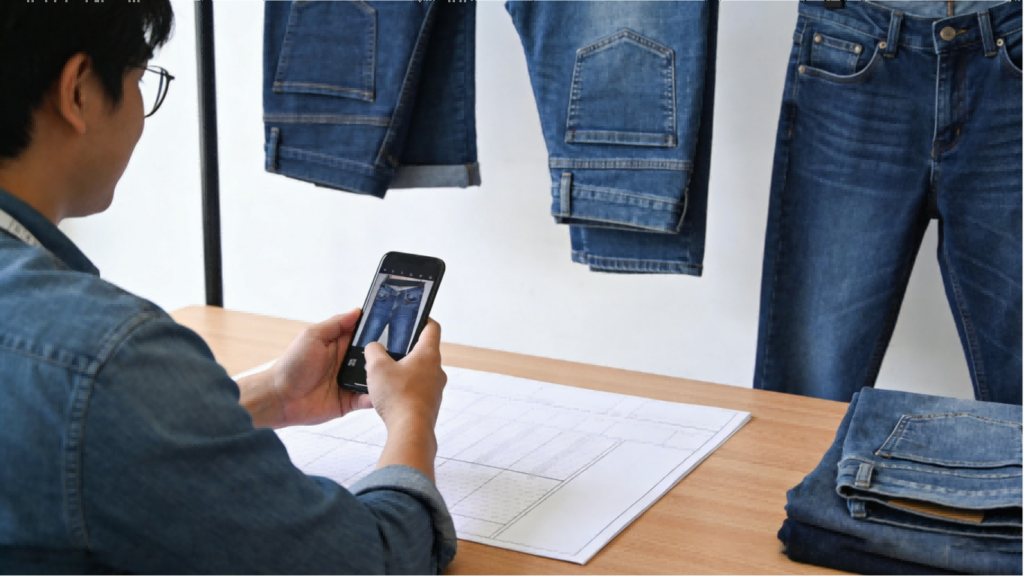
Yes — many denim projects can begin with reference photos only. The real question is not whether a tech pack is complete on day one, but whether the project already has enough certainty to move into an efficient and executable sample-development process. In fast-moving fashion teams, this often starts with a direct image, a clear modification idea, and a quick round of follow-up information.
Many buyers send street photos or market images directly for development.
They can define direction, complexity, and visible wash details.
This is often the missing detail that most affects first-sample accuracy.
Adding key information first usually saves more time than rushing blindly.
Yes, You Can Start — But the Real Issue Is Development Certainty
This is one of the most common questions buyers ask when they first contact a denim manufacturer.
The honest answer is not a simple yes or no.
Yes, a project can begin with reference photos only, and it can move into early sample evaluation. What really matters is whether the project already contains enough certainty to support an efficient and executable development process.
In real business, receiving only reference photos and no complete tech pack is not unusual at all. In fact, it is especially common in fast-moving projects.
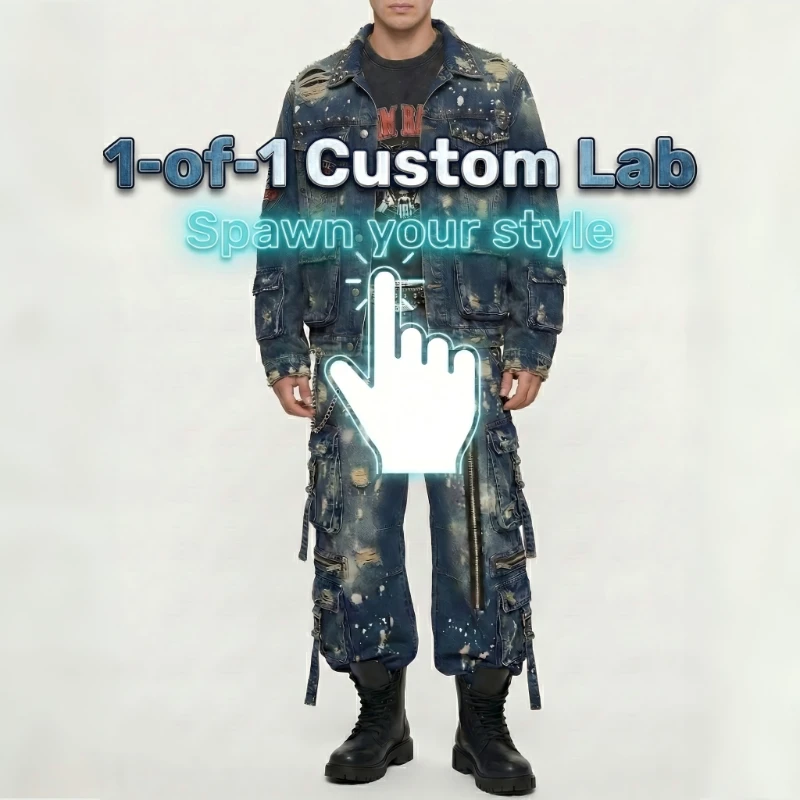
For some fast-fashion group buyers, the workflow is extremely direct: they may see a pair of jeans on the street, take a photo immediately, send it over, and ask for pattern modification and sample development. This is not an unprofessional way of working. It is often a very practical and efficient one: lock the direction quickly first, then add the key information that determines sample accuracy.
Why Many Denim Projects Do Not Start with a Complete Tech Pack
This is normal. Not every denim project starts with a full technical file, especially when the commercial rhythm is fast and the buyer’s priority is speed.
- Fast-fashion teams work in real time: they often prioritize immediate reaction and effective execution over lengthy written preparation.
- Many projects start from market images: street shots, competitor items, store photos, screenshots, inspiration boards, or target-product photos are often the real starting point.
- The buyer may already know what to change: the project may not be vague at all — it may simply not be formalized into a full tech pack yet.
- The team may want to validate feasibility first: before investing more time in technical documentation, they want to know whether the direction is viable and worth developing.
So the absence of a complete tech pack is not the issue by itself. The real issue is whether the current information can support a useful development judgment.
What Reference Photos Can Actually Help Evaluate
If the reference photos are clear enough, they can still help a denim factory make several important early judgments.
- Style direction: whether the target is straight-leg, wide-leg, flared, slim, vintage washed, cargo-influenced, or another silhouette family.
- Product complexity: whether the style includes visible paneling, special pocket construction, distressing, or more difficult finishing.
- Visible wash clues: cat whiskers, heavy wash, snow wash, abrasion areas, creasing, or obvious wash distribution can often be identified from a strong image.
- Whether the project deserves a next step: even without full data, a factory can often judge whether the direction fits its denim-development capability and whether the project should move into a more detailed evaluation round.
So the main value of a reference photo is not that it replaces a tech pack. Its value is that it helps establish direction quickly.
What Is Usually Missing When Buyers Only Send Photos?
In real development work, several things may still be unclear — but one missing point tends to affect sample accuracy more than the others:
Size Information
This is often the most common missing input and the one most likely to cause deviation in the first sample.
Two jeans can look very similar in a reference photo but feel completely different when worn because of:
- rise
- inseam length
- hip shape
- thigh ease
- leg opening
- fabric stretch
- overall wearing ease
Many buyers think they are asking for “this exact jean,” but what the factory still needs to understand is: what should it feel like when worn?
That is why, when the discussion starts from photos only, the most useful thing to clarify early is often not a long written brief, but the intended size direction and fit direction.
What Else Is Usually Still Missing?
- Fabric direction: a photo rarely tells the factory the true weight, stretch content, texture, softness, or drape.
- Wash target: photos may show a visual direction, but they do not fully define wash depth, abrasion control, handfeel, shrinkage expectation, or fading balance.
- Trim requirements: buttons, zipper type, metal color, patch type, labels, and inside construction details are often still unspecified.
- Project objective: the factory still needs to know whether this is a development sample, a photo sample, a low-MOQ test order, or a project likely to move quickly into production.
So reference photos can absolutely start the conversation, but they do not decide sample accuracy on their own.
When Can a Project Move into Sample Evaluation Without a Tech Pack?
Very often. In real life, many projects begin exactly this way.
Even without a complete tech pack, a project is usually ready for early evaluation if the buyer can still provide the following:
- Clear reference images: preferably with visible front/back views, detail areas, silhouette, and wash direction.
- A clear product direction: for example women’s high-rise straight-leg jeans, men’s loose washed denim, distressed wide-leg jeans, or vintage light-wash jeans with whiskers.
- Size or fit direction: even if not a full spec sheet, the intended target wearer, sample size, and wearing feel should be explained.
- General fabric and wash direction: soft or rigid, stretch or non-stretch, light wash or heavy wash, basic or more workmanship-heavy.
- Project stage: whether this is early evaluation, a true development sample, a low-MOQ test, or a pre-production discussion.
If these elements are reasonably clear, then a project can move into productive pre-sampling communication even without a complete tech pack.
What Problems Happen Most Often Without a Tech Pack?
The problem is usually not that the factory cannot develop the item. The problem is that interpretation gaps become larger.
- Fit interpretation can differ: the buyer expects one wearing effect, while the factory reads the image differently.
- Size expectations can differ: the image looks right, but the wear result feels wrong.
- Wash expectations can differ: the visual mood may be close, but the sample still misses the exact balance the buyer had in mind.
- The first sample may become exploratory: the less precise the inputs, the more the first round functions as a discovery round rather than a near-final sample.
- Communication effort increases: details that should have been clarified earlier must be recovered through repeated follow-up discussion.
So lacking a tech pack is not necessarily a barrier, but it usually means that the project will move more efficiently only if higher-certainty information is added early.
If You Only Have Photos, What Should You Add First?
From an efficiency standpoint, the most useful step is not always “build a perfect tech pack immediately.” The better step is often:
Add Higher-Certainty Information First
The clearer the inputs are, the more likely the first sample will be close to target. In practice, this usually saves more time than rushing into development with too many unknowns still open.
The most useful things to add first are:
- Size direction: this matters most. Even if it is not a complete spec sheet, the target size and fit direction should be stated.
- The top 2–3 priorities: what matters most — the fit, the wash effect, the handfeel, the rigidity, the silhouette?
- Fabric and wash direction: even a rough direction can prevent major misunderstandings.
- Quantity and project stage: the factory needs to know whether this is pure development or already close to test order / production.
- Whether custom trims are required: buttons, patch, hardware, labels, or packaging will all influence the development route.
Is It Better to Start Sampling Immediately, or Add More Information First?
From an efficiency perspective, it is usually better to add more certain information first.
The logic is simple: the higher the certainty, the more likely the first sample will be close to the target. That saves both time and revisions.
So when buyers send only a reference photo, the most efficient next step is often not to rush blindly into sampling. The more effective route is to quickly add the missing information that most affects the result.
In many cases, once those key details are clarified well enough, the first sample can already be very close — sometimes close enough to confirm without many rounds of back-and-forth.
When Is It Better to Build Out More Technical Information Before Sampling?
- When fit requirements are strict: if the first sample needs to be very close to the target, the technical description should be clearer.
- When the style is complex: complicated construction, paneling, layered workmanship, or difficult washes are more likely to be misread from photos alone.
- When the project may move quickly into bulk production: if this is not only a trial but a likely production style, more complete information is safer.
- When commercial accuracy matters early: clearer inputs usually lead to better early costing logic and more reliable lead-time judgment.
What Is the Most Realistic Way to Understand This Situation?
If you currently only have reference photos and no complete tech pack, the most realistic question is not:
“Can the factory copy this directly from the picture?”
The better question is:
“Based on what I already have, can the factory judge the direction and tell me what must be added next so that sample development becomes more accurate and efficient?”
That is much closer to how real product development actually works.
Many successful projects do not begin with perfect documentation. They succeed because the first discussion quickly identifies what matters most and fills in the key missing points.
How Sky Kingdom Handles Denim Projects That Start from Reference Photos
For projects that begin with reference photos but no complete tech pack, we can absolutely start with an evaluation. This situation is common in real business, especially in fast-moving development environments.
But we usually do more than answer whether it is “possible.” We look at:
- whether the product direction is already clear
- whether the project is within our denim-development scope
- whether the current information is enough for early sample evaluation
- which missing items should be added first
- whether adding those details first can significantly improve first-sample accuracy
In practice, we usually prefer to add higher-certainty inputs first, especially fit and size direction. The clearer the information becomes, the more efficient sample development will be — and the less likely the project is to lose time on avoidable rework.
If You Only Have Reference Photos, You Can Start by Sending Us These
- reference photos or inspiration images
- product type
- target wearer
- size or fit direction
- expected quantity
- fabric direction
- wash direction
- whether custom trims are needed
- current project stage
Based on that, we can help judge:
- whether the project is ready for sample evaluation
- what key information is still missing
- whether it is better to begin with a development sample or add details first
- whether the project is better suited to a low-MOQ test path or a more standard production path
If all you have right now is a photo, you can still start the conversation. The important thing is not perfect paperwork on day one — it is how quickly the project can reach a useful level of certainty.
Frequently Asked Questions
Can I contact a factory if I only have reference photos and no tech pack?
Yes. Many denim projects can begin with early evaluation based on reference photos, but some key development information will usually need to be added quickly.
Can reference photos determine the final sample result by themselves?
Not fully. They help define direction, but fit, size, fabric, and wash details still need to be clarified.
What is the most common missing information when buyers only send photos?
In real development work, size information is often the most commonly missing detail and one of the biggest factors affecting first-sample accuracy.
Does not having a tech pack reduce sample efficiency?
Usually yes. The less complete the information is, the more likely interpretation gaps and sample revisions become.
Is it better to sample immediately, or add more details first?
In most cases, adding higher-certainty information first is more efficient. The clearer the project becomes, the more likely the first sample will be close to target.
Send Us the Photos First. We Will Tell You What to Add Next.
Share your reference images, fit direction, quantity, and any wash or trim notes you already have. We will help you judge whether the project is ready for sample evaluation and what details should be confirmed first to improve development speed and accuracy.