
Buying china clothes can feel like opening a mystery box: the photos look perfect, the price is tempting, and then you wonder—will it fit, will it last, and will it match the listing? I’ve helped DTC brands source china clothes at scale (and I’ve personally test-ordered pieces to sanity-check fabric, stitching, and sizing), and the truth is simple: China makes everything from bargain-basement garments to premium, export-grade apparel. What you get depends on standards, communication, and the factory system behind it.

What “China Clothes” Actually Means (and Why It Varies So Much)
The term china clothes isn’t a single quality level—it’s a sourcing location. China’s apparel ecosystem includes fiber and fabric mills, dye houses, wash laundries, trim suppliers, pattern rooms, and large-scale sewing lines, so brands can build almost any product tier. That’s why two items can both be “Made in China” and perform completely differently in shrinkage, colorfastness, and seam strength.
Key drivers of variation include:
- Factory specialization (denim vs. knits vs. outerwear)
- Quality control standard (e.g., AQL levels and inspection coverage)
- Materials and trims (fabric weight, elastane %, zippers, buttons)
- Process control (washing, finishing, needle/thread matching, tolerances)
If you’re buying for personal wear, this explains why reviews swing from “amazing” to “unwearable.” If you’re building a brand, it’s why you must define specs, tolerances, and QC checkpoints from day one.
Quality: How to Tell Good China Clothes from “Good Photos”
When people complain about china clothes, they’re usually reacting to one of four issues: fabric feel, construction, wash/finish, or inconsistency across units. The good news is you can spot quality signals quickly once you know what to look for.
Fabric & hand-feel checks (fast and reliable)
A listing won’t tell you everything, but these cues help:
- Fabric composition: 100% cotton denim behaves differently than cotton-spandex blends (stretch recovery matters for fit).
- Fabric weight: heavier isn’t always better, but ultra-light denim can bag out or twist after wash.
- Opacity & drape: for woven shirts and dresses, thin fabric + bright light = see-through risk.
Construction checks (what I inspect first)
If I have a sample in hand, I go straight to:
- Seam consistency: even stitch length, no skipped stitches, no seam puckering
- Reinforcement: bar tacks at stress points (pocket corners, fly base)
- Symmetry: matched panels, aligned pockets, straight hems
- Trims: zipper smoothness, button attachment, rivet stability
QC standards that matter (AQL, not vibes)
Factories serving serious global brands typically run formal inspection systems. For example, “Amazon Top Seller-grade QC” often implies consistent inline and final inspections with defined defect limits (commonly discussed in AQL terms). If a supplier can’t explain their QC flow, you’re gambling.
For deeper factory-level thinking on denim production quality and execution, see SkyKingdom’s perspective on selecting partners in how to identify the best factory for fast and reliable denim clothing sample delivery.
Sizing: Why China Clothes Often “Run Small” (and How to Get It Right)
Sizing is the #1 friction point for china clothes—especially cross-border. Many brands use Asian sizing conventions, and even when they label items as US/EU sizes, the underlying base pattern may be different. Also, many size charts show garment measurements taken flat, and a 1–3 cm variance is common in manual measurement and production tolerance.
Use this 3-step method (works for shoppers and brand owners)
- Measure a similar garment you already own (not your body) and compare.
- Check whether the chart is garment measurement vs. body measurement.
- Decide fit intent:
- Relaxed/oversized: you can stay closer to chart
- Fitted styles: consider sizing up if between sizes
Common denim sizing traps
- Stretch denim: waist may feel tight at first, then relax 1–2 cm with wear.
- Rise differences: two “same waist” jeans can fit totally differently due to front/back rise.
- Shrinkage after wash: sanforized vs. unsanforized denim changes outcomes.
If you’re producing for DTC, lock sizing with a graded spec sheet and pre-production fitting. If you’re buying online, treat “S/M/L” as marketing—numbers and measurements win.
| Item Type | Common Sizing Issue | What to Measure | Quick Fix | Notes |
|---|---|---|---|---|
| Denim jeans | Waist runs small; hips/thighs tight; rise shorter | Waist, hip, thigh, front/back rise, inseam | Size up 1; compare to best-fitting jeans; check stretch | Expect 1–3 cm tolerance; use garment measurements vs body |
| Woven shirt | Shoulders narrow; chest tight; sleeves/length short | Chest (pit-to-pit), shoulder width, sleeve, length | Compare to a closet shirt; size up; check size chart | Woven has little give; 1–3 cm tolerance; measure garment flat |
| Jacket | Chest/shoulder tight; armholes small; sleeves short | Chest, shoulder, sleeve length, jacket length | Size up; verify layering allowance; check fabric/stretch panels | Allow extra room for layers; 1–3 cm tolerance; garment vs body |
What to Expect at Different Price Points (Realistic Benchmarks)
Price is not a perfect proxy for quality, but with china clothes it often reflects the underlying bill of materials, labor time, and QC depth. Here’s what tends to change as price rises:
- Better fabric and trims (zippers, buttons, thread, fusible interlining)
- More sewing operations (clean finishes, reinforced seams)
- Tighter tolerances (more consistent fit across sizes)
- Stronger finishing control (denim wash consistency, less skew/twist)

If you’re a brand, “premium” is usually less about a luxury label and more about process discipline—spec clarity, inspection, and repeatability.
Traditional vs. Modern: Two Different Meanings of “China Clothes”
Search results for china clothes often mix two categories:
- Traditional Chinese clothing styles (e.g., hanfu, qipao/cheongsam, tang suit)
- Modern mass-market apparel made in China (denim, woven sets, streetwear)
They have different buying risks. Traditional styles are more sensitive to:
- Pattern accuracy and cultural details
- Fabric authenticity (silk vs polyester “silk-look”)
- Sizing and proportions (especially shoulders, sleeve shape, collar height)
Modern apparel is more sensitive to:
- Fit consistency across units
- Wash performance and colorfastness
- Seam durability and return rates
If your goal is brand-building, it’s worth deciding early whether “China clothes” in your assortment means culturally-inspired designs, modern basics, or both—because supplier selection changes.
For inspiration on how China’s apparel sector positions designs globally, SkyKingdom also covered international showcases in guangzhous textile and garment products exhibited in paris.
If You’re a DTC Brand: How China Clothes Get Made Faster (Without Guesswork)
Speed matters in fast fashion, but speed without systems creates rework. In my experience, the best outcomes come from a repeatable pipeline:
- Tech pack clarity (POM points of measure, tolerances, stitch types)
- Rapid sampling with documented feedback loops
- Fabric and trim pre-approval (lab dips for color, wash panels for denim)
- Inline QC + final QC with clear defect definitions
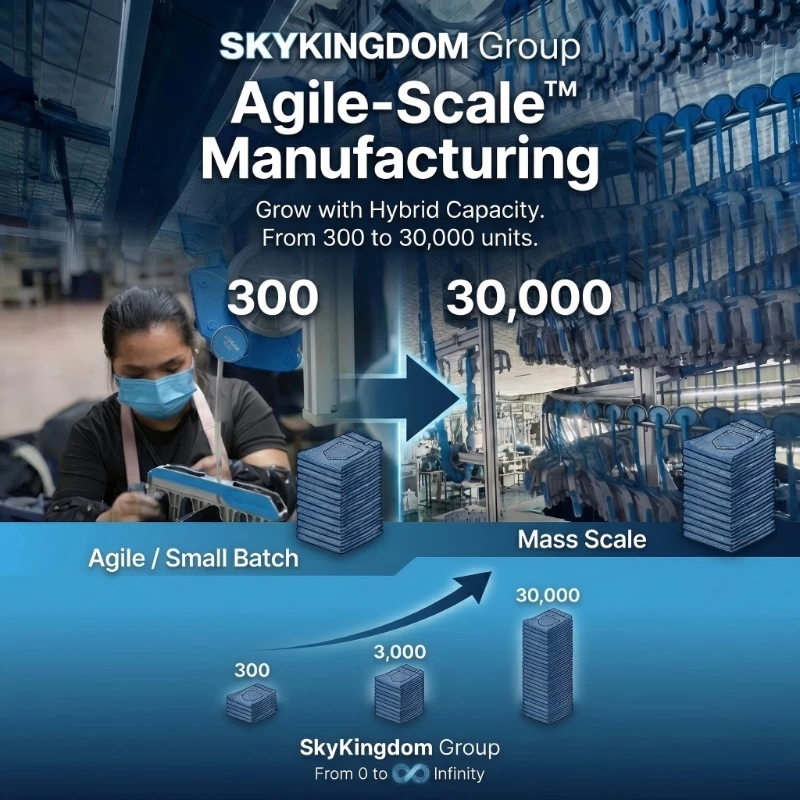
SkyKingdom Group is built around this model: a Speed-to-Market Engine (often cited as 7-day samples and 15–22-day bulk), digital ERP transparency, and AQL-based QC discipline. For new brands, their low MOQ approach is also relevant—especially when you’re testing product-market fit instead of guessing inventory.
If you’re evaluating low-order sourcing strategies, see choosing the best factory for low moq denim clothing ideal for individuality seekers.
How to Reduce Risk When Buying China Clothes Online (Practical Checklist)
Whether you’re a consumer or a small brand placing a first PO, risk reduction looks similar: verify, sample, and document.
Quick checklist
- Confirm materials: ask for composition and fabric weight (gsm/oz) when possible
- Study real photos: look for seam puckering, misaligned patterns, uneven hems
- Read sizing charts carefully: garment vs body measurement, tolerances
- Start small: one unit (consumer) or a small run/MOQ (brand)
- Plan for returns/defects: build a buffer into timeline and margin
measuring guide for jeans and chinos
Conclusion: China Clothes Can Be Great—If You Know What You’re Buying
In the end, china clothes aren’t “good” or “bad”—they’re a spectrum shaped by specs, QC, and the discipline of the production line. I’ve seen $20 pieces outperform $80 ones when measurements were clear and finishing was controlled, and I’ve seen “premium” listings fail because the seller couldn’t deliver consistency. If you treat china clothes like a system—measurements, materials, and standards—you’ll get fewer surprises and better wardrobes (or stronger DTC margins).
📌 why the abg x guess deal is a wake up call for denim creators insights from skykingdom
FAQ: China Clothes (Quality, Sizing, and Buying)
1. Are china clothes lower quality than clothes made elsewhere?
Not inherently. China produces both budget and export-grade apparel; quality depends on materials, QC standards, and factory specialization.
2. Why do china clothes sizes feel smaller?
Many brands use Asian base patterns and garment-measurement charts. Differences in shoulder width, rise, and ease can make the same labeled size fit smaller.
3. How do I choose the right size when ordering china clothes online?
Measure a similar garment you own, compare to the product’s flat measurements, and account for 1–3 cm tolerance. Size up for fitted items if between sizes.
4. What should I look for to judge quality in photos?
Check stitching consistency, hem straightness, pattern alignment, and whether fabric looks overly thin or shiny (often a clue for low-grade synthetics).
5. Do china clothes shrink more after washing?
Shrinkage varies by fabric and finishing. Denim and woven cotton can shrink if not pre-shrunk; always follow care labels and consider cold wash/air dry.
6. What’s the safest way for a new brand to start producing china clothes?
Start with a low MOQ run, request samples, approve wash panels (for denim), and use an AQL-based QC plan with clear defect definitions.
7. Is OEM/ODM manufacturing in China still competitive for fast fashion?
Yes—especially when factories have integrated supply chains, rapid sampling, and real-time production tracking to reduce lead times and rework.