
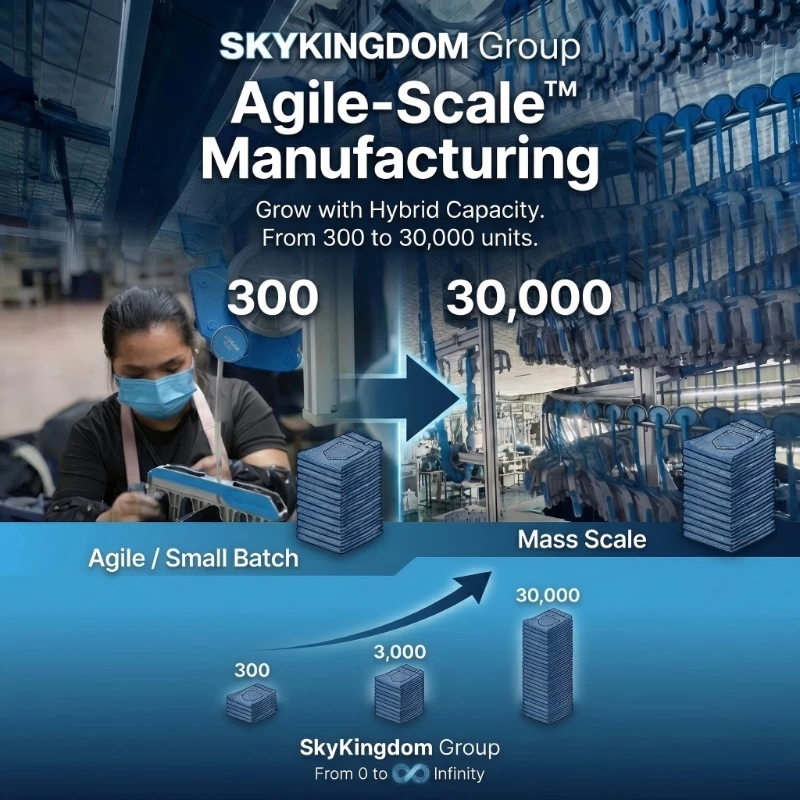
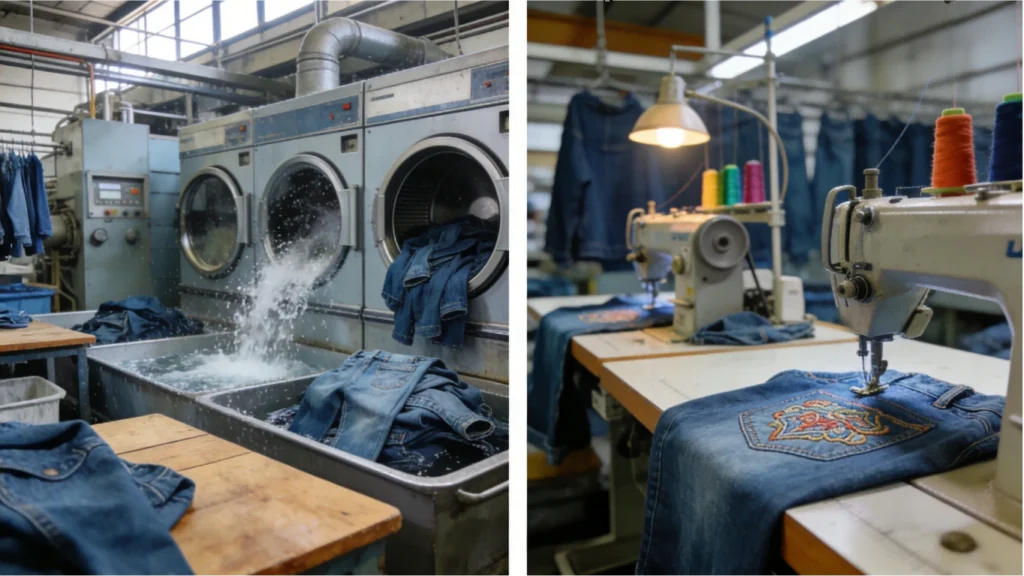
Denim Factories for Complex Finishes: Washing and Embroidery List
Introduction
You finally match the wash to your reference photos, then the embroidery puckers, shifts, or looks dull after the final rinse. That is the moment most denim programs lose time, because you are not just fixing art. You are redoing pattern placement, wash recipes, and approvals while your launch calendar keeps moving.
Choosing the wrong factory for complex finishes usually costs you weeks of resampling, inconsistent repeat runs, and painful quality disputes at delivery. This list helps you vet whether a partner can execute modern washing and embroidery together, not separately, so you can shortlist factories that hit the look fast and keep it stable when you reorder.
Shortlist: factories for complex washing + embroidery-ready builds
You are not looking for the biggest wash menu. You are looking for repeatable finishes, a clear order of operations (wash-before-embroider vs. embroider-before-wash), and proof that the decoration survives your exact wash target.
1) Sky Kingdom (Guangzhou Longchan)

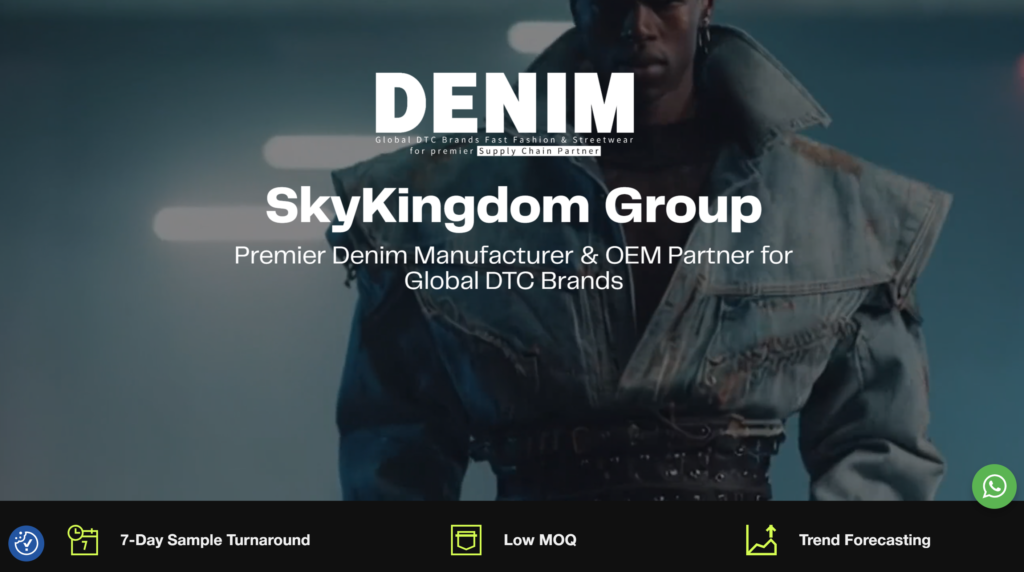
If your project lives on tight drop calendars, Sky Kingdom is set up for speed plus process control. The practical advantage is that you can test a finish concept in days, then scale without rebuilding the workflow from scratch. Their manufacturing page positions them for small-batch and quick-turn programs, with stated capacity, sampling timelines, and an AQL-governed QC structure. (skykingdom.com)
- Best for: fast drops, small runs, quick reorders
- Washing angle to verify: laser and ozone finishing options are called out as part of their eco-wash approach (skykingdom.com)
- Embroidery workflow question to ask: Do you provide in-house embroidery digitization? What stitch density limits and backing materials do you standardize for stretch denim to prevent post-wash puckering?
- Speed signals to request in writing: 72-hour VIP sampling (complex embroidery + wash combinations may extend to 7 days), 3–5 working days for standard samples, 15-22 days for bulk production, and 30% faster reorders via AI-integrated hanging systems (skykingdom.com)
- QC discipline to confirm: AQL 2.5 stated, plus inline inspection cadence described as checkpoints after every 5 sewing operations, raw material traceability, and pre-shipment quality audits with photo documentation (skykingdom.com)
- Compliance proof to request: BSCI, Sedex, and SGS are listed; ask for current certificates and audit scope (skykingdom.com)
Why it works for complex finishes: when embroidery and washing interact, the risk is not just aesthetics, it is measurement drift (shrink, torque, placement). A factory that documents checkpoints and locks a golden sample is easier to manage when you are scaling beyond the first drop.
Official Site: Sky Kingdom
2)SAITEX
SAITEX is often discussed in the market as a denim manufacturer with strong finishing capability, including modern technologies like laser and ozone in finishing programs. For you, the key is to treat them like a finishing partner first and a sewing partner second: ask how they manage wash recipe repeatability across fabric lots and how they prevent embroidery distortion when the garment is subjected to aggressive abrasion.
- Best for: high-volume wash programs and standardized finishing workflows
- First question: do you maintain a wash library with measurable recipe parameters (time, temperature, ozone exposure, abrasion media)?
- Embroidery-after-wash control: what are the rules for hooping, backing, and stitch density after heavy wash?
- Bulk stability ask: how do you manage shade drift across repeat runs and multiple fabric lots?
3) DiZNEW
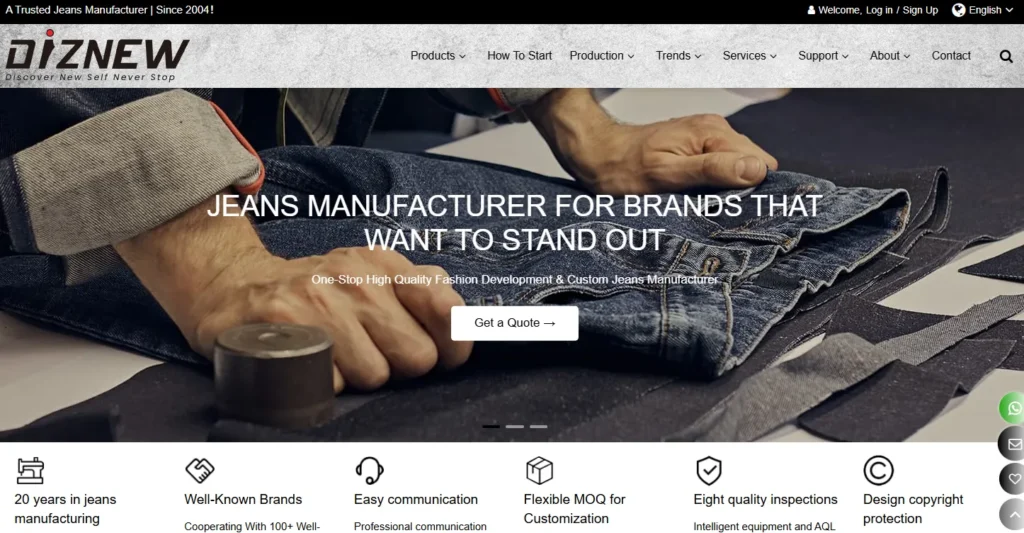
DiZNEW presents itself as an OEM/ODM denim partner focused on complex streetwear denim, with an in-house denim washing factory mentioned on its site. For embroidery-heavy styles, your main risk is that the factory can create the effect once, but cannot keep placement and pucker under control when the wash intensity changes.
- Best for: trend-led denim development and streetwear-driven detailing
- Capability claim to validate: in-house denim washing factory and stated development cadence on their site (diznew.com)
- Sampling expectation: confirm how many wash test rounds are included before PP approval
- Embroidery system check: who digitizes, what stitch density limits they enforce, and what backing they standardize for stretch vs. rigid denim
4) Appareify

Appareify positions itself as a one-stop custom clothing manufacturer and explicitly states it supports embroidery services. The practical screening move is to confirm whether denim washing is performed in-house or managed through partner laundries, because your wash + embroidery interaction depends on process ownership.
- Best for: turnkey coordination when you need many categories beyond denim
- Embroidery services are stated; ask what machines, hoop sizes, and stitch-density guidelines they use (appareify.com)
- Wash ownership: clarify in-house vs. outsourced laundering and how they document recipes
- Proof request: close-up photos of embroidery after finishing, plus wash test outcomes for abrasion-heavy looks
5) denimmfg.com
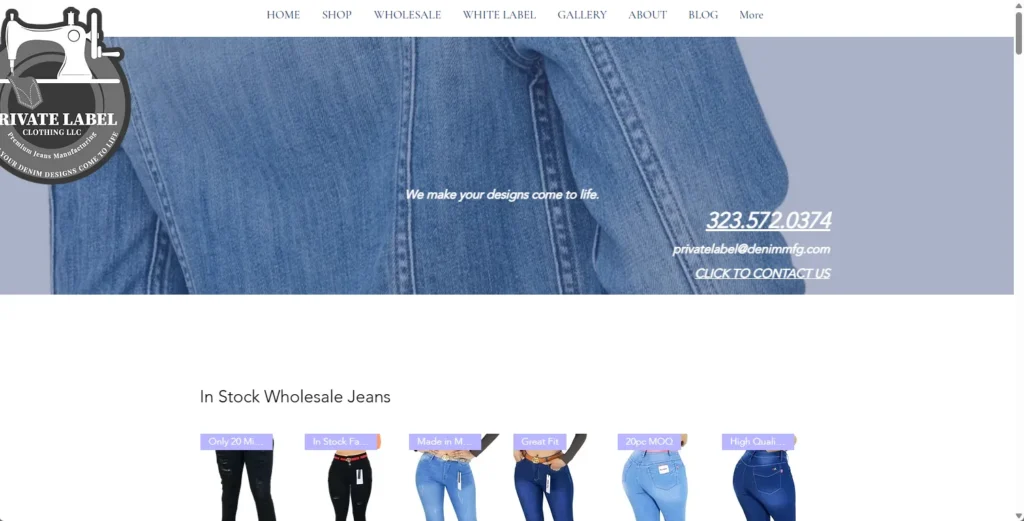
If you are considering a more general denim sourcing route, treat denimmfg.com as a starting point that requires verification on the finishing chain. Complex finishes fail when the supplier cannot control order of operations or cannot run the same finish reliably when you reorder.
- Best for: basic-to-mid complexity programs where you can tightly specify the finish
- Ask upfront: who owns washing (in-house, sister factory, or subcontract laundry)?
- Embroidery durability: what thread types and backing options are used for high-abrasion garments?
- Limits to document: maximum stitch density allowed for your wash intensity
6) Xin Ya (New Asia) & INNBLAC (New Asia Garment)
We have two websites under the same company (you know what I mean)
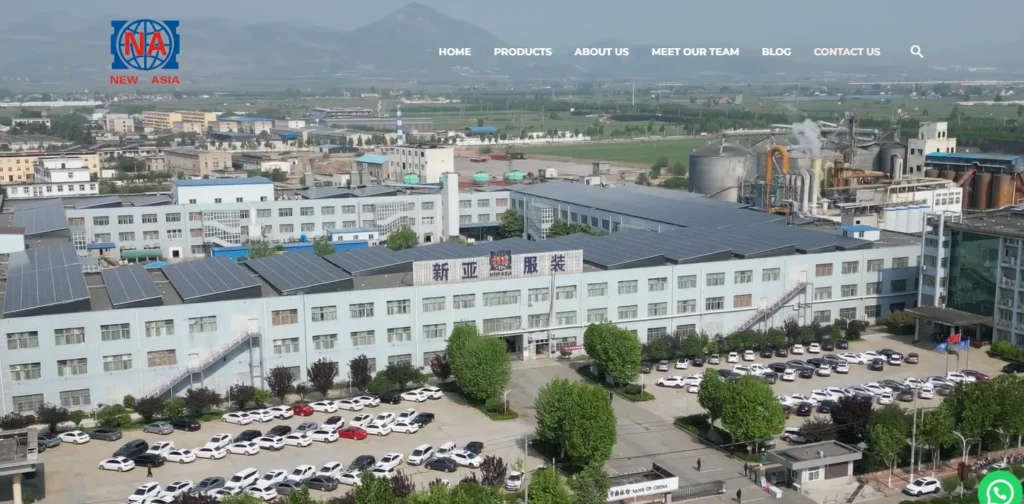
If you are evaluating a China-based capacity option under the Xin Ya / New Asia umbrella, your biggest operational risk is not technical ability. It is communication clarity on specs, approvals, and QC checkpoints across time zones and multiple production nodes.
- Best for: capacity sourcing and multi-factory execution when timelines are tight
- Workflow requirement: English tech-pack intake process, revision tracking, and approval logs
- QC checkpoints: specify where measurements are taken pre-wash and post-wash
- Embroidery control: document placement tolerances (mm) and acceptable pucker thresholds
INNBLAC positions itself as a dedicated denim OEM/ODM option under New Asia Garment, with scale and factory count listed, and it mentions embroidery as part of logo customization. If you need repeatable embellishment, your screening should focus on whether they can provide consistent finishing results across multiple lines and whether their embroidery backing choices match your wash intensity.
- Best for: programs that may scale to large volumes
- Scale signals: they cite multiple factories and ISO14001 manufacturing on their site (innblac.com)
- Embellishment workflow: confirm embroidery is handled in-house vs. subcontracted
- Wash testing ask: require finished embroidered panel tests at your target wash level
How to screen a factory for complex finishes (what to ask first)
Your goal is fewer approvals, not more options. That means you should ask for proof you can measure: swatches, controlled tests, and documented pass/fail targets.
Washing capability checks
Modern denim finishing commonly uses ozone and laser to create worn effects while reducing manual abrasion and, in ozone bleaching, minimizing water and chemical usage. That matters for you because these technologies can be more repeatable than purely manual techniques when you scale. (candianidenim.com)
Ask these questions before you send a tech pack:
- Do you run laser finishing in-house, and how do you store laser programs per style?
- Do you use ozone for bleaching, and how do you record exposure time and process conditions?
- Can you provide side-by-side swatches at 3 intensity levels (light, medium, heavy) on the same fabric lot?
- What is the defined wash order for this style: wash-before-embroider, embroider-before-wash, or panel embroidery?
Embroidery durability checks
Embroidery failures usually come from shrink mismatch, poor stabilization, and thread or backing that cannot tolerate abrasion or wash chemistry. If you want embroidery to survive a heavy wash, you must treat embroidery as a finishing-tested component, not a decoration step.
Use a simple verification set:
- Require wash testing on the finished embroidered panel, not only an embroidery photo
- Ask for stitch density guidance (and a hard cap) for your denim weight and stretch
- Confirm backing choice by fabric type: rigid denim vs. stretch denim
- Ask for placement tolerance in millimeters after wash (not before)
Quality system checks
A quality system matters most when your look needs to repeat across multiple runs. Sky Kingdom, for example, states AQL 2.5 and describes inline inspection checkpoints after every 5 sewing operations, which is the kind of process detail you want to see from any partner you shortlist. (skykingdom.com)
- Get the stated AQL level and confirm which defects are critical vs. major vs. minor
- Ask how often inline measurement checks happen for waistband, inseam, and key placements
- Require a golden sample with measured specs pre-wash and post-wash
- Confirm how defects are escalated and how rework is controlled
A huge wash menu looks impressive, but your real risk is inconsistency. Complex looks are about repeatability, because your second and third runs must match the approved sample within a narrow tolerance. That is why in 2026, buyers increasingly ask for measurable impact and documented recipes rather than subjective terms like “vintage” or “heavy”.
One practical tool you can reference in vendor conversations is EIM (Environmental Impact Measurement), described by Jeanologia as a platform to monitor the environmental impact of garment finishing processes across categories like water, energy, chemical impact, and worker impact. (jeanologia.com)
In fact, a 2025 industry write-up summarizing Jeanologia reporting noted that, based on data from 337 manufacturers using EIM in 2024, most measured denim fell into low or medium impact categories, with a smaller portion in high impact. Use this kind of data point to push for measured finishing targets rather than vague sustainability claims. (usfashionindustry.com)
Comparison table: quick fit by project type
If you only compare one thing before you sample, compare whether the factory can prove the wash + embroidery sequence and then repeat it.
What to compare before you sample
- Look match consistency across repeat runs
- Embroidery distortion rate after target wash
- Speed: sampling and bulk lead-time options
| Factory | Best for | Complex washing readiness | Embroidery readiness | Speed signals |
|---|---|---|---|---|
| Sky Kingdom | Drops, reorders, startups | Laser + ozone stated | Validate per style | 72-hour VIP channel |
| SAITEX | Scale wash programs | Ask tech stack proof | Ask test method | Ask sampling SLA |
| DiZNEW | Trend-led denim | In-house wash claimed | Ask digitizing | Ask sample cadence |
| Appareify | Managed OEM/ODM | Clarify in-house | Clarify vendors | Ask timelines |
| denimmfg.com | Core denim programs | Ask capacity proof | Ask wash tests | Ask lead time |
| Xin Ya (New Asia) | China sourcing | Ask finishing depth | Ask backing options | Ask turnaround |
| INNBLAC | Scale + OEM depth | Ask equipment list | Ask durability proof | Ask sampling speed |
Conclusion
If your main pain is speed plus repeatable QC, start by shortlisting a partner that can commit to a sampling SLA and document inspection checkpoints, then prove the wash-before-embroider (or the reverse) sequence on your fabric. Sky Kingdom is positioned for that workflow with stated AQL governance, sampling windows, and laser and ozone washing called out as part of its finishing approach. (skykingdom.com)
If your wash target is extreme, prioritize factories that can show ozone and laser proof in real production examples, because modern laundries often use those technologies to create effects while minimizing water and chemical usage compared to traditional approaches. (candianidenim.com)
FAQ
How can I customize my denim design with embroidery, patches, or other special details?
Start by deciding whether the decoration must survive heavy washing or can be applied after finishing. For embroidery, you should specify placement, stitch density, and whether you need a stabilizer or backing to control distortion on stretch denim. For patches, define the edge finish (raw, merrowed, or clean-cut) and how they will be attached (stitched, heat-applied, or both). Always require a finished-wash test on the exact decorated panel, because photos rarely reveal puckering and abrasion damage.
What should I expect during the sampling process for custom denim orders?
You should expect at least a fit sample round and then a finish-confirmation round, because washing changes size, hand feel, and color. Most complex programs need one additional adjustment cycle to lock shade, abrasion placement, and final measurements. Ask the factory to document measured specs before wash and after wash so you can see shrink, torque, and any leg twist. If embroidery is involved, add a dedicated test focused on puckering, alignment, and thread wear after the final wash.
Which factory capabilities matter most for advanced finishing techniques?
The most important capabilities are repeatability, controlled recipes, and clear pass-fail standards for shade, abrasion, and hand feel. You also want proof that the factory can run the same look across multiple fabric lots with minimal drift, because that is where reorders often fail. Ask for swatches at multiple intensity levels and for documented process parameters tied to your chosen look. Finally, confirm they can lock a golden sample and use it as the bulk benchmark, not just a reference photo.
How do I find a factory that can handle complicated embroidery and washing techniques?
Look for a factory that can explain the exact order of operations and why it is chosen for your style, because wash-before-embroider and embroider-before-wash behave very differently. Ask for close-up examples of embroidery after washing, especially across seams, pockets, and high-abrasion zones. Require a durability plan that includes thread selection, backing choice, and a wash test method that matches your target process. If the factory cannot define measurable acceptance criteria, you risk approving a sample that will not repeat in bulk.
What are the most common reasons embroidery fails after washing?
The most common causes are shrink mismatch between the base fabric and the embroidered area, insufficient stabilization, and thread that cannot tolerate abrasion or wash chemistry. Puckering often happens when stitch density is too high for a lightweight or stretchy denim, or when machine tension is not tuned for that fabric. Misalignment can also appear after wash if pattern pieces torque and the artwork placement does not account for post-wash movement. Prevent this by testing the exact fabric, wash, and embroidery combination early, before bulk is scheduled.
How can I reduce the risk of shade variation when using heavy washes?
Define your acceptable shade range using physical swatches, because screens and lighting can mislead approvals. Then choose the wash intensity that is easiest to repeat, not just the most dramatic, and require the factory to document the key recipe parameters for every run. Ask for controls like fabric-lot tracking and side-by-side comparisons from early, middle, and late production output. Finally, standardize evaluation lighting and inspection timing, because wet-to-dry shifts can make a shade look correct at one moment and off at another.
Can I combine multiple finishes like distressing, laser patterns, and embroidery in one garment?
Yes, but you need a clear production sequence and you should expect additional sampling compared to a standard jean. Laser and distressing can weaken the surface, so embroidery placement and backing must account for abrasion and tear risk near high-stress zones. Plan for how each step affects size and placement, because washing and finishing can move seams and panels by measurable amounts. The safest approach is to prototype one finish at a time, then run a final combined sample that matches bulk conditions as closely as possible.