
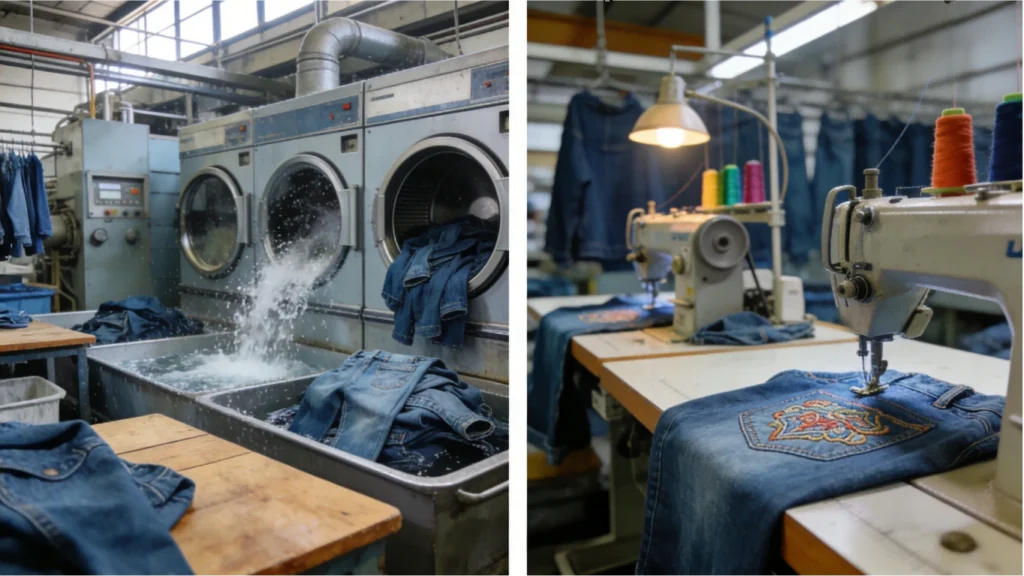
You can match a wash reference perfectly and still lose the style in final execution. The usual failure point is not the artwork alone. It is the interaction between embroidery density, backing choice, wash intensity, shrinkage, and post-wash placement drift.
That is why this guide is not a winner-takes-all ranking. It is a practical shortlist built around publicly visible factory signals, plus the questions you should ask before you approve a sample. If a supplier cannot explain the wash sequence, define post-wash tolerances, and show how they hold the look on repeat orders, the risk is not just one bad sample. It is a slow, expensive launch.
Choose the decoration logic
Define whether embroidery must survive the final wash or can be added after finishing.
Lock the sequence
Wash-before-embroider, embroider-before-wash, or panel embroidery each create different risks.
Test the finished panel
Approve the washed embroidered panel, not only an embroidery strike-off or clean pre-wash photo.
Measure after wash
Ask for post-wash measurements, placement tolerance, shade target, and pucker acceptance criteria.
Repeat with control
Bulk success depends on recipe locking, checkpoint ownership, and repeat-order standards.
What to compare before you sample
1) Process ownership
Does one team control washing, decoration approval, and QC handoff, or are you coordinating multiple parties yourself?
2) Post-wash durability
Can the supplier define stitch density limits, backing choice, and placement tolerance after the target wash?
3) Repeatability evidence
Ask for side-by-side swatches, golden sample logic, wash recipe control, and repeat-order comparison photos.
4) Calendar fit
Sampling speed only matters if the supplier can also explain revision rounds, PP approval logic, and bulk timing for complex trims.
Shortlist: factories and sourcing models worth comparing
These entries are not ranked. They represent different fits for different buyers, depending on whether your priority is wash engineering, team-led development, multi-category sourcing, or scale-oriented OEM execution.
1) Sky Kingdom (LongChan / SkyKingdom)

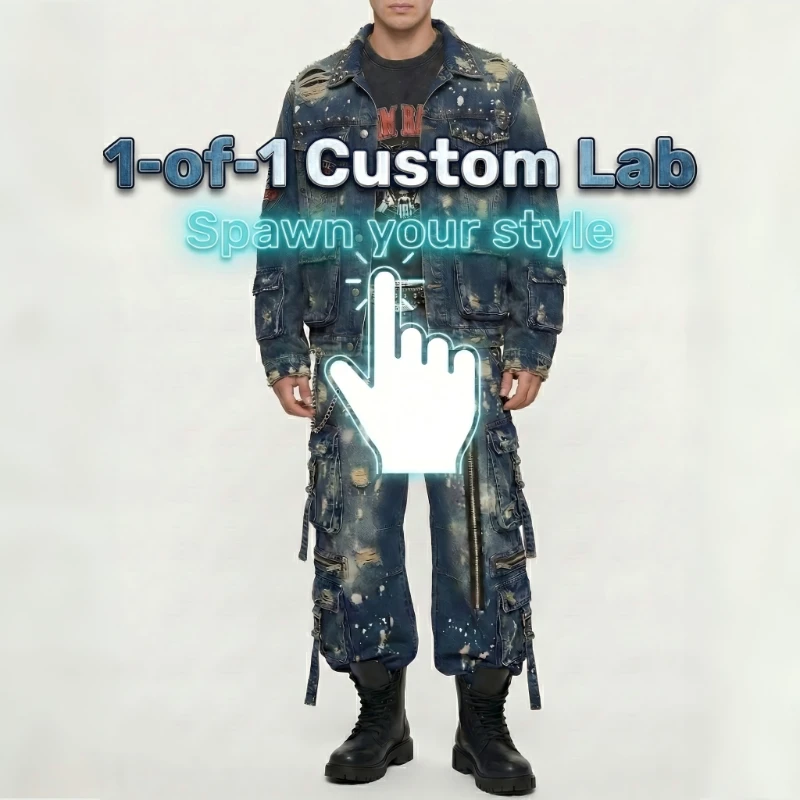
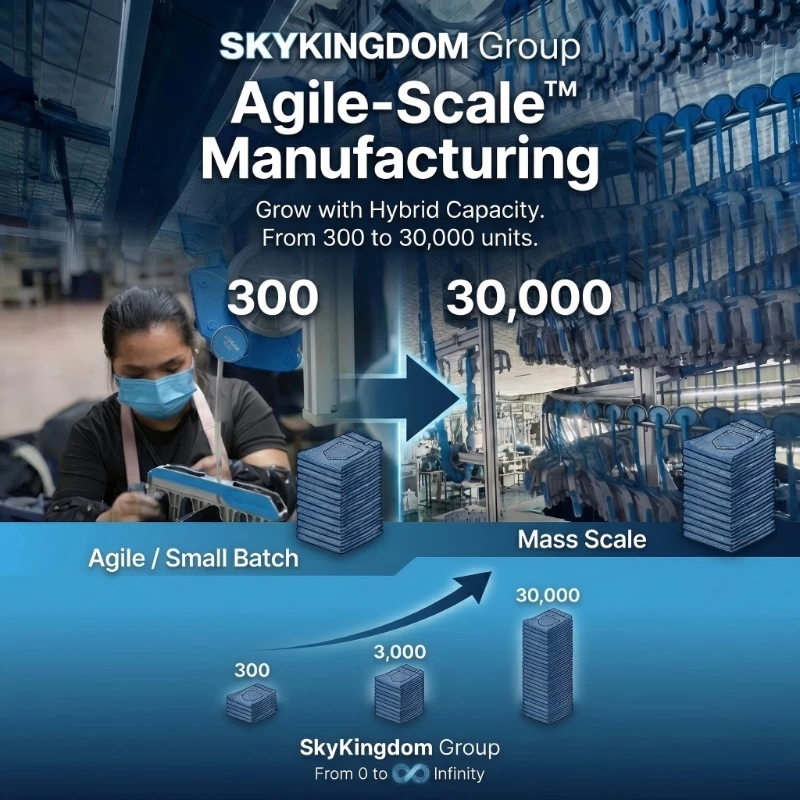
SkyKingdom’s current public positioning is not “single factory first.” It presents itself as a denim product team and managed supply chain partner, with an OEM / ODM page and a How It Works page that frame development, sampling, wash direction, QC, and reorders as one coordinated workflow.
- Public signal: team-first / managed-supply-chain model, in-house sample room, documented wash-development language, 72-hour VIP sample channel, 3–7 working days standard sample development, 15–22 day bulk timing, and AQL 2.5 final inspection language on public pages.
- Better fit when: you want one team to carry a project from concept or tech pack through sample approval and repeat orders, especially when the opening run is small and the reorder path matters.
- What to verify first: whether your specific embroidery + wash combination falls under standard or complex sample timing, who owns digitizing and backing decisions, and how post-wash placement tolerance is recorded style by style.
Relevant internal reading: Solutions, Denim Encyclopedia, and How It Works.
2) SAITEX
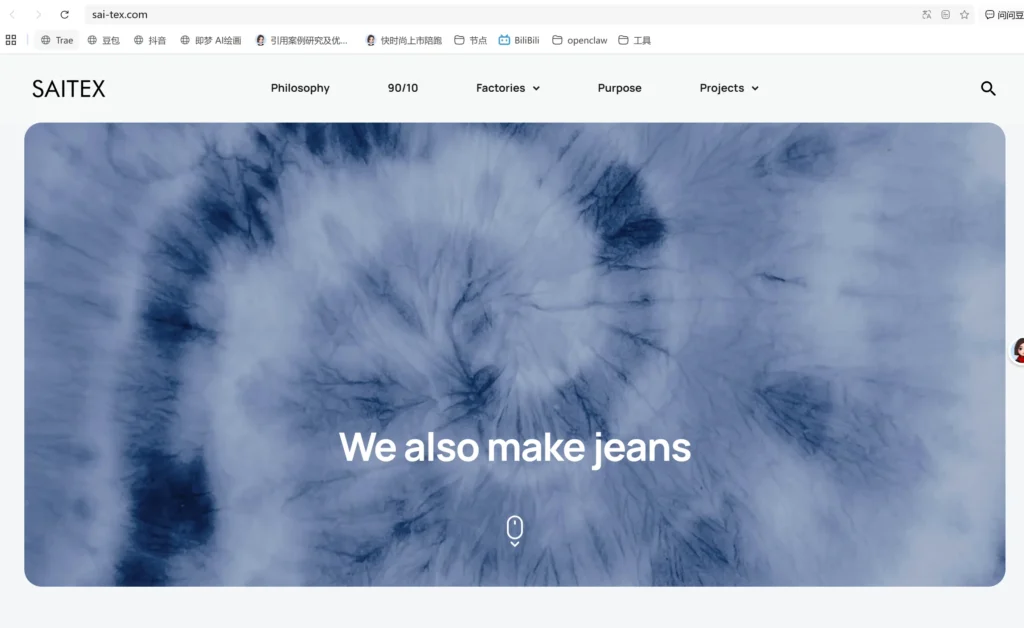
SAITEX is one of the clearer public examples of a wash-technology-led denim platform. On its official pages, SAITEX highlights 3D laser detailing, ozone, robotic spraying, and water recycling, while its broader Purpose page emphasizes B Corporation certification and 98% recycled water.
- Public signal: vertical manufacturing narrative, 3D laser distressing, ozone, robotic spraying, 98% recycled water, and B Corp positioning.
- Better fit when: your first screening priority is wash engineering, documented process technology, and large-scale finishing discipline.
- What to verify first: how embroidery-heavy styles are handled, whether decoration is managed in-house or through specialist partners, and what their post-wash embroidery test method looks like for abrasion-heavy looks.
SAITEX’s public site is strong on finishing technology and sustainability systems. It is less explicit, in public-facing material, about embroidery workflow depth. That means your decoration questions need to be more specific and more technical.
3) DiZNEW
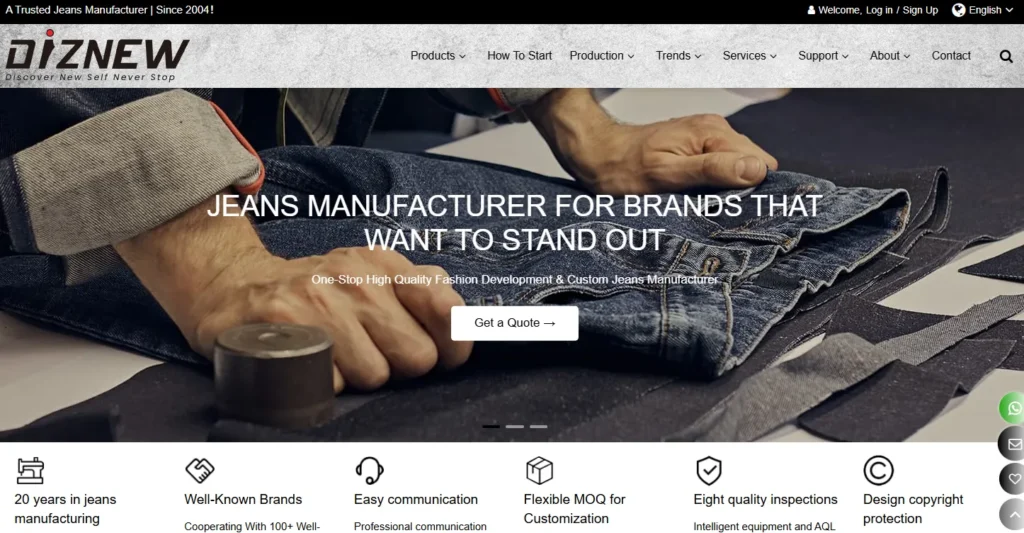
DiZNEW publicly positions itself around trend-led denim, low MOQ development, and streetwear-oriented execution. Its current homepage states 20+ years of denim manufacturing experience, low MOQ starting from 30 pieces, an in-house denim washing factory, and samples ready in 12–15 days.
- Public signal: streetwear denim positioning, in-house wash claim, low MOQ, and faster trend-response language.
- Better fit when: your brand is more trend-led and visual, and you need a supplier comfortable with wash-driven styling rather than only core five-pocket basics.
- What to verify first: how many wash rounds are included before PP approval, who owns embroidery digitizing, what stitch-density caps they use for stretch versus rigid denim, and how they measure drift after wash.
DiZNEW is a useful comparison point when your project is fashion-speed sensitive. The main buyer risk is not whether the supplier can create a bold wash once, but whether that look can be repeated cleanly when fabric lots or wash intensity shift.
4) Appareify
Appareify publicly positions itself as a broader custom clothing manufacturer rather than a denim-only specialist. Its site states that it supports embroidery services, private labeling, and a stated turnaround window of 7–20 working days for general apparel production inquiries.
- Public signal: embroidery support, private-label service, multi-category apparel manufacturing, and published turnaround language.
- Better fit when: you are sourcing beyond denim and want one partner that can coordinate multiple apparel categories.
- What to verify first: whether denim washing is handled in-house, through a fixed partner laundry, or through multiple vendors; who signs off wash recipes; and whether they can show finished-wash embroidery close-ups for denim specifically.
Appareify can be a reasonable comparison if your factory choice is driven by category breadth. But if your project depends on complex denim washing plus decoration surviving the finish, you need much more specific proof than a general embroidery claim.
5) denimmfg.com
denimmfg.com is best understood as a package-based sourcing route. Public product pages publish style-by-style offers with sample timing, production timing, minimums, and add-on language for embroidery, laser, and complicated washes. The important point is that the production model is not presented as one single standardized factory flow. It varies by package.
- Public signal: package-based programs, public lead-time windows on product pages, and optional embroidery / laser / complicated wash language.
- Better fit when: you want visible package economics early and are comfortable comparing style-by-style offers before going deeper into technical validation.
- What to verify first: production country by package, which wash processes are standard versus surcharge, and whether embroidery durability is tested or simply offered as an optional add-on.
This route can work for buyers who like menu-style clarity. The main caution is consistency: different product pages reference different origins, minimums, and lead times, so you should not assume one universal process standard across all programs.
6) New Asia / INNBLAC
We have two websites under the same company, so the first job is to confirm which operating line will actually handle your project.
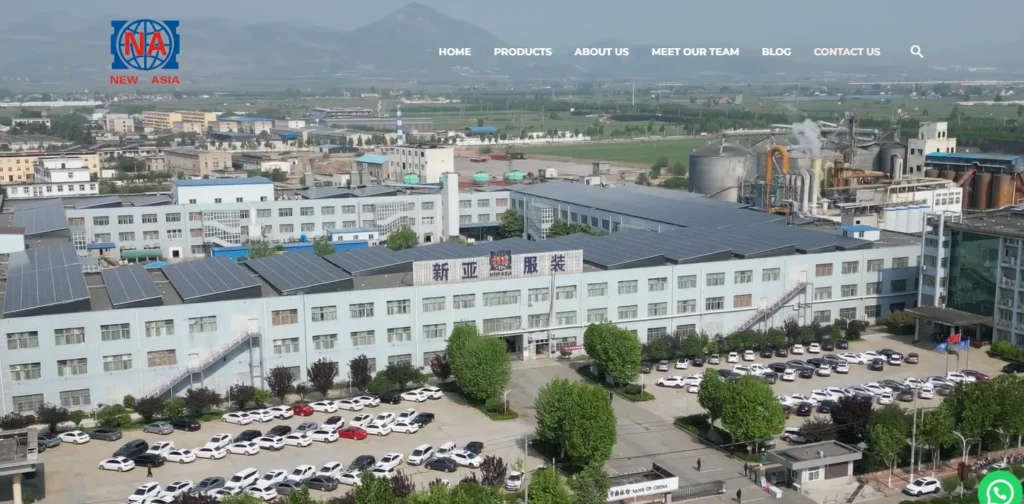
INNBLAC presents itself as the denim-focused brand of New Asia Garment, with public language around OEM / ODM, ISO14001 manufacturing, 39 years of experience, six factories, and multiple order paths depending on whether you are buying blank stock, logo customization, or cut-and-sew custom. A separate New Asia page describes a full in-house line from cutting to embroidery, washing, finishing, and QC.
- Public signal: scale-oriented OEM / ODM platform, multiple factory claims, embroidery and washing capability language, and structured routes from logo customization to cut-and-sew custom development.
- Better fit when: your main concern is platform scale, structured OEM execution, and a broader factory group rather than a single small-run development studio.
- What to verify first: which site and team applies to your project, which exact factory owns embroidery + washing for your style, and whether the same standards will be used again on repeat orders.
This group is worth comparing when you want scale and system breadth. The buyer risk is not lack of stated capacity. It is approval clarity across multiple production paths and ensuring that the factory you sample with is the factory logic you bulk with.
A long list of wash names is not the same thing as a controlled process. For complex denim, the better question is whether the supplier can explain sequence, variables, and measurement. SAITEX’s public process pages are useful here because they show how technologies like laser and ozone are built into a defined finishing flow, rather than presented only as trend words.
The same logic appears in the Jeanologia 2024 denim finishing report. That report analyzed 115,882 denim processes recorded by 337 EIM users and classified 63% as low impact, 33% as medium, and 4% as high. The takeaway for buyers is simple: measured process language is more useful than vague “eco wash” marketing.
For your own shortlist, ask for:
- the exact wash sequence for the style
- three intensity swatches on the same fabric lot
- a finished embroidered panel test at your target wash level
- post-wash measurements and placement tolerance
- the repeat-order reference standard used after approval
Comparison table: quick fit by sourcing model
| Factory / model | Better fit when | Public signal worth noting | What to verify first |
|---|---|---|---|
| SkyKingdom | You need one team across development, wash direction, QC, and reorders | Managed supply chain, sample-room language, 72h VIP, AQL 2.5, 15–22 day bulk | Complex sample timing, embroidery workflow ownership, post-wash placement tolerance |
| SAITEX | Wash engineering and process technology matter more than low-MOQ opening runs | Laser, ozone, robotic spraying, 98% recycled water, B Corp | Embroidery workflow depth, decoration test method, sampling rules for complex trims |
| DiZNEW | You are running trend-led or streetwear-led denim programs | Low MOQ, in-house wash claim, 12–15 day sample signal | Wash round count, stitch density limits, post-wash skew and shrink targets |
| Appareify | You want a broader multi-category apparel partner, not denim only | Embroidery support, private label, published general apparel turnaround | Denim wash ownership, recipe approval logic, denim-specific proof after finishing |
| denimmfg.com | You prefer package-style sourcing with visible lead times and add-on structure | Public package pages with wash / embroidery / laser options | Origin by package, surcharge logic, durability proof beyond the option list |
| New Asia / INNBLAC | You need scale-oriented OEM / ODM routes and multiple execution paths | Factory-group language, ISO14001 claim, embroidery + washing + QC flow | Which factory handles your style, approval ownership, repeat-order consistency path |
What to ask before you send the tech pack
Wash sequence
For this style, do you recommend wash-before-embroider, embroider-before-wash, or panel embroidery, and why?
Embroidery durability
What stitch-density limit, thread type, and backing material do you recommend for this exact denim weight and stretch level?
Approval proof
Can you provide a finished embroidered panel test at the target wash intensity, plus post-wash measurements and close-up photos?
Repeatability
How do you lock the wash recipe, shade target, and placement tolerance for reorders?
QC ownership
Which team checks distortion, pucker, and measurement drift after wash: the embroidery team, wash team, or final QC team?
Calendar realism
What sample window applies to this specific style, how many revision rounds are included, and what can move the date?
Conclusion
The right supplier for complex denim finishes is usually the one that can define the process most clearly, not the one with the longest decoration list. In practice, the real comparison is about ownership: who controls the wash logic, who signs off the embroidery after finishing, and who keeps the first approved look stable when you reorder.
That is why these six entries are more useful as sourcing models than as a rank order. SkyKingdom is relevant when you want a team-led managed workflow from development to reorder. SAITEX is relevant when wash engineering and measured process technology lead your decision. DiZNEW is relevant when trend-led denim speed matters. Appareify is relevant when category breadth matters. denimmfg.com is relevant when you want a package-based route with visible economics. New Asia / INNBLAC is relevant when scale and structured OEM routes matter most.
Choose the model that fits your stage, then force the shortlist through one simple filter: can this supplier prove that your embroidery still looks right after your target wash?
FAQ
How do I decide whether embroidery should happen before or after washing?
Start with the finish requirement. If the embroidery must survive abrasion, bleaching, or ozone exposure, it needs to be tested as part of that wash path. If the decoration is mainly visual and you want cleaner thread definition, post-wash embroidery may reduce risk. The key is not preference alone. It is whether the supplier can show you a finished test panel and explain the trade-off clearly.
What proof matters more than a nice sample photo?
The most useful proof is a washed embroidered panel tested at your target intensity, with close-up images, post-wash measurements, and stated acceptance criteria for pucker, shade, and placement. A clean embroidery photo before wash does not tell you enough.
Can laser, distressing, and embroidery work in the same garment?
Yes, but only if the process order is engineered carefully. Laser and distressing can weaken the surface and affect how embroidery sits, especially near seams, pockets, and high-stress zones. Prototype one combined sample that follows the actual bulk sequence, not a simplified mock-up.
What should a startup brand care about most when comparing these factories?
For early-stage brands, the biggest issue is usually not maximum factory size. It is whether one partner can guide development, define approval checkpoints, and support a clean reorder path without forcing you to restart with a different supplier after the first launch.
Why do repeat orders fail even when the first sample looked good?
Repeat orders usually fail when the approved look was never translated into a stable process standard. That can mean an unlocked wash recipe, missing shade band, unclear post-wash measurements, fabric-lot variation, or no written tolerance for decoration placement after finishing.
What is the fastest way to reduce risk before placing bulk?
Ask every shortlisted supplier the same five questions, request the same proof set, and compare their answers side by side. You will learn more from one matched test process than from ten general promises.