
Jeans are like that reliable friend who “just works”—until you buy a pair that bags out at the knees, feels stiff all day, or loses shape after two washes. If you’ve ever wondered what materials are jeans made of, the short truth is: most jeans start with cotton denim, then brands tweak the recipe with small amounts of stretch fibers, regenerated cellulosics, or performance synthetics to change comfort, drape, and durability. I’ve handled enough denim swatches in development rooms to tell you this: the fiber mix matters as much as the fit. Let’s break down the materials inside modern jeans and what each one does for you (or your product line).

The foundation: Denim (a fabric), usually made from cotton (a fiber)
People often say “jeans are made of denim,” which is true—but it helps to be precise. Denim is the fabric construction, typically a twill weave where the warp yarns dominate the surface, creating that classic diagonal rib. Traditionally, those warp yarns are dyed (often indigo), while the weft stays lighter, giving denim its iconic fading and whiskering over time.
In most cases, what materials are jeans made of comes down to cotton fibers spun into yarns and woven into denim. Cotton brings breathability, abrasion resistance, and that “break-in” feel many people love. For background on denim’s origin and structure, see Denim (Wikipedia) and Sewport’s overview of denim fabric properties and how it’s made.
100% cotton jeans: classic feel, strong character, slower comfort
100% cotton denim is the traditional choice for heritage-style jeans and many workwear-inspired fits. It tends to feel sturdier and can last a long time when the fabric weight and finishing are right. The tradeoff is comfort: pure cotton denim usually feels stiffer at first and may require several wears to soften.
From factory testing and fit sessions, I’ve found 100% cotton jeans typically:
- Hold authentic fades better (creases “set” and evolve)
- Feel cooler than heavy synthetic blends in warm climates
- Shrink more (especially in raw or minimally washed denim) if not pre-shrunk
If you’re building a product line, fabric weight is a major lever for perceived quality—this guide to weight of jeans (oz, GSM) and how to choose denim helps connect material choice to real-world wear.
Stretch denim: cotton + elastane (and sometimes more)
A huge share of jeans today are stretch denim, meaning cotton denim blended with elastane (also called spandex or Lycra—Lycra is a brand name). This is the most common upgrade when brands want comfort and body-hugging fits without sacrificing the “denim look.”
Typical stretch ranges:
- 1%–2% elastane: light stretch, still fairly “jean-like”
- 2%–4% elastane: more comfort and shape-hugging (common in skinny/slim fits)
- Above that: often moves toward jegging behavior, depending on knit-like constructions and finishing
In production, the big challenge is elasticity loss (bagging out) if the fiber, fabric structure, or wash recipe isn’t balanced. SkyKingdom has written a detailed breakdown on this issue in mastering stretch denim and preventing elasticity loss, which aligns with what many mills and QC teams see: stretch comfort is great, but it needs engineering.
| Composition | Typical Stretch | Feel/Hand | Best For | Common Tradeoffs |
|---|---|---|---|---|
| 100% cotton denim | None to minimal | Crisp, structured, breaks in over time | Classic rigid jeans, durability, vintage looks | Longer break-in, less comfort for sitting/bending, can bag at knees |
| 98/2 cotton–elastane | Low to moderate (comfort stretch) | Mostly cotton with slight spring, smoother | Everyday slim/straight fits, comfort with shape retention | Can feel less “authentic,” elastane may fatigue over time, heat sensitivity |
| Cotton–poly–elastane (e.g., 70–75/23–28/1–3) | Moderate to high | Smooth, slightly slick, very flexible | Skinny fits, high-mobility wear, frequent washing | Less breathable, potential pilling/shininess, microplastic shedding |
| Cotton–Tencel (Lyocell) blend (e.g., 60–80/20–40) | Low (unless elastane added) | Soft, drapey, cool-to-touch | Softer denim, warm climates, relaxed fits | Less crisp structure, can show wear/creases, may stretch out if cut loose |
| Recycled cotton blend (e.g., 50–80% recycled + virgin cotton/poly) | Low to moderate (depends on add-ins) | Slightly drier/rougher, matte, variable | Sustainability-focused basics, casual everyday jeans | More variability batch-to-batch, potentially less strength, may need synthetics for durability |
Cotton + polyester blends: durability, shape retention, cost control
Another common answer to what materials are jeans made of is cotton blended with polyester (sometimes plus elastane). Polyester can improve:
- Shape retention (less knee bagging in some constructions)
- Abrasion resistance in certain wear zones
- Dry time and wrinkle resistance
It can also change the feel—sometimes smoother, sometimes less “natural”—and it may reduce the dramatic fading that denim purists want. In fast-fashion and DTC, cotton/poly blends are often used to hit a specific price point while keeping performance consistent across bulk production.
For brands deciding between fabric options and vendors, this overview on top denim jeans manufacturers for trendy fashion brands can help you understand how factories translate a target hand-feel and stretch spec into repeatable bulk results.
Regenerated fibers: lyocell (Tencel™), modal, viscose—softer, drapier denim
When jeans feel unusually soft or flowy, there’s often a regenerated cellulosic fiber involved, such as lyocell (often sold as Tencel™), modal, or viscose/rayon. These fibers are made from cellulose (wood pulp) and engineered for smoothness and drape.
Why brands add them:
- Softer hand-feel right off the rack
- Better drape for wide-leg, relaxed, or women’s fashion silhouettes
- Reduced “crunch” compared to rigid cotton denim
Tradeoffs include potential pilling, different shrink behavior, and the need for careful wash development to keep the fabric stable. For a consumer-friendly explanation of denim types and terminology, Levi’s provides a useful starting point in its Denim Dictionary.
Performance and specialty fibers: nylon, coolmax-type poly, and more
Some “technical jeans” include nylon or specialized polyester yarns to improve durability, cooling, or moisture management. These are common in:
- Commuter or travel jeans
- Workwear-inspired stretch denim
- Kids’ jeans where abrasion resistance is critical
These blends can be excellent, but they’re more sensitive to finishing: the wrong wash recipe can dull color, create uneven shrink, or shift hand-feel.

What about “raw denim,” “selvedge,” and “washed jeans”—are those materials?
These terms describe fabric processing and construction, not the base fiber content. Raw denim is denim that hasn’t been heavily washed or distressed; selvedge refers to the self-finished edge from shuttle looms; washed jeans have undergone processes (enzyme, stone, bleach alternatives, etc.) that change feel and appearance.
Two jeans can both be “100% cotton” but feel completely different depending on:
- Denim weight (oz/GSM)
- Yarn quality and twist
- Dye method and shade depth
- Wash and finishing recipe
If you’re developing denim products, getting the wash right is often the difference between “okay” and “top-seller.” (This is where experienced OEM/ODM partners—like SkyKingdom Group with eco-friendlier wash processes and AQL 2.5 QC—tend to win on consistency.)
All you need to know about Denim fabrics!
How to read a jeans label (and what it really tells you)
The care label is your quickest shortcut to answering what materials are jeans made of. Look for percentages like “98% cotton, 2% elastane.” That’s the fiber composition, but it doesn’t reveal everything about quality.
Use these quick rules:
- Higher cotton doesn’t always mean better—a well-made cotton/poly/elastane jean can outperform cheap 100% cotton.
- Elastane above ~3–4% often signals a very stretchy, body-hugging feel (and may bag out if poorly engineered).
- Lyocell/modal usually means “soft and drapey,” great for comfort-forward fits.
Practical picks: which materials match which jeans goals?
Choosing the “best” depends on what you value—authentic fades, comfort, or stability. Here’s a fast mapping I use in development conversations:
- Vintage look + long-term fades: 100% cotton denim
- Everyday comfort + clean silhouette: ~98/2 cotton-elastane
- High stretch + tight fits: cotton + elastane (often with poly for recovery)
- Soft, premium drape: cotton + lyocell/modal blends
- Rugged, performance leaning: cotton + nylon/poly blends (sometimes with elastane)

Conclusion: jeans “materials” are a recipe—and the recipe decides the experience
If jeans could talk, they’d tell you their comfort and longevity come from the blend: cotton denim is the base, while elastane, polyester, lyocell, and specialty fibers fine-tune stretch, softness, and shape retention. The next time you shop—or spec a new style—start by checking the composition label, then think about how that recipe matches the life you’ll actually live in them.
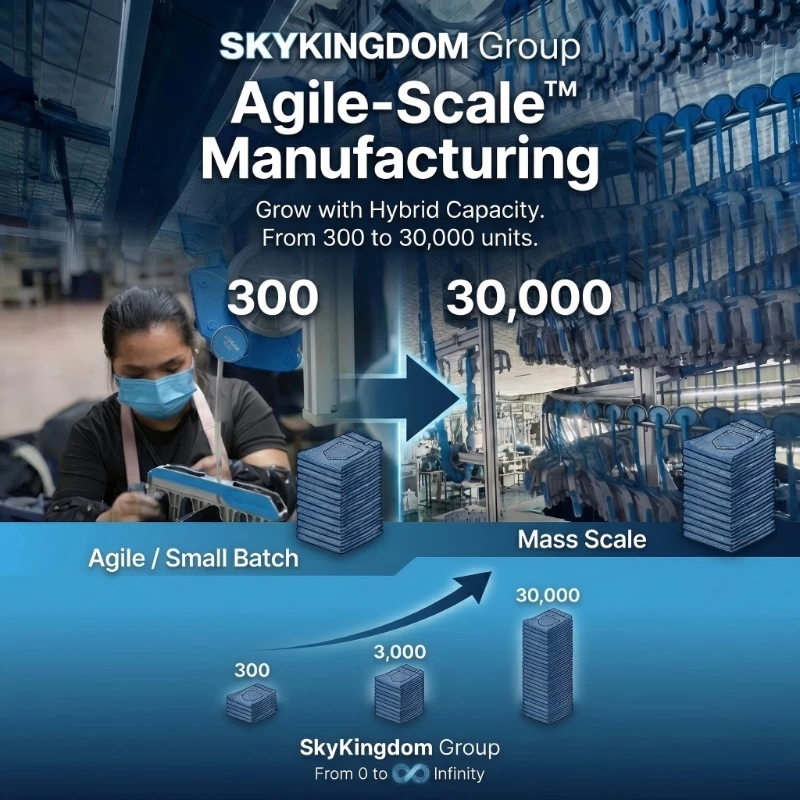
If you’re building a denim line and want help selecting the right fabric blend for your target fit, price, and timeline, SkyKingdom Group’s speed-to-market approach (7-day samples, 15–22-day bulk, low MOQ options) is designed for exactly that. Drop your questions in the comments or share what composition you’re considering—I’ll point you toward the most practical material choice.
📌 the ultimate guide to quick denim clothing sample production for fashion brands
FAQ: What people also ask about what materials jeans are made of
1) Are all jeans made of 100% cotton?
No. Many modern jeans use cotton blended with elastane for stretch, and sometimes polyester or lyocell for recovery or softness.
2) What is the most common material in jeans?
Cotton is the most common base fiber, typically woven into denim. Stretch jeans often add 1%–4% elastane.
3) What’s the difference between denim and jeans?
Denim is the fabric; jeans are the garment made from denim (or denim-like fabrics).
4) Is elastane the same as spandex?
Yes—elastane and spandex refer to the same type of stretch fiber (terminology varies by region). Lycra is a well-known brand name.
5) Do cotton-polyester jeans last longer?
They can, especially in abrasion resistance and shape retention, but durability depends on fabric quality, construction, and finishing—not just fiber content.
6) Are lyocell (Tencel) jeans better?
They’re often softer and drapier, which many people love. They may trade some rugged “workwear” feel for comfort and fluid movement.
7) Why do some jeans lose shape at the knees?
Common causes include high stretch with poor recovery, incorrect fabric balance, or wash/finish choices that weaken elastic performance.