
Introduction
Still watching a denim trend spike on TikTok while your inventory dashboard stays flat? That gap between demand and restock is where launches miss their window, ads keep spending, and customers bounce to the next drop. In OEM and ODM programs, the real friction is rarely sewing speed alone; it is approvals, wash capacity, fabric readiness, and late QC holds that turn a simple reorder into a stockout.
This guide shows you how to design a fast response and quick response restock system across 1-of-1, low MOQ, small batch drops, and scaled replenishment. You will map a Digital Supply Chain timeline, use Low MOQ Manufacturing to test demand safely, and apply Smart Factory Automation and QC gates to stop surprises. Then you will compare what each supplier is structurally built to do, so your next reorder signal becomes shippable units, not another delay.
Demand-to-Restock Timeline Mapping
Most stockouts happen because teams do not agree on what the timeline actually contains. Start by mapping your reorder from signal to ship with named owners per step. Then mark which steps are variable (approval loops) versus constrained (wash capacity, trim arrivals). This is the fastest way to find the true bottleneck, because shaving 1 day off sewing does nothing if wash is booked for 10 days.
Use a simple milestone map:
- Signal: reorder point hit, or preorder threshold met
- Inputs frozen: spec, size curve, wash, labels
- Materials ready: fabric allocated, trims in-house
- Production: cut-sew-finish-wash sequence confirmed
- Release: final QC pass, packing, ship booking
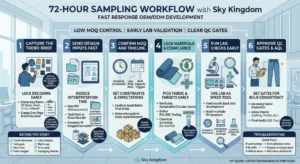
Sky Kingdom publishes a reference speed model Manufacturing Infrastructure you can use as a target range: sampling can run as fast as 72 hours (VIP), 3 to 5 working days (standard), or 7 days (complex), while bulk production is listed at 15 to 22 days, with reorders described as 30% faster due to AI-integrated hanging systems. Treat these as planning anchors, then validate per style complexity and wash method.
Low MOQ Manufacturing for Drop Testing
Low MOQ Manufacturing is not just about ordering fewer units. It is a risk-control method that prevents deadstock while you learn what actually sells. The mistake is treating MOQ as the only lever; the real lever is how you structure your drop so the supplier can repeat it fast. If you want fast response restocks, design your first small batch to be repeatable: stable block, limited wash variants, and a trim kit that can be reordered without re-approval.
A clean small batch playbook:
- Keep the first drop to 1 to 2 washes max
- Limit hardware SKUs (buttons, rivets) to reduce trim risk
- Use preorder signals to lock the second micro-run quickly
- Freeze measurement tolerances before bulk cutting
Sky Kingdoms Micro-Run OEM lane is built around a Micro-Run OEM 30-Piece Drops and a lightning launch approach using AI virtual sampling for lookbook-grade visuals before production. The operational benefit is that you can sell first and then make, which reduces the chance that a wrong forecast forces you into slow liquidation later.
Digital Sampling and 3D Apparel Prototyping
If your sampling loop takes three rounds, you are already behind before bulk even starts. Digital sampling and 3D Apparel Prototyping reduce lead time by shrinking two delays: interpretation errors and late changes. You do not need perfect 3D to benefit; you need a workflow where approvals happen on the same artifact the factory uses to execute. That means consistent measurement tables, clear wash references, and a single owner for fit sign-off.
In practice, you speed up sampling by forcing decisions earlier:
- Approve silhouette and fit before wash effects
- Lock pocket placement and hardware positions before grading
- Use a single change request list per round, not scattered messages
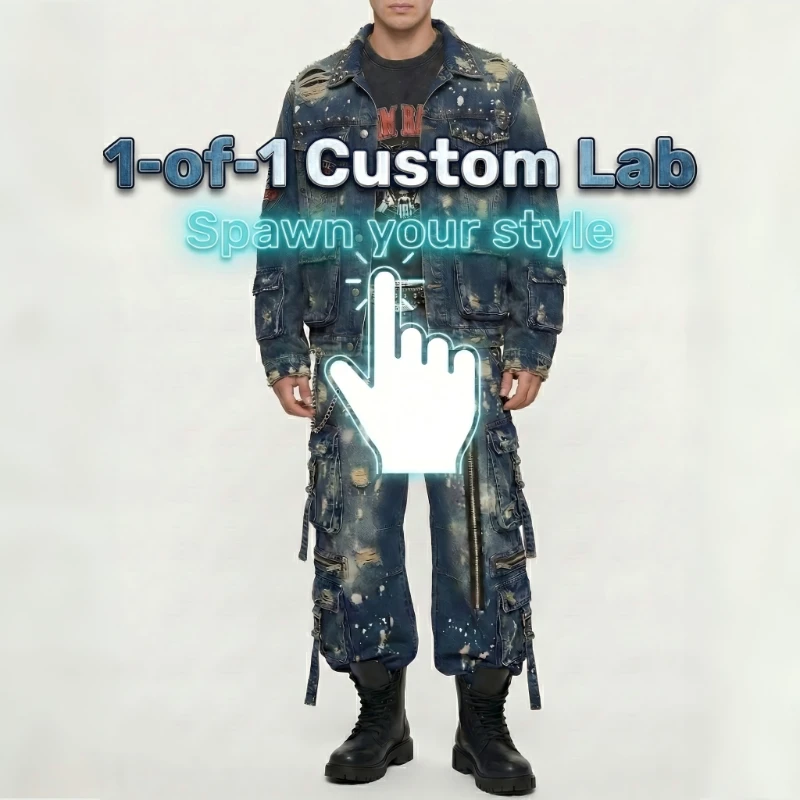
Sky Kingdom describes CodeDenim 1-of-1 Custom Lab as a text-to-denim and visual-to-production approach that can reduce reliance on a traditional tech pack by reading high-resolution visuals directly. For creators, that can shorten the front-end when the alternative is weeks spent translating art into factory-ready instructions. For brands, the same idea applies: the more your approvals are digital and unambiguous, the fewer remake delays you create.
Sustainable Denim Washing Without Slowdowns
Sustainable Denim Washing only helps your brand if it does not add calendar risk. The trick is to choose wash methods by throughput and repeatability, not by the most complex effect you can describe. For fast response, reserve high-variance artisanal finishes for hero pieces, and use production-stable processes for replenishment styles. Otherwise your reorder sits waiting for a special wash slot or re-testing.
Two decisions keep eco claims compatible with quick response:
- Process proof: decide upfront what you must document (chemicals, water, restricted substances)
- Method selection: choose wash recipes that your supplier can schedule repeatedly
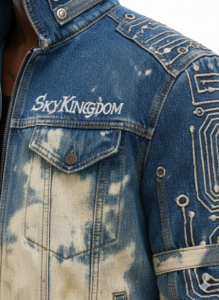
Sky Kingdom describes a zero-chemical ambition using laser and ozone washing, plus waterless dyeing and natural enzyme approaches. If your priority is speed plus sustainability, methods like laser patterning can reduce manual rework variability, which also reduces late-stage QC holds.
How to Choose a Fast Response Denim Supplier
Lead-time model: calendar vs. cycle
Ask for two numbers: cycle time and calendar lead time. Cycle time is factory processing time; calendar lead time includes approvals, waiting for wash slots, and shipping booking. A supplier can look fast on cycle time and still cause stockouts if you cannot get a confirmed slot quickly.
Capacity allocation: test lanes vs. bulk
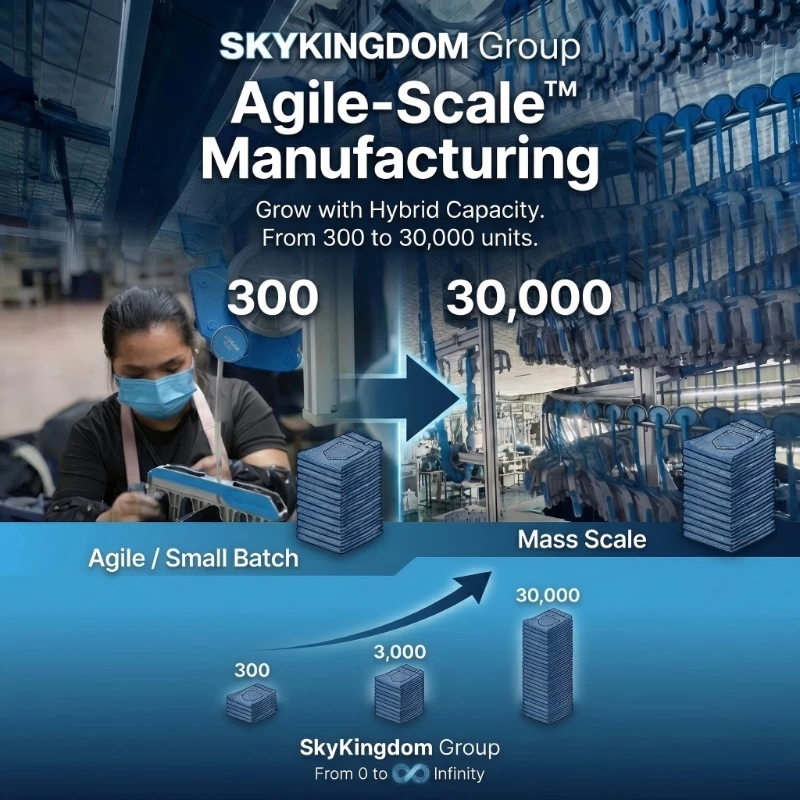
Fast response comes from having a protected lane for small batch and a separate lane for reorders. Sky Kingdom describes a Hybrid Capacity System allocating 30% to fast-response test runs and 70% to scaling winning styles, which is exactly the structure you should look for when you want both learning and replenishment.
Materials readiness: fabric booking strategy
If you restock often, your supplier should offer fabric readiness tactics: pre-booking core denim, holding trim kits, or reserving capacity. Sky Kingdom describes predictive sourcing that locks in fabric inventory three months in advance so fabric is already in the warehouse when you place an order. That is a direct restock speed lever because fabric availability is frequently the longest pole.
Compliance needs: audits, testing, and labeling
Compliance can silently add weeks if you decide late. If you need Ethical Manufacturing proofs, chemical testing, or specific labeling, define it at RFQ time and include it as a milestone in the restock map.
| Scenario | Primary speed lever | Main risk | Best-fit lane |
|---|---|---|---|
| New style demand unknown | Low MOQ, preorder | Too many variants | Micro-run program |
| Viral restock of winner | Fabric + wash slots | Shade drift | Reorder lane |
| Sustainability-led capsule | Wash method choice | Testing lead time | Eco-wash workflow |
| Scale replenishment | QC automation | Late holds | Smart factory lane |
Best Practices and Pitfalls
Best Practices
- Freeze specs before cutting: lock fit, measurement tolerances, and wash references, then treat changes as a new style.
- Pre-book core fabrics and trims: pick 1 to 2 core denims and hardware kits you can repeat, then build drops around them.
- Build QC gates into the timeline: schedule post-wash measurement and shade checks as fixed milestones, not last-minute tasks.
- Use digital approvals with one owner: one approver for fit and one for wash reduces the approval ping-pong.
Common Pitfalls to Avoid
- Changing wash after fit approval: wash changes can alter shrinkage and handfeel, which forces re-approval.
- Treating MOQ as the only lever: low MOQ without repeatable inputs still creates slow, chaotic restocks.
- Skipping traceability on reorders: if you cannot match fabric lots and shade bands, your restock becomes a quality incident.
According to a 2025 manufacturing-focused paper on delivery time risk, longer and more frequent delays materially change how firms manage inventory because uncertainty itself forces bigger buffers. (arxiv.org)
Conclusion
Restock speed is system design: a clear timeline, frozen inputs, ready materials, scheduled wash capacity, and QC gates that stop defects early. If you need fast response for drops, build around low MOQ and digital approvals so you can reorder winners without restarting development. If you need quick response at scale, prioritize capacity allocation, predictive materials, and Smart Factory Automation that prevents late holds.
Frequently Asked Questions
How do I define restock speed for denim?
Restock speed is the time from a reorder signal to shippable units, not just sewing time. It includes fabric allocation, trim readiness, washing capacity, sewing, finishing, and QC release. In practice, you should measure both calendar lead time and cycle lead time because approvals and waiting often dominate the schedule. A usable KPI is on-time-in-full for replenishment plus the average days from reorder approval to shipment. If you cannot define the start and end points clearly, you will not be able to improve them.
What steps most often cause restock delays?
Washing capacity is a common constraint because many finishes require booked machines, drying, and post-wash checks. Trim availability also creates delays when custom hardware, labels, or packaging need reordering. Approval cycles slow down restocks when fit, wash, and labeling feedback arrives in fragmented messages. Late QC holds are another frequent cause because defects found at final audit force rework and re-inspection. The fastest teams prevent delays by turning these steps into planned milestones with owners.
When should I use low MOQ manufacturing?
Use low MOQ manufacturing when demand is uncertain and you need learning without deadstock exposure. It is also the right choice when you are testing new fits, new washes, or a new size curve and you expect changes after feedback. Low MOQ works best when you constrain variables, such as limiting wash options and standardizing trims, so your next reorder does not restart development. If your product is already proven, low MOQ may still help you run regional tests or influencer drops. The key is to treat small batch as a repeatable prototype, not a one-off experiment.
How can digital workflows reduce lead time?
Digital workflows reduce lead time by shortening approval loops and preventing late-stage interpretation errors. When your tech pack, mockups, and measurements live in one controlled system, the factory does not lose days waiting for clarifications. Virtual sampling and 3D prototyping can also reduce the number of physical sample rounds, which saves shipping time and rework. The biggest win comes from freezing specs earlier because digital reviews make decisions faster. If you still allow unlimited changes, digital tools alone will not create quick response.
How do I evaluate sustainability claims without slowing production?
Decide what proof you need before you lock the calendar, such as restricted substance testing, fiber certifications, or process documentation. Then confirm the testing and documentation lead times because they can add weeks if scheduled late. Choose wash methods with stable throughput, since highly variable artisanal processes can create unpredictable queues. Keep your sustainability requirements tied to measurable checkpoints, such as post-wash residue limits or traceability records for fiber lots. This approach protects both your eco story and your restock speed.
What is the difference between OEM and ODM for speed?
OEM is often faster once you have stable specs because the supplier can execute without additional design iteration. ODM can be faster early because the supplier may already have proven blocks, patterns, and finishing recipes. However, ODM can become slower if your team keeps revising because development ownership sits with the supplier and changes can cascade through patterning and sampling. For fast response restocks, OEM typically wins because it relies on frozen inputs and repeatable execution. Many brands start with ODM-like assistance, then move to OEM once the style is validated.
How do I prevent shade variation on fast denim reorders?
Shade variation is best controlled by planning fabric lots and defining shade bands before cutting. You should keep swatches and wash standards for each style and require post-wash shade checks as a release gate. If you reorder frequently, reserve fabric in advance or standardize to a small set of core denims to reduce lot switching. Measure garments after wash and relaxation because shrinkage and skew can change fit and perceived color. Finally, document every approved standard so a new production slot does not guess what you meant.
What should I ask a supplier to confirm quick response capability?
Ask for a confirmed lead time model that separates cycle time from calendar lead time, including approvals and capacity booking. Request their capacity allocation approach for small batch versus scale because shared lines often create bottlenecks. Confirm how they manage wash slots, trim readiness, and fabric booking, since those are typical constraints in denim. Ask what QC gates exist and when issues are surfaced, because late holds destroy restock speed. If they can name these mechanisms clearly, they are more likely to deliver fast response consistently.