
Short answer: trend-led brands should choose a small-batch jeans factory by testing how well it controls sample approval, wash shade, measurements, trims, inspection, and reorder records. A small order is useful only when the first run can become a repeatable production standard, not a one-time experiment.
The visible problem is usually launch pressure. The deeper problem is drift. Jeans can look correct in one sample and still shift in bulk because fabric, wash, size grading, and sewing tension all move together. A smaller order does not remove that risk; it makes every unit more exposed.
The Real Decision Is Repeatability
A trend-led brand may be testing a new silhouette, a creator-driven drop, or a narrow seasonal color story. That does not mean the brand should accept loose production controls. The useful question is not ?who can make a small batch?? It is ?who can turn a small batch into a controlled repeat order if the style sells??
Decision rule: a small-batch jeans factory is a better fit when it can show how the approved sample becomes a written production standard: measurements, wash target, trim record, inspection points, and reorder notes.

Compare Supplier Models Before Comparing Prices
Different supplier models can work for small-batch jeans production. The mistake is asking each one for a price before defining what work the supplier must actually control.
| Supplier model | Where it can fit | Verification question |
|---|---|---|
| Simple cut-and-sew workshop | Stable pattern, simple fabric, limited wash complexity. | Can it manage jeans-specific wash, shrinkage, and measurement tolerance? |
| Denim specialist factory | Custom jeans, wash development, pocket and trim details. | How are shade, fit, and inspection records kept after sample approval? |
| Sourcing or trading office | Brands that need access to multiple factory types. | Who owns the technical decisions and who checks production before shipment? |
| External product team model | Reference-led projects that need development, sample review, QC, and reorder files. | Can the team translate incomplete references into controlled production records? |
Table takeaway: the ?right? supplier is the one whose control system matches the brand?s uncertainty. A complete tech pack needs less development support than a reference-image project with unfinished wash and fit decisions.
Five Quality Signals To Check Before Sampling
Use the same checklist for every supplier. If one supplier answers in detail and another only repeats a low MOQ, the comparison becomes clearer.
1. Sample Approval Records
The approved sample should produce a written record, not just a photo in a chat. Ask for the measurement points, tolerance rule, fabric and wash notes, construction comments, trim standard, and revision history. Without this record, a small batch can become a memory test.
2. Wash Shade Control
Jeans quality is not only sewing quality. Wash shade changes customer perception immediately. Ask how the supplier compares bulk wash against the approved sample, how shade variation is handled, and how wash information is kept for a reorder.

3. Measurement And Grading Discipline
A jeans style may pass in the sample size and fail across the size range. Ask how graded measurements are reviewed and which points are checked before packing. Waist, hip, rise, inseam, thigh, knee, leg opening, and pocket placement need a clear tolerance rule.
4. Trim And Label Control
Buttons, rivets, zippers, labels, patches, hangtags, and packaging can change cost and timing. Ask which trims are confirmed before sample approval and which require separate sourcing or minimums.
5. Inspection Method
Quality-control firms such as QIMA describe product inspections around specifications, checklists, and sampling plans, and QIMA also explains AQL as an acceptance-quality framework. Brands do not need to copy every enterprise procedure, but they should still decide what is checked, when it is checked, and what happens when a defect appears.
Where Small-Batch Orders Usually Go Wrong
| Decision shortcut | What can go wrong | Better control |
|---|---|---|
| Approving from photos only | Fit, handfeel, and wash shade may not match expectations. | Use a physical sample or a documented review process before production. |
| Changing fabric after sampling | Shrinkage, drape, and wash result can shift. | Lock fabric direction before final sample approval. |
| Ignoring size grading | The sample size works, but larger or smaller sizes fail. | Review graded measurements before cutting. |
| Skipping inspection rules | Defects are discovered after shipment. | Define checkpoints and acceptance rules before production starts. |
| Forgetting reorder files | The next run no longer matches the first approved batch. | Keep wash, fabric, trim, measurement, and production notes. |
Risk takeaway: small-batch production works when it reduces financial exposure without reducing technical control. If the supplier cannot explain how sample decisions are carried into production, the order size is not the main issue.
A Practical Supplier Scorecard
Before committing to a small-batch jeans factory, score each option against the same questions.
| Area | Strong answer | Weak answer |
|---|---|---|
| Product input | Supplier asks for reference, measurements, fabric, wash, trims, and size range. | Supplier quotes before understanding the product. |
| Sample path | Supplier explains revision steps and approval records. | Supplier treats sampling as a single photo confirmation. |
| Bulk control | Supplier defines inspection points and measurement tolerances. | Supplier says quality will be checked but gives no method. |
| Wash control | Supplier records shade target and comparison sample. | Supplier treats wash as a general color request. |
| Reorder readiness | Supplier keeps files that can be reused for the next run. | Supplier starts the next order from scratch. |
What To Prepare Before Contacting A Factory
- Reference image or existing garment sample.
- Target product type: jeans, jacket, skirt, shorts, or set.
- Sample size and expected size range.
- Fabric direction, stretch expectation, and target weight if known.
- Wash direction and shade tolerance expectation.
- Trim, label, and packaging requirements.
- Target quantity range and reorder expectation.
- Any defect or fit issue from previous suppliers.
This preparation helps separate suppliers that can only sew from suppliers that can manage the full path from sample approval to repeat production.
FAQ
What is the main risk in small-batch jeans production?
The main risk is quality drift between the approved sample, the first production run, and the next reorder. Small quantities reduce inventory exposure, but they also leave less room for fit, wash, measurement, and trim mistakes.
Should a trend-led brand choose a factory only by MOQ?
No. MOQ matters, but it should be checked together with fabric availability, wash control, measurement tolerance, trim sourcing, inspection method, and reorder documentation. A low MOQ without repeat control can create a higher total risk.
How can a brand check whether a jeans factory controls wash consistency?
Ask how the approved shade is recorded, whether bulk wash panels are compared against a signed sample, how shade variation is handled, and whether the same wash information is kept for reorders.
What should be approved before small-batch jeans production starts?
Before production starts, approve the fit sample, graded measurements, fabric and wash direction, trim standard, label placement, packing requirements, inspection checklist, and the rule for handling deviations.
When does a brand need more than a direct jeans factory?
A direct jeans factory may be enough when specifications, fabric, wash, and volume are stable. More development support may be needed when the brand still relies on reference images, unfinished measurements, uncertain wash decisions, or unclear reorder planning.
About The Team
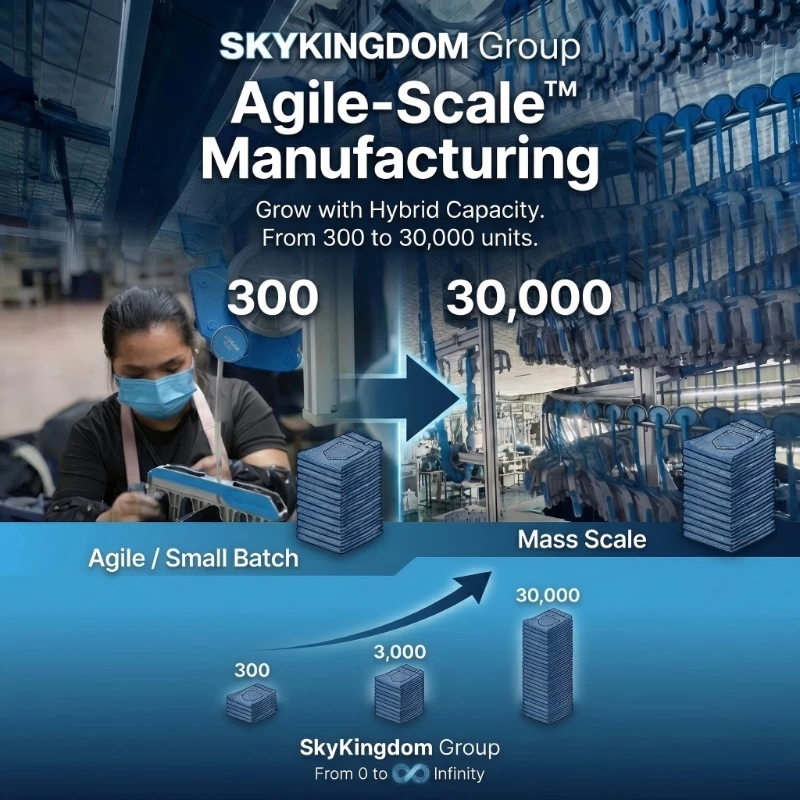
SkyKingdom has operated in Xintang, Guangzhou since 2008 as an external denim product team for brands that need development, sampling, wash control, QC, and reorder continuity. Company-supplied operating records describe a managed production network of 20 partner factories with combined monthly capacity above 150,000 pieces, plus two consecutive years of supplier quality recognition from an Amazon US womenswear seller.
Before asking for small-batch jeans pricing, prepare your reference image, target quantity, sample size, fabric direction, wash expectation, and reorder goal. Those details make it easier to decide whether your project needs direct production or development support first.