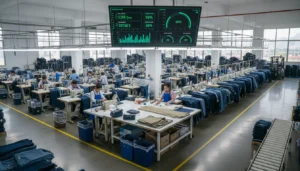


Short answer: when a jeans reorder starts falling behind, brands should vet suppliers by their reorder-readiness system: approved sample records, fabric availability, wash repeatability, trim continuity, inspection checkpoints, and communication discipline. The goal is not to find a louder promise. It is to find a supplier that can repeat what already sold.
A stockout feels like a timing problem, but in jeans production it is usually a documentation problem first. If the first order was not recorded clearly, the second order can turn into a new development project at the worst possible moment.
The Reorder Problem Is Usually Built Earlier
When a bestseller runs out, the pressure lands on production. But the cause often sits in the first sample approval: unclear wash target, loose measurement records, undocumented trims, missing defect notes, or no agreement about what should happen when fabric or hardware changes.
Decision rule: a jeans supplier is reorder-ready when it can show what will be repeated, what must be reconfirmed, and what will be inspected before the next shipment leaves production.

Five Reorder Signals To Check
This is not a supplier ranking. Use the five signals below to pressure-test any current or new supplier.
| Signal | What it shows | Question to ask |
|---|---|---|
| Approved sample file | The supplier knows exactly which fit, construction, and finish must be repeated. | Can you show the approved sample record and comments from the last production run? |
| Fabric and trim continuity | The supplier can identify what may change before the reorder starts. | Are the same fabric, buttons, rivets, zipper, labels, and packaging still available? |
| Wash repeatability | The supplier has a reference for shade, handfeel, and shrinkage behavior. | How will the reorder wash be compared with the approved sample? |
| Inspection trigger points | The supplier checks the right risks before the order ships. | Which measurements, defects, and shade points are checked before packing? |
| Communication cadence | The brand does not discover problems only after the order is late. | What updates are shared when fabric, wash, trims, or inspection status changes? |
Table takeaway: reorder readiness is not a mood. It is a set of records and checkpoints that let the next run repeat the product customers already bought.
Supplier Types To Compare Without Giving Them The Story
When a reorder falls behind, brands often ask for a new supplier list. A better first move is to compare supplier types by the problem they can actually solve.
| Supplier type | Public signal or role | Verification question |
|---|---|---|
| Current jeans factory | Already knows the previous order, but may not have documented it well. | Can it repeat the previous sample without renegotiating every detail? |
| Domestic production option | May shorten communication distance for some brands. | Can it match the same wash, fabric handfeel, and trim setup? |
| Overseas jeans specialist | May offer deeper jeans construction and wash experience. | What production records are needed before it can quote a repeat order? |
| Sourcing office | May provide access to multiple factory options. | Who owns technical confirmation, and who checks production quality? |
| External product team model | Useful when records, QC, sampling, and supplier coordination need one owner. | Can it rebuild missing records from sample, photos, measurements, and production notes? |
The point is not to make the supplier list longer. The point is to make the next supplier conversation more specific.
How To Diagnose The Delay Before Switching Suppliers
Do not assume every delay has the same cause. A reorder can stall for different reasons, and each reason needs a different response.
| Delay pattern | Likely root issue | What to request |
|---|---|---|
| The sample must be reapproved | Previous approval record was incomplete. | Measurement file, sample comments, wash reference, and trim record. |
| The shade does not match | Wash target or fabric lot changed. | Approved shade sample, bulk wash panels, and comparison rule. |
| The supplier asks for trims again | Buttons, rivets, labels, or packaging were not locked. | Trim bill, supplier source, substitute rule, and approval owner. |
| Defects appear late | Inspection points were not defined early enough. | Inline and final inspection checklist tied to the product spec. |
| Communication becomes unclear | No shared reorder timeline or escalation path. | Named update points for fabric, cutting, wash, sewing, inspection, and packing. |
For inspection discipline, QIMA describes product inspections around specifications, checklists, and sampling plans, while Intertek describes textile and apparel inspection services around quality verification before shipment. Brands do not need a large-enterprise process for every reorder, but they do need a defined inspection method.
What Reorder Files Should Include
Before asking any supplier to rescue a delayed jeans reorder, prepare a compact reorder file. It should include:
- Approved sample photos and physical sample status.
- Measurement specification and graded size chart.
- Fabric composition, weight direction, stretch expectation, and approved handfeel.
- Wash target, shade reference, and acceptable variation rule.
- Trim, label, patch, hangtag, and packaging records.
- Defect notes from the previous order.
- Inspection checklist and acceptance rule.
- Current inventory pressure and target reorder quantity range.

When To Stay, When To Switch
Staying with the current supplier may be reasonable if the team can recover missing records, confirm fabric and trims, and agree on inspection checkpoints before the next run. Switching may be necessary if the supplier cannot explain root causes, cannot preserve wash or trim continuity, or repeatedly turns reorders into new sampling cycles.
Fit / not fit: a direct jeans factory may be enough when the product is stable and the brand owns strong production records. A deeper product-management layer may fit better when the brand has a selling style but weak files, unclear wash standards, or repeated reorder drift.
FAQ
What should a brand check when a jeans reorder starts falling behind?
Check whether the supplier has approved sample records, fabric availability, wash notes, trim records, graded measurements, inspection checkpoints, and a clear production communication path. These controls matter more than a vague promise to catch up.
Why do jeans reorders fail even after the first order sold well?
Jeans reorders often fail when the first order was not documented clearly. Fabric may change, wash shade may drift, trims may be unavailable, measurements may be reinterpreted, or the supplier may restart development instead of repeating a controlled standard.
Should a brand switch suppliers immediately after a delayed reorder?
Not always. First identify whether the delay came from missing records, fabric shortage, wash capacity, trim sourcing, unclear approvals, or poor communication. Switching suppliers helps only if the new supplier receives the right production files and can control repeatability.
What documents help a jeans supplier repeat a previous order?
Useful documents include the approved sample, measurement specification, graded size chart, fabric and wash notes, trim and label records, packing rules, defect history, and comments from the previous production run.
How can brands reduce stockout risk without overbuying jeans inventory?
Brands can reduce stockout risk by setting reorder triggers, keeping production records ready, confirming fabric and trim availability early, and choosing suppliers that can repeat approved products instead of restarting the development process every time.
About The Team
SkyKingdom has operated in Xintang, Guangzhou since 2008 as an external denim product team for brands that need development, sampling, wash control, QC, and reorder continuity. Company-supplied operating records describe a managed production network of 20 partner factories with combined monthly capacity above 150,000 pieces, plus two consecutive years of supplier quality recognition from an Amazon US womenswear seller.
Before asking a new supplier to take over a delayed reorder, prepare the approved sample, measurement file, wash reference, trim record, defect notes, and target reorder quantity range. Those details help separate a repeatable production path from another restart.