
When your best-selling style goes out of stock, it doesn’t feel like a “supply chain issue”—it feels personal. You’re watching ad spend burn, customers churn, and momentum slip because your clothing manufacturers suppliers can’t keep up. I’ve seen DTC teams do everything right on marketing, then lose the season on sampling delays, unclear QC, and factory bottlenecks. This guide breaks down how to pick the right supplier, what to ask, and how SkyKingdom Group helps brands launch faster with less risk.

What “clothing manufacturers suppliers” really means (and why it matters)
The term clothing manufacturers suppliers often gets used as a catch-all, but it usually includes several roles. Some companies only sew (CMT: cut, make, trim). Others do full-package (fabric + trims + patterns + sampling + bulk + packing). The best partner for you depends on your product category, speed needs, and how much control you want over materials.
Common supplier types you’ll run into:
- OEM manufacturers: You provide tech packs; they execute production.
- ODM manufacturers: They can develop designs and offer ready-to-adapt styles.
- Sourcing agents / platforms: They connect you to factories, sometimes adding a service layer.
- Vertical factories: Strong control over fabric, washing, finishing, and QC under one system.
For fast-fashion denim and woven apparel, the difference between “can sew” and “can deliver consistently” is usually the factory’s process control—sampling workflow, fabric readiness, and inspection discipline.
The 7 decision factors that separate great suppliers from risky ones
Most brands don’t fail at choosing a factory—they fail at choosing a system. When evaluating clothing manufacturers suppliers, focus on these measurable factors instead of promises.
-
Speed-to-market capability
- Ask for sample lead time and bulk lead time in writing.
- Confirm if timelines include fabric booking, wash approvals, and PP sample sign-off.
-
MOQ flexibility without quality drop
- Low MOQ is only helpful if the factory still runs proper QC and process checks.
- Watch out for “low MOQ” that quietly increases cost via trims, wash, or pattern fees.
-
Quality standard and inspection method
- Look for a clear AQL level (AQL 2.5 is common for consumer apparel).
- Ask how they handle shade variation, shrinkage, and measurement tolerances.
-
Fabric and wash expertise (especially for denim)
- Denim is not just sewing—wash recipes, abrasion control, and color consistency matter.
- Verify eco-friendly wash options and chemical compliance documentation.
-
Capacity planning and scalability
- A supplier should support small drops and growth without forcing you to switch factories.
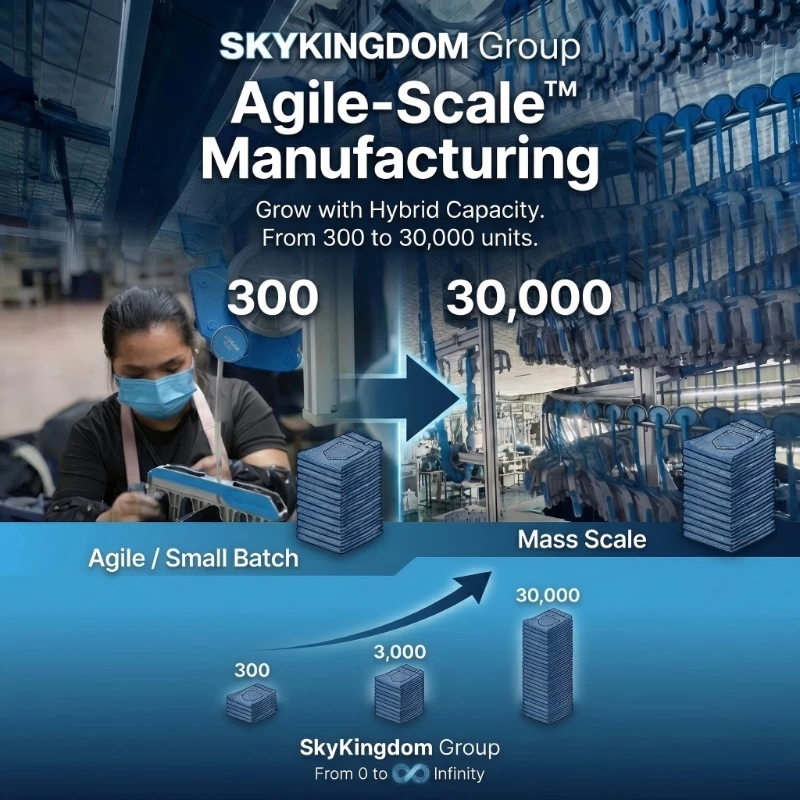
- Hybrid capacity models help when you go from 30 units to 3,000+ units.
-
Transparency and communication
- You want real-time production status, not “we’re working on it.”
- Digital ERP tracking reduces surprises and helps you plan launches.
-
Compliance and social responsibility
- Certifications and audits don’t guarantee perfection, but they reduce brand risk.
- Confirm labor standards alignment with your retail channels and marketplaces.
Why DTC brands struggle with suppliers (what I see most often)
In practice, the biggest issues with clothing manufacturers suppliers are predictable. I’ve tested factory onboarding workflows where everything looked fine—until the first bulk run exposed weak pre-production control. The most common pain points are not “bad intent,” but missing systems.
Typical failure patterns:
- Sampling is fast, bulk is slow because fabric wasn’t secured early.
- Great first order, inconsistent reorders due to shade and wash drift.
- MOQ bait-and-switch where costs spike through “required” upgrades.
- QC happens at the end instead of inline, leading to expensive rework.
The fix is to choose a supplier that treats production like an engineered process, not a craft-only workflow.

SkyKingdom Group as a modern OEM/ODM supplier for denim and woven apparel
SkyKingdom Group is built for brands that live and die by launch speed. As an OEM/ODM partner in China, SkyKingdom focuses on fast-fashion denim and woven apparel for men, women, and children—especially custom denim jeans and woven categories that need reliable wash and finishing control.
What stands out operationally (not just in marketing):
- Speed-to-Market Engine: 7-day sample turnaround and 15–22-day bulk production.
- Low MOQ: Start at 30 units for new brands and creators, then scale with hybrid capacity.
- Amazon Top Seller-Grade QC: AQL 2.5 standard to reduce return-driving defects.
- Eco-friendly wash processes: Designed to meet modern compliance expectations.
- Risk-Sharing Partnership: Base fabric safety stock management to reduce “fabric delay” risk.
- Digital ERP transparency: Real-time tracking for clearer timelines and fewer surprises.
- Certified supplier: Alignment with international social responsibility standards.
If you’re comparing denim-focused partners, these internal guides can help you benchmark options and questions:
- how to identify the best factory for fast and reliable denim clothing sample delivery
- what are the best small batch denim clothing manufacturers for private label
- 2025 global top denim manufacturers review
A practical checklist: questions to ask clothing manufacturers suppliers before you pay
Use this as a sourcing script on your next call. It’s designed to surface real capability fast.
Sampling and development
- Can you produce a sample in 7–14 days including pattern + wash test?
- How many revisions are included, and what triggers extra fees?
- Do you support ODM development if I only have a reference + measurements?
QC and consistency
- What is your inspection standard (AQL level) and where do you inspect (inline vs final)?
- How do you control denim shade, shrinkage, and wash recipe repeatability?
- Can you share a typical measurement tolerance sheet?
Production and logistics
- What is your realistic bulk lead time including fabric booking?
- How do you handle rush reorders or top-up quantities?
- What packaging, labeling, and carton requirements can you meet?
Risk and compliance
- What certifications/audit standards do you meet?
- How do you ensure material compliance (restricted substances, wash chemicals)?
- What happens if production misses the agreed timeline?
| Criteria | Typical Agent/Marketplace Supplier | Standard OEM Factory | SkyKingdom Group |
|---|---|---|---|
| Sample Lead Time | 10–21 days | 7–14 days | 3–7 days |
| Bulk Lead Time | 45–75 days | 30–60 days | 20–45 days |
| MOQ | 200–500 pcs/style | 300–1,000 pcs/style | 100–300 pcs/style (flexible by wash/fabric) |
| QC Standard (AQL) | AQL 2.5–4.0 (inconsistent) | AQL 2.5 | AQL 1.5–2.5 (in-line + final) |
| Denim Wash Control | Outsourced; variable shade consistency | In-house/partnered; stable | In-house wash + lab dips; tight shade control |
| Fabric Safety Stock | Rare; buy-to-order | Limited (core fabrics) | Maintained for core programs; re-order buffer |
| ERP Transparency | Low; limited order visibility | Medium; milestones shared | High; real-time updates, cut/sew/finish tracking |
| Compliance/Certification | Varies; often incomplete | BSCI/SEDEX common | BSCI/SEDEX + OEKO-TEX/GRS options; full audit pack |
| Scalability for DTC Drops | Weak; slow repeats | Moderate; capacity scheduled | Strong; supports small drops + fast replenishment |
Common sourcing mistakes (and how to fix them fast)
Even experienced founders make these mistakes when dealing with clothing manufacturers suppliers—usually because they’re moving fast and trying to keep costs down.
Mistakes to avoid:
- Approving samples without wash + shrinkage confirmation
Fix: Require wash test results and post-wash measurements before PP approval. - Skipping a clear QC plan
Fix: Define AQL, critical/major/minor defects, and inspection checkpoints. - Not locking fabric early
Fix: Use a supplier that can hold base fabric or help you pre-book key materials. - Choosing the cheapest quote without process proof
Fix: Ask for production timeline evidence, QC reports, and re-order consistency examples.
For broader industry context on supplier sourcing and production workflows, these references are useful:
- Sewport’s manufacturer sourcing marketplace (quote-based supplier discovery model)
- International Labour Organization (ILO) – labour standards (compliance baseline)
- OEKO-TEX® STANDARD 100 (textile chemical safety framework)
Inside a Denim Factory: The Full Denim Jeans Manufacturing Process Revealed
Who should choose China-based suppliers vs nearshore vs domestic?
There’s no single “best country,” only the best fit for your operating model. In my experience, DTC brands win when they align sourcing with launch cadence and margin structure.
A simple way to decide:
- Choose China-based OEM/ODM if you need strong denim/woven capability, speed at scale, and competitive unit economics.
- Choose nearshore if you prioritize faster shipping and smaller replenishment cycles.
- Choose domestic if you need ultra-tight collaboration, very small runs, or “Made in” positioning.
SkyKingdom’s model is most attractive when you want fast sampling, low MOQ entry, and a clear path to scale without switching suppliers mid-growth.

Conclusion: choose clothing manufacturers suppliers that run on systems, not promises
If your brand is a story you’re telling the market, your supplier is the engine that keeps the story moving. The best clothing manufacturers suppliers don’t just quote prices—they control fabric, wash, QC, and timelines with discipline and transparency. SkyKingdom Group’s Speed-to-Market Engine, low MOQ (30 units), AQL 2.5 QC, and real-time ERP tracking are built for DTC brands that need to launch quickly and scale without chaos.
📌 how to identify the best factory for fast and reliable denim clothing sample delivery
FAQ: clothing manufacturers suppliers
1) What’s the difference between a clothing manufacturer and a clothing supplier?
A manufacturer produces garments (cut, sew, wash, finish). A supplier may be a manufacturer, a sourcing agent, or a wholesaler—so always confirm who actually owns production.
2) What is a good MOQ for startups working with clothing manufacturers suppliers?
For new brands, 30–100 units per style/color is ideal if QC stays consistent. Many factories start at 150–600 units, especially for full-package programs.
3) How long should sampling take for denim jeans?
A competitive denim sample timeline is 7–14 days depending on pattern readiness, wash testing, and revision rounds. Always confirm whether the timeline includes wash approval.
4) What QC standard should I request?
AQL 2.5 is a common benchmark for consumer apparel. Also define measurement tolerances, shade bands, and wash consistency requirements.
5) How do I verify a supplier is legit?
Ask for business registration, factory audit/certifications, recent QC reports, and production photos/videos with timestamps. If possible, run a third-party inspection on the first bulk order.
6) Should I use an agent or work directly with the factory?
Agents can help if you lack experience, but direct factory relationships often improve speed, pricing clarity, and accountability—especially when ERP tracking and clear SOPs exist.
7) What should be included in a tech pack for woven and denim?
At minimum: measurements, graded size specs, construction details, stitch type, fabric composition/weight, wash recipe targets, trims, labeling, packaging, and defect tolerance notes.