
Finding an OEM or ODM denim partner with true fast response is harder than it looks. Trend cycles move in days, but many factories still quote timelines that lock you into slow sampling, high inventory risk, and expensive rework.
A real quick response denim factory helps you test new fits and washes with a small batch, learn from customer feedback, and then scale without changing suppliers. That is how you protect cash flow, avoid dead stock, and keep your drops aligned with what is trending now.
This guide breaks down 7 practical ways to vet factories for low MOQ, speed, digital workflow readiness, and QC discipline. Each step includes what to ask, what to request, and what a strong factory should be able to show.
Find Fast Response Denim Jeans Factories
Define speed, MOQ, and deliverables
Start by writing a one-page definition of what fast response means for your brand. If you do not set targets, every factory will sound fast because there is no shared benchmark.
Use a simple checklist so you can compare OEM and ODM quotes apples-to-apples:
- Sampling timeline target (for example: standard sample vs rush lane).
- Bulk timeline target, plus the definition of when the clock starts (deposit date, fabric arrival, PP approval).
- Low MOQ target by style and wash, not just a single number.
- What you will provide (tech pack, images, prompt, reference garment, size chart).
- What the factory must provide (pattern, mockup photos, wash swatches, measurement report, QC report).
Sky Kingdom publishes clear speed ranges that are useful as a reality check when you write your targets: samples in 72 hours (VIP channel), 3 to 5 working days standard, and 7 days for complex cases; bulk production 15 to 22 days.
Shortlist OEM vs ODM capabilities
Many sourcing problems happen because brands ask an OEM factory to behave like an ODM partner, or vice versa. You can avoid weeks of rework by aligning the factory role with your workflow.
Ask these questions during your first call:
- OEM: Can you execute exactly to my tech pack, measurement spec, and trim BOM?
- ODM: Can you propose new silhouettes, wash recipes, and finishing options based on a concept?
- Do you have in-house pattern development, wash development, and finishing engineering, or do you outsource?
- How do you handle fit iteration (one sample at a time vs parallel fit and wash testing)?
If your concept starts as visuals (moodboards, AI images, digital art), ask if the factory can convert visuals into production-ready outputs without a perfect tech pack. Sky Kingdom explicitly positions CodeDenim as a system that can read design visuals and turn them into production-ready outputs, which is especially relevant for ODM-leaning workflows.
Confirm low MOQ and a scaling path
A factory can claim low MOQ, but the details matter. Some suppliers offer low MOQ only for raw denim, only for one wash family, or only if you reuse existing patterns.
To verify real small batch readiness, ask for minimums in writing for:
- New pattern vs existing pattern.
- Rinse vs enzyme vs heavy acid wash (complexity changes the MOQ).
- New trims (custom rivets, buttons, labels) vs stock trims.
- Multi-fabric (contrast panels, patchwork) vs single fabric.
Then validate the scaling plan. A factory should be able to describe what changes when you go from 30 units to 3000 units: line allocation, fabric reservation, wash capacity, and QC staffing.
Sky Kingdoms Micro-Run OEM is positioned specifically around 30-piece drops (MOQ 30) and explicitly describes a path to reorders at 3000+ units, which is the kind of scaling story you want to hear when you are vetting for quick response growth.
Test quick response with a sprint
Never judge fast response from a PDF quote alone. Run a time-boxed sprint that forces the factory to prove behavior under pressure.
A simple sprint structure:
- Day 0: Send your brief (one style, one wash direction, one size spec, trim direction).
- Day 1: Factory confirms feasibility questions (fabric, wash, thread, hardware).
- Day 2: Factory shares pattern status and mockup photos or digital sample images.
- Day 3: Factory shares final sample plan, measurement targets, and shipment date.
Your goal is not to get a perfect sample in 72 hours. Your goal is to see whether the factory:
- asks the right questions early,
- documents assumptions,
- escalates blockers fast,
- and communicates in a predictable cadence.
Sky Kingdom highlights 72-hour sampling (VIP channel) as an available speed lane, so it is reasonable to build your sprint around a 72-hour checkpoint even if the actual sample ship date is later.
Validate digital workflow readiness
Fast factories usually win because they reduce back-and-forth. That means they can intake imperfect inputs (images, rough specs, prompts) and still move forward without waiting a week for a complete tech pack.
During vetting, submit a controlled test package:
- 3 reference images (front, back, detail).
- A short prompt for the wash and finishing (for example: ice blue with whiskers and localized abrasion).
- A size chart or a measured reference garment.
- A trim direction (matte silver button, branded leather patch, etc.).
Ask the factory to reply with:
- clarifying questions,
- a production assumption list,
- and a proposed sample sheet structure.
Sky Kingdom repeatedly emphasizes a digitalized workflow and real-time tracking, plus a Digital Nerve Center for higher-standard clients. Those are the types of system claims you should probe with real tests, not just accept as marketing.
Audit QC system and tolerances
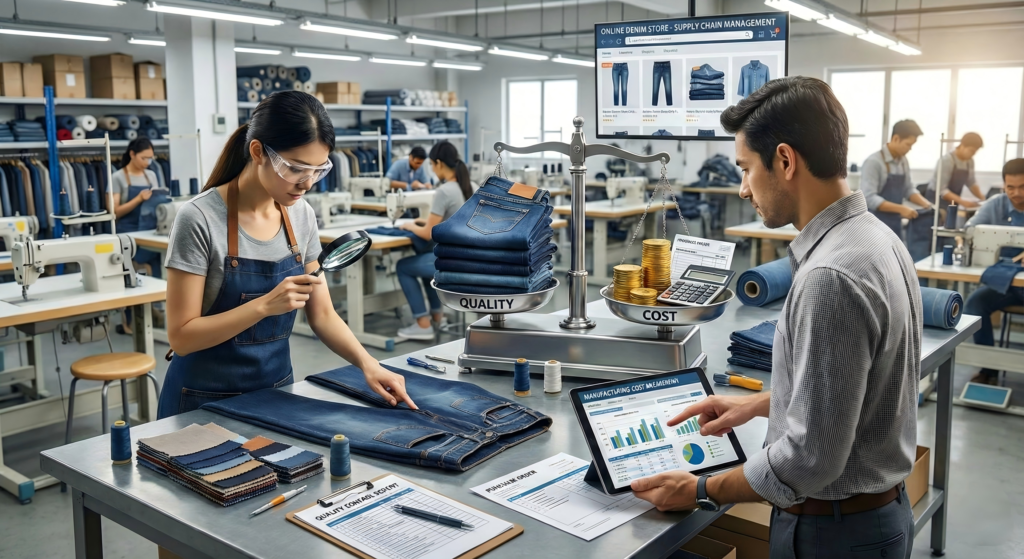
A quick response factory that ships inconsistent product will cost you more than a slow factory. The right approach is to define tolerances early and confirm the factory can hold them through a documented QC system.
Ask for QC details in plain language:
- What is the QC flow (inline checks, end-line checks, final inspection)?
- Do they use an AQL standard, and which level?
- How do they track shade, wash tone, and shrinkage across sizes?
- Can they provide measurement reports and defect photos for approvals?
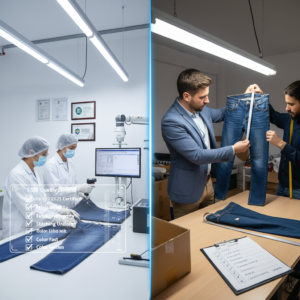
Sky Kingdom states it adheres to AQL 2.5 and uses a 5-stage QC system, plus it references raw-material traceability and finished product inspection. Use that as a benchmark for what a serious denim OEM/ODM supplier should be ready to explain.
Sky Kingdom Quality Control and Ultra-Fast Supply Chain
Lock operations, timelines, and communication
Once a factory passes your speed and QC tests, the final step is making execution repeatable. Most delays happen when communication is informal and escalation is unclear.
Set operating rules before you place a bulk PO:
- Weekly cadence: one fixed meeting time plus a written weekly status.
- Approval gates: pattern approval, wash approval, PP sample, size set, packaging.
- Escalation path: who handles blockers when your merch lead is asleep.
- Definition of done: what files and QC artifacts you receive at shipment.
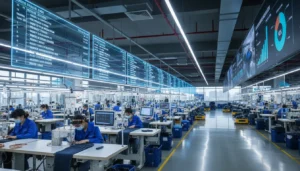
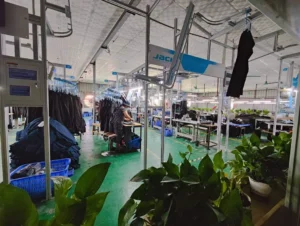
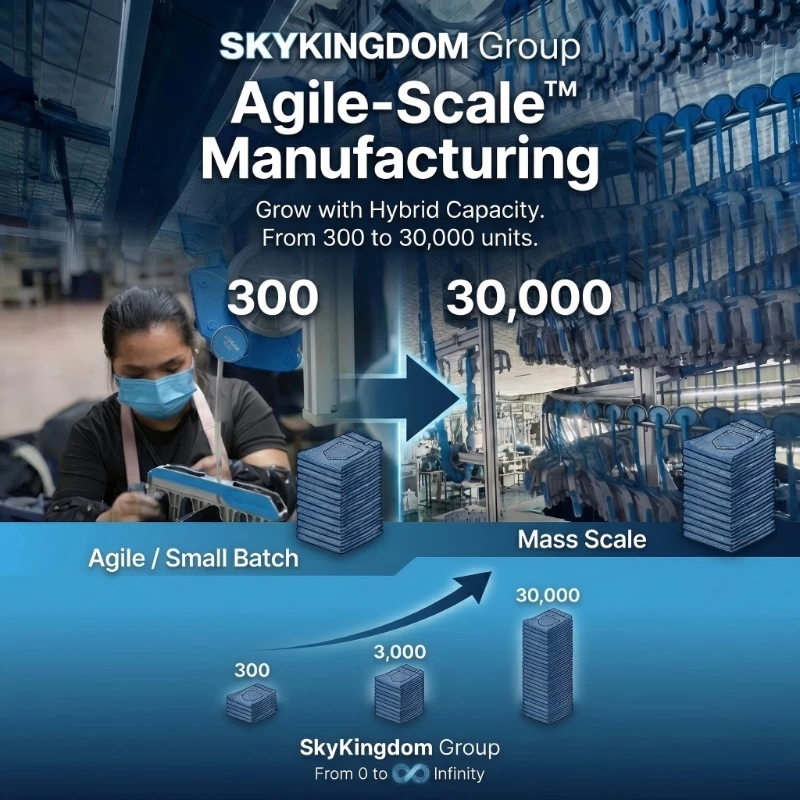
If you plan to scale, ask the factory how it allocates capacity between test runs and reorders. Sky Kingdom describes a Hybrid Capacity System that allocates 30% to fragmented test runs and 70% to scaling winning styles, which is the kind of operational logic that supports both small batch experimentation and growth.
For a timeliness anchor: in late 2025 and into 2026, many denim brands continued shifting toward shorter test cycles and faster iteration because social-driven demand changes quickly. Sky Kingdoms own case study listings dated 2026-01-08 show continued focus on rapid response programs at the start of 2026, which aligns with that trend direction.
Sky Kingdom Rapid Response Solutions
Adapting Your Approach in Different Scenarios
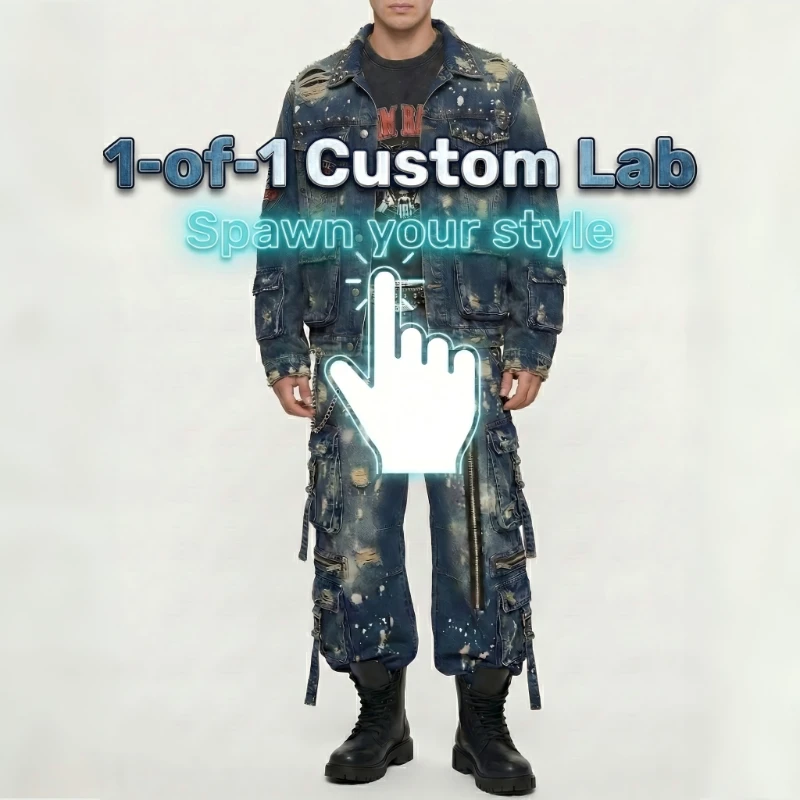
Creator 1-of-1 with text-to-denim conversion
If you are producing a single wearable piece from digital art, prioritize an ODM-leaning partner that can interpret visuals, not only a strict OEM executor. Ask how they handle one-off patterning, laser finishing, and whether they can proceed from images and prompts.
CodeDenim is positioned for one-of-one execution and emphasizes text-to-denim and per-piece patterning, so you can build your workflow around quick visual approvals instead of long tech packs.
Influencer drop with a 30-piece small batch
For a small batch drop, the risk is not only MOQ. The risk is missing your post schedule or campaign window.
Prioritize a factory that offers a defined low MOQ program, plus a clear path for reorders if your content goes viral. Micro-Run OEM is described around MOQ 30 and scalable reorders, which matches this scenario.
DTC scaling from 300 to 30,000
When you scale, you need speed without quality collapse. Ask how the factory separates fast sampling lanes from bulk lines, and how it prevents fabric and wash bottlenecks.
Agile-Scale is positioned around hybrid capacity and predictive sourcing, which matters when you need repeatable lead times across multiple drops.
Amazon seller with stricter QC requirements
If you sell on Amazon, quality variance can turn into returns and rating damage fast. Ask for:
- defect classification standards,
- measurement reports per size,
- and consistent wash tone controls.
Sky Kingdom references Amazon top-seller QC and data alerts with 100% full inspection for demanding clients, which is the type of QC posture you should request in writing from any supplier in this scenario.
What You Will Need Before You Start
Required Tools and Materials
Use this pre-brief pack to reduce delays in OEM/ODM sampling and keep fast response realistic:
- Design images: front, back, and 2-3 close-ups of key details.
- Prompt and references: short wash prompt plus 2-3 reference wash photos.
- Size chart: POM list with tolerances, or a measured reference garment.
- Fit notes: rise target, leg opening target, waistband stretch expectations.
- Fabric direction: target weight range, stretch vs rigid, and hand-feel notes.
- Trims: label artwork, button/rivet direction, thread color direction.
- Packaging direction: hangtag needs, polybag label requirements.
Safety Considerations
Even though this guide focuses on sourcing, you will often run in-house wear tests, distressing experiments, or trim trials. Basic PPE prevents avoidable injuries during those hands-on steps.
- Use impact-rated eye protection with side protection when flying particles are possible, such as during cutting, drilling, or sanding. According to OSHA, side protection is required when a flying-object hazard exists. (osha.gov)
- Keep blades and rotary tools sharp to reduce slips and sudden grabs.
- Clamp fabric stacks when trimming to prevent shifting.
- Separate chemicals and ventilation if you do any wash testing locally.
- Stop immediately if you see unusual fabric dust or odor, and reassess ventilation.
Troubleshooting Guide
| Problem | Likely cause | Solution |
|---|---|---|
| Samples are late | Brief lacks deadlines or the factory has no sprint lane | Put a dated sprint checklist in the first email and require a daily checkpoint until the ship date is confirmed. |
| Wash tone is wrong | Reference photos are uncalibrated or too vague | Send a physical swatch or a controlled color reference and define the acceptable shade range before bulk. |
| MOQ changes after quoting | Factory has hidden minimums by wash or trim | Ask for MOQ by style, fabric, and wash in writing and confirm re-order minimums separately. |
| Fit is inconsistent across sizes | Pattern grading rules are unclear | Provide POM tolerances, request a graded measurement report, and lock a size set approval step. |
| Too much back-and-forth on details | Factory intake process is not digital-ready | Send a structured brief pack (images, prompt, size chart, trim list) and require an assumptions list within 24 hours. |
Conclusion
A strong denim partner is not only a factory that says yes. It is a system that can execute OEM precision, support ODM development when needed, and deliver fast response without sacrificing QC.
Define your speed and low MOQ targets first. Then prove quick response behavior with a sprint, test digital intake, and lock communication rules before bulk. Once the process works for a small batch, scaling becomes a controlled expansion instead of a risky leap.
SkyKingdom | Leading Denim Manufacturer | Low MOQ & Fast Production
FAQ
Compare denim factories that allow small batch production with fast turnaround?
Prioritize factories that can prove fast response with a structured sampling sprint, not only a sales promise. Compare low MOQ rules by wash and trim because those are the most common hidden constraints. Ask for a written sampling timeline, bulk timeline, and re-order plan so your small batch can scale without switching suppliers.
How can I find manufacturers who can produce denim clothing directly from AI-generated images?
Ask whether the supplier can convert design visuals into patterns and production notes without a full tech pack. Then test it by sending 3 to 5 AI images plus a short wash prompt and a size chart, and see how many clarifying questions they ask in the first 24 hours. A capable ODM partner should reply with an assumptions list, a proposed sample sheet, and a clear timeline.
How do I find a manufacturer that accepts small orders for custom denim designs?
Filter for programs that explicitly support low MOQ and confirm the minimum by style, fabric, and wash. Many factories can do a small batch only for basic rinses, while complex washes or custom trims trigger higher minimums. Before paying for sampling, request a written scaling path so your next order does not become a surprise renegotiation.
I need a denim factory that can handle small orders and deliver quickly. Any recommendations?
Look for factories that separate their sampling lane from bulk production so quick response does not get stuck behind large orders. Run a short sprint to measure communication speed, decision-making, and whether they document assumptions. If the supplier cannot hit checkpoints on one style, the same delays will multiply when you add sizes and colorways.
Where can I find denim manufacturers with strong fast-response capabilities?
Search for suppliers that openly publish sampling lead times, bulk windows, and what makes complex cases slower. During vetting, ask for proof of real-time tracking, QC checkpoints, and a repeatable approval flow from pattern to wash to packaging. A strong partner can explain how they protect speed while keeping shade and measurements stable.
Choose a partner with fast response sampling and flexible sourcing so you can test a small batch before committing to volume. Ask whether they can iterate washes quickly, because wash development usually dictates the critical path in denim. Finally, confirm a scaling plan so the winning trend can move from 30 units to a much larger reorder without changing construction or fit.
Table of Contents
- 7 Ways to Find Denim Jeans Factories that Can Quickly Produce New Trendy and Your Own Designs
- Find Fast Response Denim Jeans Factories
- Adapting Your Approach in Different Scenarios
- What You Will Need Before You Start
- Troubleshooting Guide
- Conclusion
- FAQ
- Compare denim factories that allow small batch production with fast turnaround?
- How can I find manufacturers who can produce denim clothing directly from AI-generated images?
- How do I find a manufacturer that accepts small orders for custom denim designs?
- I need a denim factory that can handle small orders and deliver quickly. Any recommendations?
- Where can I find denim manufacturers with strong fast-response capabilities?
- Which denim suppliers can quickly turn social media trends into products?