
Upcycling fashion walks into your studio like a box of “problem” garments—returns, deadstock, damaged samples, leftover rolls—and quietly asks: What if this is inventory, not waste? If you’re a DTC brand, creator, or product developer, that question matters because margins are tight and launches move fast. I’ve worked on denim and woven programs where the “scrap pile” turned into the best-selling capsule, simply because it looked unique and shipped on time.
Upcycling fashion is also one of the few sustainability moves that can improve design differentiation while reducing material cost exposure. The key is treating upcycling like a manufacturing workflow, not just a DIY project. In this guide, you’ll learn what upcycling fashion really means, how it differs from recycling, and how to scale it into repeatable denim and woven drops—especially with low MOQ and rapid sampling.

What Is Upcycling Fashion (And How It’s Different From Recycling)?
Upcycling fashion means turning existing garments or textiles into higher-value products with minimal breakdown of the original material. Recycling usually means breaking fibers down (mechanically or chemically) and re-spinning or re-forming, which can reduce fiber length and adds processing steps. In practice, upcycling keeps more of the original fabric’s “work” intact—dye, wear patterns, fades, and structure.
Common upcycling fashion inputs include:
- Customer returns (unworn or lightly worn)
- Deadstock fabric and trims
- Production offcuts and end-of-roll shortages
- Sample yardage and proto garments
- Vintage denim, shirts, and uniforms
From a brand perspective, upcycling fashion sits inside circular design: extending product life, reducing virgin material demand, and creating a story customers can verify. For definitions and circular economy context, see Ellen MacArthur Foundation’s circular economy overview.
Why Upcycling Fashion Is Surging (Beyond the “Eco” Story)
Upcycling fashion is popular because it solves three modern problems at once: over-supply, content fatigue, and speed pressure. In denim especially, upcycled pieces naturally create one-of-one details—fades, whiskers, repairs, patchwork—that would be expensive to replicate from scratch.
Here’s what I’ve repeatedly seen in real product meetings:
- A small upcycled capsule can outperform basics because it feels “limited” without artificial scarcity.
- Customers accept slight variation when you set expectations clearly (and show photos of real batches).
- Upcycling can reduce your dependency on perfect fabric availability during peak seasons.
If you want the industry’s broader view on how upcycling is evolving and where it shows up in the market, FashionUnited’s background coverage is a helpful starting point: This is upcycling.
The Most Scalable Upcycling Fashion Methods (Denim + Woven Friendly)
Not every upcycling technique scales. The best ones are repeatable, patternable, and QC-friendly. Below are methods that work well for denim jeans and woven apparel.
1) Panelization (Patchwork That Manufactures Cleanly)
Panelization means cutting consistent panels (thigh, yoke, pocket area) from source garments and assembling them into a standardized pattern. It’s ideal for denim because seams and wear lines become design features.
Best for:
- Upcycled denim jeans
- Denim jackets
- Woven overshirts
2) Visible Mending (Design-Led Repairs)
Visible mending turns holes and weak spots into aesthetic details using patches, sashiko-style stitching, or reverse appliqué. I tried this on a kids’ denim capsule and found the return rate dropped—parents liked that repairs looked intentional, not “fixed.”
Best for:
- Kids denim
- Workwear-inspired lines
- “Wabi-sabi” streetwear capsules
3) Re-Cut & Rebuild (Refashioning Into New Silhouettes)
This is the most creative and the hardest to scale. You deconstruct garments (like men’s shirts) and rebuild into new silhouettes (crop tops, fitted blouses, skirts). To scale it, you need strict sorting rules and pattern constraints.
Best for:
- Statement tops
- Limited drops
- Creator collabs
4) Trim & Component Harvesting
Harvesting means reusing hardware and trims—zippers, buttons, labels, pocket bags—when fabric is too inconsistent. It’s a great way to reduce BOM cost volatility.
Best for:
- Denim hardware programs
- Utility pants
- Accessories (caps, totes)
Easy DIY Patchwork Denim Tote Bag Jeans Upcycle | Quick Version
The Real Challenge: Consistency (And How Pros Control It)
Upcycling fashion breaks the normal manufacturing assumption: input materials aren’t uniform. The solution is not “hope”—it’s a control plan.
Sorting Rules That Actually Work
Set sorting rules before design finalization:
- Fiber content: 100% cotton vs stretch denim (keep separate)
- Weight range: e.g., 10–12 oz for one program
- Color family: light/mid/dark wash buckets
- Damage tolerance: acceptable wear zones vs reject zones
Pattern Strategy for Upcycled Denim & Wovens
To keep output consistent, use:
- “One base block, many surfaces” (same fit, varied panels)
- Oversized silhouettes (more forgiving for panel yields)
- Modular components (standard pockets, yokes, waistbands)
QC Reality Check
Upcycling needs QC that focuses on strength + safety, not just appearance:
- Seam slippage and seam strength at joins
- Needle damage around weak areas
- Color bleed compatibility across panels
- Metal detection if you’re harvesting trims
For apparel quality benchmarks, many factories align to AQL sampling plans; a common reference framework is ANSI/ASQ Z1.4 sampling procedures (useful for understanding how inspection levels are structured).
Upcycling Fashion at Scale: A Manufacturing Workflow You Can Repeat
When brands try to scale upcycling fashion, they often skip the “boring” steps—then get stuck in rework. A scalable workflow looks like this:
- Material intake & quarantine
- Count, photo, tag lots, and isolate unknown fiber content.
- Sorting + grading
- Build lots by weight, stretch %, color family, and damage map.
- Design mapping
- Define which garment zones are allowed for each pattern piece.
- Sampling
- Approve a “variation range” (what can differ batch-to-batch).
- Pilot run
- Validate yield rate, labor minutes, and defect types.
- Bulk production
- Lock SOPs, QC checkpoints, and packing rules.
- Traceability
- Lot coding + simple storytelling (what it was, what it became).
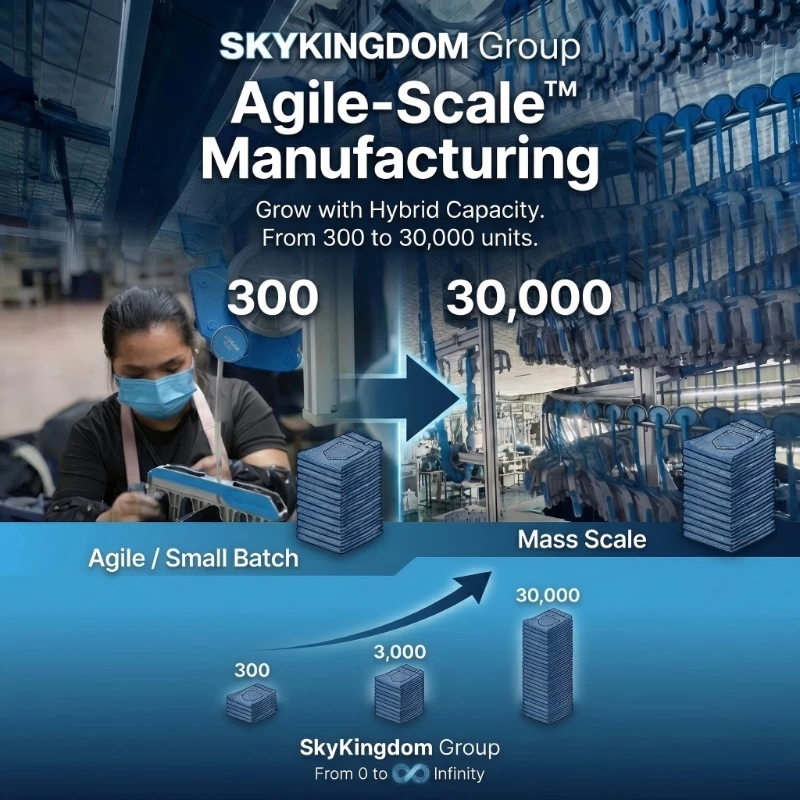
SkyKingdom Group’s OEM/ODM model (fast sampling, low MOQ, ERP traceability, and QC discipline) is built for exactly this kind of controlled variability—especially in denim and woven categories where speed-to-market matters.

Cost, Speed, and Risk: What Upcycling Fashion Changes for DTC Brands
Upcycling fashion can lower raw material spend, but it can also increase labor and sorting time. The win happens when you design for repeatability and choose the right complexity for your price point.
Key trade-offs to plan for:
- Lower fabric cost vs higher labor minutes
- Higher perceived uniqueness vs more variation management
- Faster story-driven marketing vs slower material prep
If you’re trying to keep budgets tight while building a capsule, this internal guide pairs well with an upcycling plan: the ultimate guide to quick denim clothing sample production for fashion brands.
| Method | Best Products | Complexity (Low/Med/High) | Consistency Level | Typical MOQ Fit | Common Risks | Practical Fix |
|---|---|---|---|---|---|---|
| Panelization | Patchwork jackets, tote bags, denim skirts | High | Medium | Medium–High | Shade/weight mismatch, yield unpredictability, labor bottlenecks | Pre-sort by color/weight; standardize panel sizes; use cutting templates & bundled kits |
| Visible Mending | Knitwear repairs, denim reinforcement, tees | Med | Low–Medium | Low | Aesthetic variability, slow throughput, QC subjectivity | Define stitch library & placement rules; train to a spec; photo QC standards & grading |
| Re-cut & Rebuild | Shirts-to-dresses, tailored outerwear, jeans rework | High | Medium | Low–Medium | Pattern fit inconsistency, damage hidden until cut, high sample iteration | Create size-graded base blocks; intake inspection & mapping; limit source SKUs to a few |
| Component Harvesting | Buttons/zip pulls reuse, trims, pockets, labels | Med | High | Medium | Hardware count variability, cleaning/compliance issues, breakage | Build buffer inventory; wash/sanitize SOPs; substitute list with approved alternates |
| Deadstock-Only “Upcycled Look” | Patchwork tees, color-block sweats, quilted vests | Low–Med | High | High | Deadstock depletion, lot-to-lot shade shift, claims risk (“not truly upcycled”) | Secure multi-lot commitments; lab dip/shade bands; transparent labeling & storytelling |
Upcycling Fashion Design Ideas That Sell (Without Becoming Costume)
Upcycling fashion performs best when it’s wearable first and “upcycled” second. The strongest commercial ideas keep the silhouette familiar and let the surface do the talking.
Try these proven directions:
- Upcycled denim “hybrid wash” jeans (light + mid panels, consistent fit)
- Patch pocket swaps (contrast pocket bags, double pockets, cargo add-ons)
- Waistband rebuilds (two-tone waist, adjustable tabs, lace-up back)
- Woven shirt-to-overshirt conversions (boxy fit, reinforced elbows)
- Denim tote + cap sets (use offcuts; easy add-on revenue)
For assortment planning that matches high-street demand cycles, see: best denim clothing options for high street fashion retailers in 2025.
Avoid Greenwashing: How to Make Upcycling Claims Customers Trust
Upcycling fashion is credibility-sensitive. If you market “upcycled” but only use a tiny patch, customers notice. Build trust with clear, simple disclosures.
Use claim practices like:
- State what was upcycled (returns, deadstock, cutting waste)
- Share how much (percentage by weight or by component)
- Explain variation (“each piece is unique; color placement varies”)
- Use lot codes or QR links for transparency when possible
For guidance on environmental marketing claims, the U.S. FTC’s reference is useful: FTC Green Guides.
How SkyKingdom Helps Brands Launch Upcycling Fashion (Fast, Controlled, Low MOQ)
Upcycling fashion becomes scalable when your factory can manage variability without slowing your calendar. In denim and woven production, that usually means tight sampling, clear SOPs, and real-time tracking of lots and outputs.
SkyKingdom Group supports upcycling fashion programs through:
- 7-day sampling to test panel maps, mending styles, and rebuild patterns quickly
- 15–22-day bulk production for time-sensitive drops
- Low MOQ (30 units) for creators and new DTC brands testing demand
- AQL 2.5 QC discipline to keep “unique” from becoming “defective”
- ERP-based transparency for lot tracking and repeatability
- Eco-friendly wash processes that complement upcycled denim aesthetics
If cost control is part of your upcycling roadmap, this internal resource can help: 5 ways to reduce your denim clothing buying expenses.

Conclusion: Upcycling Fashion Isn’t Slower—It’s Smarter When You Systemize It
Upcycling fashion started as a creative rebellion, but it’s becoming a serious product strategy for brands that want differentiation without runaway material risk. When you treat upcycling like a controlled manufacturing program—sorting rules, pattern logic, QC checkpoints—you can ship unique denim and woven capsules on a real calendar. I’ve seen the shift firsthand: the moment a brand stops “making do” and starts designing for upcycling, the results look intentional, premium, and sellable.
If you’re planning an upcycling fashion drop, share your product idea (jeans, jackets, shirts, kidswear) and your target MOQ—I’ll help you map the simplest scalable method.
📌 the ultimate guide to quick denim clothing sample production for fashion brands
FAQ: Upcycling Fashion
1) What is upcycling fashion in simple terms?
Upcycling fashion means making new clothing or accessories from existing garments or textiles, usually with minimal fiber breakdown, to create higher-value pieces.
2) Is upcycling better than recycling for clothing?
Often yes for impact and uniqueness, because upcycling keeps more of the original material intact and avoids energy-intensive reprocessing. Recycling can be better when items are too damaged to reuse.
3) What are the easiest garments to upcycle at scale?
Denim jeans, denim jackets, woven shirts, and workwear pieces are easiest because the fabric is durable and components (pockets, yokes, waistbands) can be standardized.
4) How do brands handle size and color variation in upcycled denim?
They sort inputs into lots (by wash family, weight, and stretch), use standardized base patterns, and define an acceptable “variation range” during sampling.
5) Can upcycling fashion work with low MOQ?
Yes—low MOQ is a strong fit because upcycling inputs are limited and variable. Small runs let you test yield rates and customer response before scaling.
6) How do you price upcycled fashion products?
Price based on total cost (sorting + labor + yield loss) and value (limited nature, design uniqueness). Many brands price upcycled capsules above core basics due to higher labor and perceived exclusivity.
7) What should an “upcycled” product description include?
Include what was upcycled, how much (by component or %), and a note that each piece may vary. Clear disclosure improves trust and reduces returns.