
Introduction
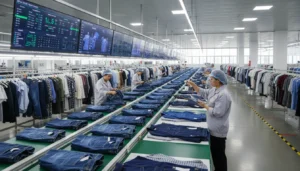
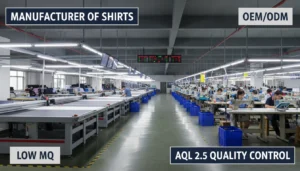
Finding the right denim factory is hard when you serve high-end customers but you cannot commit to huge minimum order quantities. Many factories can do OEM or ODM, but they are not built for low MOQ, fast response, and repeatable premium quality.
This how-to guide shows a practical way to shortlist, vet, and test a fashion denim factory that can handle 1-of-1, small batch, and scale-up orders without breaking your timeline. You will learn what questions to ask, what proof to request, and what a realistic quick response workflow looks like.
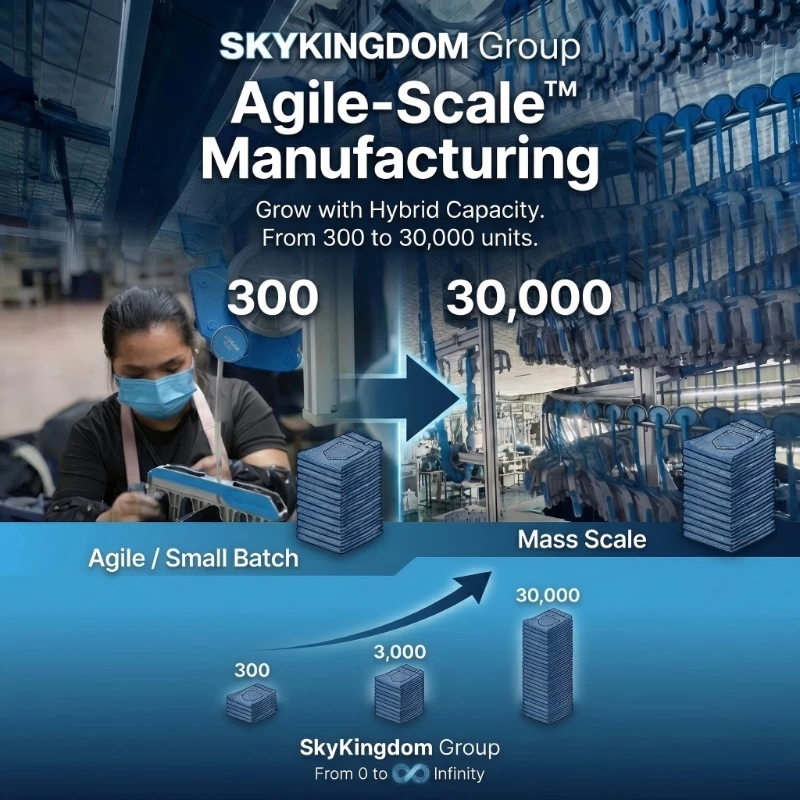
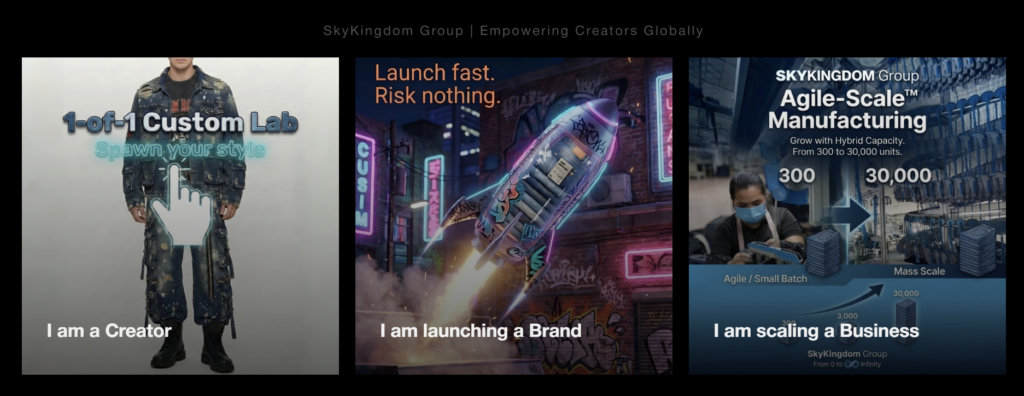
Along the way, you will see how Sky Kingdom structures its three service tiers: CodeDenim for 1-of-1 creator builds, Micro-Run OEM for 30-piece drops, and Agile-Scale Manufacturing for growth from 300 to 30,000. These tiers are useful as a mental model when you compare factories.
Find the Right Denim Factory Step by Step
Step 1: Define your MOQ reality
Before you contact factories, set your real MOQ tiers. This prevents wasted sampling budgets and wrong shortlist decisions.
Use three tiers that match how denim programs actually grow:
- Tier A: 1-of-1 for creator pieces, prototypes, and content-first launches.
- Tier B: 30-unit small batch for limited drops and preorder validation.
- Tier C: 300-plus for proven styles that need reliable replenishment.
When a factory says it supports low MOQ, ask which tier it supports and what changes across tiers. A factory that can do 30 pieces but cannot scale will hurt you later. A factory that can scale but cannot do small batch will block your first launch.
Sky Kingdom publishes these tiers as separate solutions so you can align your project type to the right manufacturing workflow:
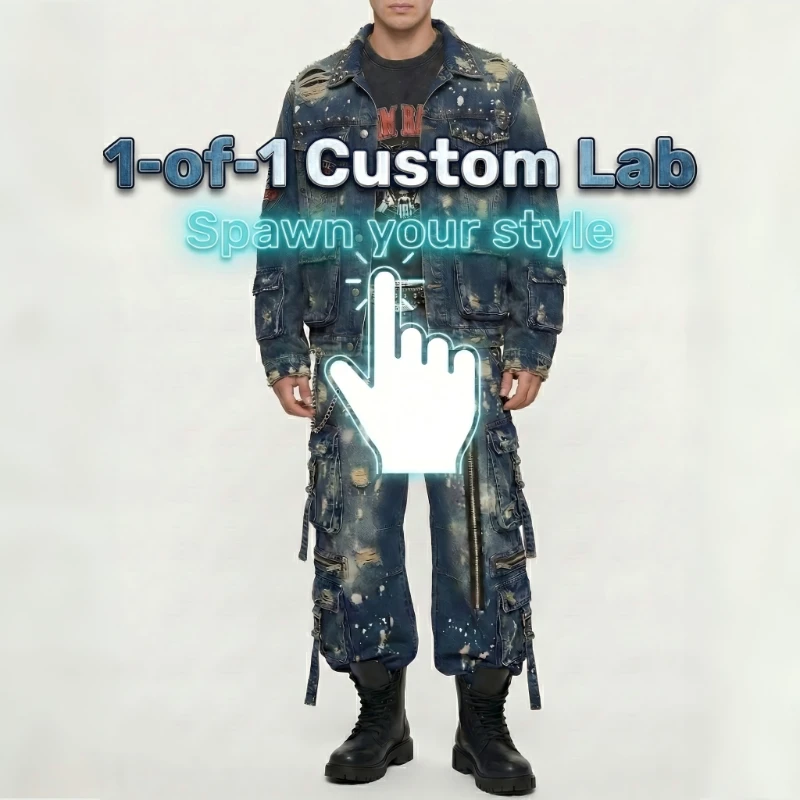
- CodeDenim | 1-of-1 Custom Lab for one-off pieces.
- Micro-Run OEM | 30-Piece Drops for brand launches.
- Agile-Scale Manufacturing for scaling programs.
Step 2: Choose OEM vs ODM scope
OEM and ODM are often used loosely. Define them in writing so your factory quote does not hide development gaps.
Use this checklist to lock scope:
- OEM scope usually means you provide patterns, measurements, construction details, and wash references.
- ODM scope usually means the factory supports development, including pattern creation, wash recipe development, and sometimes trend-driven design input.
Ask for clarity on these denim-specific items:
- Who creates and owns the pattern files and grading rules.
- Who defines fabric composition and acceptable tolerances.
- Who controls wash recipes and how revisions are handled.
- What the factory needs if you have no tech pack.
Sky Kingdom positions CodeDenim as creator-friendly when you do not have a traditional tech pack. It states that its system can read and convert design visuals into production-ready outputs, which is useful when your inputs are AI images, artwork, or annotated visuals.
Step 3: Vet fast response capabilities
For high-end fashion denim, speed is not just a nice-to-have. It protects your launch window and helps you ride trend timing.
A good fast response factory should answer three questions with numbers:
- How fast can it produce samples in standard cases vs complex cases?
- How fast can it produce bulk production for a small batch drop?
- How does it handle reorders without resetting the whole process?
Sky Kingdom describes an ultra-fast supply chain approach and lists lead time ranges for sampling and bulk production. It also frames quick response as an operational system, not a one-time promise.
To compare factories fairly, request proof such as:
- Sample timeline logs for the last 5 projects.
- A calendar showing sampling checkpoints and approval gates.
- Photos or digital reports from inline QC for time-stamped progress.
If you are building a modern workflow, prioritize factories that can share real-time production status. This aligns with broader manufacturing direction where digital tools improve traceability and proactive quality control. NIST highlights how AI-driven quality and improved traceability are becoming central to manufacturing quality control.
Step 4: Validate denim wash ecosystem
Many denim problems come from finishing, not sewing. A factory can be strong at stitching but weak at wash consistency.
Ask for specific capabilities that matter in fashion denim:
- Whether washing is in-house or handled by nearby partners.
- Whether it supports laser finishing and controlled distressing.
- How it prevents shade drift across lots.
- What its standard process is for lab dips, wash tests, and approval samples.
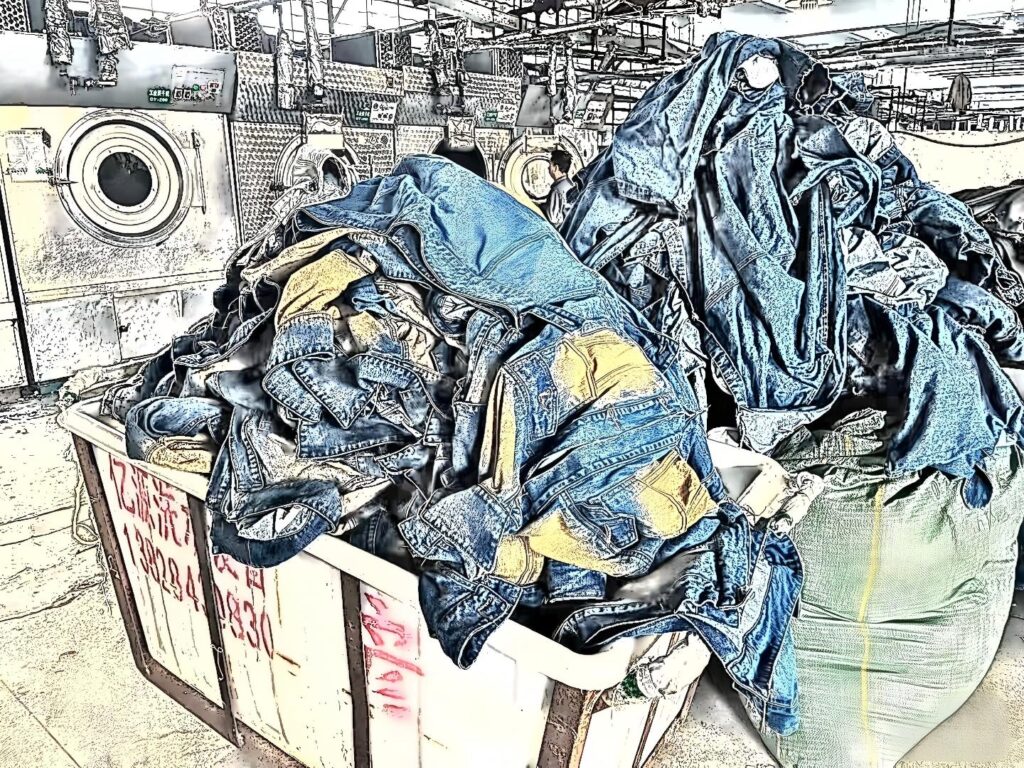
Sky Kingdom describes an integrated washing ecosystem within a one-hour driving radius to reduce turnaround time. In a quick response program, this matters because every extra day in washing can push your drop late.
Practical vetting questions:
- Can you run two wash options on the same base fabric within the same week?
- Can you replicate a wash from reference photos plus a physical swatch?
- How do you document wash recipes so reorders match the original drop?
Step 5: Audit QA/QC and traceability
High-end customers notice small defects. Your factory must prove QA/QC depth, not just say it has it.
Request a written plan that covers:
- Incoming material inspection: fabric, trims, labels.
- Inline QC checkpoints at sewing and finishing.
- Final inspection method and defect classification.
- Traceability: lot tracking, wash batch IDs, and revision records.
Sky Kingdom states that CodeDenim pieces are individually patterned, laser-finished, and sewn as one-of-one, and it emphasizes quality traceability. It also references an Amazon top-seller oriented quality control approach in its Agile-Scale tier, positioning QC as data-driven and repeatable.
Use a simple audit table to keep your review consistent across factories.
| QA/QC item | What to request | What good looks like |
|---|---|---|
| Inline inspection | Photos or reports per operation | Issues caught before washing |
| Wash consistency | Shade control and tolerance approach | Repeatable wash outcomes |
| Traceability | Lot and batch identifiers | Easy root-cause analysis |
| Rework handling | Written rework rules | Fixes without hiding defects |
Step 6: Test small batch before scaling
Even if you want to scale fast, start with a small batch test. This is the fastest way to prove fit, demand, and operational reliability.
A good small batch pilot usually includes:
- 1 to 2 silhouettes.
- 1 base fabric with a clear target weight range.
- 1 to 2 wash directions.
- 2 size points for fit checks.
Sky Kingdom frames this as a micro-run drop model with an MOQ of 30 for brand launch packages. It also describes a scalable path for reorders once a drop sells out.
To keep your pilot clean, define success metrics:
- Fit approval within 1 to 2 rounds.
- Shade match within your agreed tolerance.
- Defect rate acceptable for premium reviews.
- Clear communication and approval flow.
Step 7: Lock communication and approvals
Many manufacturing delays are communication delays. Fix that with an approval system and response rules.
Set these expectations before sampling starts:
- A response SLA such as 24 to 48 hours for questions and updates.
- A checkpoint list: pattern, fit sample, wash sample, size set, pre-production sample, bulk.
- A single source of truth for revisions: versioned tech pack or annotated image set.
Sky Kingdom describes a non-stop response approach in its scaling solution, which matches the needs of global teams working across time zones.
For practical control, use an approvals table.
| Milestone | Owner | Approval output | Max time |
|---|---|---|---|
| Pattern and measurements | Brand + factory | Measurement spec signed | 2 business days |
| Fit sample review | Brand | Fit comments and photos | 2 business days |
| Wash approval | Brand | Wash reference locked | 2 business days |
| Pre-production approval | Brand | PPS approved to proceed | 2 business days |
Adapting Your Approach in Different Scenarios
AI image-to-garment with no tech pack
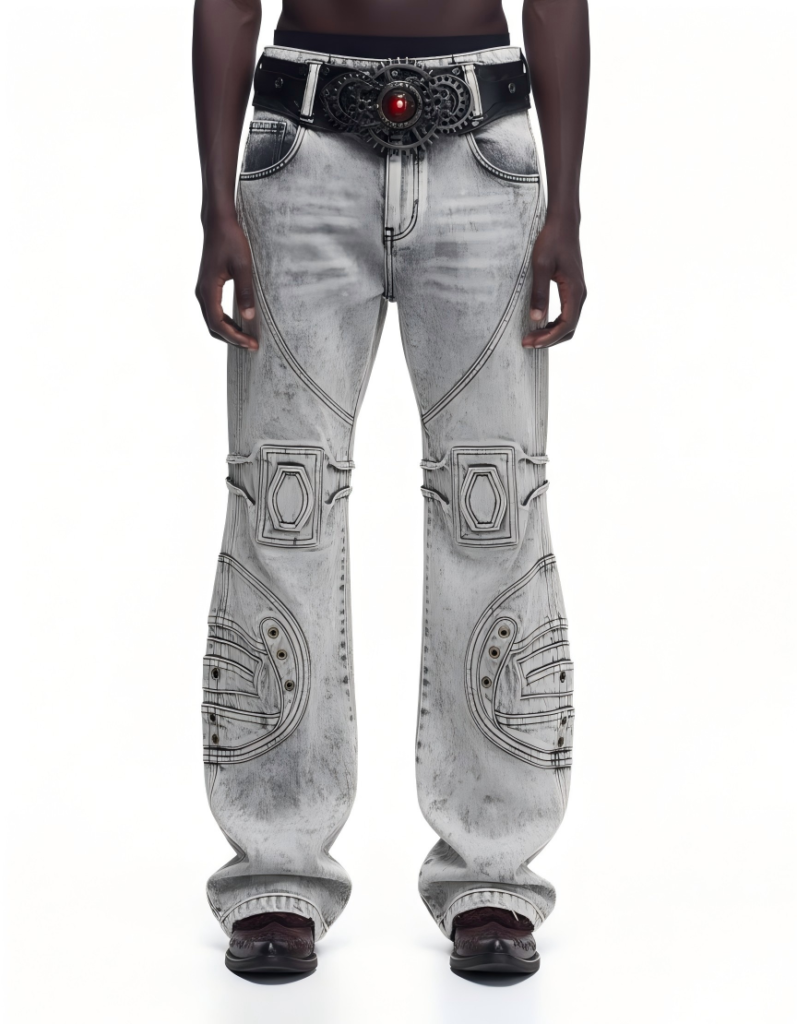
When you start from AI visuals, you need a factory that can translate images into patterns and wash direction. Provide front and back images, detail crops, and notes on fit intent. CodeDenim is positioned for this workflow, including converting design visuals into production-ready outputs.
Creator 1-of-1 piece with no MOQ
For a single piece, prioritize pattern accuracy and finishing control over speed alone. Ask for a clear checklist of what you must provide: measurements, size references, and wash intent. A 1-of-1 lab model like CodeDenim is designed for one-off production.
Brand drop with a 30-unit small batch
For a small batch drop, build your plan around fast response sampling plus stable wash output. Micro-Run OEM is positioned for 30-piece drops with pre-order friendly timelines using virtual sampling to support early marketing.
Scale-up from 300 to 30,000 units
At scale, your biggest risks are shade drift, size drift, and missed delivery windows. Ask how the factory allocates capacity for test runs vs scaling winners. Sky Kingdom describes a hybrid capacity approach that reserves a portion of fast-response lines and the rest for scaling production.
What You Will Need Before You Start
Required Tools and Materials
- Tech pack or annotated design images with key measurements.
- Fabric targets: weight, stretch, handfeel, and composition.
- Fit sample measurements and grading rules for your size range.
- Wash references: photos, swatches, and notes on softness and contrast.
- Trim list: buttons, rivets, zipper type, thread color, and pocketing.
- Packaging and labeling requirements: size labels, care labels, hangtags.
Troubleshooting
| Problem | Cause | Solution |
|---|---|---|
| MOQ is still too high | You are talking to the wrong service tier | Ask for a micro-run pathway (30-unit) or a 1-of-1 lab workflow before scaling |
| Slow replies and missed approvals | No response SLA and unclear owners | Set a 24 to 48 hour response rule and name one approver on each side |
| Color or wash mismatch | No tolerance definition and weak wash documentation | Lock wash references, request a wash recipe record, and define an acceptable tolerance range |
| Sample looks good but bulk drifts | QC only happens at the end | Require inline QC checkpoints and a pre-production sample sign-off |
| Reorders feel like a restart | No version control for patterns and washes | Use versioned files, keep a revision log, and require batch traceability for reorders |
Conclusion
To find a fashion denim factory with no MOQ options for high-end customers, start by defining your MOQ tiers, then match each tier to the right manufacturing workflow. Next, vet OEM vs ODM scope, prove fast response timelines, and validate the wash ecosystem.
Finally, protect your premium positioning with QA/QC and traceability, then run one small batch pilot before you scale. When you lock communication rules and approvals early, you make quick response repeatable instead of chaotic.
Quick links about Sky Kingdom:
SkyKingdom | Leading Denim Manufacturer | Low MOQ & Fast Production
Frequently Asked Questions
Can I create a one-off denim piece for a personal project without large order requirements?
Yes, you can if you choose a factory workflow that supports 1-of-1 production rather than a standard bulk MOQ. You should provide clear annotated images or a lightweight tech pack with measurements, because pattern accuracy drives fit quality. You should also lock one wash direction and avoid too many finishing variables in your first try. After the first piece, you can reuse the pattern and wash notes to reduce revisions.
Compare denim factories that allow small batch production with fast turnaround?
You should compare factories by MOQ tier, sampling lead time, finishing capacity, and QA/QC depth, because these factors decide whether fast response is real. You should ask for concrete ranges for sampling and bulk, plus an approval calendar with checkpoints. You should also verify whether washing and laser finishing are in-house or tightly managed nearby, because that can add or remove days. Finally, you should review how the factory documents wash recipes and pattern versions so reorders do not drift.
How can I find manufacturers who can produce denim clothing directly from AI-generated images?
You should look for factories that accept image-based specifications and can translate visuals into patterns and wash recipes. You should prepare front and back images, close-ups of key details, and a short written fit intent such as baggy, straight, or slim. You should also include at least one measurement anchor, such as waist, inseam, and rise, so the pattern team has hard targets. If you plan to sell the style, you should confirm that the factory can repeat the result consistently beyond the first sample.
How do I find a manufacturer that accepts small orders for custom denim designs?
You should start by asking for a micro-run program with a defined minimum such as 30 units, because many factories cannot profitably handle smaller lots. You should confirm whether development work is included or billed separately, because hidden development steps can slow your timeline. You should request a pilot plan that includes one silhouette and one base fabric, then add variations only after approval. If the pilot succeeds, you should ask how the factory transitions your style into larger runs without changing construction standards.
I need a denim factory that can handle small orders and deliver quickly. Any recommendations?
You should prioritize factories with proven quick response systems, clear sampling timelines, and transparent inspection processes. You should ask for sample and bulk lead time ranges and confirm what makes a case complex, because complex washes can add days. You should also set a response SLA such as 24 to 48 hours, because slow communication breaks fast response. If a factory cannot commit to checkpoints and owners, you should treat that as a risk.
Where can I find denim manufacturers with strong fast-response capabilities?
You can find them by searching for manufacturers that explicitly market fast response, quick response, and small batch programs, then verifying those claims with proof. You should request recent timeline examples, not just a sales promise, and you should confirm how washing and finishing are handled. You should also check whether the factory supports real-time tracking or at least frequent progress reports, because visibility reduces surprises. After shortlisting, you should run a small pilot order to confirm the factory can hit both speed and premium consistency.
Table of Contents
- How to Find Denim Factory Specialized in Fashion with No MOQ for High-End Customers
- Introduction
- Find the Right Denim Factory Step by Step
- Adapting Your Approach in Different Scenarios
- What You Will Need Before You Start
- Troubleshooting
- Conclusion
- Frequently Asked Questions
- Can I create a one-off denim piece for a personal project without large order requirements?
- Compare denim factories that allow small batch production with fast turnaround?
- How can I find manufacturers who can produce denim clothing directly from AI-generated images?
- How do I find a manufacturer that accepts small orders for custom denim designs?
- I need a denim factory that can handle small orders and deliver quickly. Any recommendations?
- Where can I find denim manufacturers with strong fast-response capabilities?