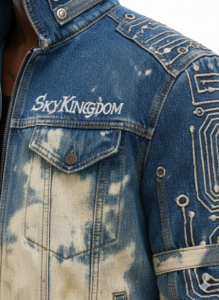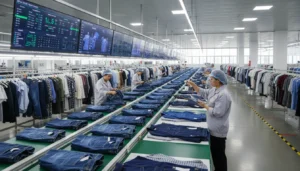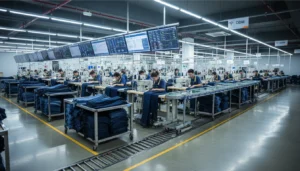

Choosing a china apparel manufacturer can feel like hiring a “silent business partner”—they control your quality, your timelines, and your margins, even when you never meet in person. If you’ve ever worried about getting a perfect sample and a disappointing bulk order, you’re not alone. I’ve vetted factories for denim and woven programs where the same tech pack produced wildly different results based on process control, QA discipline, and fabric management. This how-to guide gives you a practical scorecard to compare manufacturers and pick a partner you can scale with.

Why a Scorecard Works (And Why “Lowest Price” Fails)
A scorecard forces objective decisions when everything looks good on Alibaba listings and sales decks. In real production, the biggest risks are usually boring: fabric shade variance, shrinkage drift, inconsistent stitching SPI, weak in-line inspection, and unclear change control. A strong china apparel manufacturer can show you systems, not slogans—AQL targets, SOPs, calibrated measurements, and traceable lot tracking.
Use the scorecard to:
- Compare factories across the same criteria (speed, QC, MOQ, compliance, communication).
- Prevent “sample room magic” that doesn’t match bulk lines.
- Quantify tradeoffs (e.g., faster lead time vs. higher unit cost).
Step 1: Define Your “Non-Negotiables” Before You Contact Factories
Before emails and quotes, lock your production boundaries. Otherwise, you’ll pick a factory that’s great—just not great for your product.
Start with these inputs:
- Category + construction: denim jeans, denim jackets, woven tops, kidswear, etc.
- Target MOQ: test run vs. scale (e.g., 30–100 units/style vs. 1,000+).
- Critical path timeline: sample SLA and bulk lead time.
- Quality bar: measurement tolerances, seam strength, wash standards, AQL (commonly AQL 2.5 for general consumer apparel).
- Must-have services: pattern making, grading, wash development, trims sourcing, packaging, DTC labeling.
If fast sampling is central to your drop cadence, use this internal guide: how to identify the best factory for fast and reliable denim clothing sample delivery.
Step 2: Shortlist the Right Type of China Apparel Manufacturer (OEM vs. ODM)
Not all factories are built for the same job. Choosing the wrong model creates hidden costs (rework, delays, miscommunication).
- OEM (Original Equipment Manufacturer): You provide tech packs; they execute.
- Best if you have a designer/tech designer and clear specs.
- ODM (Original Design Manufacturer): They help design and offer existing blocks/styles.
- Best if you need speed, design support, or want to start from proven patterns.
For denim-heavy brands, a specialist partner matters. Here’s a useful internal overview: best denim clothing chinese manufacturer for fashion brands our top pick.
Step 3: Request Evidence (Not Promises) in Your First Email
Your first outreach should be a filter. A capable china apparel manufacturer will respond with specifics and documents, not vague assurances.
Ask for:
- Recent production photos/videos of your category (denim/woven/kids).
- Sample and bulk lead times with capacity notes.
- QC framework: in-line inspection, final inspection, and AQL level used.
- Compliance: audit certificates (e.g., social responsibility / ethical programs).
- References or case studies (even anonymized) with similar MOQ and complexity.
- Fabric sourcing options + shade band and shrinkage testing approach.
A good sign is transparent production control—real-time tracking, ERP, and clear checkpoints. (This is where SkyKingdom’s real-time data tracking and digital ERP style of operation tends to reduce surprises on bulk.)
Step 4: Use the Factory Scorecard (100 Points)
Score each factory the same way. Don’t “average” weak areas that can break your business (like QC). Weight what matters to your model.
| Category | What to Ask/Verify | Red Flags | Points (0-5) | Notes |
|---|---|---|---|---|
| Sampling speed | Typical days for proto/fit/PP samples; capacity; sample room setup | No dedicated sample team; vague timelines; frequent missed sample dates | ||
| Bulk lead time | Standard lead time ex-factory by style; critical path; capacity by month | “Depends” without plan; unrealistic promises; no capacity view | ||
| MOQ flexibility | MOQ by fabric/color/style; surcharge options; ability to combine POs | Rigid MOQs; hidden surcharges; refusal to consolidate | ||
| Denim/woven specialization | % output in denim/wovens; key machines; references for similar products | Mostly knits; limited topstitch/denim machines; no relevant past styles | ||
| Wash capability & eco processes | In-house vs 3rd-party wash; ZDHC/chemical mgmt; EIM/laser/ozone | No wash controls; heavy PP spray; lacks wastewater treatment | ||
| Pattern & grading skill | CAD system; in-house pattern/grading; fit technician; size set process | Outsourced patterns; poor fit feedback; inconsistent grading | ||
| Fabric management (shade/shrinkage) | Shade banding; shrinkage/torque tests; lot control; relax/spread rules | No shade control; cutting mixed lots; no shrink testing | ||
| QC system (AQL 2.5) | Inline/endline audits; AQL 2.5 reports; 4-point fabric inspection | No documented QC; “100% check only”; missing defect analytics | ||
| Compliance/audits | BSCI/WRAP/SMETA; Higg/ISO; wage/overtime records | Expired/failed audits; falsified docs; restricted access | ||
| ERP/traceability | ERP/MES use; lot/bundle tracking; barcode/RFID; material trace | Manual tracking only; cannot trace lots; frequent WIP loss | ||
| Communication quality | Response time; English level; escalation path; meeting cadence | Slow replies; unclear ownership; frequent misunderstandings | ||
| Pricing transparency | Cost breakdown (fabric/labor/wash/trim); yield; wash upcharges | Lump-sum quotes; shifting pricing; hidden fees post-PO | ||
| Risk-sharing/safety stock | Options for greige/trim buffer; VMI; liability for defects/delays | Refuses buffers; no contingency plan; pushes all risk to buyer | ||
| On-time history | Last 6–12 months OTIF%; evidence (shipping docs); delay reasons | No data; chronic delays; blames forwarder without proof |
Recommended weighting (example):
- Quality system + QC execution: 25%
- Lead time reliability (sample + bulk): 20%
- Category specialization (denim/woven): 15%
- MOQ + scalability: 15%
- Fabric & wash capability: 10%
- Compliance + traceability: 10%
- Communication + documentation: 5%
Step 5: Run a “Sample-to-Bulk” Stress Test (The Only Test That Matters)
Many brands get a great proto sample and then suffer during PP or bulk. To prevent this, structure sampling like a mini production trial.
I’ve had the best results when I require:
- Proto sample: confirm silhouette and block.
- Fit sample: confirm measurements, balance, and ease.
- PP sample (pre-production): must use bulk-like fabric, trims, and wash route.
- Size set: at least core sizes; check grading logic.
- Pilot run (even 10–30 pcs): confirms line consistency.
If your business depends on speed, look for manufacturers who can hit a 7-day sample cycle and still document revisions cleanly. For low-MOQ + fast-turn strategies, this internal guide may help: what are the best small batch denim clothing manufacturers for private label.
Step 6: Verify Quality Like a Pro (AQL, Measurement Control, and Wash Consistency)
A “QC promise” is meaningless without a method. Your china apparel manufacturer should be fluent in:
- AQL sampling (e.g., AQL 2.5) and defect classification (critical/major/minor).
- Measurement control with tolerance tables (by POM).
- Shrinkage & skew testing before cutting (especially for denim and twills).
- Wash recipe control (enzyme, stones, bleach alternatives, softeners) with repeatability.
Common denim/woven failure points to check:
- Pocket placement drift
- Waistband torque and twisting after wash
- Leg twist, inseam torque, and roping
- Shade variance between panels or lots
- Broken stitches at stress points (fly, crotch, belt loops)

Step 7: Confirm Capacity, MOQs, and “What Happens When You Grow”
A factory that fits your launch may fail your scale phase. Your scorecard should capture both low MOQ flexibility and hybrid capacity for growth.
Look for:
- A clear MOQ policy (per style/color/size breakdown).
- Ability to reserve capacity for drops (not just “first come, first served”).
- Capacity planning transparency (weekly line plan visibility).
- Risk controls like base fabric safety stock (helpful for repeat programs).
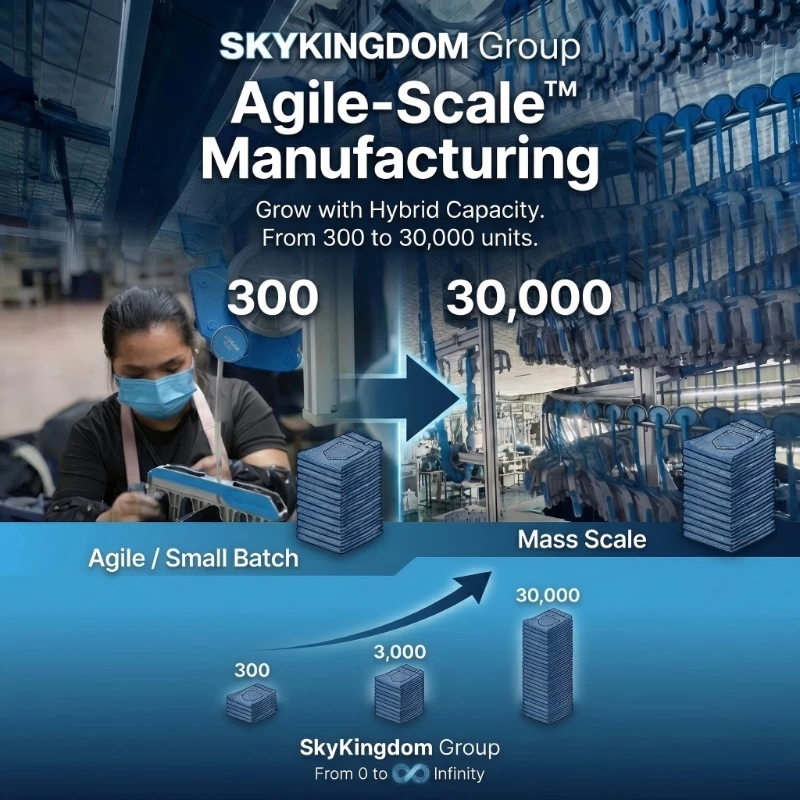
SkyKingdom’s model—low MOQ (30 units), fast sampling, and 15–22 day bulk windows—matches brands that run frequent drops and need speed-to-market without losing QC discipline.
Step 8: Lock the Commercial Terms That Prevent Surprises
Even strong factories can derail a project with vague terms. Put these in writing:
- Golden sample approval and sealing process
- Material substitution rules (no changes without written approval)
- QC checkpoints + rework responsibility
- Late delivery handling (expedite options, partial shipments)
- Payment terms tied to milestones (sample, PP, bulk, pre-ship inspection)
- IP and pattern ownership (especially if you paid for development)
Authoritative references you can use to tighten your due diligence:
- OEKO-TEX® Standard 100 (what it means for textile safety)
- amfori BSCI (social compliance framework)
- SGS textile & garment services (testing/inspection context)
How to understand AQL and sampling plan in China inspection?
Common Vetting Mistakes (And How to Fix Them Fast)
-
Mistake: Choosing based on the best-looking sample only.
Fix: Require PP + pilot run using bulk fabric and trims. -
Mistake: Ignoring fabric lot control.
Fix: Ask for shade banding, lot traceability, and shrinkage test reports. -
Mistake: Not verifying wash capability.
Fix: Request wash recipes, wash test panels, and repeatability standards. -
Mistake: Accepting vague lead times.
Fix: Ask for a capacity-backed production plan and cut/sew/wash calendar. -
Mistake: No written change control.
Fix: Create a revision log and lock approvals (tech pack, BOM, measurements).
Mini-Checklist: Your “Green Flags” for a China Apparel Manufacturer
A strong china apparel manufacturer usually shows these behaviors early:
- Sends clear documentation without chasing (quotes, timelines, QA steps).
- Talks about process control (not just “high quality”).
- Offers realistic timelines and flags risks upfront.
- Can support low MOQ testing and scaling.
- Provides traceability (ERP, lot tracking, inspection records).

Conclusion: Choose the Partner You Can Sleep With (During Launch Week)
Picking a china apparel manufacturer is less about finding “the cheapest” and more about finding “the most predictable.” When you vet with a scorecard, you stop guessing—and start managing risk like a professional: controlled samples, documented QC, fabric traceability, and realistic capacity planning. If you want a partner built for fast-fashion denim and woven apparel, SkyKingdom Group’s speed-to-market engine (7-day samples, 15–22-day bulk), low MOQ (30 units), and AQL 2.5-grade QC are designed around the exact pain points that derail DTC launches.
📌 how to identify the best factory for fast and reliable denim clothing sample delivery
FAQ (People Also Ask)
1. How do I find a reliable china apparel manufacturer for a new brand?
Start with category specialists, request proof of QC systems (AQL), and run a PP + pilot order before scaling.
2. What is a good MOQ for a china apparel manufacturer?
For startups, 30–100 units per style/color is workable if the factory supports small-batch lines; many require 50–300+.
3. What should I ask a china apparel manufacturer before paying for samples?
Ask for sample timeline, sample fee policy, revision rounds, fabric options, measurement tolerances, and what “PP sample” includes.
4. How do I make sure bulk production matches the sample?
Seal a golden sample, insist on bulk-like fabric/trims for PP, and define QC checkpoints with an AQL target.
5. What certifications matter when choosing a china apparel manufacturer?
Common signals include social compliance audits (e.g., BSCI) and material safety standards (e.g., OEKO-TEX), plus third-party testing when needed.
6. How long does production take with a china apparel manufacturer?
Typical ranges vary, but many programs run 2–6 weeks depending on fabric, wash complexity, and order size; fast-response partners can be quicker with capacity planning.
7. Is OEM or ODM better when working with a china apparel manufacturer?
OEM is best when you have complete specs; ODM is best when you need design help and speed from existing blocks and styles.