
Denim starts its life as a humble cotton fiber—then it gets twisted, dyed, woven, and finished until it becomes the tough, blue fabric we all recognize. If you’ve ever wondered why denim is blue on the outside and lighter on the inside, or why some jeans feel rigid while others stretch, the answer lives in the manufacturing steps. I’ve toured and worked with denim production flows where one small choice—like dye dips or loom settings—changed the final look more than people expect. Let’s walk through how denim fabric is made, from cotton selection to indigo weave, in plain language.

What denim fabric is (and what makes it “denim”)
Denim fabric is a warp-faced twill textile, most commonly made from cotton. “Warp-faced” means the warp yarns (lengthwise yarns) dominate the surface, and “twill” refers to the diagonal ribs you can see on the fabric. That diagonal line is not decoration—it’s the structure that helps denim resist wear and tear.
Most classic denim is yarn-dyed: the warp yarns are dyed (often with indigo), while the weft yarns (crosswise) are left white or lightly bleached. That’s why denim looks blue on the face and pale on the back, and why fades show up with wear.
Step-by-step: how denim fabric is made
1) Cotton selection and fiber prep
Denim usually begins with cotton that’s chosen for staple length, cleanliness, and consistency. Longer, cleaner fibers tend to spin into stronger yarn with fewer weak spots. Mills often blend cotton lots to keep the yarn even from batch to batch, which helps brands maintain stable color and hand-feel across seasons.
Key goals at this stage:
- Reduce contamination (leaf, seed fragments, plastics)
- Create a consistent fiber blend
- Set the foundation for strength and uniform dyeing later
2) Spinning: turning cotton into denim yarn
After opening and cleaning, cotton goes through carding (and sometimes combing) to align fibers into a sliver, then into roving, and finally into yarn. Yarn structure matters because it affects everything downstream—especially dye uptake and abrasion behavior (how it fades).
Common spinning approaches you’ll hear about:
- Ring-spun yarn: typically softer, hairier surface, richer vintage look and fades
- Open-end (rotor) yarn: often more uniform and cost-effective, can feel slightly flatter
- Core-spun yarn (for stretch denim): cotton wraps around an elastane/poly core for recovery
When I’ve compared denim fabric trials, yarn choice alone often explains why two “same weight” denims feel totally different in stiffness and surface texture.
3) Warping: preparing the warp sheet
Warping gathers hundreds or thousands of warp ends and winds them onto beams in parallel. Accuracy here prevents streaks, tension issues, and weaving defects later. Consistent tension across the beam is critical; uneven tension can cause “barre” effects (visible shading bands) after dyeing and finishing.
4) Indigo dyeing: the signature blue step
Indigo dyeing is the step most people associate with how denim fabric is made—and it’s also where denim gets its iconic fading behavior. Indigo is typically applied in a vat dye system where the dye is reduced to a soluble form, the yarn dips in, then it oxidizes back to blue when exposed to air.
Most denim dye ranges use repeated cycles:
- Dip in reduced indigo
- Squeeze (remove excess)
- Air oxidize
- Repeat for deeper shade
Because indigo mainly coats the yarn surface rather than penetrating fully, abrasion reveals lighter core fiber over time—creating fades.
How to denim process fabrics making automatically through the of warping, Dyeing, and weaving part 1
Shade control levers mills adjust include:
- Number of dips and oxidation time
- Indigo concentration and bath chemistry
- Yarn speed through the dye range
- After-dye soaping and washing intensity
For more technical background on denim construction terms, CottonWorks provides a useful reference library: Denim construction overview.
5) Sizing: protecting yarn for weaving
After dyeing, warp yarns usually receive size (a protective coating). This reduces friction and breakage during weaving, improving loom efficiency and fabric consistency. The sizing recipe influences fabric hand-feel and also affects downstream finishing—too much size can make early processes harder; too little can increase weaving defects.
Typical sizing components:
- Starch or modified starch
- Binders and softeners
- Lubricants
6) Weaving: making the denim fabric (twill structure)
Now the dyed, sized warp yarns are woven with the weft yarns to create denim fabric. The most common structure is 3/1 twill (three over, one under), producing a strong diagonal line and a warp-dominant face.
Major denim weave families:
- Right-hand twill (RHT): classic diagonal direction; often strong, traditional look
- Left-hand twill (LHT): can feel softer and fade differently
- Broken twill: zig-zag pattern that helps reduce leg twist in jeans
Weaving quality is where many visible issues originate: missed picks, broken ends, tension lines, and reed marks. If you’re sourcing denim, it’s worth asking how the mill controls defect mapping and inspection.
Denim fundamentals and why warp/weft choices matter are explained clearly here: Denim explained (warp, weft, indigo).
7) Greige inspection and fabric finishing
Fresh off the loom, denim is “greige” (unfinished). It’s inspected, then finished to achieve target shrinkage, width, skew control, and hand-feel. Common finishing steps include:
- Desizing: remove size to allow softer hand and proper absorbency
- Washing/soaping: clean, stabilize shade, improve rubbing fastness
- Sanforizing (shrink control): compressive shrinkage process to reduce garment shrink later
- Heat-setting (especially for stretch denim): stabilize elastane recovery and dimensions
- Brushing/peaching (optional): softer surface
A solid technical primer on general denim properties and manufacturing is also available at Sewport’s denim fabric guide.
What changes the look and performance of denim fabric?
Small spec changes can create big differences in the final denim fabric. Here are the main “dials” mills and factories use:
- Fabric weight (oz/yd² or gsm): heavier often feels sturdier; lighter drapes more
- Yarn type: ring-spun for character; open-end for uniformity; core-spun for stretch
- Indigo depth: more dips typically equals darker shade (but not always better fades)
- Twill direction and weave: impacts hand-feel and leg twist behavior
- Stretch content: affects comfort, bagging, and recovery
- Finishing: controls shrinkage, softness, and surface clean-up

Common denim fabric defects (and how manufacturers prevent them)
A practical way to understand how denim fabric is made is to look at what can go wrong—and which step usually causes it. In production, we typically prevent issues with a combination of process control, inline inspection, and lab testing (shade, shrinkage, skew, stretch/recovery, and rubbing fastness).
| Issue | What You See | Likely Stage | Common Cause | Practical Fix |
|---|---|---|---|---|
| Shade streaks | Long vertical streaks or barre effect; visible shade bands across width | Dyeing / Warping | Uneven indigo pick-up, poor rope tension control, oxidization inconsistency, mixed lot beams | Balance rope/beam tension, standardize dip/squeeze & oxidation times, verify indigo concentration/pH, keep lot integrity through warping |
| Warp breaks | Frequent end-downs, loom stops, fuzz/lint build-up, rough warp feel | Sizing / Weaving | Under/over-sizing, poor size penetration, abrasive guides/reed, low yarn strength/high hairiness | Optimize size recipe & add-on %, control drying temperature, improve size penetration (viscosity), polish/replace worn guides, review yarn quality & twist |
| Skew / torque | Side seams twist after wash; leg spiraling; diagonal skew lines | Finishing / Weave choice | Twill torque from unbalanced construction, uneven overfeed, incorrect stenter skew setting, residual stresses not released | Adjust stenter skew/bowing, set correct overfeed, use sanforizing to relax, consider balanced twill or lower torque yarns, verify shrinkage targets |
| Poor rubbing fastness | Indigo crocking (dry/wet), staining on hands/labels, excessive surface dye | Dyeing / Soaping | Insufficient soaping/clearing, over-ring dyed surface, poor fixation/oxidation, inadequate final rinse | Improve soaping time/temp & surfactant, ensure full oxidation between dips, add final clearing wash, optimize dip/squeeze to reduce loose dye |
| Inconsistent stretch recovery | Bagging at knees/seat, variable stretch between rolls, uneven growth after wear | Yarn selection / Heat-setting | Elastane denier/brand variation, uneven core-spun quality, incorrect heat-set temp/time, moisture/relaxation differences | Tighten yarn specs & lot control, verify elastane % and tension, standardize heat-setting parameters, control fabric moisture before setting, run roll-to-roll recovery testing |
Where SkyKingdom Group fits in the denim pipeline (OEM/ODM view)
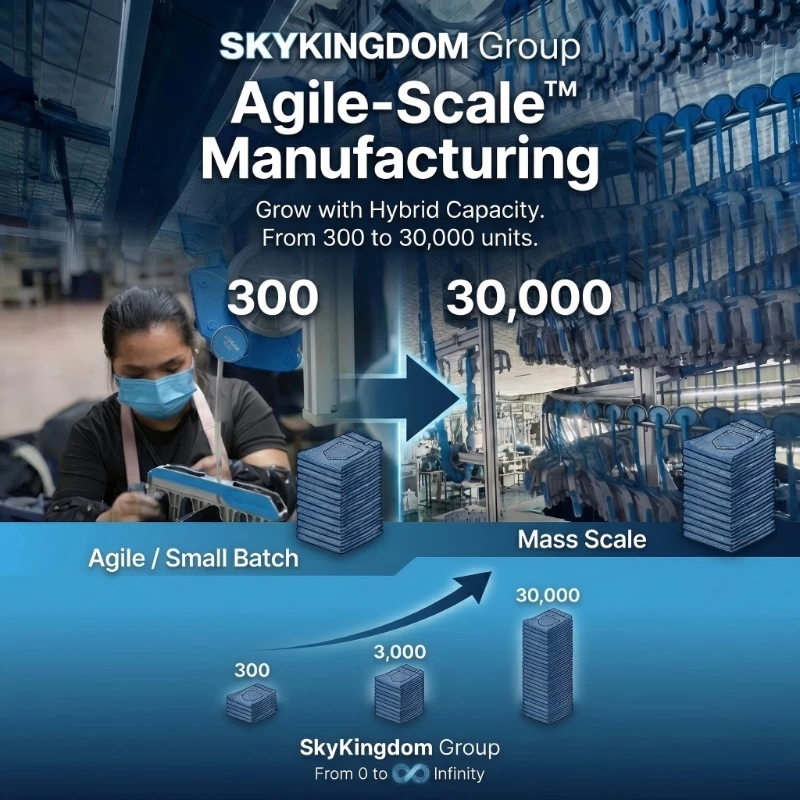
For DTC brands, the biggest risk isn’t just “how denim fabric is made”—it’s whether your denim spec can be reproduced fast, consistently, and at your MOQ. SkyKingdom Group supports brands by connecting fabric decisions (weight, stretch, shade, finishing) to rapid sampling and stable bulk execution using digital ERP tracking and real-time production visibility.
If you’re building a new denim style and need speed, these resources map well to the real workflow:
- the ultimate guide to quick denim clothing sample production for fashion brands
- 5 ways to ensure your denim clothing design is made right
- a guide about how to choose denim clothing factory for your fashion retail business
A simple mental model: “Denim is engineered to fade”
If you remember one thing about how denim fabric is made, make it this: denim is built so the indigo sits more on the yarn surface, and the twill structure puts more dyed warp on the face. That combination is why denim develops character with wear instead of just looking old. When you choose yarn type, indigo method, and finishing, you’re basically choosing how the fabric will age.

Conclusion: from cotton to indigo weave—denim becomes your brand’s signature
Denim fabric is made through a tightly linked chain: cotton prep, spinning, warping, indigo dyeing, sizing, weaving, and finishing. Each stage adds either strength, color, texture, or stability—and the best denim results come from controlling the handoffs between those steps. If you’re developing denim for a DTC launch, the fastest wins usually come from locking a clear fabric spec early and validating it through sampling before scaling.
📌 the ultimate guide to quick denim clothing sample production for fashion brands
FAQ: how denim fabric is made
1) Why is denim blue on the outside and white on the inside?
Because the warp yarns are indigo-dyed while the weft yarns are usually left white, and denim is warp-faced so the dyed yarns dominate the surface.
2) What is the difference between denim and twill?
Denim is a type of twill, but not all twills are denim. Classic denim is typically warp-faced, often indigo warp + white weft, with specific finishing and performance expectations.
3) Does “more indigo dips” always mean better denim?
Not always. More dips can deepen shade, but fade behavior, rubbing fastness, and tone depend on bath chemistry, oxidation, soaping, and yarn type too.
4) How is stretch denim fabric made?
Stretch denim usually uses core-spun yarns (cotton wrapped around elastane) and controlled finishing/heat-setting to preserve recovery and reduce bagging.
5) What is sanforized denim?
Sanforized denim is mechanically pre-shrunk to reduce shrinkage after washing, improving size stability for finished garments.
6) What causes denim “leg twist” in jeans?
Leg twist is often linked to twill direction, yarn torque, and finishing/skew control. Broken twill structures can reduce this effect.
7) How do manufacturers test denim fabric quality before cutting?
Common tests include shade continuity, fabric weight, width, shrinkage, skew, tensile/tear strength, stretch & recovery, and color fastness (especially rubbing).