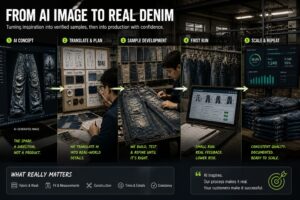

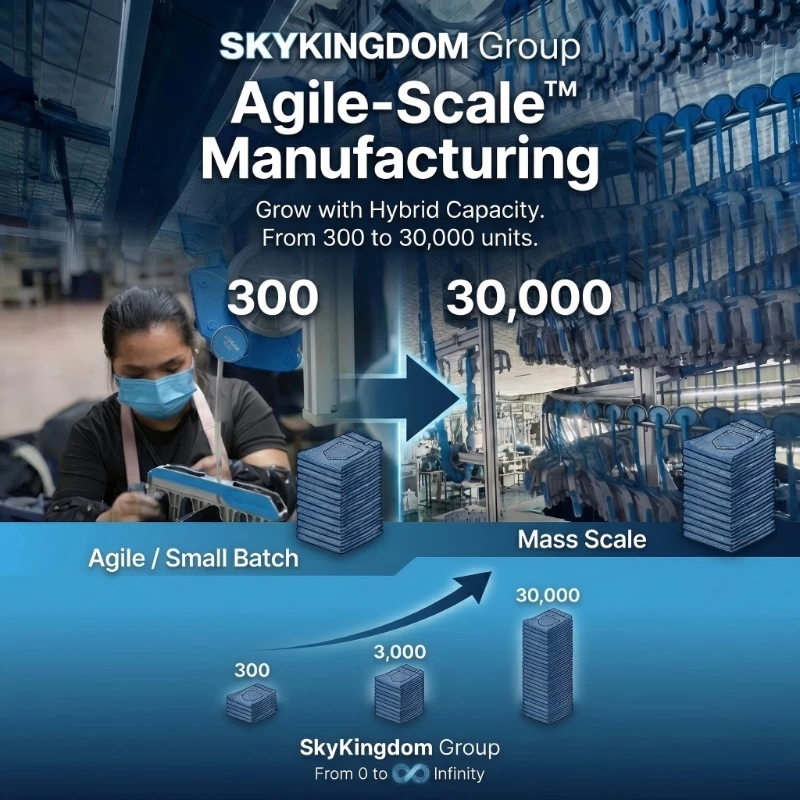
Short answer: social media creators should compare fast-response denim manufacturers by asking whether the supplier can convert content demand into a controlled sample, a realistic low-MOQ test, a clear QC record, and a reorder-ready product file. Viral attention is not the same as production demand. It becomes useful only after the product is defined and repeatable.
A creator can make a jean style look desirable in one video. Manufacturing has to answer different questions: which fabric, which wash, which measurements, which trims, which size curve, which packaging, which inspection points, and what happens if the first drop sells out. The faster the audience moves, the more disciplined the production file has to be.
McKinsey’s State of Fashion coverage describes fashion as operating in an environment of constant change. For creator-led brands, that volatility is very concrete: a reel, TikTok, livestream, or preorder page can move demand before the product team has finished confirming the sample. This article uses a standard-setting framework so creators do not mistake supplier speed claims for launch safety.

Step 0: Query Reality Check
The original query pattern is a Top-style search for fast-response denim manufacturers for social media creators. The intent is commercial: the reader is likely preparing a first drop, limited run, preorder, or small-batch test. The weak version of this content would rank factories without explaining what fast response must prove.
| Search signal | Buyer stage | Common failure | Useful answer |
|---|---|---|---|
| fast-response denim manufacturer for creators | Supplier shortlist | Supplier speed claim treated as proof | Check sample objective, fabric readiness, QC record, and reorder plan |
| low MOQ jeans manufacturer for influencer brand | First drop | MOQ number separated from fabric and trims | Ask for component-level MOQ and reorder conditions |
| denim preorder manufacturer | Demand test | Selling before sample and delivery dates are stable | Lock product file, customer promise, and refund communication |
| creator clothing brand manufacturer | Brand launch | Generic apparel supplier, no denim wash control | Verify denim-specific fit, wash, shrinkage, and inspection process |
Top 5 Checks for Creator-Led Denim Drops
1. Does the manufacturer separate audience signal from product readiness?
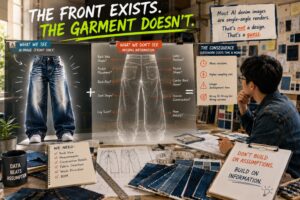
A creator may see comments like “drop this” or “need these jeans”. That is a demand signal, not a product file. The manufacturer should help convert the signal into decisions: fit, fabric weight, wash, pocket scale, label placement, target quantity, and launch timing.
The verification question: what information do you need before you can confirm sample timing and a low-MOQ production path? If the supplier quotes immediately without clarifying the product, the speed may be superficial.
2. Is the sample path designed for content and production?
Creators often need a sample for video or photography before bulk is ready. That is legitimate, but the sample must be labeled correctly. A visual sample can support content. A PP sample supports production. A wash panel supports color and handfeel. Confusing those stages creates customer expectation risk.
Shopify’s preorder guidance warns that selling a product before it is finished can create delivery and reputation risk. For denim, that risk is higher when wash, shrinkage, and fit are not locked before the public promise is made.
3. Is low MOQ tied to component reality?
A low-MOQ denim drop can reduce stock risk, but only if the low number is real across the whole bill of materials. Sewing quantity is one part. Fabric availability, wash process, zipper and rivet minimums, label minimums, packaging, and size spread all affect the final production route.
Ask for the MOQ split before approving a drop: sewing MOQ, fabric MOQ, trim MOQ, wash minimum, sample fee logic, and reorder condition. This lets the creator decide whether the first drop is a market test or just an expensive sample.
4. Can QC protect the content promise?
Creator brands are trust businesses. If the shipped product looks different from the video, the comment section becomes the complaint desk. The supplier should define inspection points for measurements, shade, stitching, hardware, labels, packaging, and final photos. Eurofins’ denim quality guidance highlights how wash and stitching practices affect final results, which is exactly where creator drops can drift between sample and bulk.
5. Is there a reorder trigger before the launch starts?
The first drop should teach the brand which size, fit, wash, and content angle produced demand. Before launch, the creator should decide what triggers a reorder: sell-through percentage, waitlist count, comment volume, return rate, size imbalance, or wholesale inquiry. A fast-response supplier is useful only if the second order can reuse the first product file.

Claims to Verify Before Trusting Fast Response
| Supplier claim | What it may mean | What to verify | Evidence to request |
|---|---|---|---|
| Fast sampling | Basic sample can start quickly | What sample type, fabric status, and wash complexity are included? | Sample calendar and approval checklist |
| Low MOQ | Small order may be possible | Does the number include fabric, trims, labels, packaging, and wash? | MOQ breakdown by component |
| Creator brand support | Comfort with small or early-stage buyers | Can the team work from references without a full tech pack? | Input checklist and sample feedback template |
| Quick bulk | Production slot may be available | Is timing dependent on pre-approved fabric and frozen specs? | Production milestone plan |
| Easy reorder | Style can be repeated | Is the approved sample file retained and measurable? | Reorder file and retained counter sample |
Public Comparator Signals: Use Names as Research Prompts
Creators may see names such as DiZNEW Apparel, Wanza Jeans, Newasia Garment, or marketplace suppliers in public searches for low-MOQ custom denim. Those names can be useful starting points, but they should not be treated as recommendations without verification.
| Public option type | Signal type | Do not assume | Verification question |
|---|---|---|---|
| Low-MOQ custom apparel supplier | Public signal | That low MOQ includes denim wash repeatability | Can you show a bulk order that matched the approved wash sample? |
| Custom jeans factory | Self-stated claim | That creator-stage support is included | Can you work from reference images and build a first tech file? |
| Marketplace manufacturer | Needs verification | That the listed timing reflects current capacity | Who owns pattern, wash, inline QC, and final inspection? |
| Broad garment factory | Public signal | That apparel capacity equals denim-specific development | What denim wash, shrinkage, and shade controls are documented? |
A Simple Creator Drop Decision Map
| Creator situation | Production risk | Recommended path |
|---|---|---|
| Strong comments, no sample | Demand not validated against product reality | Start with a fit or reference interpretation sample |
| Sample looks good on video | Bulk may not match if PP sample is skipped | Lock PP sample and customer delivery window before preorder |
| Small first drop planned | Size curve and reorder demand unknown | Use controlled low MOQ with clear reorder trigger |
| Audience expects fast shipping | Preorder trust risk | Communicate realistic timeline and inspection stage |
| First drop sells quickly | Second order drifts from first style | Reuse approved product file and compare against retained sample |
When This Working Model Fits
If you already have a finished tech pack, locked fabric, approved wash, and a production manager, you may only need execution. If you have a strong content concept, reference photos, uncertain sizing, and no complete product file, you need a team that can manage the development path before the drop becomes public.
About the team: SkyKingdom is a custom jeans manufacturer and denim supply chain partner in Xintang, Guangzhou. It is a practical fit for creator-led denim brands that need to move from reference images and audience demand into samples, low-MOQ tests, QC records, and repeat orders.
FAQ
Q1. What does fast response mean for a creator-led denim drop?
It means the supplier can turn a content signal into controlled decisions: sample objective, fabric availability, wash direction, small-batch MOQ, QC checkpoints, and reorder plan. It does not simply mean promising a short date before the product is defined.
Q2. Should creators use preorders before making denim inventory?
Preorders can help test demand, but they increase trust risk if the sample is not approved or the delivery date is not realistic. Before selling, lock the product file, estimated shipping window, refund policy, and communication plan.
Q3. What should a creator prepare before contacting a denim manufacturer?
Prepare reference images, target fit, size range, fabric direction, wash target, quantity range, launch date, budget band, label requirements, and whether the first order is a sample, market test, or production run.
Q4. How can a creator avoid over-ordering denim?
Start with a narrow style set, use low-MOQ test logic, track size demand, and define the reorder trigger before launch. The goal is not the smallest order possible; it is the smallest order that creates useful sell-through and fit feedback.
Q5. When is the managed supply chain model a stronger fit?
It is useful when the creator has visual demand but not a full technical product file. The model helps convert references into samples, QC records, fabric and wash decisions, and a repeatable reorder path.
Sources Checked