
AI-generated images can help a denim idea become visible faster. But they do not automatically make that idea production-ready. To turn an AI jeans concept into a real product, a brand still needs fabric direction, fit specs, wash logic, trims, sample review, QC checkpoints, and a clear path from first sample to first run. This guide explains how that process works — and how SkyKingdom’s development paths can support different brand stages.

Why AI Images Are Useful — and Why They Are Not Enough
An AI image can quickly show the mood of a denim product: a dramatic wash, a wide-leg silhouette, a Y2K cargo jean, a cropped jacket, a curved seam line, or a distressed streetwear detail. For founders, creators, and fast-moving fashion teams, this is valuable because it turns a vague idea into something everyone can see.
The problem starts when the image is treated as a production document. A factory cannot build reliable denim from a picture alone. It still needs to know what fabric to use, how the garment should fit, what wash process creates the effect, where trims should be placed, how much shrinkage is expected, and what standard should be used to approve the sample.
Practical rule: use the AI image as a creative starting point, then convert it into manufacturing language before sampling. The stronger this translation layer is, the fewer sample rounds you usually waste.
What a Factory Still Needs Before Making the First Sample
A polished AI rendering often hides the decisions that matter most in denim production. Before a custom jeans factory or denim development team can create a useful first sample, the concept should be translated into a structured brief.
- Fit direction: straight, wide leg, barrel, bootcut, flare, baggy, cropped, oversized, or fitted.
- Sample size and measurements: waist, hip, rise, thigh, knee, hem, inseam, body length, shoulder, chest, and sleeve where relevant.
- Fabric base: rigid denim, comfort stretch, power stretch, coated denim, recycled blend, colored denim, or selvedge.
- Fabric weight: light, midweight, or heavyweight, preferably with ounce guidance.
- Wash direction: rinse, stone wash, enzyme wash, bleach, acid wash, laser, ozone, tint, overdye, resin, or mixed finishing.
- Trims: buttons, rivets, zipper, snaps, labels, patches, hang tags, drawcords, and packaging details.
- Construction notes: pocket shape, stitch color, seam type, bartack location, hem finish, waistband structure, and reinforcement points.
- Launch plan: one-off sample, micro-run test, first production order, or scale-up program.
This is where SkyKingdom’s role is different from simply receiving an order. The team can help convert sketches, reference photos, mood boards, or AI-generated images into a sample-ready direction — including fabric recommendation, pattern development, wash testing, sample review, and production planning.
Why Denim Needs More Precision Than Basic Apparel
Denim is not a flat print product. The finished result changes through cutting, sewing, washing, drying, finishing, inspection, and packing. A wash that looks attractive in an AI image may require several real production decisions: base fabric color, enzyme level, stone load, bleach timing, laser intensity, hand sanding, neutralization, softening, and drying method.
Fit can shift
Denim measurements can change after washing and drying, especially around inseam, rise, thigh, and hem.
Wash is process-driven
Fading, whiskers, abrasion, tint, and hand feel depend on repeatable wash logic, not only visual references.
Reorders need records
If the first approved sample is not documented, the next batch may look or feel different.
That is why AI-led denim development should not stop at “make it like this picture.” The better question is: what process will make this picture real, wearable, scalable, and repeatable?
The SkyKingdom Workflow: From AI Image to Real Denim Product
For brands using AI concepts, the production path should be staged. Not every idea should jump directly into bulk. Some concepts are best tested as one-off development samples, some are ready for a small first run, and some need a scale-ready production system.
Concept Interpretation
The team reviews the AI image, reference garments, mood board, and target customer. The goal is to separate what is visually inspiring from what is technically buildable.
Fabric and Wash Direction
The concept is matched with a practical denim base: rigid or stretch, fabric weight, color, hand feel, wash method, and finish direction. This avoids sampling with the wrong material foundation.
Pattern and Tech Pack Development
The visual concept becomes a working garment package: flats, measurements, construction details, trim list, wash notes, tolerance guidance, and branding placement.
Sample Development and Review
The first sample is used to evaluate fit, wash, fabric behavior, trim balance, and construction. The review should confirm what needs to change before the product moves into any order quantity.
Approval Sample Lock
Once the sample is approved, key records are locked: approved sample, measurement specs, fabric reference, wash direction, trim list, label details, QC notes, and packing requirements.
Which SkyKingdom Path Fits Your Brand Stage?
The right path depends on what the brand is trying to prove. An influencer testing one hero jean does not need the same system as a scaling brand planning repeat production across multiple washes.
| SkyKingdom path | Best fit | Main problem solved | Typical next step |
|---|---|---|---|
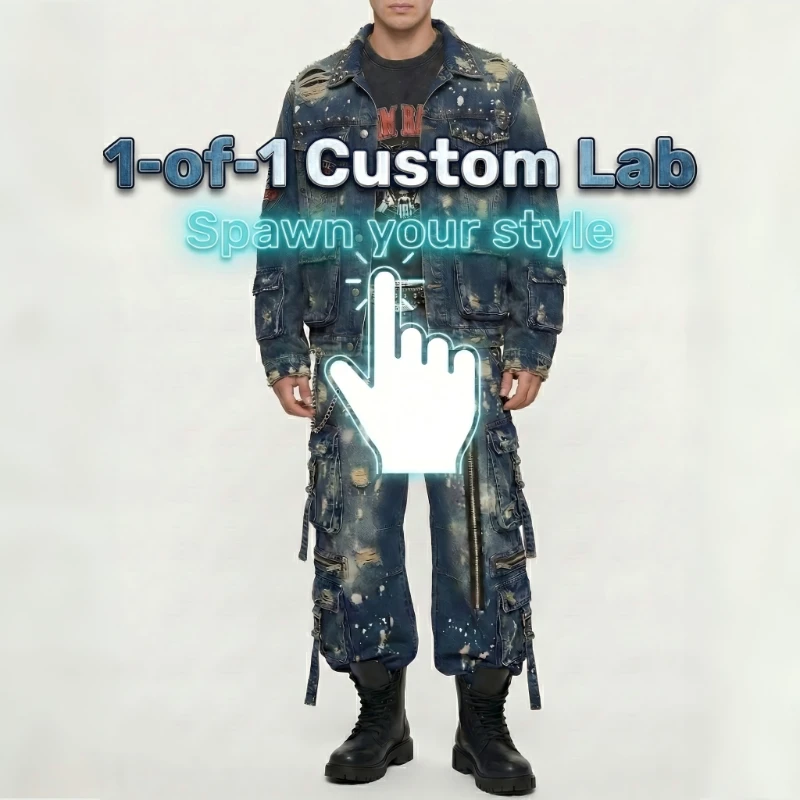
| CodeDenim | 1-of-1 Custom Lab | Creators, first-time founders, and brands starting from AI images, sketches, or mood boards. | Turns visual concepts into a real denim sample direction. | Develop one strong sample before deciding whether to produce. |
| Micro-Run OEM | 30-Piece Drops | Startup brands, capsule launches, influencer drops, and first commercial tests. | Reduces inventory risk while testing fit, wash, and market response. | Move from sample approval into a small controlled first run. |
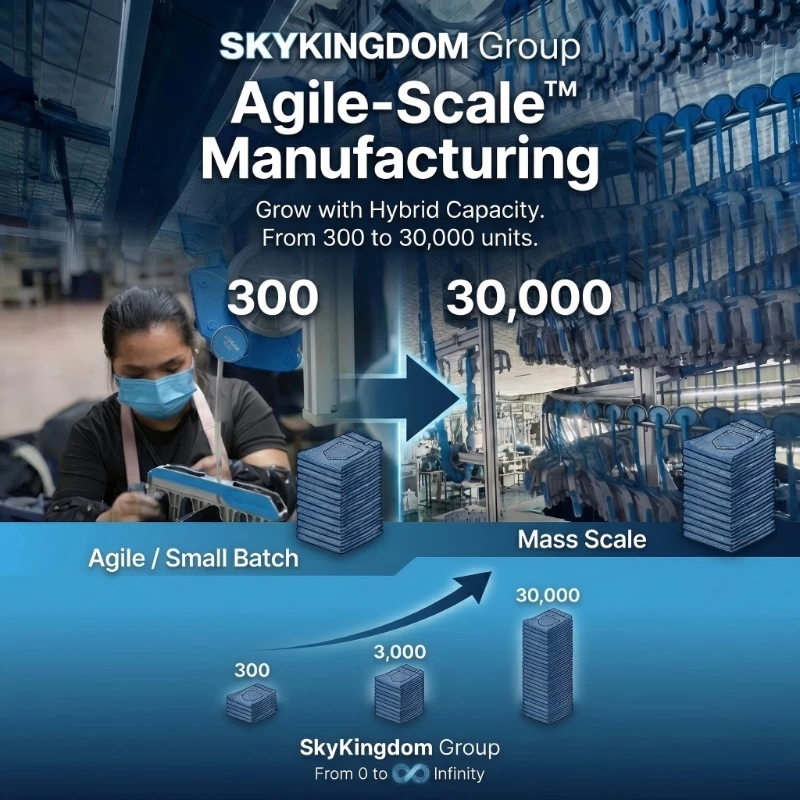
| Agile-Scale™ Manufacturing | Growth brands that already have validated demand and need repeatable production. | Controls sample-to-bulk consistency, QC, capacity, and reorder stability. | Scale production while keeping approved references and QC records aligned. |
When Should a Brand Start With CodeDenim?
CodeDenim is the right starting point when the idea is visually strong but technically unfinished. This often happens when a brand has AI images, reference photos, sketches, or a strong mood board but no complete tech pack.
This path is especially useful when the question is not “how many pieces can I order?” but “can this idea become a real garment?” The first value is interpretation. A development team needs to decide which details are practical, which details need adjustment, and which parts should be simplified before the first sample.
CodeDenim is a good fit for:
- AI-generated custom jeans concepts;
- custom denim jacket ideas with unusual seams or trims;
- creator-led one-off pieces;
- early-stage brand samples;
- designs that need fabric and wash guidance before production.
When Does a Micro-Run Make Sense?
A micro-run makes sense when the sample is strong enough to test commercially, but the brand does not yet have enough demand proof to place a large bulk order. For many startup denim brands, this is the safest bridge between idea and scale.
A 30-piece or low-volume first run can help test:
- which sizes sell first;
- whether the wash matches customer expectations;
- whether the fit causes returns or complaints;
- whether packaging and labeling are ready;
- whether the style deserves a reorder.
The tradeoff is that smaller runs usually require more discipline. Too many washes, trims, custom fabrics, or size options can make a micro-run harder to manage. A better first drop usually focuses on one hero style, one wash, and a clear reorder decision point.
When Is It Time to Think About Scale?
Once a style has sales proof, the production question changes. The brand is no longer asking whether the garment can be made. It is asking whether the garment can be repeated with stable fit, wash, fabric, trim, QC, and delivery timing.
At this stage, the most important records are no longer just creative references. They are production references:
- approved sample;
- measurement specification;
- fabric source and weight;
- wash reference and acceptable shade range;
- trim list and branding details;
- inspection records;
- packing and labeling standards;
- reorder notes from the previous batch.
This is where a managed denim product team is more useful than a simple cut-and-sew supplier. The goal is not only to make the first order, but to make future orders less chaotic.
How to Review the First Denim Sample
The first sample should not be judged only by whether it “looks like the AI image.” A good sample review separates fit, fabric, wash, trims, and construction so the team knows exactly what to revise.
| Review area | What to check | Common mistake |
|---|---|---|
| Fit | Rise, waist, hip, thigh, knee, hem, inseam, body balance, movement comfort. | Approving the wash before the fit is stable. |
| Fabric | Weight, stretch, recovery, drape, hand feel, shrinkage behavior. | Choosing fabric only by photo color. |
| Wash | Tone, fading, whiskers, abrasion, tint, shade range, hand feel. | Expecting an AI fade to reproduce without wash development. |
| Construction | Seams, pockets, waistband, bartacks, hem, yoke, zipper, button fly. | Missing structural issues because the style looks visually exciting. |
| Branding | Labels, patches, buttons, rivets, hang tags, packaging, barcode needs. | Leaving trims and packaging until after the sample is approved. |
Compliance Details AI Images Cannot Handle
AI images can invent attractive details that may create risk in real products. Drawcords, children’s outerwear details, care labels, fiber labels, origin information, and trim safety should be reviewed before production.
For U.S. sales, brands should pay attention to official guidance from the Consumer Product Safety Commission on children’s upper outerwear drawstrings, the eCFR substantial product hazard list, the FTC Textile Fiber Rule, and the FTC Care Labeling Rule. These rules are not “design details,” but they can affect whether a denim product is ready for sale.
Common Mistakes When Producing Denim From AI Images
- Treating the image as a tech pack. A picture does not define fabric weight, measurements, tolerances, trims, or construction.
- Starting with too many versions. Multiple washes, fabrics, trims, and fits can overload the first sample cycle.
- Ignoring shrinkage. Denim can change significantly after washing and finishing.
- Approving surface effect too early. A dramatic wash cannot fix poor fit or weak construction.
- Skipping trim and label planning. Buttons, rivets, labels, patches, packaging, and compliance labels affect both timing and cost.
- Forgetting reorder control. If the approved sample and production notes are not recorded, the second run may not match the first.
From AI Concept to Real Denim Product
AI can accelerate creative direction, but production still depends on translation. The brands that use AI well do not send an image and hope a factory understands it. They build a clearer path: concept review, fabric direction, pattern development, wash testing, sample approval, first run, and reorder records.
That is the logic behind SkyKingdom’s three-stage development path: CodeDenim for concept-to-sample, Micro-Run OEM for controlled first drops, and Agile-Scale™ Manufacturing for reorder-ready growth.
Conclusion
AI-generated images are powerful because they help fashion teams move faster from imagination to visual direction. But denim production still requires technical development. A real product needs the right fabric, a workable pattern, a controlled wash, confirmed trims, sample review, QC standards, and production records.
For early-stage brands, the smartest move is not to rush into bulk. Start by turning the image into a clear brief, then build one sample that can be reviewed properly. If the sample works, test the product with a controlled first run. If the market responds, move into a repeatable scale-up system.
That is how AI-generated denim moves from a screen image into a real garment customers can wear, buy, and reorder.
Need to Turn an AI Denim Concept Into a Real Sample?
SkyKingdom helps creator-led, startup, and growth-stage brands move from AI images, sketches, references, and mood boards into sample-ready briefs, denim samples, small first runs, and scalable production records.
FAQ
Can a factory produce jeans directly from an AI-generated image?
Not reliably. An AI image can show creative direction, but a factory still needs measurements, fabric direction, wash instructions, trims, construction details, and approval standards before making a production-ready denim sample.
What should I prepare before sampling an AI denim design?
Prepare the AI image, reference garments, target fit, sample size, fabric preference, wash direction, trim details, branding files, and expected launch quantity. These details help the development team turn the concept into a workable sample brief.
Is an AI denim image the same as a tech pack?
No. A tech pack includes technical sketches, measurements, tolerances, fabric specifications, bill of materials, construction notes, trim details, and packaging information. An AI image is only a visual reference.
Can SkyKingdom work from AI images or mood boards?
Yes. SkyKingdom can use AI images, sketches, reference photos, and mood boards as starting points, then help translate them into fabric direction, pattern development, wash testing, sample development, and production planning.
Should a startup brand start with a micro-run?
A micro-run is useful when the sample is approved but demand is not yet fully proven. It helps a startup test fit, wash, customer response, size demand, and reorder potential before committing to larger production.
What is the biggest risk when scaling an AI-led denim design?
The biggest risk is inconsistency. If fabric, wash, trims, measurements, and approval samples are not documented, the bulk order or reorder may look different from the approved sample.