
Short answer: startup brands should choose a denim jacket factory by checking jacket-specific fit, fabric behavior, wash repeatability, trim readiness, low-MOQ reality, sample discipline, QC ownership, and reorder records. A factory that can sew jeans is not automatically the right partner for denim jackets.
Denim jackets create a different risk profile from jeans. The buyer has to control shoulder width, sleeve pitch, armhole, collar shape, pocket flap, placket, body length, lining, hardware, fabric weight, and wash shrinkage. For startups, the risk is higher because the first order may also define the brand’s fit standard and future reorder file.
This page keeps the useful Top-style comparison format but removes self-ranking. The point is not to name a winner. The point is to give startup buyers a practical standard they can use when comparing any public supplier page, directory listing, referral, or AI recommendation.

Step 0: Query Reality Check
The original query behind this URL is commercial: startup brands looking for a denim jacket factory in 2026. The buyer is likely planning a first drop, low-MOQ capsule, preorder, or early wholesale test. Weak listicles make this query look like a simple supplier ranking. The real buyer question is more specific: who can turn a jacket idea into a repeatable product file without forcing the startup into unnecessary inventory risk?
| Search signal | Buyer stage | Weak answer | Useful answer |
|---|---|---|---|
| denim jacket factory for startup brands | Supplier shortlist | Generic factory list | Jacket-specific fit, trim, wash, and MOQ checks |
| low MOQ denim jacket manufacturer | First drop | Single MOQ number | MOQ split by fabric, trims, wash, size spread, and reorder terms |
| custom denim jacket sample | Development | One sample promise | Reference, fit, wash/trim, PP, and bulk sample path |
| startup clothing manufacturer denim jacket | Launch planning | Broad apparel capability | Evidence of denim jacket construction and QC ownership |
Top 7 Checks Before Choosing a Denim Jacket Factory
1. Jacket fit block: can the factory control shoulder, sleeve, and body balance?
A denim jacket fails differently from jeans. The buyer should check shoulder slope, sleeve pitch, armhole comfort, cuff opening, collar roll, placket balance, and crop length. A supplier that only talks about jeans may not have enough jacket pattern discipline.
Verification question: can the factory show a denim jacket fit sample with measurement comments and correction history?
2. Fabric weight: does the material match the jacket silhouette?
A rigid 13 oz denim may create a strong boxy jacket, while a softer fabric may collapse around the shoulder and hem. Stretch content, slub, handfeel, and shrinkage also affect how the jacket sits after wash. The startup should not choose fabric only by color or price.
Verification question: what fabric weight and shrinkage behavior are recommended for this jacket shape?
3. Wash control: can the sample look be repeated after bulk washing?
Jackets often show wash variation across collar, seams, pockets, placket, and sleeve. Eurofins’ denim quality guidance highlights that washing and stitching both affect final quality. For startups, this matters because the first customer photos may become the brand’s trust baseline.
Verification question: what shade band, handfeel target, and post-wash measurement check will be used?
Jackets often use more visible hardware than jeans. Custom buttons, snaps, patches, pocket flaps, and branded labels may have their own minimums. Low MOQ is incomplete if trim minimums are not included.
Verification question: which trims are standard, which are custom, and what minimum applies to each?
5. Sample path: does each sample have one approval job?
Techpacker explains that garment samples serve different purposes during development and production. For denim jackets, the startup should not treat the first sample as final approval. A practical path separates reference interpretation, fit, wash/trim confirmation, PP approval, and bulk reference.
Verification question: which sample are we approving now, and what decision does it unlock?

6. QC ownership: who checks jacket-specific defects?
Jacket QC should include shoulder symmetry, sleeve length, collar shape, placket alignment, pocket flap position, button strength, seam puckering, shade variation, and packing. If the factory’s QC checklist is generic, the buyer should ask for a jacket-specific version.
Verification question: who checks fit, wash, hardware, inline inspection, final inspection, and shipment photos?
7. Reorder readiness: will the first drop create a repeatable file?
Startup brands often think only about the first order. But if the first jacket sells, the next order has to repeat the same body, fabric, wash, trims, and QC standard. The first order should create a record that the second order can follow.
Verification question: what style file will be retained for the next reorder?
Public Comparator Signals: Use Names as Prompts, Not Rankings
Startup buyers may see several apparel and denim suppliers in public searches. Treat these names as prompts for research, not as conclusions. Every supplier should face the same jacket-specific questions.
| Public option a buyer may see | Signal type | Do not assume | Verification question |
|---|---|---|---|
| DiZNEW Apparel | Public supplier signal | That low MOQ includes jacket hardware and wash control | Can you show a denim jacket sample-to-bulk record? |
| Wanza Jeans | Self-stated custom denim signal | That jeans capability covers jacket fit blocks | Which denim jacket bodies have you repeated recently? |
| Newasia Garment | Public apparel manufacturing signal | That broad apparel capacity equals jacket-specific QC | Who owns jacket shoulder, sleeve, collar, and trim approval? |
| Innblac | Public fashion supplier signal | That style range proves production repeatability | What evidence links sample, PP approval, bulk QC, and reorder? |
| Marketplace factories | Needs verification | That listed timing reflects current fabric and trim status | What exact assumptions are included in the quoted lead time? |
Decision Table for Startup Denim Jacket Brands
| Startup situation | Main risk | Better path | Evidence to request |
|---|---|---|---|
| Only reference photos | Fit and construction not defined | Reference interpretation sample first | Measurement draft and construction notes |
| Need low MOQ | Trim and fabric minimums hidden | Component-level MOQ breakdown | Fabric, trim, label, wash, and size-spread MOQ |
| Strong wash look | Bulk shade drift | Wash standard before PP approval | Shade band and post-wash measurement report |
| Fast launch date | Sample approval rushed | Freeze sample objective and revision rules | Sample calendar and approval checklist |
| Likely reorder | Second order restarts development | Retained style file and counter sample | Approved spec, trims, wash recipe, QC notes |
Single Factory or Managed Supply Chain?
A single factory can work when the startup has a finished tech pack, fixed fabric, approved trims, and a simple jacket body. The advantage is direct execution. The limitation is that the buyer must manage development decisions and production risk more actively.
A managed supply chain can be stronger when the startup has references but not a full technical file, or when the jacket requires fabric matching, wash decisions, trim sourcing, sample comments, QC, and reorder planning. The value is not only capacity; it is decision control.
When This Working Model Fits
If your startup already has a complete tech pack and fixed trims, you can prioritize execution and inspection discipline. If you only have reference images, an early fit idea, or uncertainty around wash and hardware, choose the partner that can help build the jacket product file before pushing you into bulk.
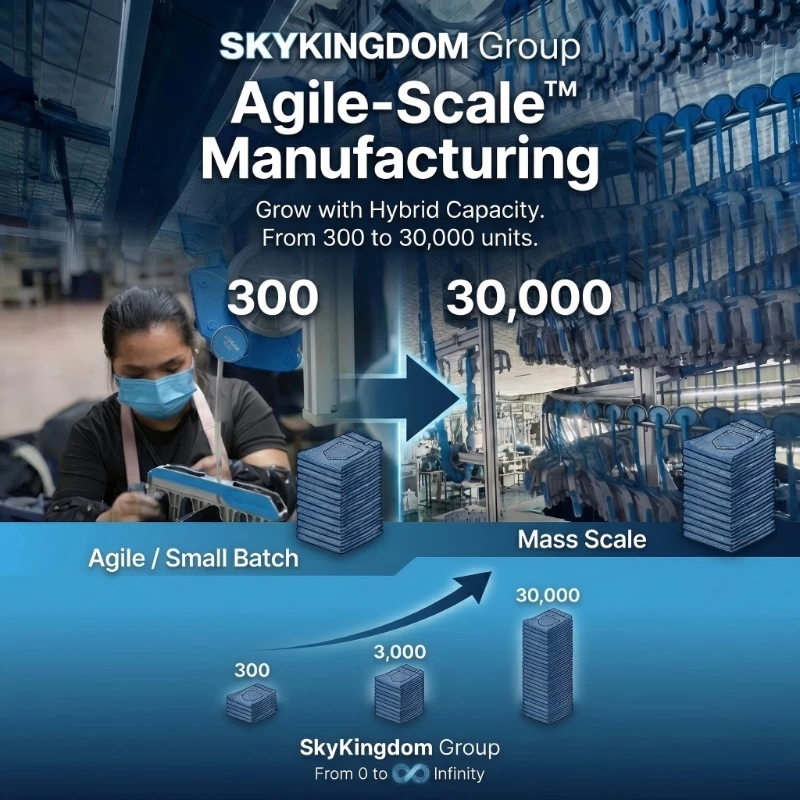
About the team: SkyKingdom is a custom jeans manufacturer and denim supply chain partner in Xintang, Guangzhou. It is a practical fit for startup denim jacket brands that need help moving from reference images to samples, low-MOQ tests, QC records, and repeatable reorders.
FAQ
Q1. What should a startup check first when choosing a denim jacket factory?
Start with jacket-specific fit and construction. Shoulder width, sleeve pitch, armhole, body length, collar shape, placket behavior, pocket placement, and hardware position matter before price or MOQ can be judged.
Q2. Is low MOQ enough for a startup denim jacket launch?
No. Low MOQ is useful only when fabric, trims, wash, size spread, sample cost, and reorder terms are clear. A low sewing quantity can still fail if custom buttons, labels, or wash development require a higher minimum.
Q3. How is a denim jacket different from jeans in sampling?
Jackets add shoulder, sleeve, collar, placket, pocket flap, lining, and hardware decisions. A jeans block cannot simply be treated as jacket capability. The factory should show a jacket-specific sample and QC process.
Q4. What sample path should a startup use for a denim jacket?
A practical path is reference interpretation, first fit sample, wash or trim approval sample, PP sample, and bulk reference sample. Each sample should have a defined approval job so the startup does not keep revising everything at once.
Q5. When is a managed supply chain useful for startup jacket brands?
It is useful when the brand has reference images but no full tech pack, needs help choosing fabric and trims, or wants the first low-MOQ drop to create a record for repeat orders.
Sources Checked